
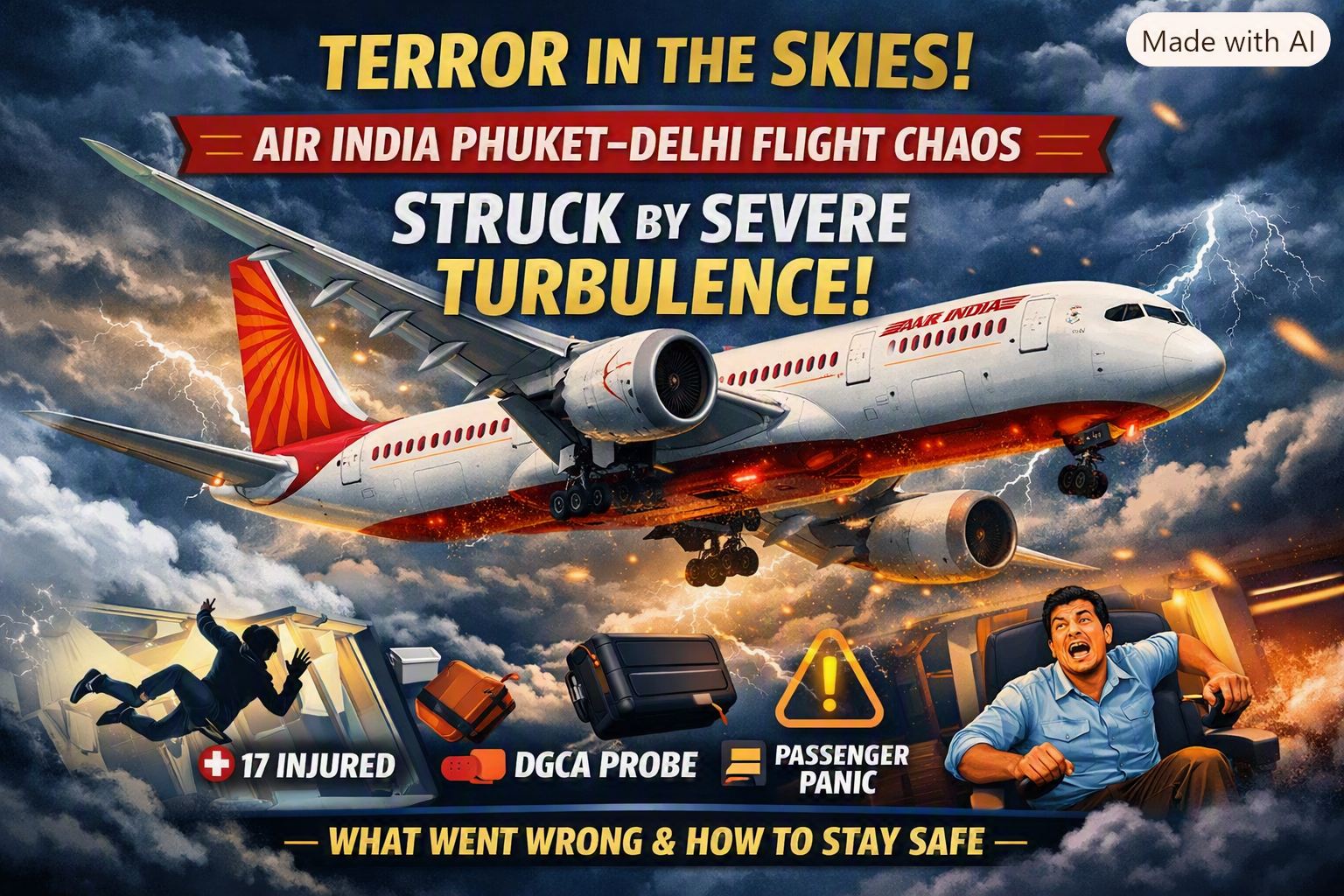
Panic at 30,000 Feet
On August 4, Air India flight AI‑2379 from Phuket to New Delhi turned into a nightmare mid‑air. Just 90 minutes into the journey, the aircraft suddenly lost 300 feet of altitude, throwing passengers into chaos.
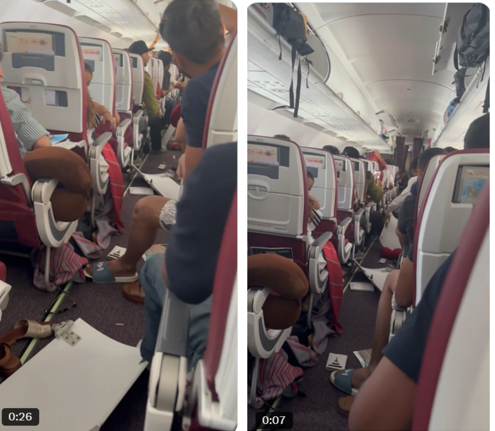
“We thought the plane was going to crash,” recalled terrified travellers, as trays, baggage, and even slippers flew across the cabin.
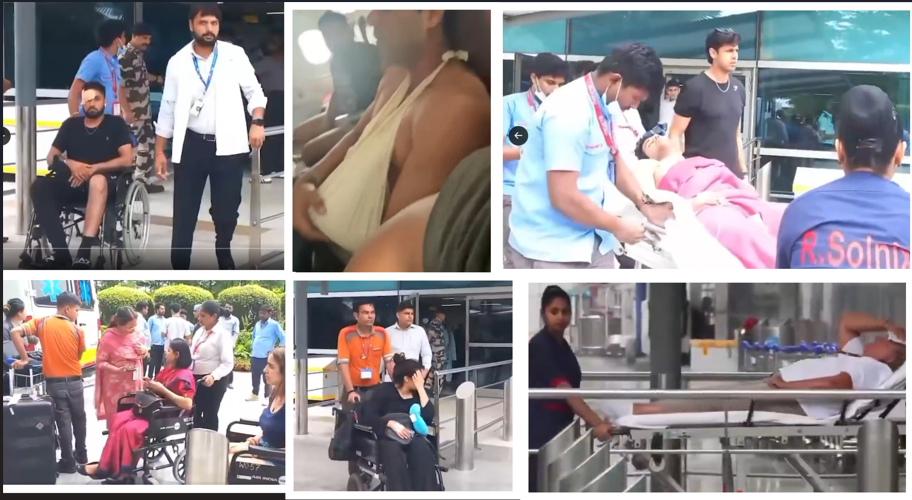
Seventeen people were injured, 13 passengers and 4 crew members, with head, neck, and shoulder injuries. Ambulances rushed them to hospitals, including Fortis, Medanta, and the Indian Spinal Injury Centre, upon landing.
What Exactly Happened?
The culprit: Clear Air Turbulence (CAT), the most dangerous form of turbulence. Unlike storm clouds or thunderstorms, CAT is invisible and impossible to detect with onboard weather radar. It’s linked to jet streams and wind shear, striking without warning.
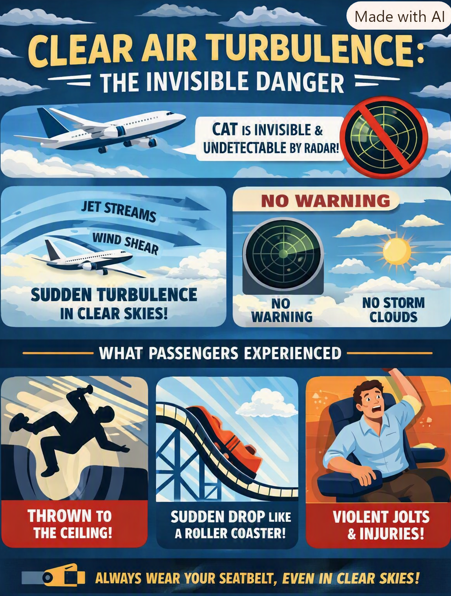
Passengers described the sensation as being on a roller coaster suddenly plunging downward. For those without seatbelts, the impact was brutal, some were thrown up to the cabin roof.
Minister Breaks Silence
Civil Aviation Minister Ram Mohan Naidu has finally addressed the turbulence scare aboard Air India flight AI2379 from Phuket to Delhi. Speaking on Wednesday, he revealed that the terrifying episode lasted four to five minutes, and after meeting passengers, he pieced together the sequence of events from their firsthand accounts.

Minister Naidu assured that the authorities are committed to providing comprehensive medical care and assistance to everyone injured in the turbulence incident. From immediate treatment at the airport to specialized hospital care, the government is ensuring that no passenger or crew member is left without the help they need.
Crew Lauded for Bravery
Naidu praised the cabin crew’s quick response, highlighting how they continued assisting passengers despite suffering injuries themselves. Their courage in the midst of chaos helped stabilize the situation until the aircraft landed safely in Delhi.
Swift Medical Response
The minister emphasized that airport medical teams were on standby as soon as the plane touched down. Injured passengers received immediate care, with those requiring advanced treatment admitted to Medanta Hospital and Fortis Hospital.
Crew Injuries Revealed
Naidu disclosed that several crew members sustained serious spinal injuries, including damage to the neck and tailbone. They remain under close medical observation, underscoring the severity of the turbulence’s impact.
“Two Hours of Pure Horror”
A passenger shared a chilling video from inside the cabin, calling the ordeal the “worst two hours of my life.” They urged fellow travellers to always keep seatbelts fastened, even when the sign is off, stressing how quickly chaos erupted when the aircraft hit severe turbulence.
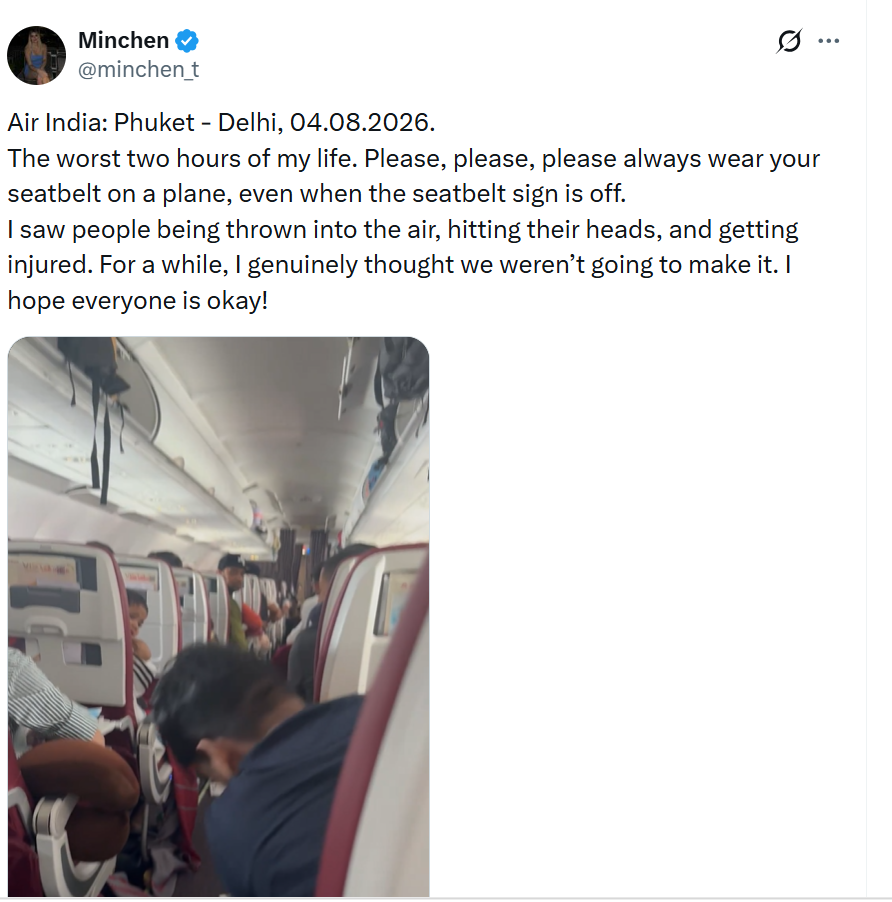
The eyewitness described people being hurled into the air, striking the cabin roof, and suffering injuries. For a moment, they genuinely believed the flight wouldn’t make it. Their heartfelt post has gone viral, resonating with thousands online and serving as a powerful reminder: seatbelts save lives at 30,000 feet.
Climate Change & Rising Risks
Experts warn that climate change is intensifying jet streams, making turbulence more frequent and severe. Longer flights are especially vulnerable, and aviation authorities predict that in coming decades, passengers will face turbulence more often than ever before.
Are Aircraft Safe Enough?
Modern jets from Airbus and Boeing undergo rigorous stress tests, designed to withstand extreme turbulence. But the real danger lies with passengers and crew who aren’t strapped in. Cabin crew, often serving meals mid‑flight, are especially at risk.
Lessons for Every Traveller
Always keep your seatbelt fastened, even when the sign is off.
Listen to crew instructions - turbulence can strike without warning.
Stay calm - aircraft are built to endure far more than passengers imagine.
Investigation Underway
India’s aviation regulator, DGCA, has ordered a full probe. The black box, flight data recorder, and cockpit voice recorder will be analyzed to determine whether this was purely a weather event or if mechanical issues played a role.
Final Takeaway
This incident is a stark reminder: nature is unpredictable, but preparedness saves lives. Clear Air Turbulence is invisible, unavoidable, and deadly, but vigilance and simple precautions can make all the difference.
Your Turn: Stay Safe in the Skies!
Have you ever experienced turbulence while flying? Share your story in the comments below and don’t forget to spread awareness by sharing this blog.
The next time you board a flight, remember, seatbelts aren’t just for takeoff and landing; they’re your lifeline at 30,000 feet.
Written by
Ishaan TrivediDiscussion (0)
Sign in to join the discussion.
Loading comments…