
Escalation: From Broken Deals to Direct Strikes
The U.S.-Iran conflict has been brewing for years, with broken agreements and failed negotiations paving the way for open hostility. What once targeted military infrastructure has now shifted toward civilian assets, marking a dangerous escalation.
The Collapse of Chabahar’s Tower
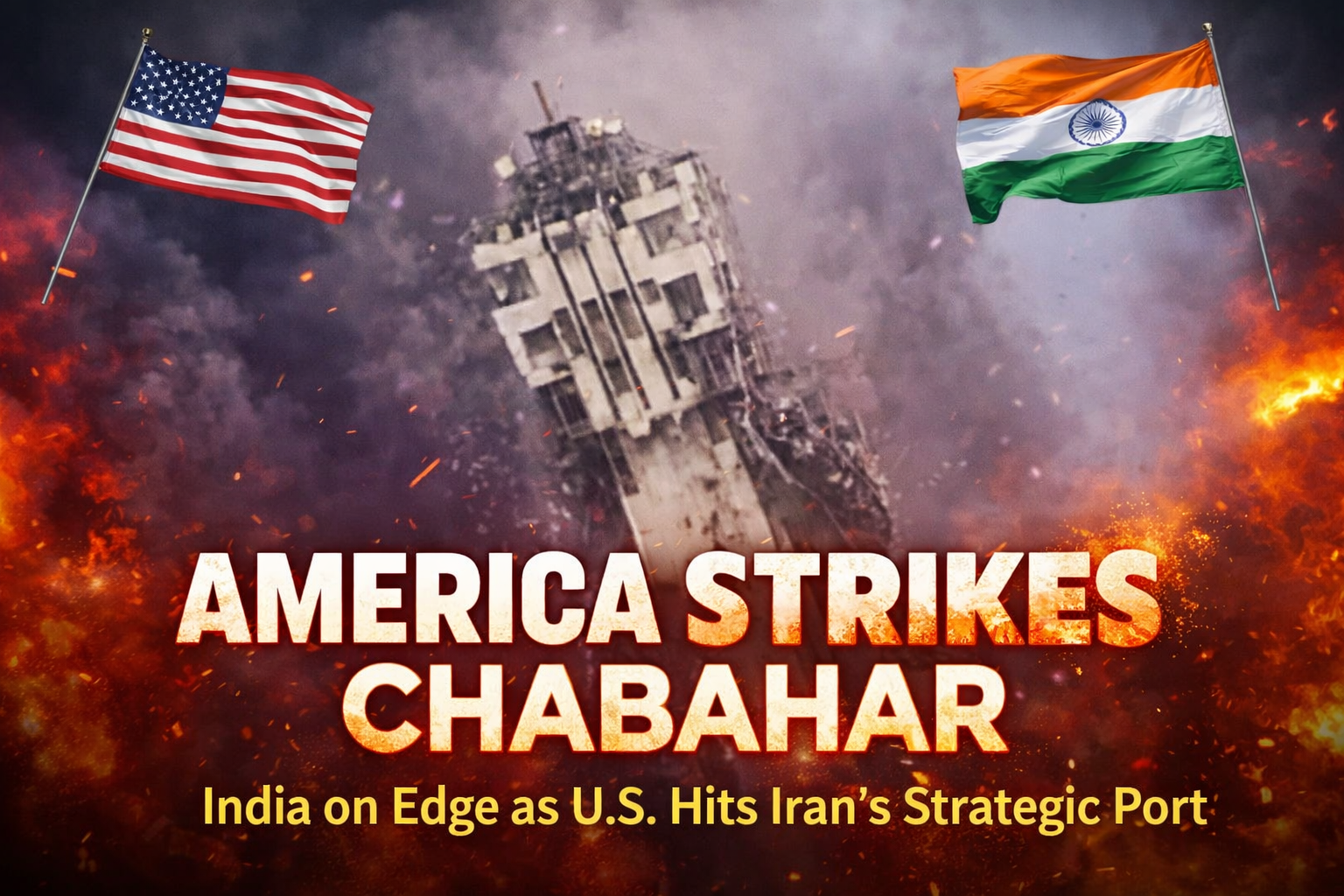
In a dramatic turn, U.S. Defense Secretary Pete Hegseth shared images of the Chabahar Port tower collapsing after repeated American strikes. The tower, crucial for maritime traffic control, fell during the third wave of attacks, symbolizing the intensity of Washington’s campaign.
Why Chabahar Port Matters Globally
Chabahar isn’t just another port. Located outside the volatile Strait of Hormuz, it offers safer access to the Indian Ocean. Its position makes it less vulnerable to chokepoint disruptions and transforms it into a strategic hub for energy supplies and global trade routes.
India’s Multi‑Million Dollar Investment
For India, Chabahar is a lifeline. Since 2003, New Delhi has worked with Iran to develop the port, culminating in a trilateral agreement with Afghanistan in 2016. India’s Shahid Beheshti Terminal, operated by India Ports Global Limited, is one of its largest overseas infrastructure investments, with more than $120 million invested in modern cargo‑handling systems.
Civilian Infrastructure Under Fire
What makes the latest strikes alarming is the shift from military to civilian targets. The destroyed tower was part of a monitoring system that coordinated vessel movements and ensured safe navigation. India quickly condemned the attack, stressing that civilian infrastructure should never be targeted during armed conflict.
Chabahar vs Gwadar: The Strategic Rivalry
Chabahar’s importance is magnified by its proximity to Pakistan’s Gwadar Port, developed with Chinese assistance under the China–Pakistan Economic Corridor (CPEC). While India uses Chabahar to bypass Pakistan and access Afghanistan and Central Asia, China leverages Gwadar to expand its maritime presence in the Arabian Sea. The rivalry is less about direct military confrontation and more about regional connectivity and influence.
India’s Diplomatic Balancing Act
When reports suggested India’s terminal was hit, New Delhi clarified that the damage was confined to Iran’s Shahid Kalantari Terminal, not the Indian‑built facility. Still, India’s response carried weight: it defended its investments while indirectly warning Washington against targeting civilian assets.
The Bigger Picture: Ports as Power
The collapse of Chabahar’s tower is more than a headline. It underscores how ports, trade corridors, and connectivity projects are now central to global geopolitics.
For India, Chabahar is not just about commerce; it’s about strategic autonomy, regional influence, and securing a foothold in Central Asia.
Written by
Kartikeya RaoDiscussion (0)
Sign in to join the discussion.
Loading comments…