
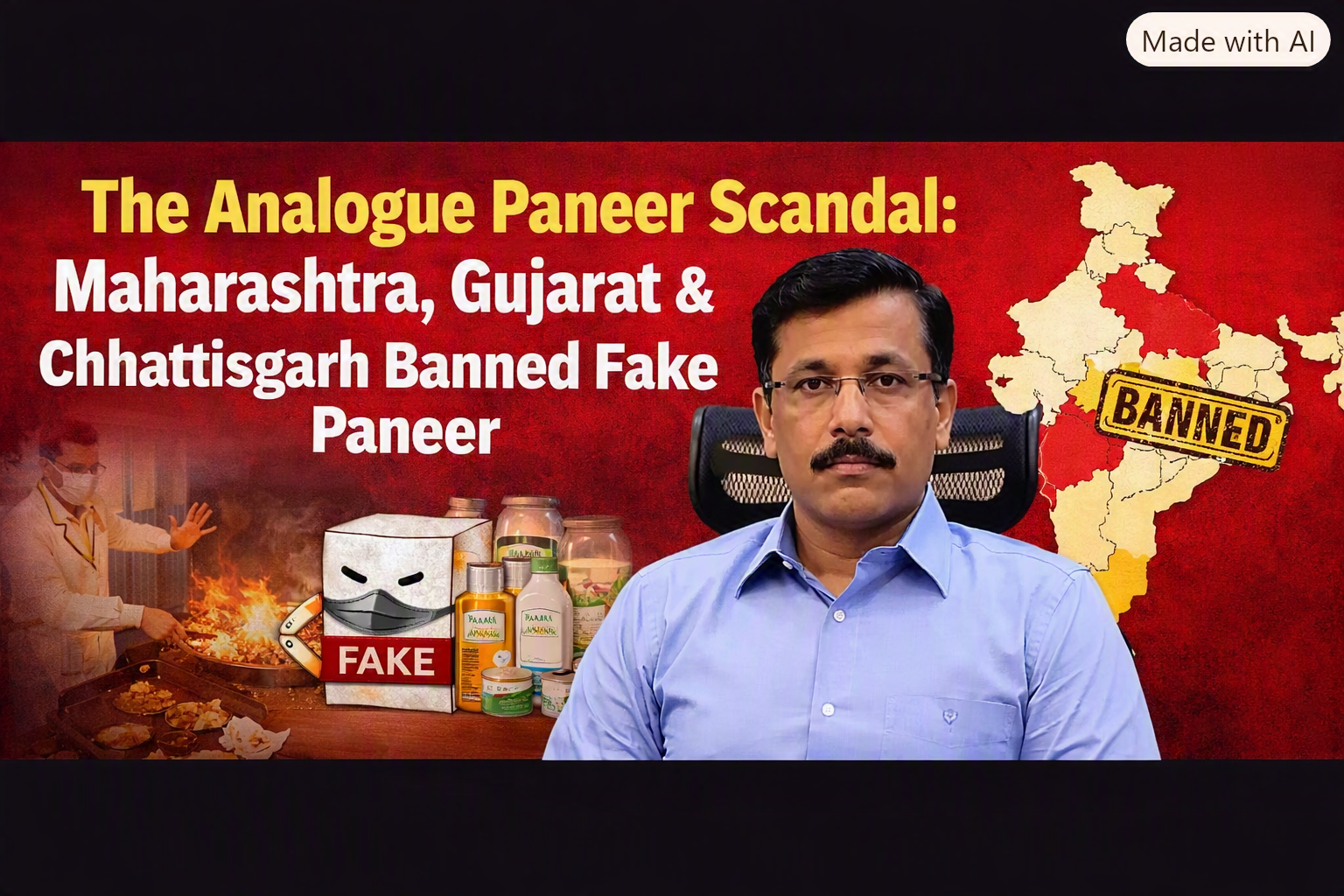
The Dairy Powerhouse Under Threat
India is the world’s largest producer of milk, over 240 million tonnes annually. Paneer, the crown jewel of dairy products, is not just a staple in homes but also a booming business for restaurants, caterers, and cooperatives like Amul, Mother Dairy, and Nandini. With demand skyrocketing, paneer has become the ultimate protein source for millions of vegetarians.
But behind the creamy blocks of paneer lies a disturbing reality: fake paneer, or “Analogue paneer,” is flooding the market.
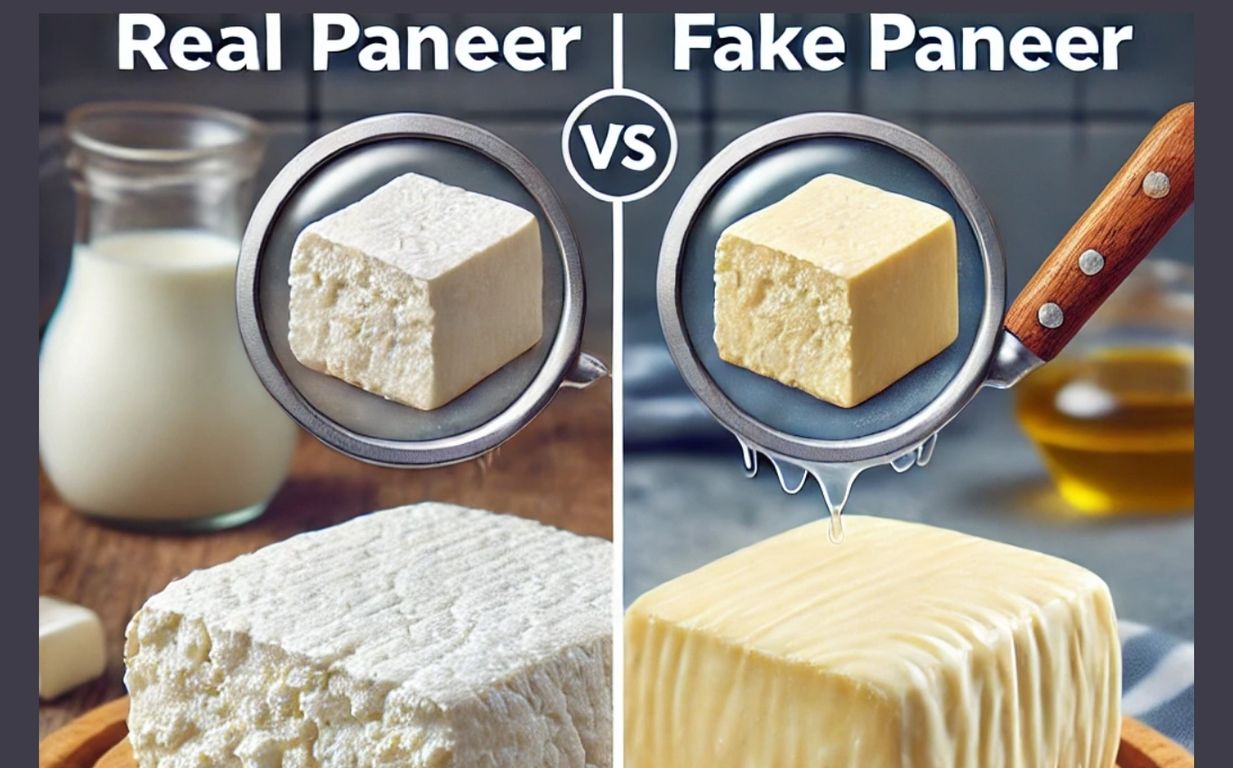
What Exactly is Analogue Paneer?
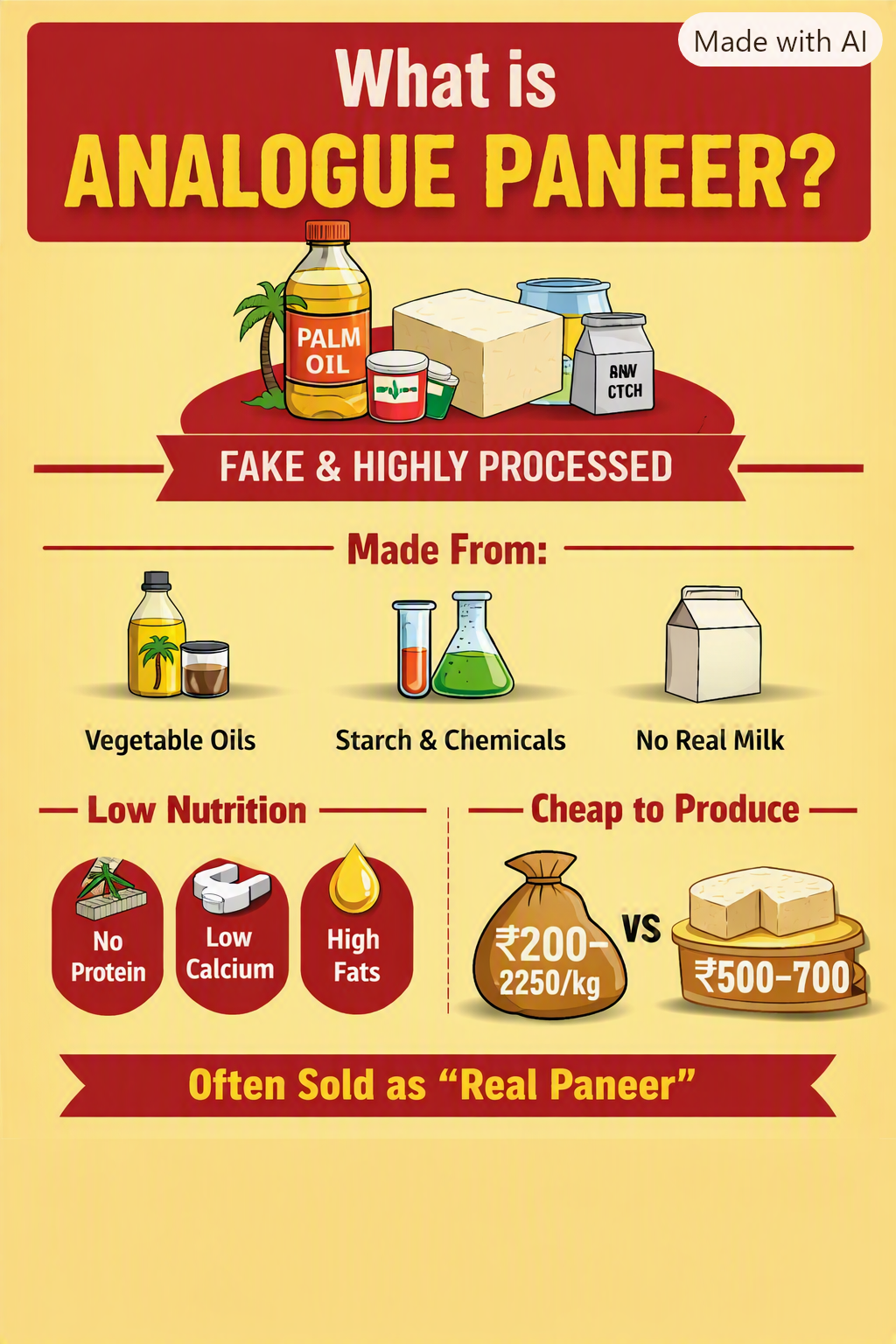
Unlike real paneer made from fresh milk curdled with lemon juice or vinegar, Analogue paneer is a highly processed imitation.
Made from cheap vegetable oils (mostly palm oil), modified starch, emulsifiers, and stabilizers.
Looks, feels, and cooks like paneer, but lacks the nutrition of milk protein, calcium, and healthy fats.
It costs less than half to produce, around ₹200–₹250 per kilo compared to ₹500–₹700 for genuine paneer.
This economic shortcut is why Analogue paneer is spreading fast but often sold deceptively as “real paneer.”
The Crackdown: Maharashtra, Gujarat, and Chhattisgarh Strike Back
Food safety raids have uncovered shocking malpractice. In Maharashtra, 35% of paneer samples failed quality tests, revealing vegetable fat instead of milk fat. Restaurants and caterers were caught serving Analogue paneer without disclosure.
Maharashtra imposed a one‑year ban on Analogue paneer.
Gujarat, another dairy giant, followed suit.
Chhattisgarh joined the ban to protect consumers and farmers.
At the center of this storm is IAS officer Tukaram Mundhe, Maharashtra’s FDA Commissioner, who has led raids on over 1,100 restaurants, earning praise for his uncompromising stance on food safety.
Who is Tukaram Mundhe?
After 25 transfers, IAS officer Tukaram Mundhe rises as Maharashtra’s FDA crusader, earning nationwide praise for his tough stance on food safety.
⚖️ Mundhe’s Mission: A Statewide Food Safety Blitz

In May 2026, senior IAS officer Tukaram Mundhe, a 2005‑batch officer of the Maharashtra cadre, stepped into the role of FDA Commissioner. Famous for his no‑nonsense style and a career marked by frequent transfers, Mundhe wasted no time in launching one of the largest enforcement drives in the department’s history.
🥛 Milk: More Than Just Food
“Milk is not just another commodity; it is the nutritional lifeline for children, mothers, patients, and the elderly. Tampering with its purity is nothing less than endangering public health, and Maharashtra will not tolerate such reckless practices,” emphasized FDA Commissioner Tukaram Mundhe in his remarks.
He further noted that since the crackdown began, both milk and paneer supplies have visibly declined, underscoring the scale of the problem and the urgency of strict enforcement.
His campaign has gone beyond paneer, striking at the roots of food adulteration, banning tobacco sales, and addressing regulatory violations across Maharashtra.
🚔 The Crackdown Begins
On May 25, a new era of enforcement began when IAS officer Tukaram Mundhe took charge as Maharashtra’s FDA Commissioner. Wasting no time, he rolled out tough directives to tighten food safety across the entire dairy chain, from dairies and transporters to distributors, wholesalers, and retailers.
“We will keep pursuing establishments that flout FSSAI norms. At the same time, citizens must stay alert, understand the standards, and watch hygiene practices closely,” Mundhe asserted, signaling that the drive is far from over.
Is Analogue Paneer Illegal?
Surprisingly, no. Under India’s food laws, Analogue products are a recognized category.
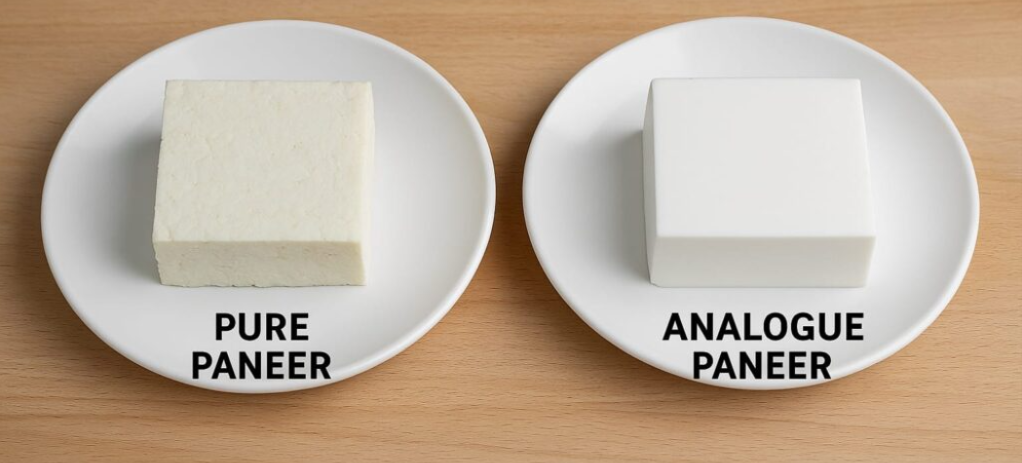
They can be manufactured legally if:
Proper hygiene and approved ingredients are used.
Labels clearly state, “Analogue Paneer” or “Non‑Dairy Product.”
Consumers are not misled.
The problem arises when manufacturers pass off Analogue paneer as genuine dairy paneer, cheating both customers and farmers.
The Hidden Health Risks
Analogue paneer isn’t poisonous, but it carries risks:
High saturated fat intake from palm oil.
Low protein and calcium compared to real paneer.
Excess additives and stabilizers from heavy processing.
Misleading nutrition: You think you’re eating protein‑rich paneer, but you’re not.
Why This Matters for Farmers?
If Analogue paneer dominates the market, dairy farmers will suffer. Reduced demand for milk means lower incomes for millions of rural households who depend on dairy cooperatives.
The Consumer’s Dilemma
Most diners don’t question what’s on their plate. Paneer curry tastes good, so why worry? But without lab testing, it’s nearly impossible to distinguish real paneer from Analogue. That’s why consumer awareness and strict enforcement are critical.
🚨 Misleading Consumers is a Crime
The Food and Drugs Administration (FDA) has made it clear: passing off analogue paneer as genuine dairy paneer is not just deception, it’s an unfair trade practice under the Food Safety and Standards Act, 2006.
Those caught in the act face serious consequences. Depending on the severity of harm caused, penalties range from six months in jail with fines up to ₹1 lakh, to life imprisonment and a minimum fine of ₹10 lakh if consumption of unsafe food leads to death.
In short, cheating consumers with fake or analogue paneer isn’t just unethical; it’s a punishable offense that can ruin lives and livelihoods.
✅ What You Can Do
Protecting India’s dairy heritage starts with everyday choices. Here are a few simple but powerful steps you can take:
Check labels carefully when buying packaged paneer.
Support local dairy cooperatives to safeguard farmer livelihoods.
Demand transparency from restaurants; don’t hesitate to ask if their paneer is truly dairy‑based.
Spread awareness by sharing this blog so others don’t get fooled by fake paneer.
👉 Your voice matters. Together, we can ensure that what reaches our plates is pure, safe, and fair, keeping India’s paneer tradition strong for generations to come.
Let's protect India’s dairy heritage from being diluted by cheap imitations.
Written by
Niranjan MehtaDiscussion (0)
Sign in to join the discussion.
Loading comments…