
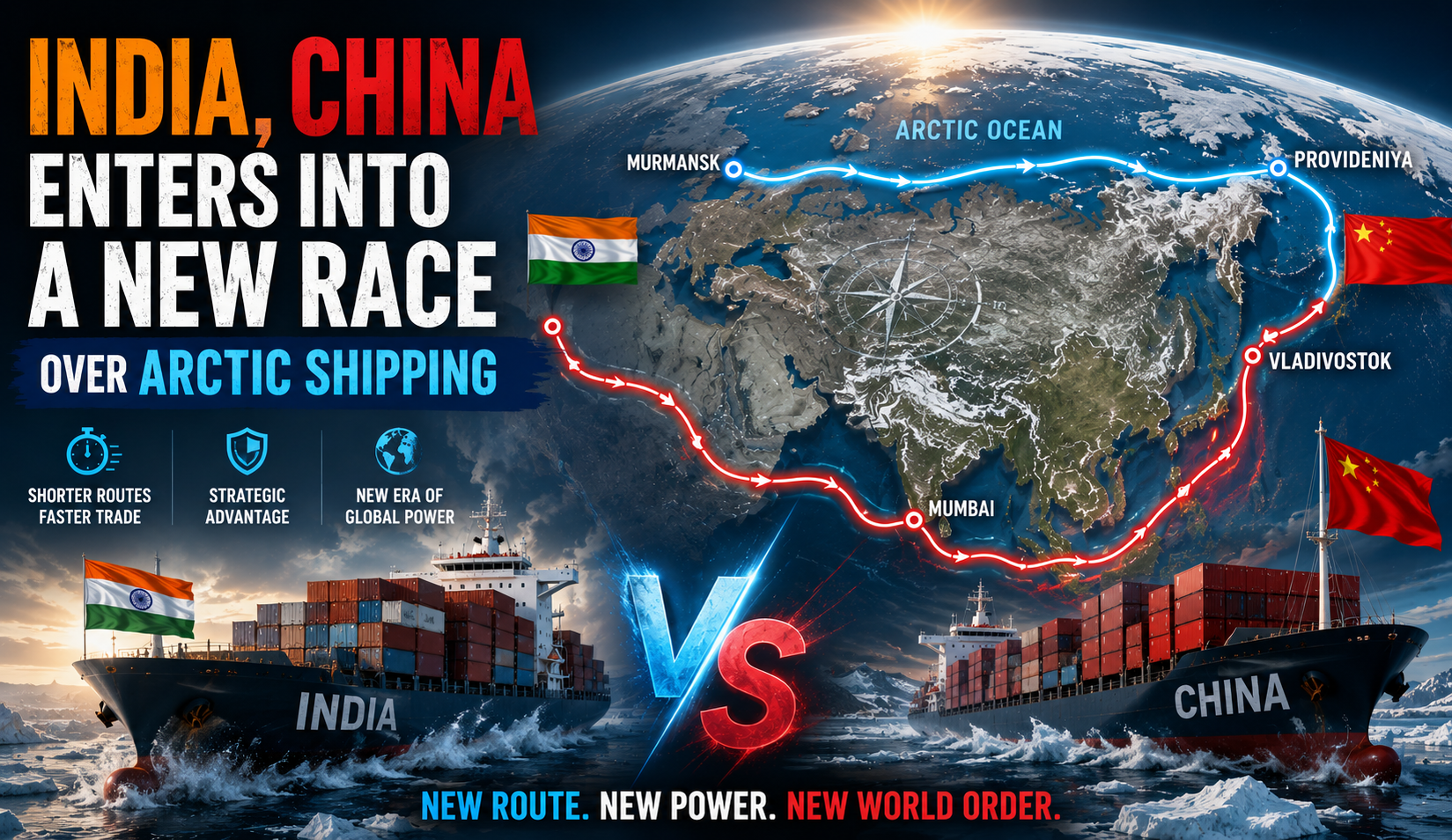
🌍 A New Geopolitical Race in the Arctic
Far from the equator, in the icy waters of the Arctic Ocean, a silent revolution is underway. Russia’s Northern Sea Route (NSR), stretching across 5,600 km of its northern coastline, is emerging as a strategic maritime corridor connecting Europe and East Asia. Once blocked by thick ice, climate change and melting Arctic seas are now unlocking this passage, cutting shipping times dramatically.
“Cargo that once took 40 days from China to Europe can now reach in just 20.”
This isn’t just about faster trade. It’s about power, influence, and survival in a world where chokepoints like the Malacca Strait and Bab el‑Mandeb are increasingly vulnerable to conflict.
Why China Is Betting Big: Faster Trade, Higher Risks
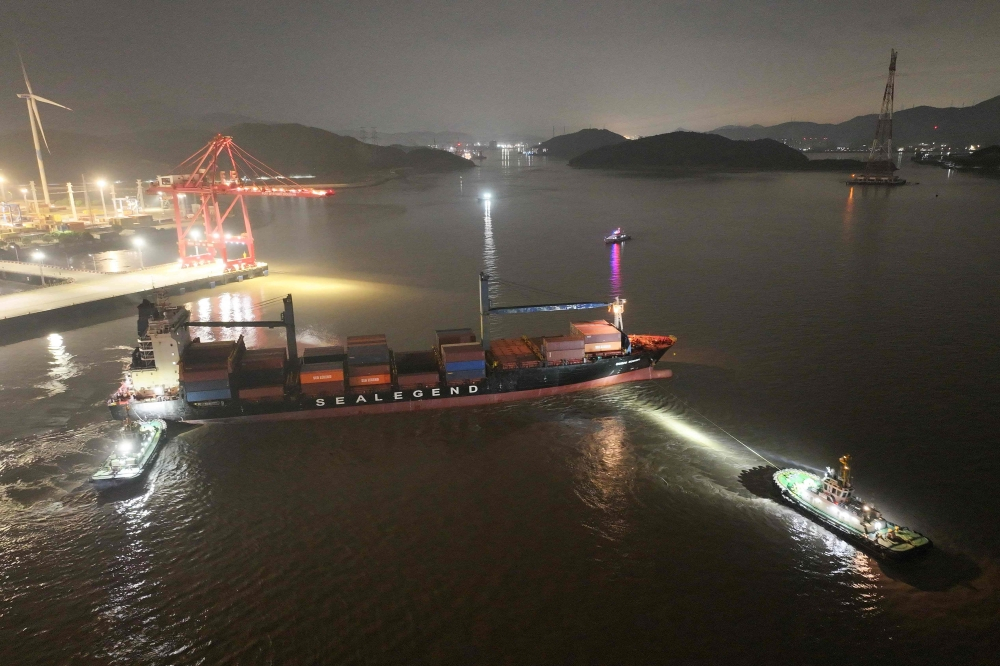
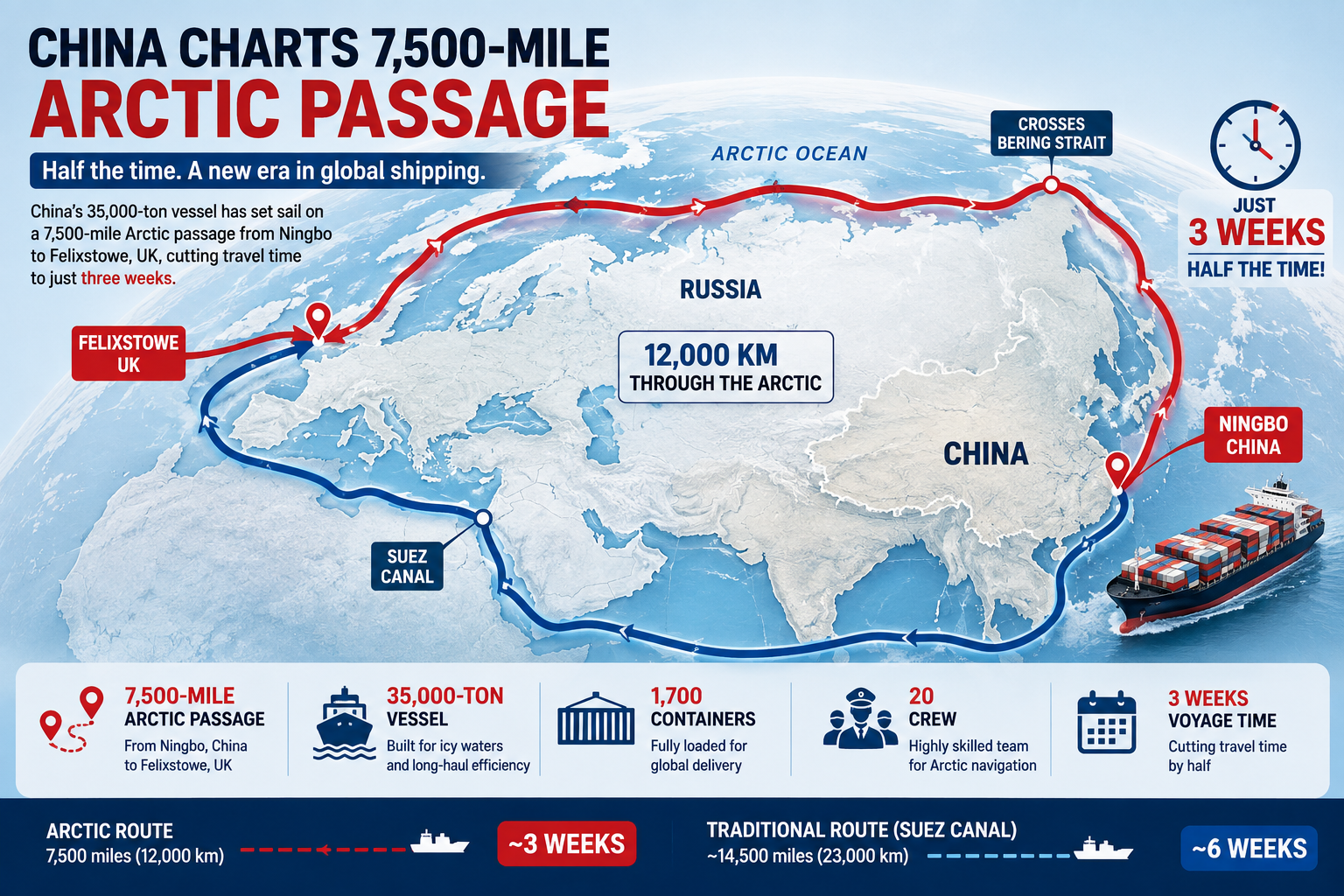
China has already launched its first regular Arctic container service, Sea Legend, through the NSR. China charts a 7,500‑mile Arctic passage starting from Ningbo; ships now cross the Bering Strait and sail through the Arctic to reach Felixstowe, UK, in half the time. The 35,000‑ton vessel, loaded with 1,700 containers and a crew of 20, set sail on Friday. The voyage spans 12,000 km through the Arctic, cutting travel time to just three weeks. But the route isn’t without risk: ships must weave through drifting ice before reaching the North Sea.
Sea Legend plans to run weekly trips for two months, exploiting the short summer window when Arctic waters are navigable.
For Beijing, the NSR means:
Route diversification – avoiding risky chokepoints.
Energy security – faster access to oil and gas.
Strategic autonomy – reducing dependence on U.S.-controlled waters.
China sees the NSR not as a replacement but as a backup lifeline in times of crisis.
Russia’s Arctic Gamble
For Moscow, the NSR is more than a shipping lane; it’s a lifeline for revenue. With sanctions and war draining its economy, Russia is banking on:
Arctic resources: oil, natural gas, rare minerals.
Infrastructure expansion: ports, icebreakers, logistics hubs.
Transit fees: offering services to passing ships.
Every vessel that sails through strengthens Russia’s grip on the Arctic and funds its extraction projects.
🧊 Sino‑Russian Arctic Power Play

Analysts suggest the new shipping route isn’t just about trade. Peter Sand of Xeneta notes it’s equally about security and early territorial claims in the Arctic.
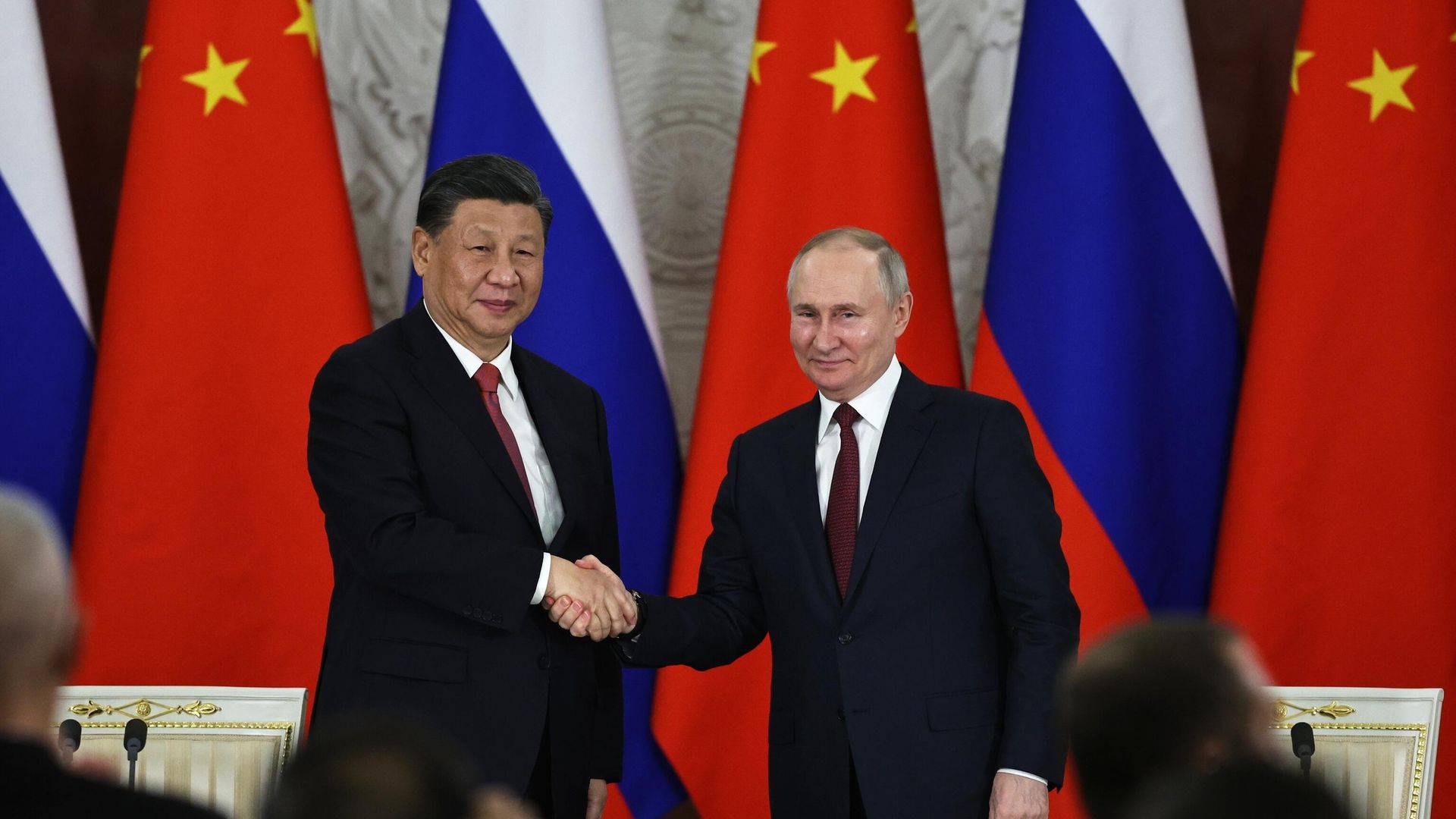
Russian icebreakers would patrol the waters regardless, reinforcing Moscow’s sovereignty. Partnering with China to open these lanes, therefore, serves both strategic influence and commercial interests.
India’s Strategic Opportunity
India may be far from the Arctic, but Moscow has invited New Delhi to join the NSR project. The Ministry of External Affairs has confirmed discussions on cooperation.
For India, the benefits include:
Alternative energy routes during global crises.
Direct shipping to Russia’s Far East (Vladivostok), bypassing volatile chokepoints.
Strengthening trade ties with Russia while balancing China’s growing influence.
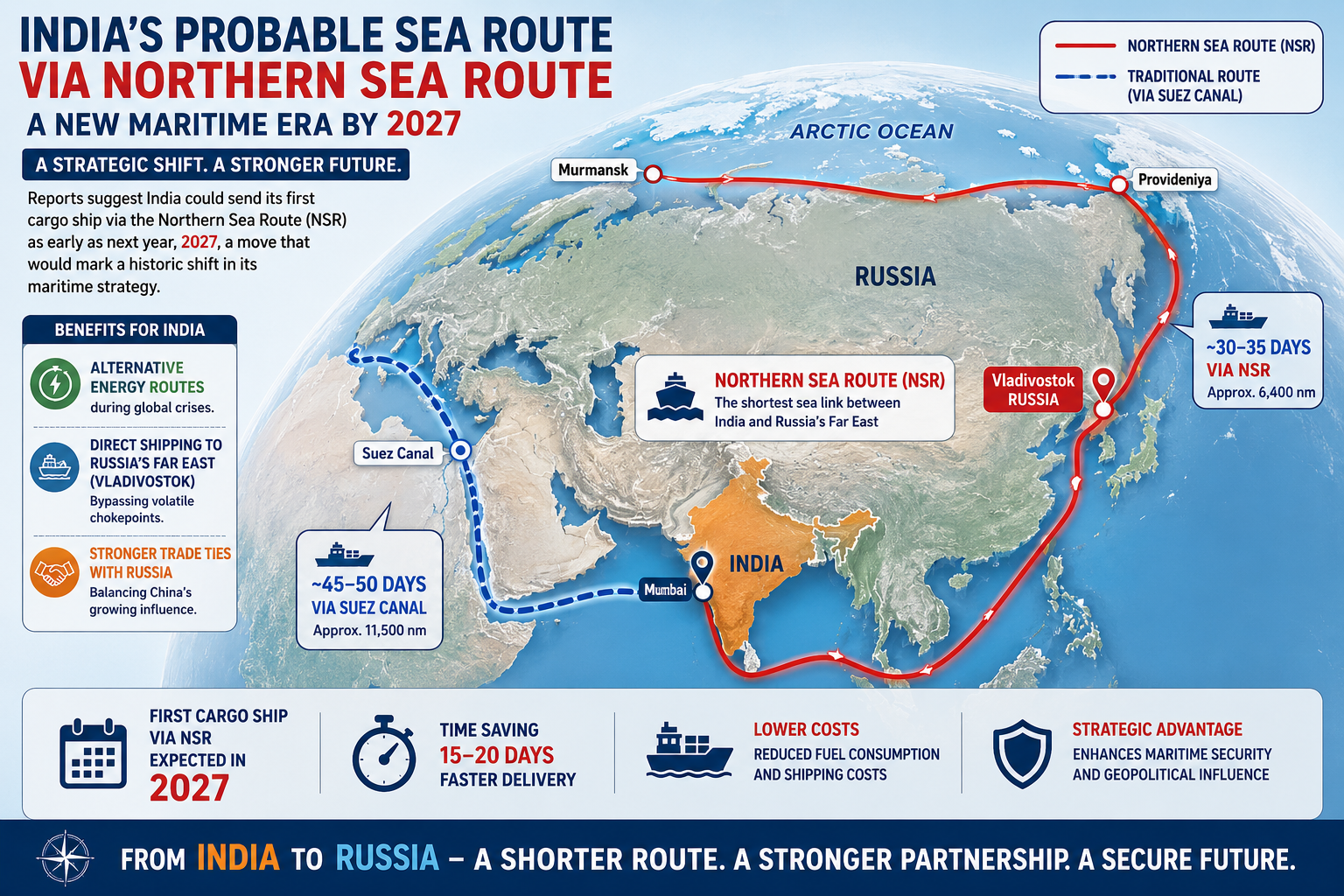
Reports suggest India could send its first cargo ship via the NSR as early as next year, 2027, a move that would mark a historic shift in its maritime strategy.
🌐 Western Concerns & Environmental Risks
The West is alarmed. A Russia‑China partnership dominating the Arctic could tilt global power balances. Meanwhile, environmentalists warn:
Black carbon emissions accelerate ice melt.
Oil spills in the Arctic are nearly impossible to clean.
Noise pollution threatens marine ecosystems.
Some major shipping companies have pledged not to use the NSR due to ecological dangers, but the geopolitical race shows no signs of slowing.
⚡ The Big Picture
The Northern Sea Route is no longer a frozen dream; it’s a geopolitical reality. For Russia, it’s survival. For China, it’s autonomy. For India, it’s opportunity. And for the West, it’s a looming challenge.
The Arctic is melting, and with it, the future of global trade is being reshaped. Will India seize this chance to secure its energy and trade routes? Or will environmental risks outweigh strategic gains?
What do you think: opportunity or risk? Drop your comments below and join the conversation!
Written by
Niranjan MehtaDiscussion (0)
Sign in to join the discussion.
Loading comments…