
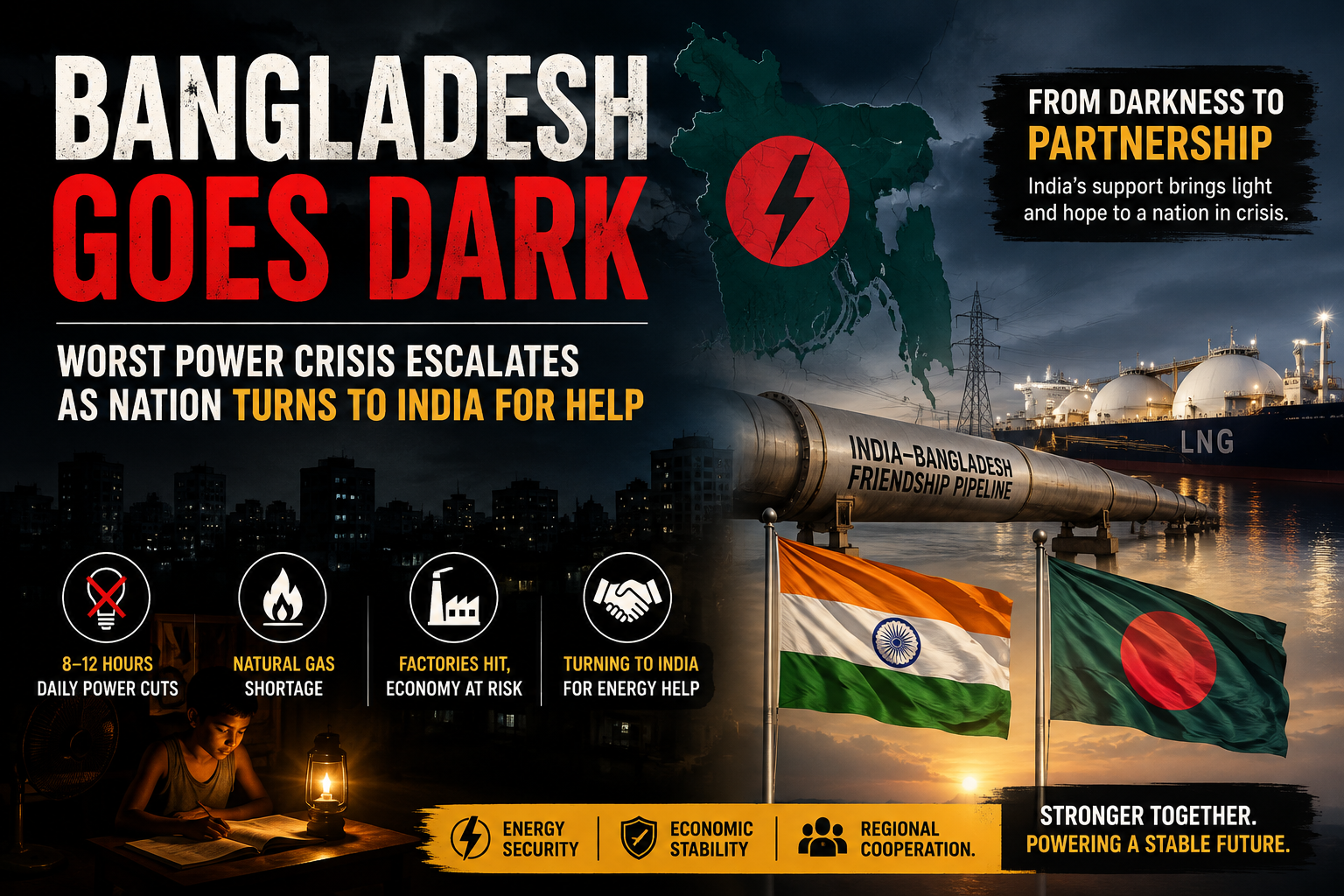
12 Hours Without Electricity - A Nation on Edge
Bangladesh is battling one of the most severe electricity crises in its history. In rural areas, families are enduring 8 to 12 hours of daily load‑shedding, plunging entire communities into darkness. The crisis has spiraled so deep that the government has imposed emergency restrictions: shopping malls, markets, and cultural programs must shut down by 8 PM, and glowing billboards are ordered off after sunset.
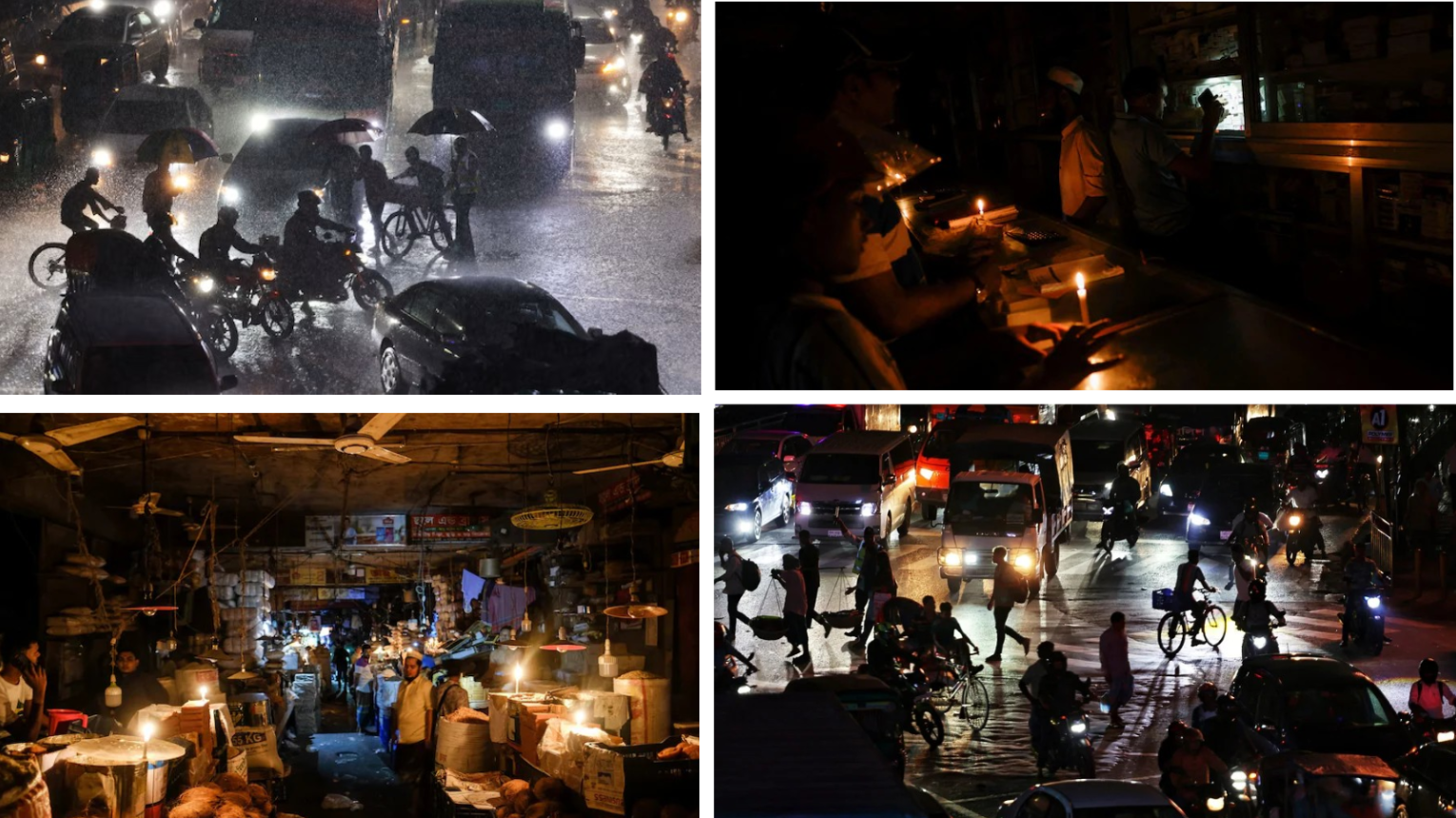
The Heart of the Crisis: Natural Gas Shortage
At the core of this meltdown lies a crippling energy security crisis. Bangladesh’s power plants are heavily dependent on natural gas, but supply has collapsed.
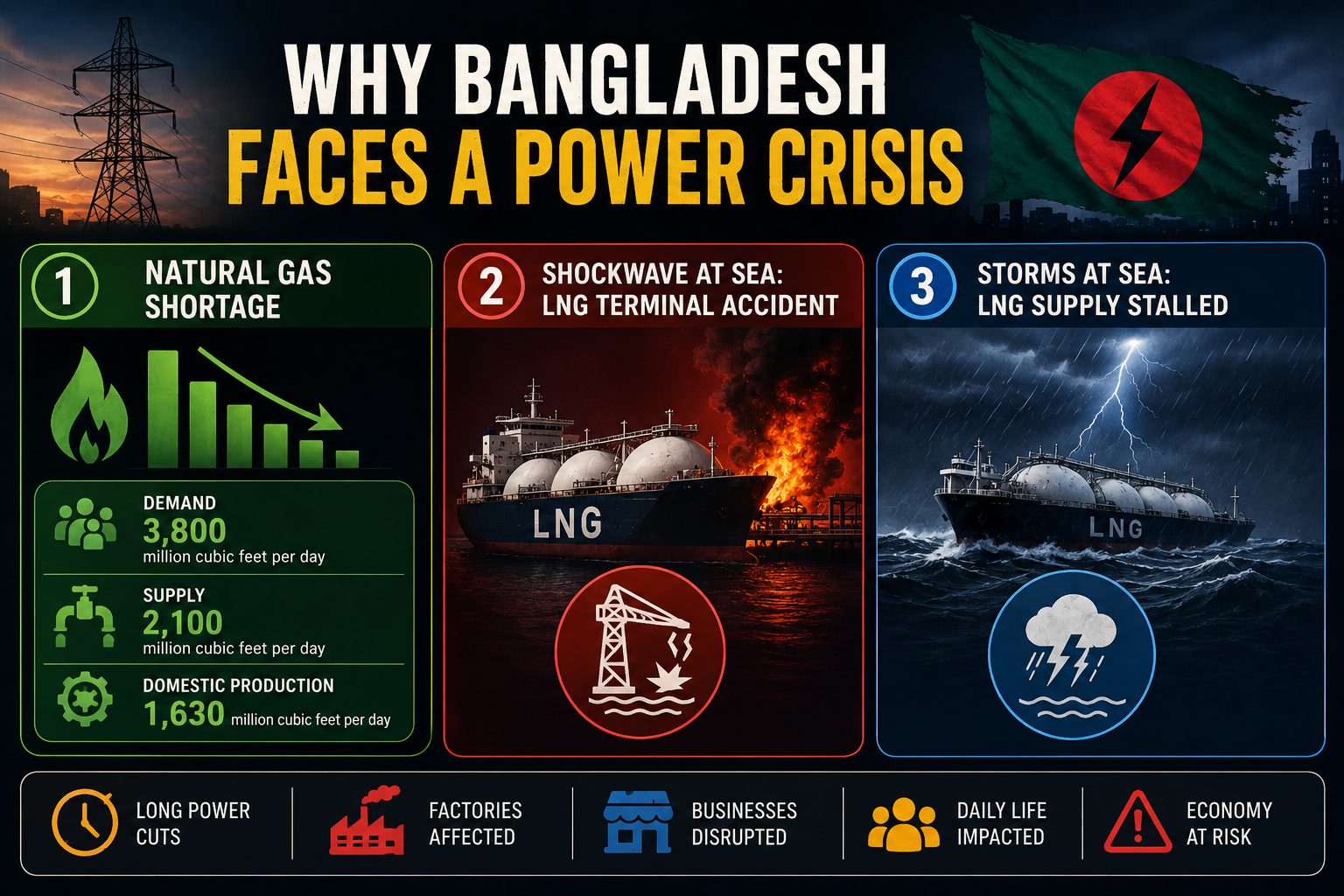
Demand: 3,800 million cubic feet per day
Supply: Barely 2,100 million cubic feet per day
Domestic gas production has fallen to just 1,630 million cubic feet per day, while imports of liquefied natural gas (LNG) have been disrupted by accidents at floating terminals and bad weather in the Bay of Bengal. The mismatch has triggered a shortfall of nearly 2,745 MW, worsening by the day.
Twin Shocks Push Bangladesh’s Energy Crisis to the Brink
1. Shockwave at Sea: LNG Terminal Accident
Bangladesh’s fragile energy lifeline took a massive hit when one of its LNG terminals, run by US‑based Excelerate Energy, suffered a serious accident on June 21, 2026. The facility was forced into a complete shutdown, instantly slashing the nation’s gas supply.
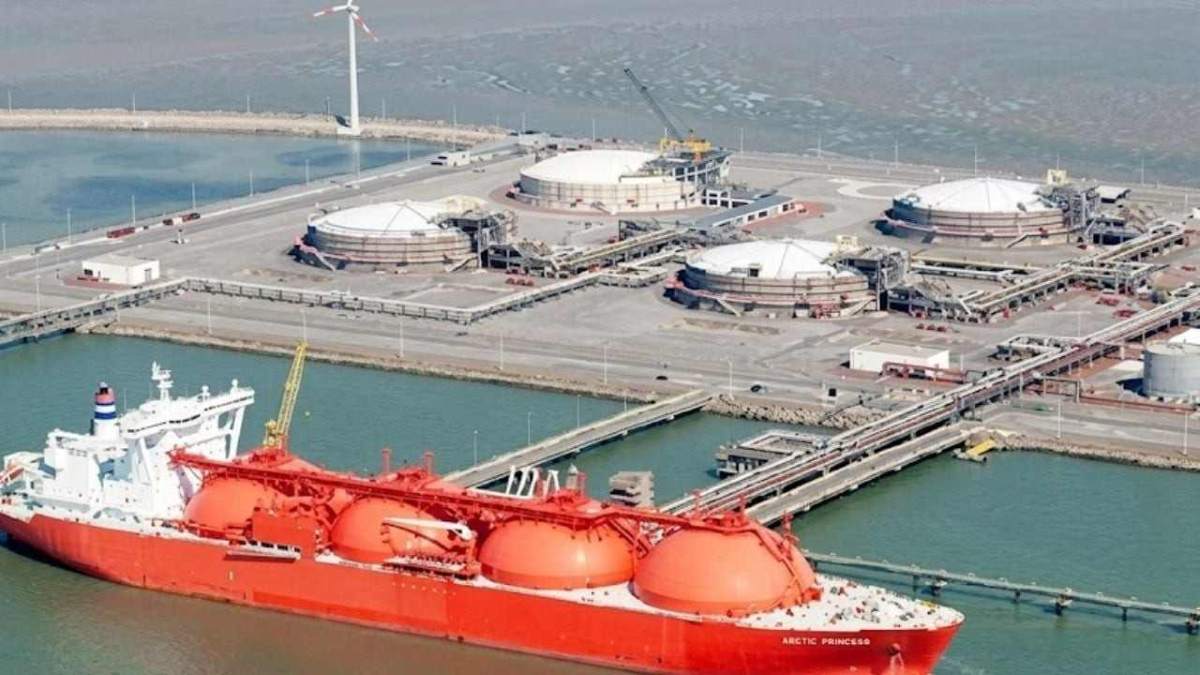
Partial Recovery, Lingering Pain
Although operations restarted in a limited capacity on August 5, the terminal has yet to return to full strength. The gap between demand and supply remains wide, leaving the country struggling to keep its power plants running.
Why This Matters So Much
Bangladesh’s gas system depends on just a handful of entry points. When even one terminal goes offline, there’s no quick fix, domestic production cannot be ramped up overnight. This single accident exposed just how vulnerable the nation’s energy infrastructure truly is.
2. Storms at Sea: LNG Supply Stalled
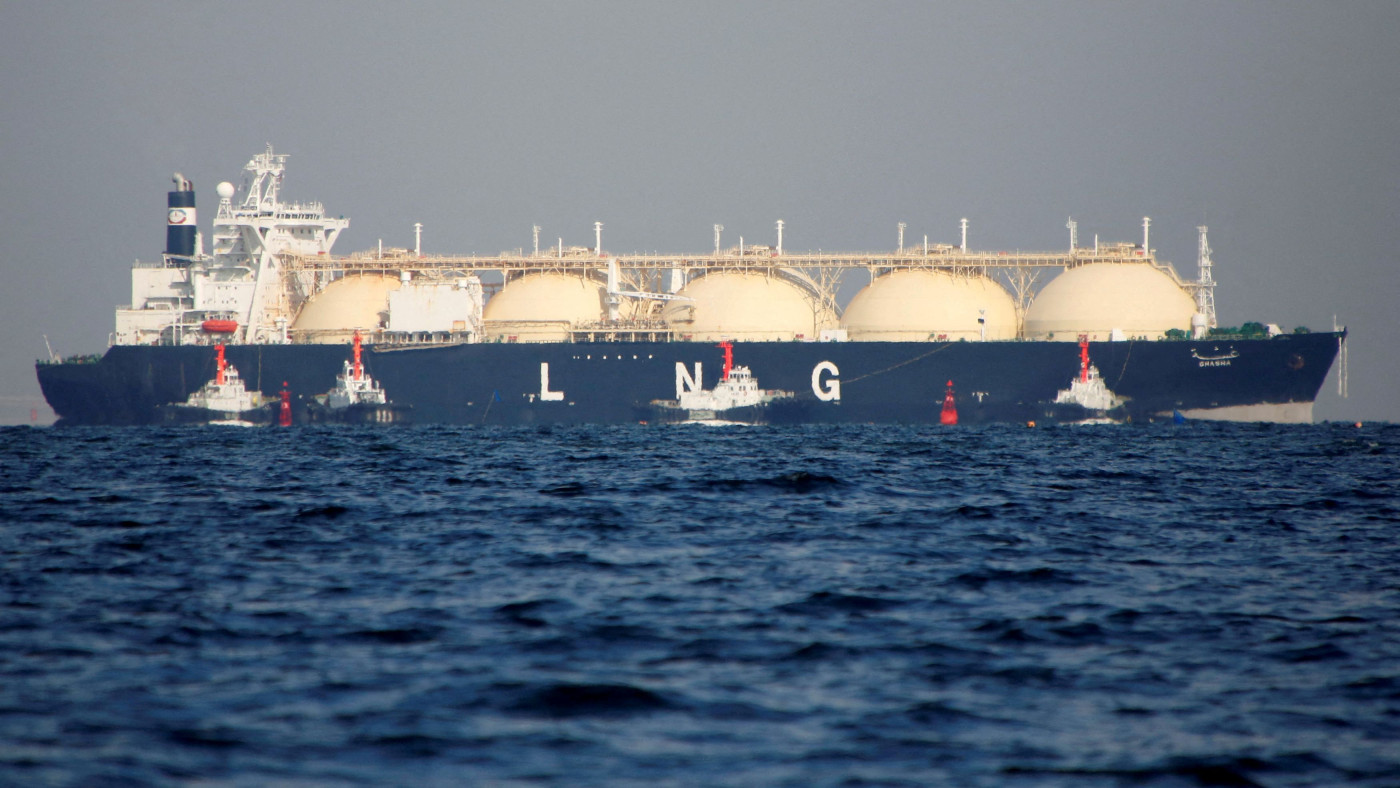
Bangladesh’s energy woes deepened when rough seas in the Bay of Bengal stopped LNG tankers from unloading their cargo. What should have been a routine transfer turned into a major disruption, leaving the country short on critical fuel.
Summit Terminal Struggles
The Summit‑operated LNG terminal was forced to cut back gas deliveries starting August 10, simply because ships couldn’t dock and discharge. With supply chains choked by bad weather, the nation’s fragile power grid faced yet another blow.
Nature Adds Fuel to the Crisis
This wasn’t just a logistical hiccup; it was a reminder of how vulnerable Bangladesh’s energy system is to external shocks. When the weather turns hostile, the entire chain of electricity generation trembles, pushing millions deeper into darkness.
Factories, Protests, and Rising Anger
The blackout isn’t just inconvenient; it’s economic sabotage. Bangladesh’s garment industry, the backbone of its exports, is struggling to meet deadlines as factories grind to a halt. Costs are rising, foreign currency earnings are at risk, and social tensions are boiling over. Angry citizens have even attacked electricity substations, forcing police to guard critical infrastructure.
Turning to India for Help
In desperation, Bangladesh has turned to India. Energy Minister Iqbal Hasan Mohammad has requested urgent diesel supplies through the India‑Bangladesh Friendship Pipeline, which connects Assam’s Numaligarh refinery to Parbatipur in Bangladesh.
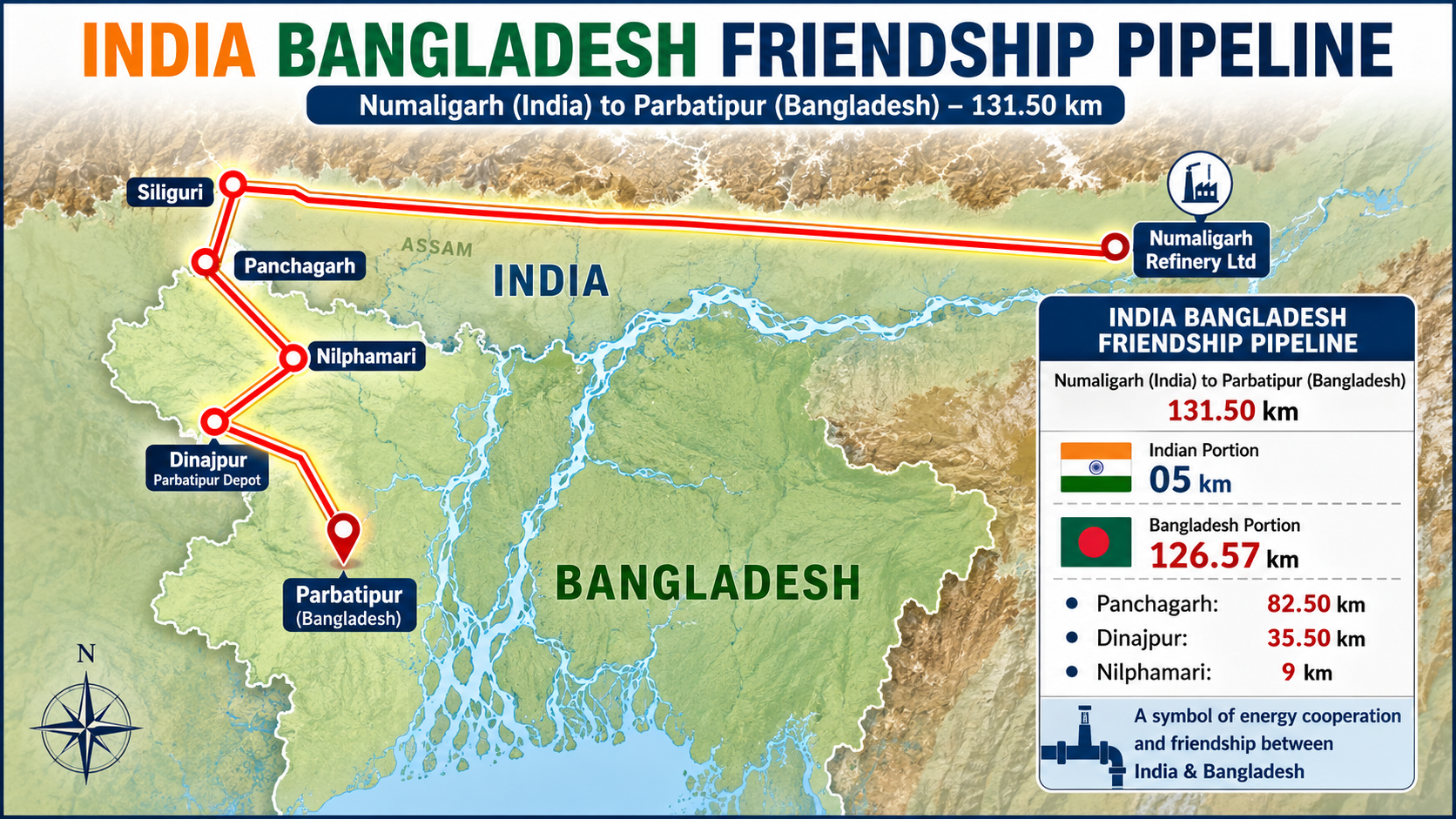
India has already committed 1880 metric tons annually, with 300 tons supplied earlier this year.
Bangladesh now seeks expanded emergency shipments to power backup generators, agriculture, and essential services.
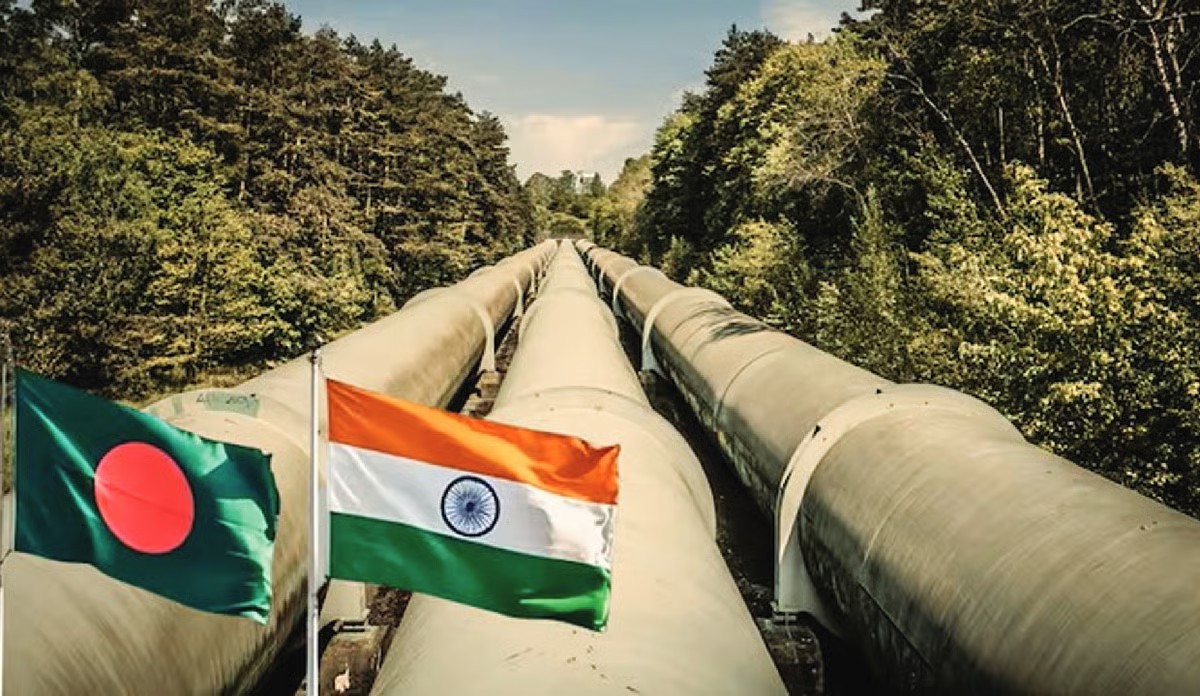
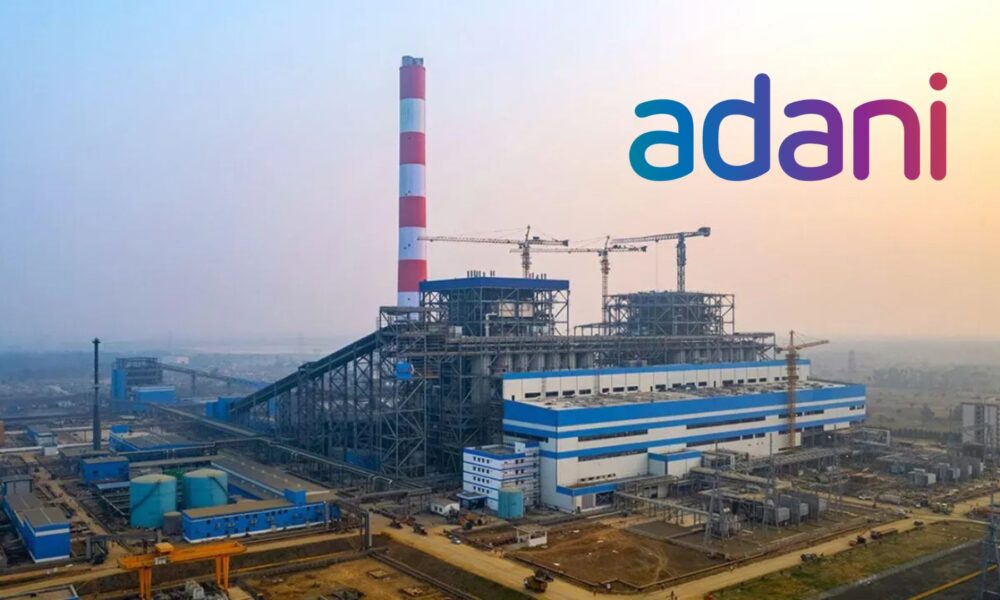
Beyond diesel, India also supplies electricity directly from Tripura and via Adani’s Godda coal‑based power project in Jharkhand, making regional energy cooperation a lifeline.
India’s Energy Edge: Turning Crisis into Influence
For New Delhi, Bangladesh’s struggle opens a window of opportunity. Instead of watching each neighbour scramble alone for scarce fuel in global markets, India can position its pipelines, grids, and companies (Indian refiners and producers) as the backbone of South Asia’s energy network.
By weaving regional economies into its infrastructure, India doesn’t just supply power; it builds reliance. Every cross‑border flow of electricity or diesel strengthens India’s role as the stabilizer, gradually expanding its economic and strategic influence across the neighbourhood.
Geopolitical Stakes: More Than Just Power
This crisis unfolds against a tense political backdrop. Relations between India and Bangladesh have been strained since Sheikh Hasina’s ouster, yet energy ties remain critical. Diesel and electricity supplies are not just about keeping the lights on; they are about stabilizing a nation on the brink and reinforcing regional partnerships.
Bangladesh’s crisis is a stark reminder of how fragile energy security can be. Energy security isn’t just about infrastructure; it’s about resilience against nature’s unpredictability. Energy integration isn’t just about keeping the lights on; it’s about shaping the balance of power in South Asia.
As the nation struggles to keep its factories running and homes lit, the question is clear: Will regional cooperation be enough to prevent a total blackout?
Stay tuned for updates on how India’s support could reshape the future of South Asia’s energy map. Share this story to raise awareness about the urgent need for sustainable energy solutions.
Written by
Kartikeya RaoDiscussion (0)
Sign in to join the discussion.
Loading comments…