
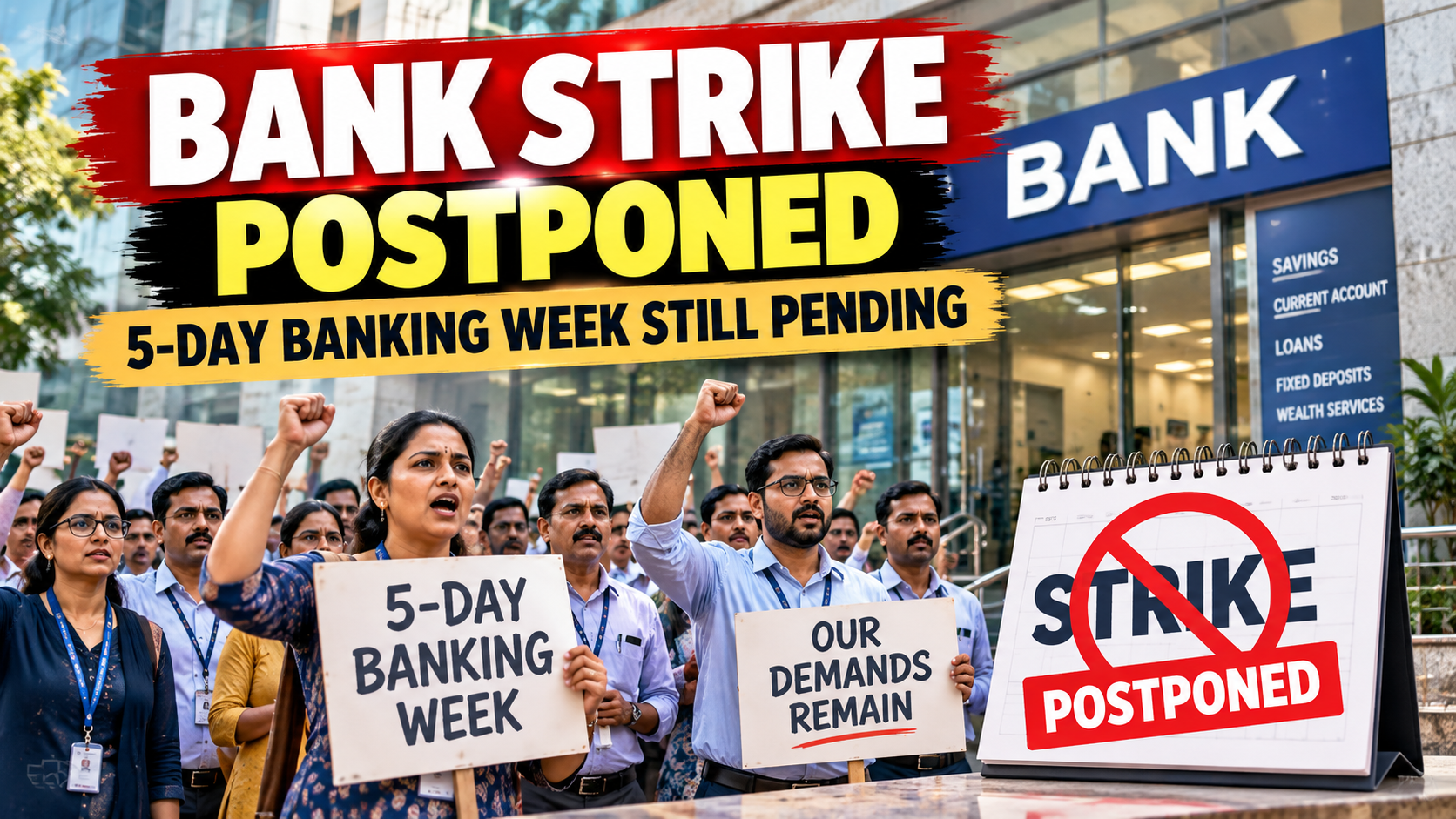
Bank Customers Breathe Easy, But the Bigger Battle Is Far From Over
Just when millions of customers, pensioners, traders, and salaried professionals were preparing for a major disruption, India's proposed nationwide bank strike scheduled for September 28-30 was suddenly called off. The dramatic overnight decision sparked one big question across the country:
Has the government finally agreed to a 5-day banking week?
The short answer is No.
While the strike has been postponed, the demand for all Saturdays to be declared holidays remains unresolved. So, what exactly happened behind closed doors between bank unions and management that led to this unexpected development? Let's break down the full story.
Why Was the Nationwide Bank Strike Announced?
For weeks, bank employees' unions had been pushing for one of their most significant demands:
A 5-Day Work Week for Banks
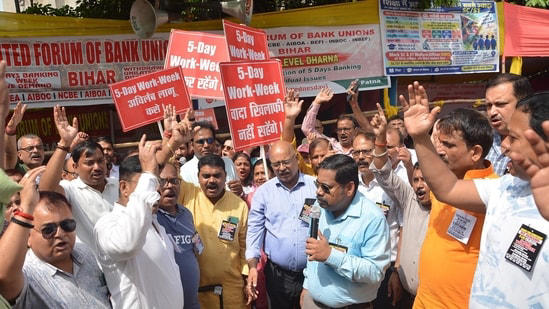
Currently, bank branches remain closed only on the second and fourth Saturdays of every month. The remaining Saturdays are regular working days.
Bank unions have been demanding that:
1. All Saturdays be declared holidays.
2. Banking employees should work only Monday to Friday.
3. Banking should adopt a system already followed by several corporate organisations, government offices and institutions.
The unions argue that banking work does not end when branches shut down. Employees often continue handling:
1. Reporting responsibilities
2. Compliance work
3. Performance targets
4. Documentation
5. Customer-related back-office tasks
According to unions, increasing workloads and rising performance expectations have put significant pressure on bank staff, making a 5-day work week necessary.
Bank employees believe they deserve similar work-life balance. Importantly, unions are not demanding fewer working hours. Their proposal suggests:
1. Extending daily banking hours slightly during weekdays
2. Compensating for Saturday work through longer Monday-to-Friday schedules
3. Maintaining productivity without reducing total service hours
Employees argue that this model would improve mental well-being, family time, and overall efficiency while keeping banking services uninterrupted.
What Happened on Sunday Night? The Meeting That Changed Everything
The turning point came during a late-night meeting between:
1. Indian Banks' Association (IBA)
2. United Forum of Bank Unions (UFBU)
Following the discussions, unions announced that the proposed three-day strike would be postponed. But there is an important catch: “The demands were not accepted.”

Contrary to social media speculation, no decision has been made to implement a 5-day banking week. Instead, both sides agreed to create a:
High-Level Committee
This committee will:
1. Examine the demand for additional Saturday holidays.
2. Consult relevant stakeholders.
3. Evaluate possible alternatives.
4. Study customer convenience concerns.
5. Recommend workable solutions.
It was this assurance of formal discussions that convinced unions to temporarily withdraw the strike call.
Why Customers Were So Worried
The timing of the proposed strike couldn't have been worse. Consider the calendar:
1. September 26: Fourth Saturday
2. September 27: Sunday
3. September 28-30: Proposed strike period
Had the strike gone ahead, banking operations could have been severely affected for multiple days. Adding to the pressure was another critical factor: “September 30 is a half-year financial closing day.”
Banks usually experience intense activity during this period because of:
1. Account reconciliation
2. Regulatory reporting
3. Government transactions
4. Business payments
5. Financial closing processes
The Finance Ministry had also expressed concerns about disruptions affecting customers, businesses, pension disbursements and government transactions
This widespread impact significantly increased pressure on all stakeholders to find a temporary solution.
The Dispute Over Government Commitments
Another reason behind the ongoing conflict is a disagreement over previous negotiations. Bank unions claim that discussions with authorities moved significantly toward accepting a five-day banking week. Many employee representatives believe the proposal was close to implementation.
However, the Finance Ministry maintains that no formal commitment has been made regarding a five-day banking week. This has created a trust deficit between unions and policymakers, adding fuel to the ongoing protests.
Government Says Many Employee Demands Have Already Been Met
Officials argue that several employee concerns have already been addressed over recent years. Some of the reforms introduced include:
1. Improved family pension benefits
2. Better pension-related provisions
3. Enhanced medical insurance facilities
4. Recruitment improvements
5. Streamlined promotion processes
6. Special leave provisions
According to the government, many key employee welfare demands have been fulfilled, while proposals like the five-day banking week require deeper consultation due to their impact on public services.
The RBI Comparison: “Why Not Us?”
One of the strongest arguments from bank employees involves comparisons with other financial institutions. Union representatives point out that employees in:
1. The Reserve Bank of India (RBI)
2. Certain financial regulatory departments
3. Various government financial offices
already follow a five-day workweek. Their question is straightforward: If RBI employees receive Saturdays and Sundays off, why should commercial bank employees be treated differently?
However, policymakers argue that regulatory institutions and customer-facing commercial banks perform very different functions.
Unlike regulators, commercial banks deal directly with millions of customers every day, making service availability a much bigger concern.

The Other Side of the Story: What About Customers? Why Is the Government Hesitant?
While employees seek better work-life balance, customers have a very different perspective. The primary concern is public convenience.
For millions of working professionals, Saturday is often the only convenient day to visit a bank branch. Many important services still require physical visits, such as:
1. Account-related documentation
2. Cheque processing
3. KYC updates
4. Pension-related work
5. Loan documentation
6. Dispute resolution
This is why the debate goes beyond employee welfare. The real question is:
Can banks shut all Saturdays without reducing customer access to services?
The government has repeatedly highlighted this concern, emphasizing that remaining Saturdays provide crucial banking access to customers who cannot visit branches during weekdays.
Another Important Issue Raised During Talks: The Performance Linked Incentive (PLI) Controversy

These are incentive systems linked to employee performance. The concept was introduced to connect a portion of employee remuneration with bank performance. The idea was simple:
1. Better-performing banks generate better incentives.
2. Higher profitability encourages greater efficiency and productivity.
On paper, the system sounds reasonable. But unions argue that recent modifications have disproportionately favoured senior-level officers.
Unions emphasized that certain aspects of the policy required review and modification. Both sides agreed that these concerns, along with other pending employee-related issues, would be discussed further and appropriate proposals would be taken forward.
What Is the Employee Objection?
Bank unions believe that a bank's success is the result of collective effort. Performance is driven by branch managers, credit officers, relationship managers, clerical staff, cashiers, operations teams, back-office employees and senior management.
Every employee contributes to:
1. Loan growth
2. Deposits
3. Customer service
4. Digital banking adoption
5. Recovery operations
According to unions, incentive benefits should therefore be distributed more equitably across all levels rather than primarily benefiting higher-ranking officers.
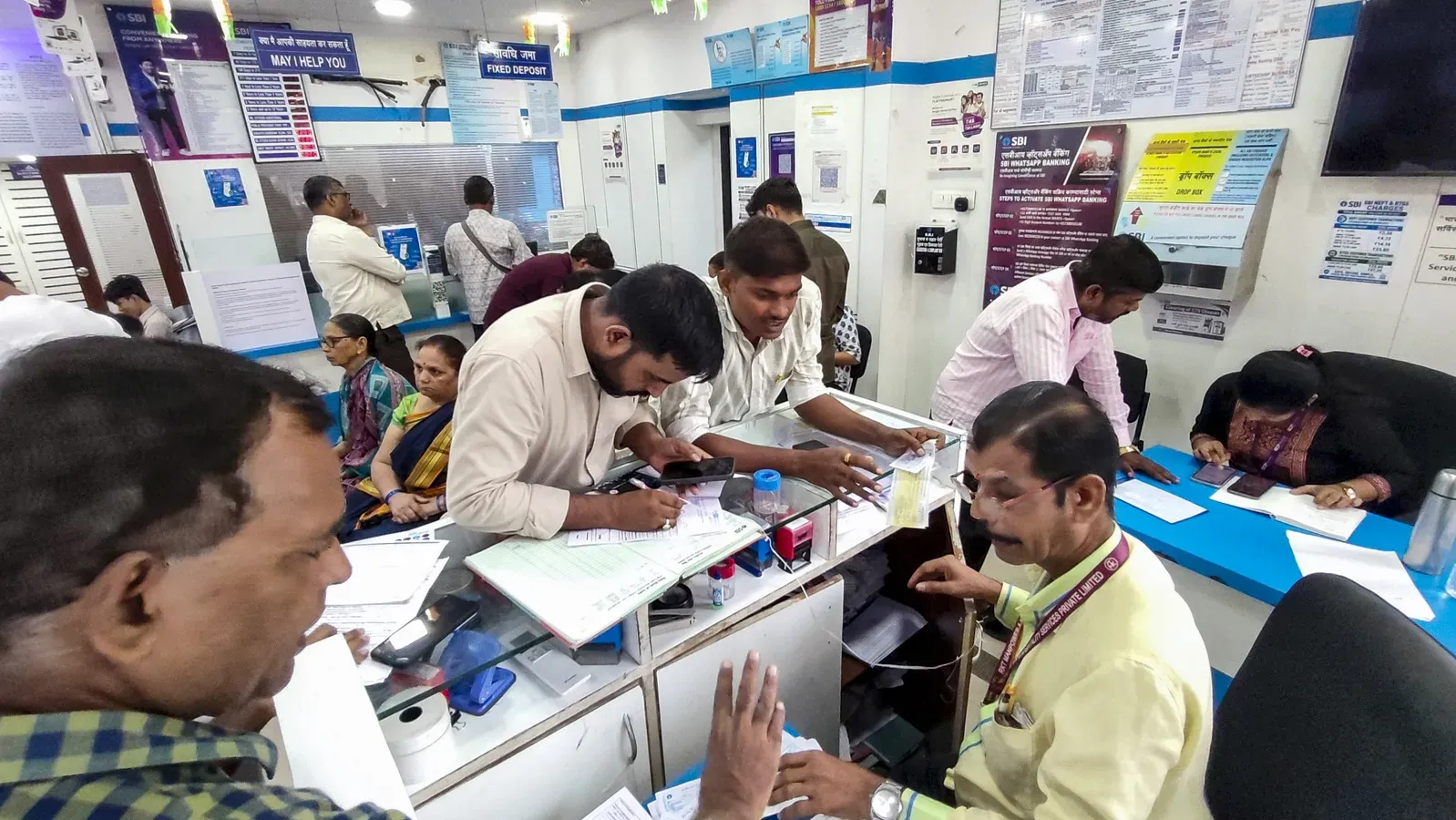
The Bigger Question: What Happens If Banks Close Every Saturday?
This debate is not just about giving bank employees more holidays or keeping branches open for customers. The real challenge is finding a balance between both.
If all Saturdays are declared holidays, some important questions will need answers:
1. How will customers who work on weekdays visit bank branches?
2. Will branch timings and staffing structures change?
3. Will special arrangements be made for senior citizens, pensioners and rural customers?
4. Can all banking services be handled online?
At the same time, simply saying that "online banking is available" is not a complete solution.
Making a UPI payment and resolving branch-level documentation issues are two very different things. Many services still depend on physical branch visits and employee availability. That is why the upcoming committee's recommendations will be crucial.
Finding a solution that works for both bank employees and customers will be the biggest challenge in the coming months.
What Does This Mean for Bank Customers Right Now?
Here's the most important takeaway:
✅ The September 28-30 Nationwide Bank Strike Has Been Postponed
Customers should not assume that bank branches will remain closed due to the strike on these dates. However:
1. Local holidays may still apply.
2. State-specific closures may occur.
3. Individual branches may follow separate notifications.
Customers should check with their respective banks for local operational updates.
What Does This Mean for Bank Employees?
For banking employees, the development is a mixed outcome. On the positive side:
✅ Their biggest demand has officially entered the negotiation stage.
But:
❌ The 5-day work week has not yet been approved.
❌ No implementation date has been announced.
❌ No final policy decision has been taken.
The issue remains under discussion rather than resolution.
What Should India Watch Next?
Three key developments will determine the future of banking Saturdays:
1. Formation of the High-Level Committee
When will it be constituted?
2. Committee Recommendations
What balance will it suggest between employee welfare and customer convenience?
3. Government's Final Decision
Will the recommendations eventually lead to a nationwide 5-day banking system?
Only these developments will reveal whether Sunday's breakthrough was the beginning of a permanent solution or simply a temporary pause in a larger dispute.
Final Verdict: Strike Postponed, Decision Pending
Despite widespread speculation, India has not yet approved a 5-day banking week.
The nationwide bank strike was postponed after bank unions and management agreed to continue discussions through a high-level committee. Customers have received immediate relief from service disruptions, but the larger debate over Saturday banking remains unresolved.
The road to a 5-day banking week has opened, but the destination is still far from certain.
💬 What Do You Think?
Should all bank branches remain closed on every Saturday?
✅ Yes, banking employees deserve a 5-day work week.
✅ No, customers still need branch access on Saturdays.
✅ A middle-ground solution should be introduced.
Share your views in the comments and join the conversation. Also, follow us for the latest updates on banking reforms, financial policies, and major developments affecting millions of Indian customers and bank employees. 🚀
Written by
Ishaan TrivediDiscussion (0)
Sign in to join the discussion.
Loading comments…