
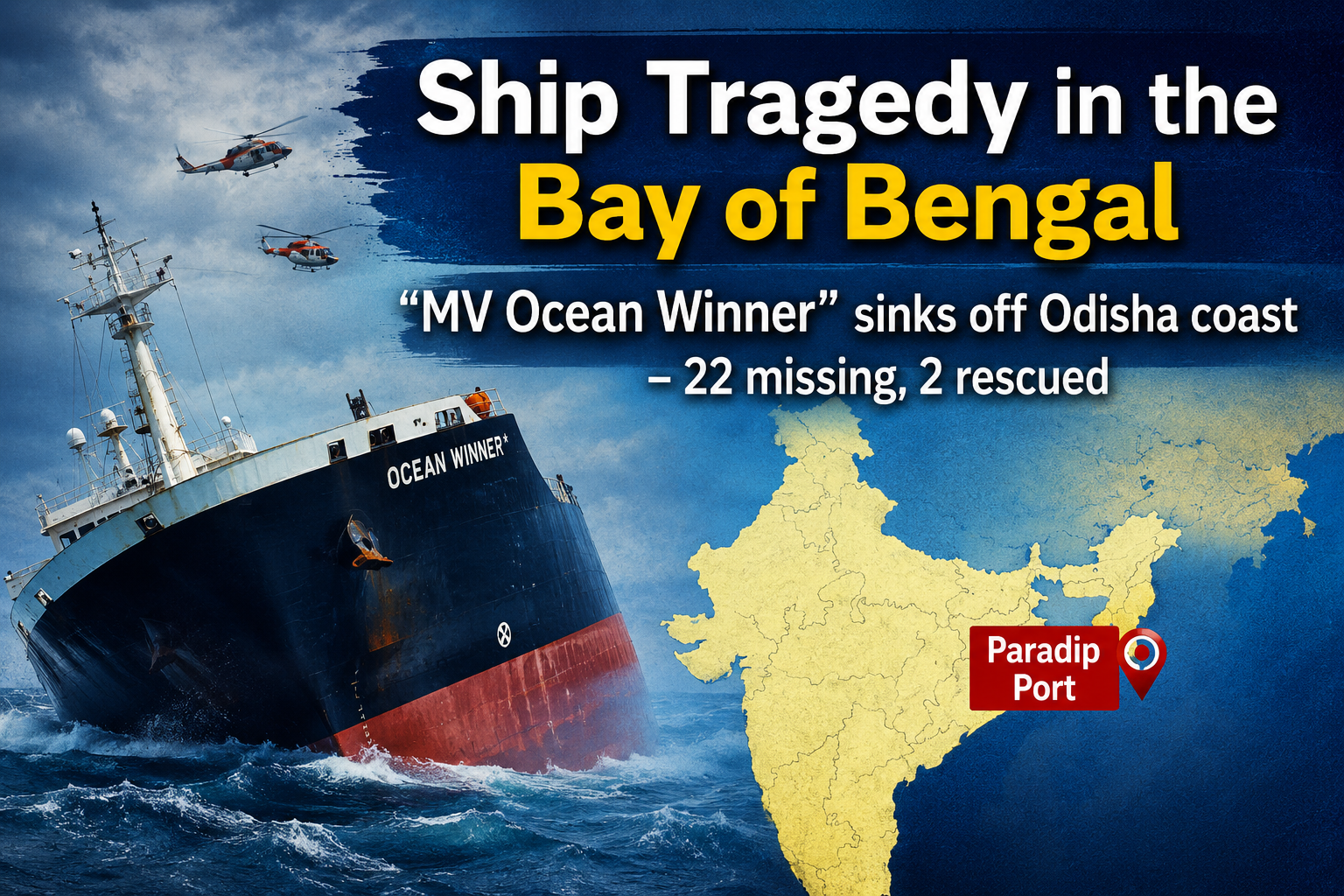
🚢 The Incident
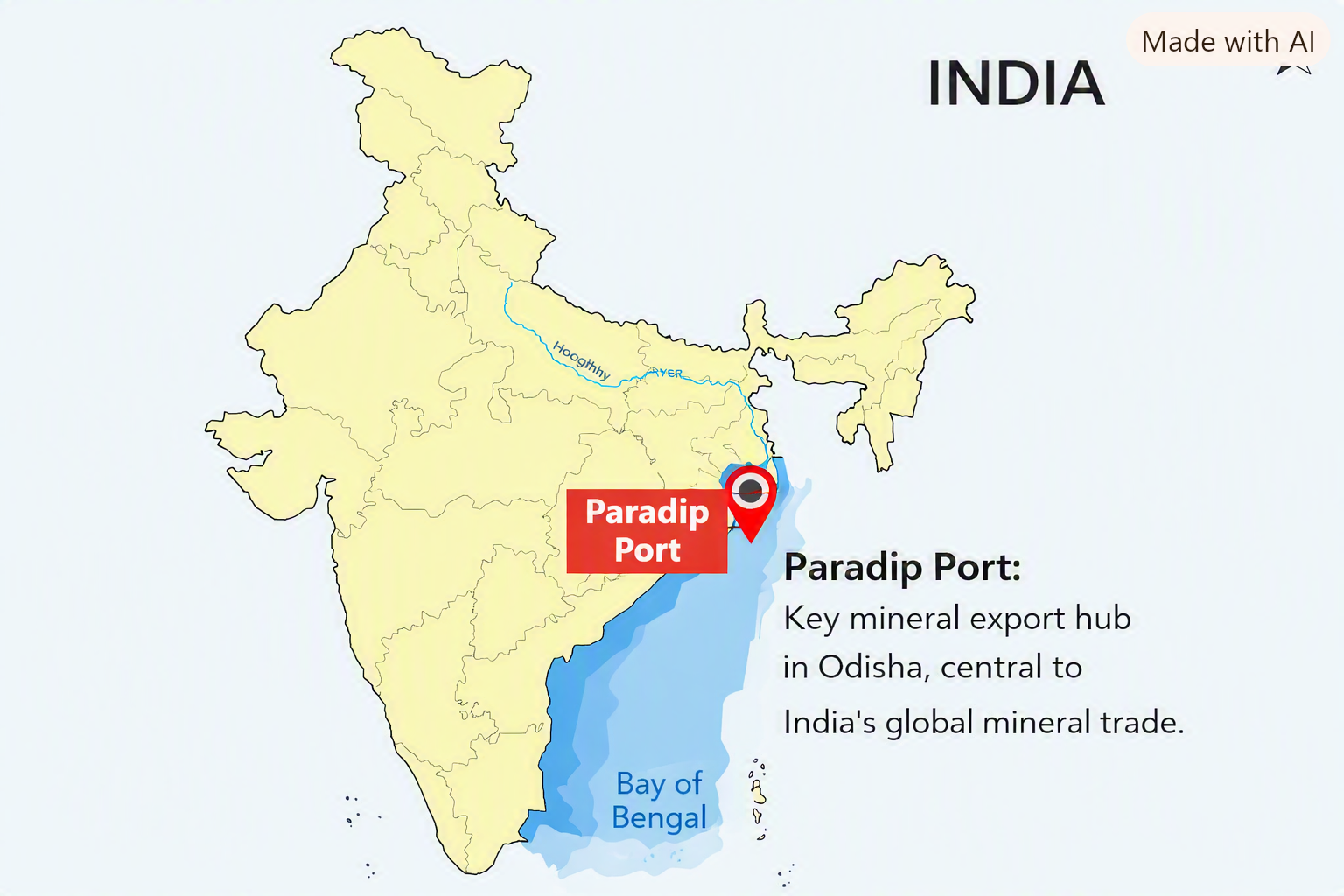
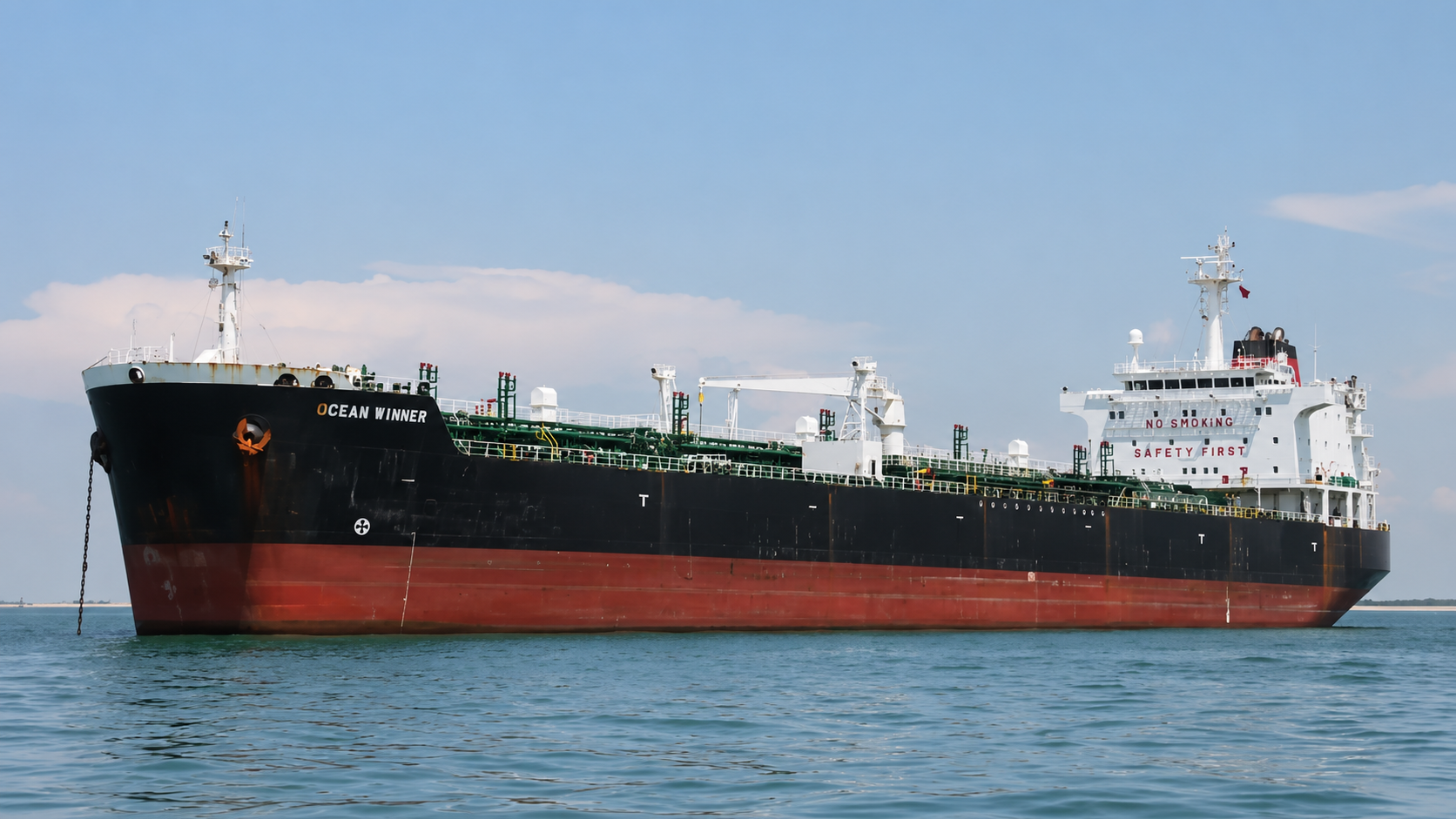
A devastating maritime disaster unfolded off the coast of Odisha when the Panama-flagged bulk carrier MV Ocean Winner, loaded with iron ore from Paradip Port and bound for Singapore, sank approximately 240 nautical miles (≈450 km) into the Bay of Bengal. The vessel carried 24 crew members: 20 Chinese nationals, 3 from Myanmar, and 1 from Bangladesh.
Despite immediate rescue efforts, only two survivors have been found via emergency life rafts, while 22 remain missing.
"At least two lives were saved through life rafts… but unfortunately, 22 crew members are still unaccounted for."
🕒 Timeline of Events
20 August, 10:30 PM – Ship departs Paradip Port carrying iron ore.
22 August, 11:48 AM – Indian Coast Guard receives distress alert after communication loss.
22 August, 8:00 PM – Two survivors located.
Multiple Indian Coast Guard vessels (Varad, Anmol, Vijit) and nearby commercial ships were deployed for search and rescue.
🌍 Why This Matters Internationally
This tragedy is not just India’s concern; it’s an international maritime incident:
Crew from multiple nations.
Ship registered under Panama’s “flag of convenience” system.
India’s responsibility under global maritime law to conduct search-and-rescue operations in its maritime region.
India’s policy prioritizes saving human lives at sea over nationality or flag, reinforcing its role as a responsible maritime power.
🚩 What Does “Panama-Flagged” Really Mean?
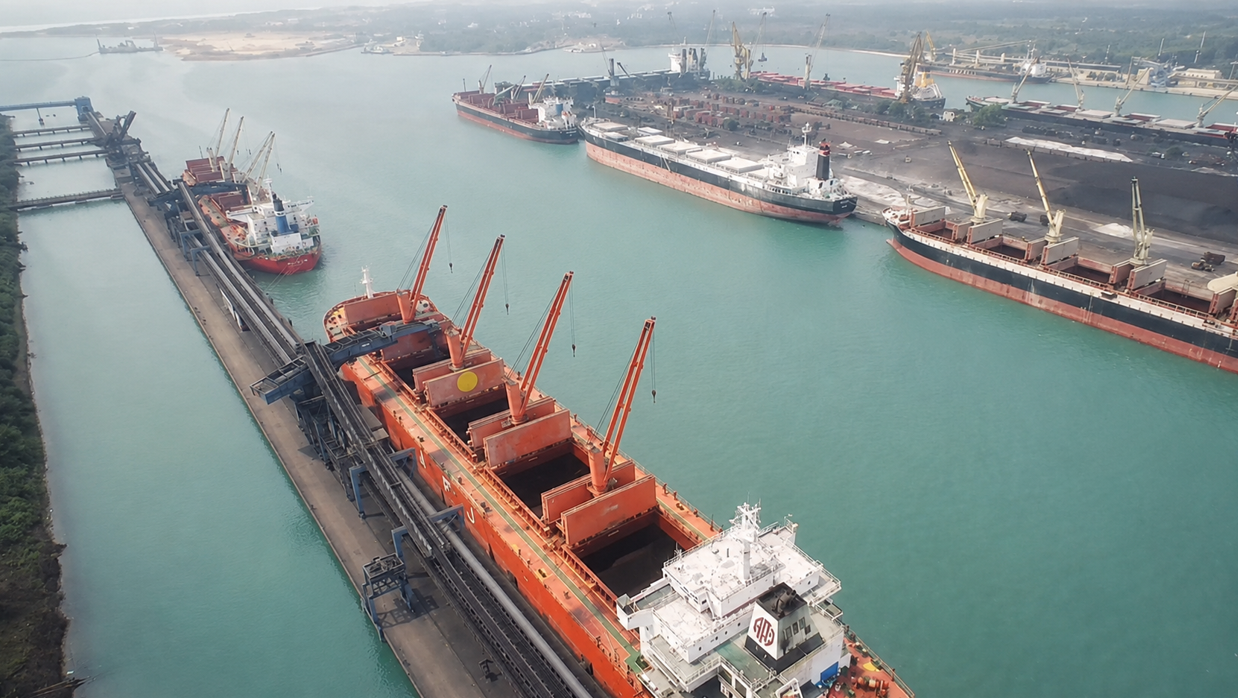
When you hear that a ship is Panama-flagged, it doesn’t mean Panama owns it. Instead, it means the vessel is registered in Panama and operates under its maritime laws. This system, known as the flag state framework, allows ships to be owned in one country, registered in another, and crewed by people from multiple nations, while carrying cargo from yet another country to a completely different destination.
In short, the flag tells you where the ship is registered, not who owns it. Many shipowners choose Panama or Liberia because of lower taxes and easier regulations; a practice often called the “flag of convenience.”
Next time you see a ship flying a foreign flag, remember it’s not about ownership; it’s about registration, and it shows how truly global maritime trade is.
⚓ Challenges in Rescue Operations
Distance: 240 nautical miles from shore makes helicopter and vessel deployment difficult.
Weather: Monsoon winds, high waves, and poor visibility hamper search efforts.
Scale: Identifying small life rafts in vast waters is extremely challenging.
🔍 Possible Causes (Still Under Investigation)
Sudden monsoon weather deterioration.
Structural failure or flooding.
Cargo shift affecting stability.
Collision or other mechanical issues.
"No confirmed report yet; speculation points to monsoon winds and high waves as possible triggers."
India’s Dual Response: Coast Guard & Navy
Indian Coast Guard: Maritime law enforcement, coastal security, search & rescue.
Indian Navy: Larger ships, advanced radar systems, and extended operational reach. Together, they amplify India’s ability to respond to such emergencies.
Maritime safety is not just about ships; it is about protecting human lives. The recent tragedy in the Bay of Bengal underscores the urgent need for stronger international cooperation in search and rescue operations, stricter safety protocols for cargo vessels, and advanced monitoring systems in high‑risk waters. Only by prioritising these measures can the global maritime community minimise such disasters and safeguard lives at sea.
👉 Stay informed, support global maritime safety initiatives, and raise awareness about the importance of saving lives at sea.
Written by
Niranjan MehtaDiscussion (0)
Sign in to join the discussion.
Loading comments…