
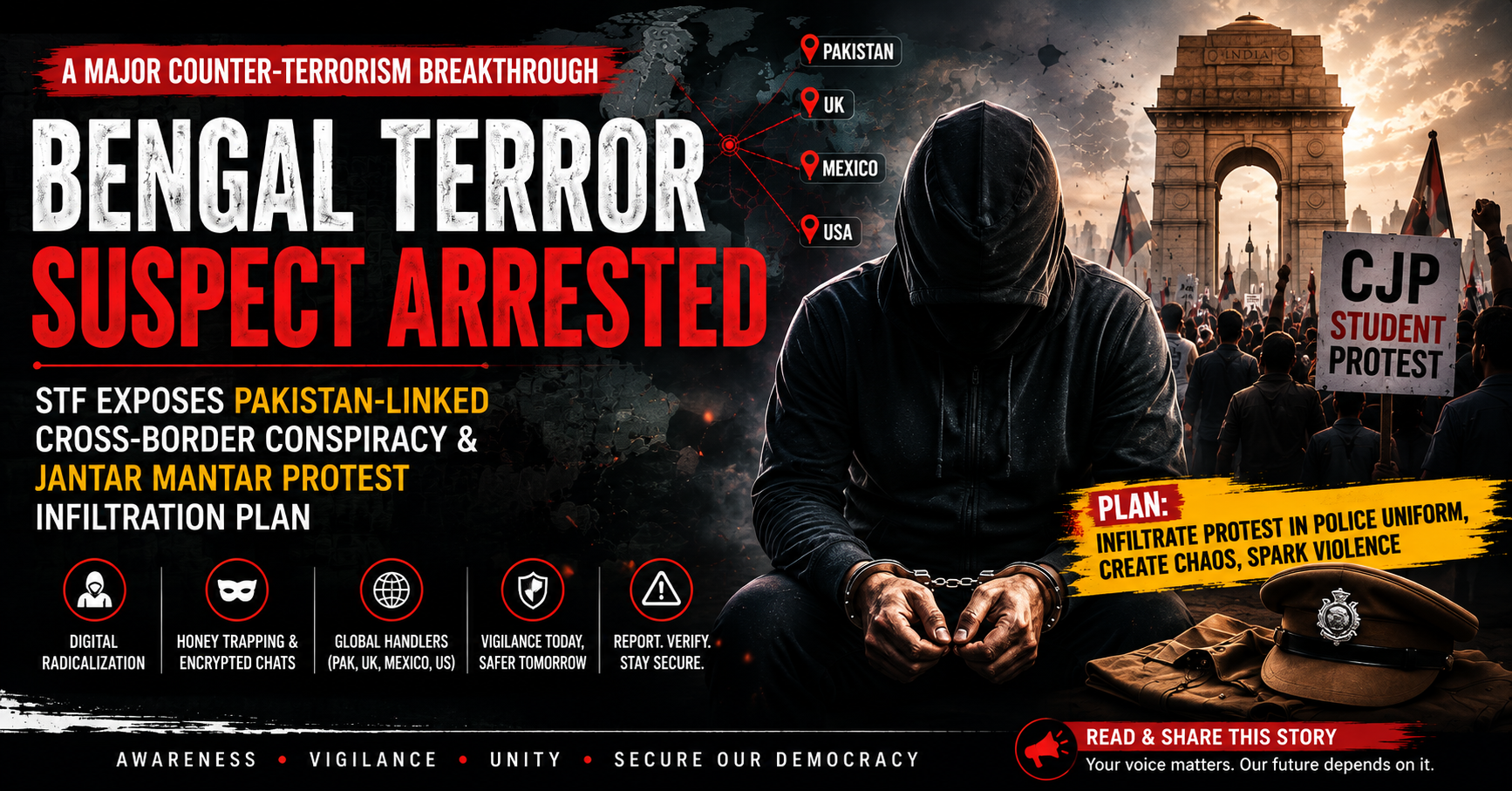
A Major Counter‑Terrorism Breakthrough
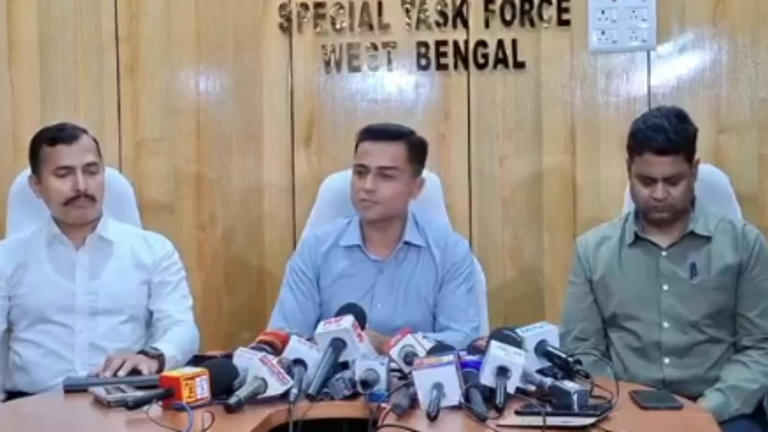
West Bengal’s Special Task Force (STF) has arrested Hamim Mondal, a radicalized Indian citizen allegedly working under the direction of Pakistan‑based handlers linked to Jaish‑e‑Mohammed. Investigators revealed that Mondal was tasked with infiltrating the CJP student protest at Jantar Mantar, disguised in a police uniform, to trigger panic and violence.
“Arrested terror suspect had plan to infiltrate CJP protest,” confirmed West Bengal STF.
Digital Radicalization & Honey Trapping
Mondal was radicalized online, adopting extremist propaganda and maintaining encrypted communication with foreign handlers.
His associate, Arpita Sarkar, arrested in Jharkhand, allegedly engaged in honey‑trapping to extract sensitive information and pass it to Mondal.
Global Numbers in Terror Web: STF seized SIM cards from the UK and Mexico, WhatsApp chats, and digital evidence during the raid, highlighting the sophisticated methods used to evade detection. Investigators uncovered a trail of suspicious international contacts tied to the case. Among them were two Pakistan‑based numbers (+92) operated under the aliases “Rana” and “C9Uzhair”. Another line carried a US code (+1) and was allegedly run by “Abid Jutt”. The FIR further points to connections using UK and Mexico numbers, reportedly managed under the name “Hamid”.
This digital footprint paints a chilling picture of how terror networks exploit global communication channels to mask identities and coordinate across borders.
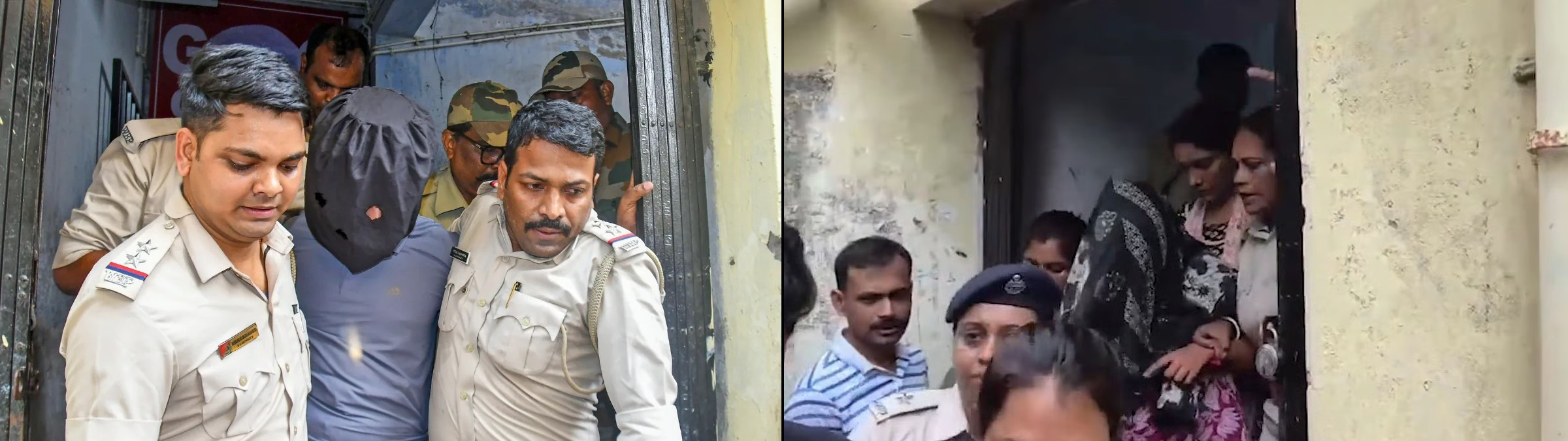
College Student Nabbed in Bengal: STF Links Him to Jaish‑e‑Mohammed Operative
West Bengal’s Special Task Force (STF) carried out a dramatic arrest on Monday, detaining Aditya Singh, a college student allegedly connected to terror suspect Hamim Mondal.
Police confirmed Singh was picked up from Belilious Road in Howrah, where he lived with his family. Investigators believe his association with Mondal ties directly into a wider Pakistan‑linked terror network under scrutiny.
Targets & Objectives
Student Protest at Jantar Mantar: Mondal was ordered to infiltrate the protest in police uniform, create chaos, and spark clashes.
West Bengal CM Suvendu Adhikari’s movements: Mondal was allegedly tasked with tracking convoy routes, public meetings, and potential security gaps.
Broader Agenda: Radicalization, recruitment, narco‑terror financing, and intelligence collection, all coordinated by Pakistan‑based handlers.
Why Are Protests Attractive Targets?
Terror groups exploit large gatherings to maximize fear and confusion. A single violent act in a crowded protest can:
Trigger stampedes and clashes.
Draw instant media attention.
Fuel communal tension and social division.
This explains why security agencies maintain strict checks, from ID verification to bag inspections, at protest sites.
The Bigger Picture
The case underscores India’s growing challenge digital radicalization, where online propaganda and encrypted apps are used to recruit local operatives. It also underscores the importance of vigilance at public protests, which can easily be exploited by extremist organizations.
India’s youth, civil society, and policymakers must recognize the hidden dangers of digital radicalization.
Stay alert, report suspicious online activity, and support stronger cyber‑security measures.
Your voice matters - share this story to raise awareness about how terror networks exploit protests and digital platforms. Together, we can safeguard our democracy.
Written by
Ishaan TrivediDiscussion (0)
Sign in to join the discussion.
Loading comments…