
🚨 Trump’s Warning vs. BRICS’ Bold Move
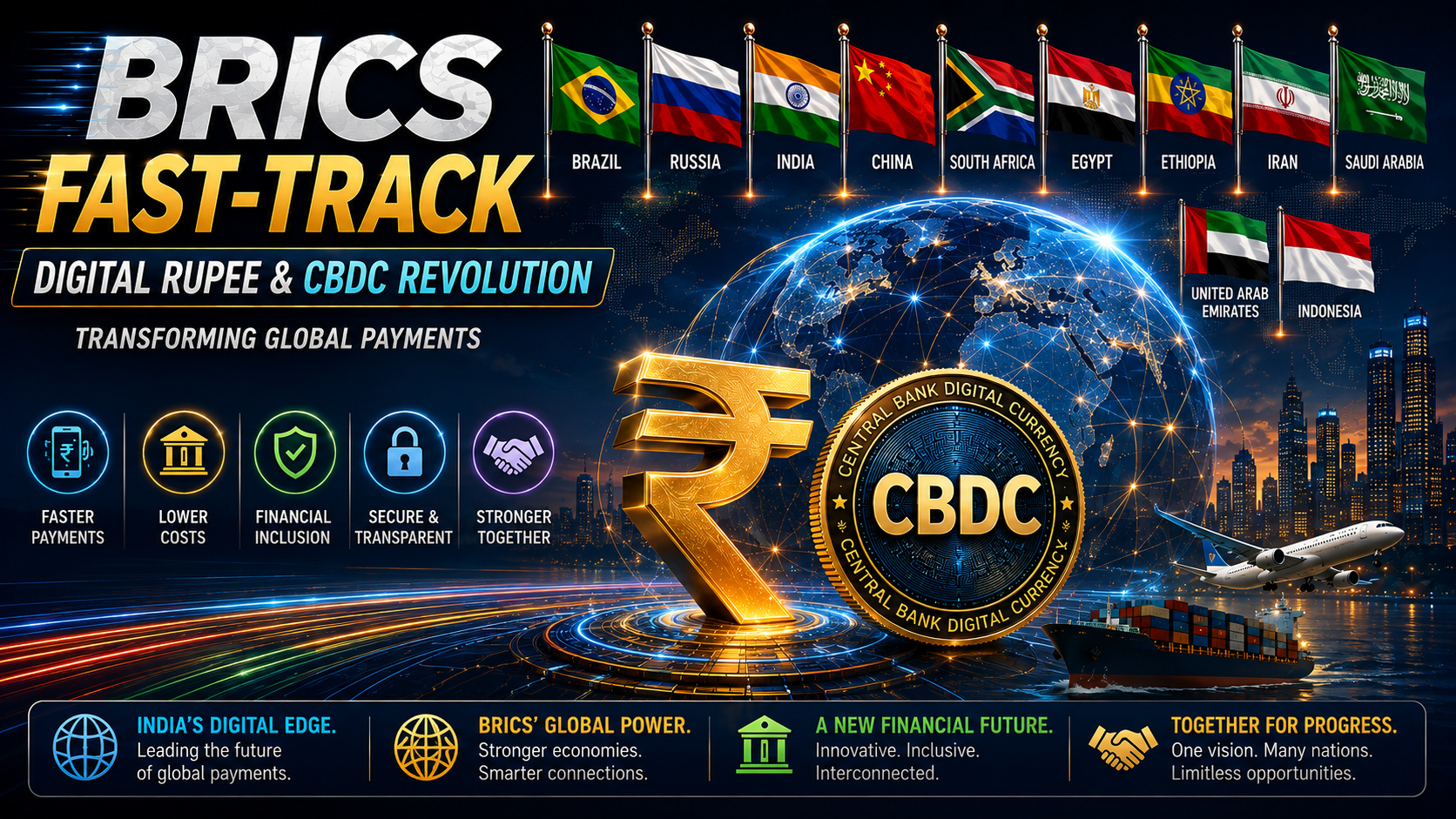
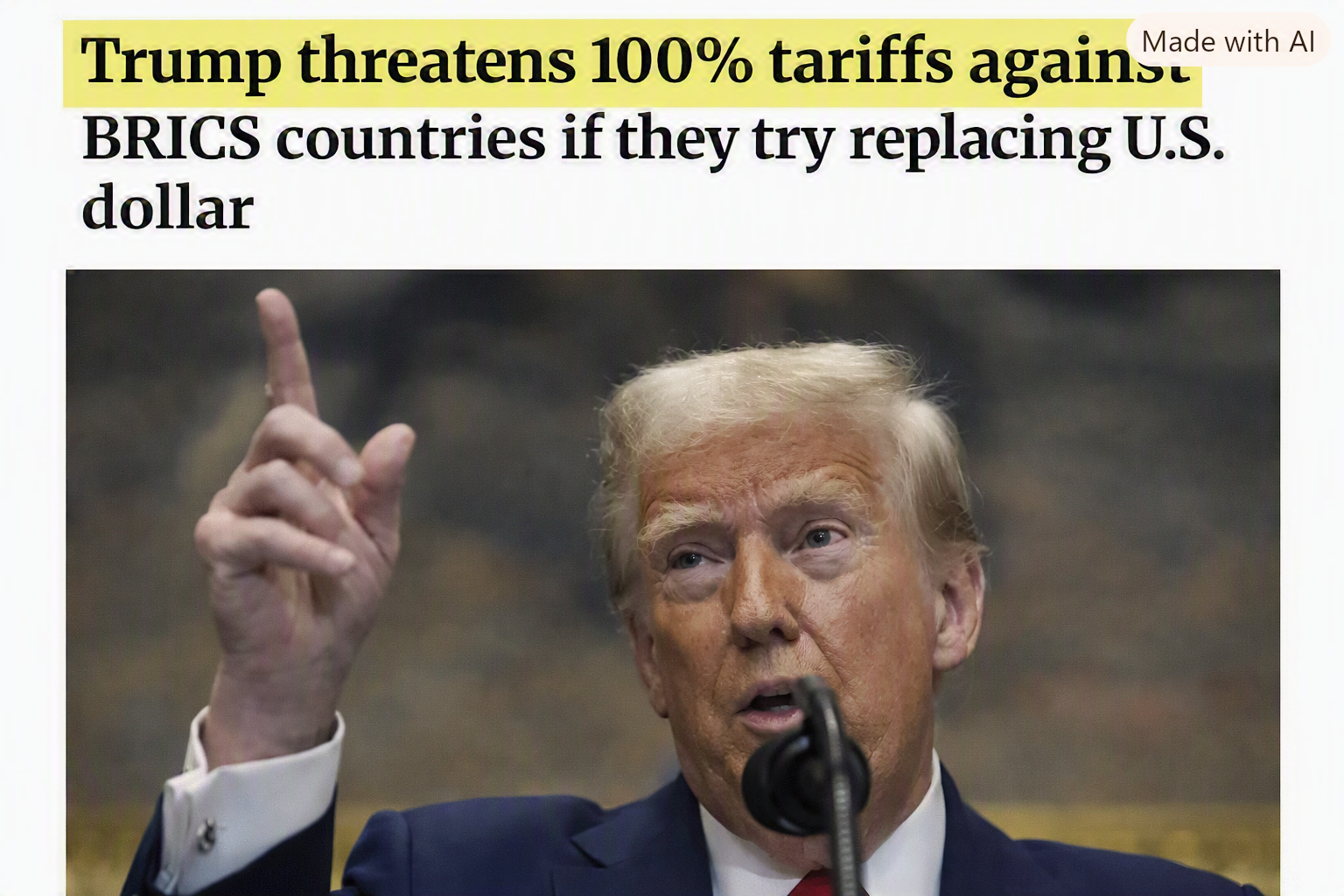
Last year, Donald Trump thundered that if BRICS launched a common currency, he’d slap 100% tariffs on member nations. But here’s the twist: BRICS isn’t creating a new currency at all. Instead, they’re exploring how Central Bank Digital Currencies (CBDCs), like India’s Digital Rupee (e₹) can be linked through a fast payment system.
This means smoother, cheaper, and faster transactions across BRICS nations, without relying on the U.S. dollar. And with the upcoming BRICS summit hosted in India, where leaders like Putin and Xi Jinping may attend, the timing couldn’t be more critical.
💡 RBI’s Game-Changing BRICS Vision: What’s Really Being Planned?
Under India’s 2026 chairmanship, RBI Governor Sanjay Malhotra revealed that BRICS nations are exploring a bold plan to link their fast payment systems and digital currencies (CBDCs) to revolutionise global transactions.
Interlinking Fast Payment Systems: Imagine India’s UPI directly connecting with Brazil’s payment infrastructure. No dollar conversions, no endless intermediaries.
CBDC Integration: Each BRICS nation’s sovereign digital currency- India’s e₹, China’s e‑CNY, Russia’s digital ruble- could flow seamlessly across borders.
Reduced Dependency on SWIFT: By bypassing traditional settlement systems, BRICS aims to cut costs and delays in cross‑border trade.
In short: India’s digital edge could soon redefine how BRICS moves money across borders.
💰 CBDC: India’s Digital Money Revolution
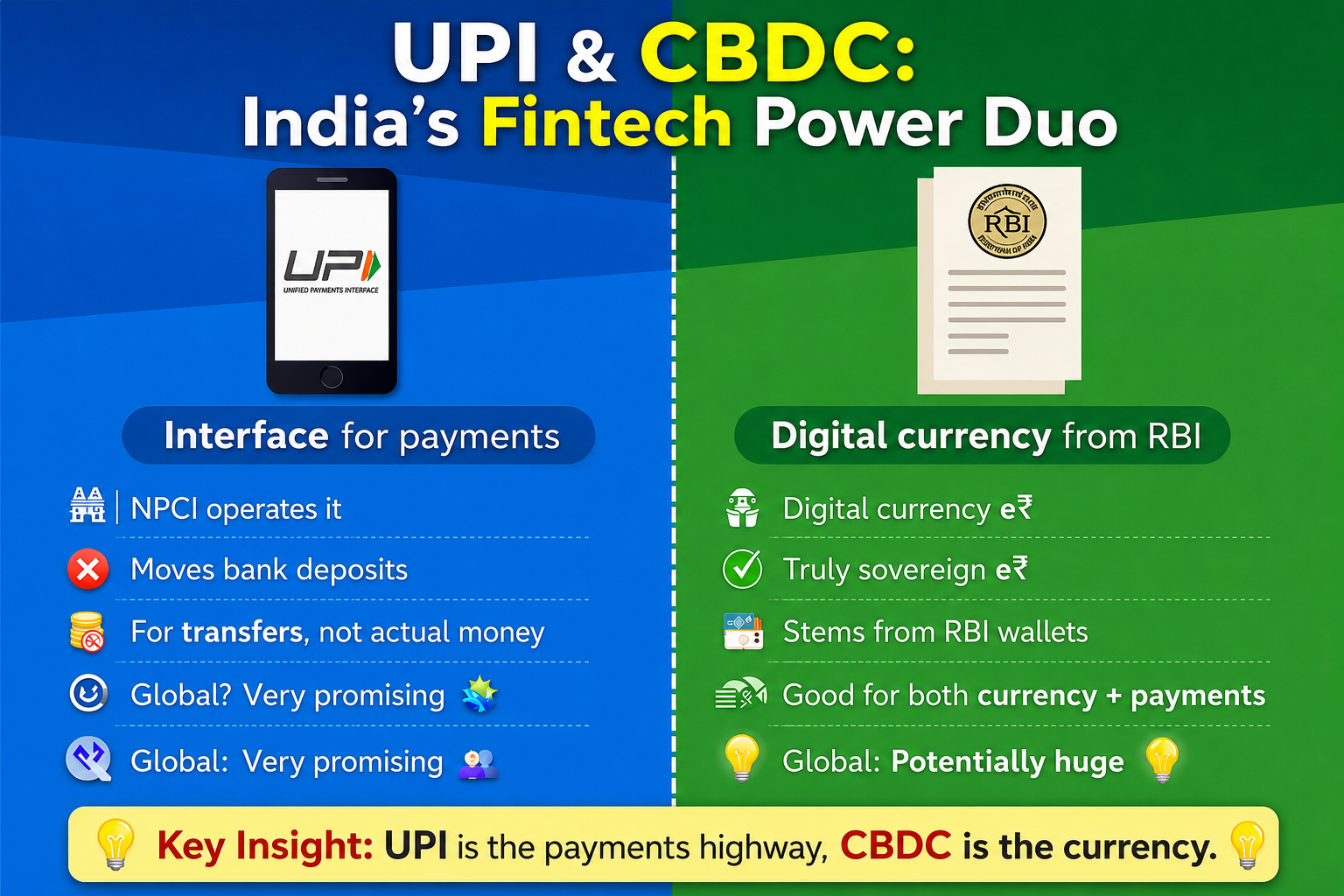
The Central Bank Digital Currency (CBDC) is simply a nation’s official money, but in digital form. In India, it’s known as the Digital Rupee (e₹), issued directly by the Reserve Bank of India, carrying the same sovereign value as physical cash.
In essence: It’s not crypto; it’s real currency, reimagined for the digital era.
India’s e₹ is redefining trust, speed, and the future of money.
💸 India’s Digital Rupee: The Next Leap in Money
Launched in December 2022, India’s Digital Rupee (e₹) marks a major milestone in the country’s financial evolution. It operates through two distinct tracks:
Retail e₹‑R → For everyday use by individuals, merchants, and consumers.
Wholesale e₹‑W → For banks and financial institutions handling large‑scale settlements and securities.
Together, they form a crucial pillar of India’s digital public infrastructure, with RBI Governor Sanjay Malhotra calling the Digital Rupee a new rail powering India’s financial future.
India isn’t just going cashless; it’s going sovereignly digital.
Why India Stands to Gain Most
India already has a world‑class digital payments ecosystem: UPI, IMPS, RTGS, NEFT, all matured and widely adopted. Linking this infrastructure with BRICS partners could:
Boost remittances for millions of Indian workers abroad.
Simplify tourism payments (think paying directly in Brazil without dollar conversion).
Supercharge cross‑border trade, making transactions faster and cheaper.
Strengthen the rupee’s international demand to enhance India’s monetary influence.
⚖️ The Geopolitical Angle
While Russia pushes for full de‑dollarization (given sanctions), and China champions its digital yuan, India’s stance is more balanced. New Delhi isn’t anti‑dollar; instead, it seeks strategic autonomy, cheaper payments, and wider rupee adoption.
Yes, dollar usage will decline in intra‑BRICS trade, but India presents this as innovation rather than confrontation.
🌐 De‑Dollarisation: Efficiency, Not Rebellion
The BRICS nations are rethinking how money moves globally, aiming for smarter, faster, and cheaper cross‑border payments. While the world’s financial system still leans heavily on the U.S. dollar, these countries are exploring national‑currency‑based alternatives and interoperable payment networks to cut costs and boost autonomy.
But here’s the nuance: India isn’t waging war on the dollar. The RBI’s proposal focuses on efficiency and connectivity, not confrontation. It’s about building a parallel system that empowers economies, not dismantling the existing one.
Innovation, not opposition- that’s India’s quiet revolution in global finance.
🚀 The Road Ahead
With India chairing BRICS in 2026, the opportunity is massive. If executed well, this initiative could:
Transform global remittance flows.
Reduce transaction costs dramatically.
Position India as the architect of a new digital financial order.
The world is watching. Will India leverage UPI and the Digital Rupee to lead this transformation?
👉 Stay tuned for updates from the BRICS summit, because the future of money might just be written in New Delhi.
Written by
Vedant BhardwajDiscussion (0)
Sign in to join the discussion.
Loading comments…