
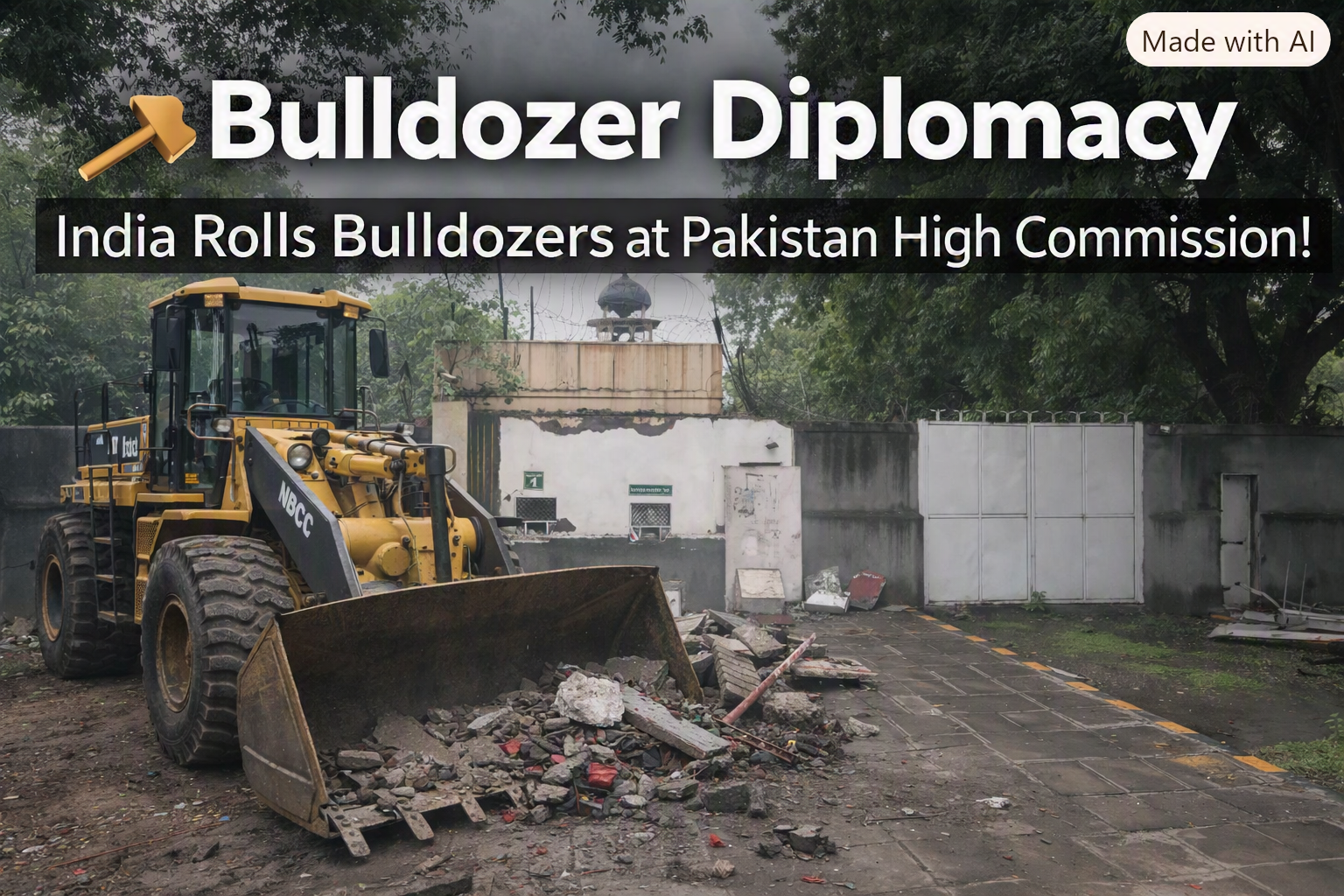
A Bulldozer Outside Chankayapuri
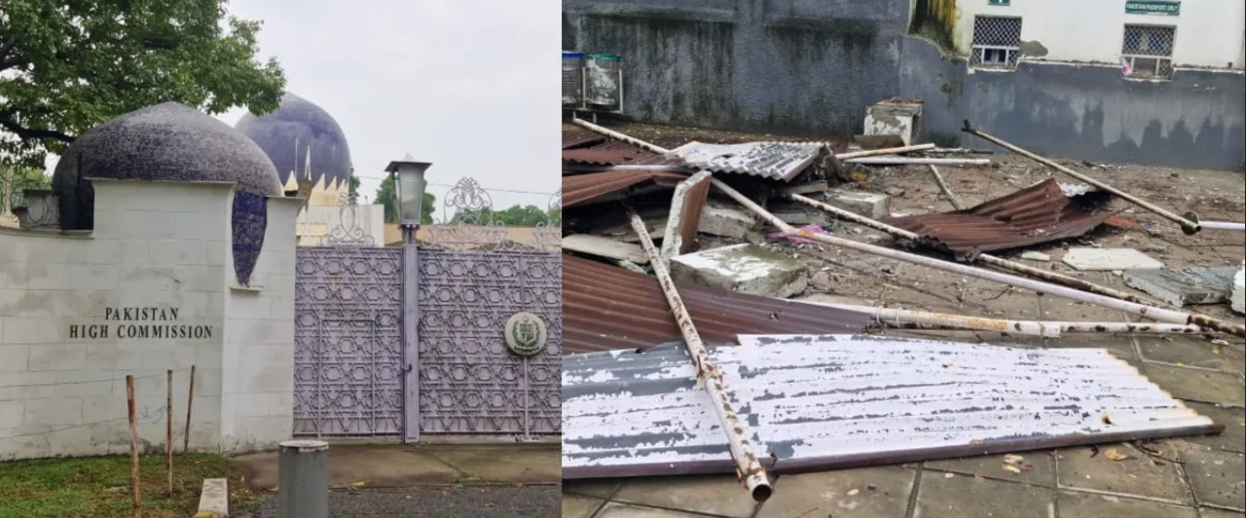
In a dramatic move, Indian authorities rolled bulldozers outside the Pakistan High Commission in New Delhi’s Chanakyapuri, tearing down illegal barricades, traffic bollards, and metal frames. The visuals of broken railings and exposed passport counters shocked many, a rare glimpse inside a tightly guarded diplomatic mission.
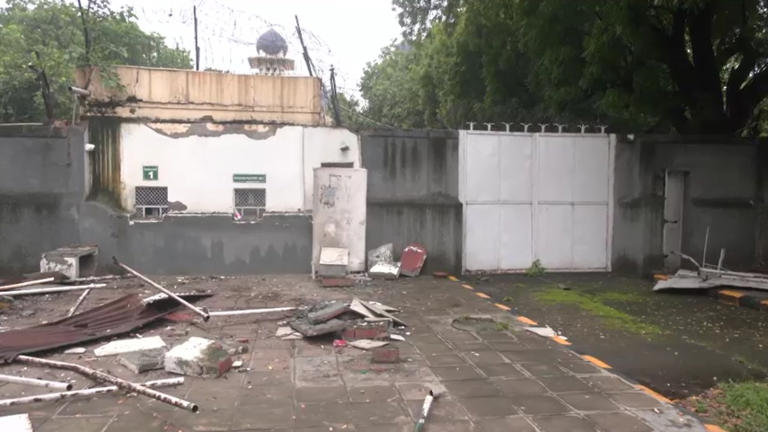
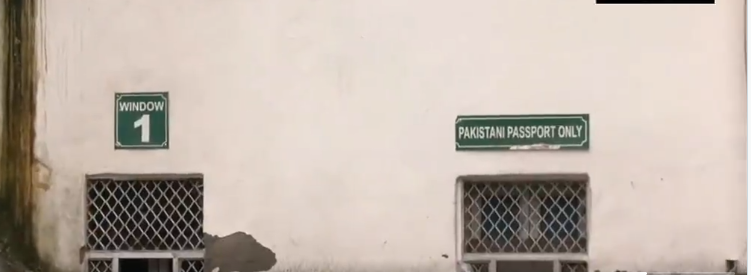
🛑 Visa Counters Amid the Rubble
Amid twisted fencing and scattered debris, the visa section stood exposed, windows marked “Pakistani Passport Only” and “Visa Applications, Window 5” now visible to all.
The High Commission’s imposing white façade, domed architecture, and emblem‑stamped iron gates remained untouched, while barbed wire still lined parts of the compound’s perimeter.
Why Now? The Trigger from Islamabad
This wasn’t an isolated act. Just three days earlier, Pakistani authorities had removed barricades and parking poles outside India’s High Commission in Islamabad, despite New Delhi’s protests. India’s response was deliberately louder: bulldozers instead of quiet removals, sending a clear signal that it would answer every move with one step stronger.
Symbolism of Barricades
Embassy barricades may look mundane, but they carry weight. Security arrangements outside diplomatic missions reflect the host nation’s respect and protection. Removing them often signals displeasure or pressure. As history shows, from India‑Canada tensions during the Khalistani issue to the expulsion of diplomats, such gestures can escalate quickly.
Vienna Convention & Security Layers
Does removing barricades violate international law? Not at all. The Vienna Convention on Diplomatic Relations (1961) obliges host nations to protect missions, but it doesn’t prescribe the number of barricades or police posts. Security is layered: fences, patrols, surveillance, and diplomatic immunity remain intact. Barricade removal is symbolic, not a withdrawal of protection.

Strategic Messaging
India’s bulldozer action is more than demolition; it’s diplomacy in steel and concrete. The message: Pakistan’s moves won’t go unanswered, and India will always respond with greater force. With tensions already high after Operation Sindoor, the suspension of the Indus Waters Treaty, and U.S. envoy Sergio Gor’s remarks in Srinagar calling Kashmir “an integral part of India,” the bulldozer episode adds another layer to the fragile relationship.
⚡ Pakistan Pushes Back on US Envoy’s Kashmir Remark
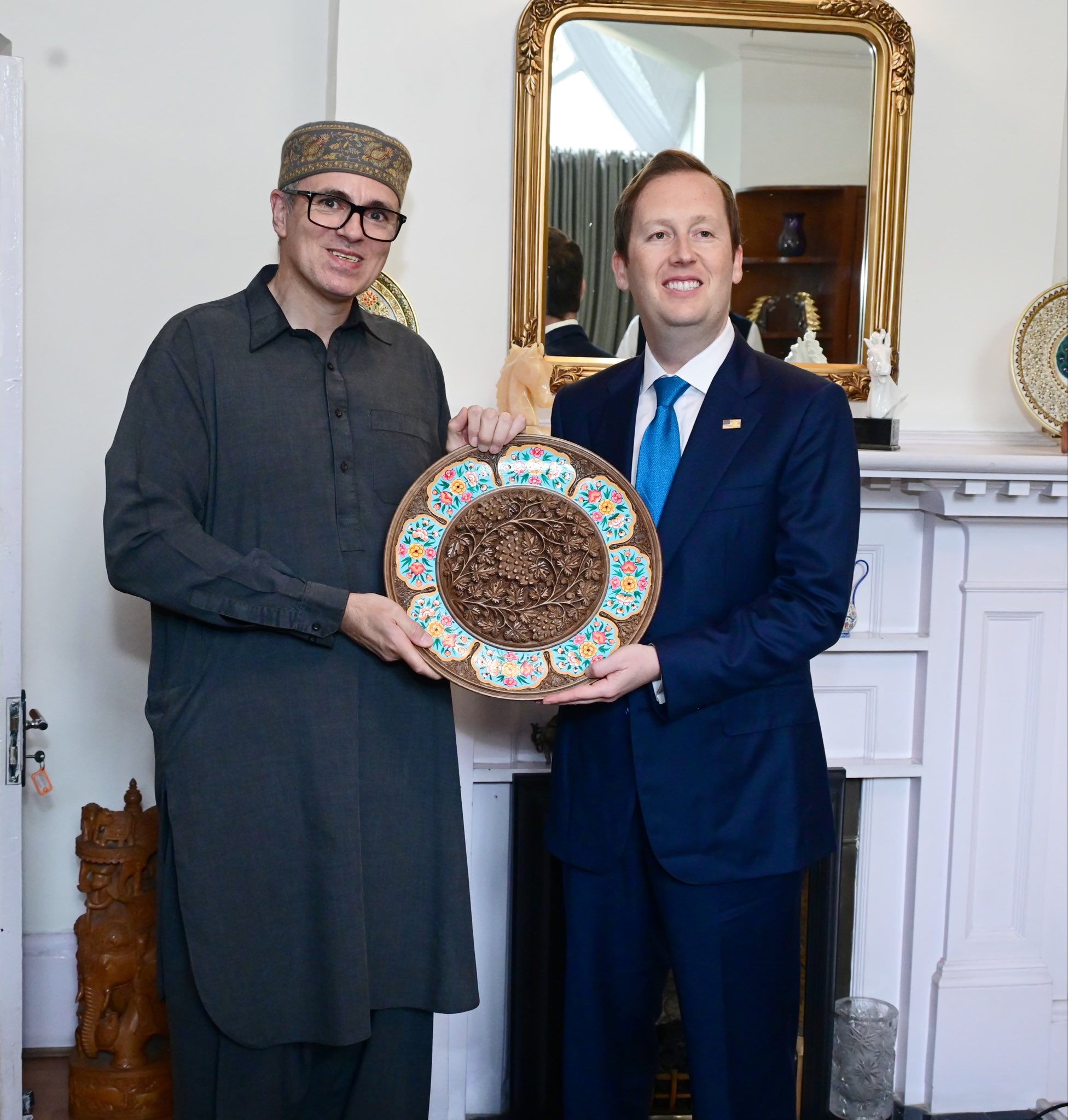
During his visit to Srinagar, US Ambassador Sergio Gor described Jammu & Kashmir as “an important part of India” and praised the Valley’s security.
The statement jolted Islamabad, which swiftly summoned Deputy Chief of Mission (DCM) at the U.S. Embassy in Islamabad, Pakistan, Natalie Baker to register its protest and issue a formal démarche. However, whether New Delhi’s bulldozer action outside the Pakistan High Commission was tied to this diplomatic flare‑up remains unclear.
🔥 Key Takeaway
This bulldozer wasn’t just clearing illegal structures; it was clearing doubts about India’s resolve. In the high‑stakes game of diplomatic tit‑for‑tat, every barricade removed is a message delivered.
👉 What do you think? Should India’s bulldozer diplomacy continue, or is it time to de‑escalate? Share your thoughts below and join the conversation!
Written by
Kartikeya RaoDiscussion (0)
Sign in to join the discussion.
Loading comments…