
A River That Fuels Millions
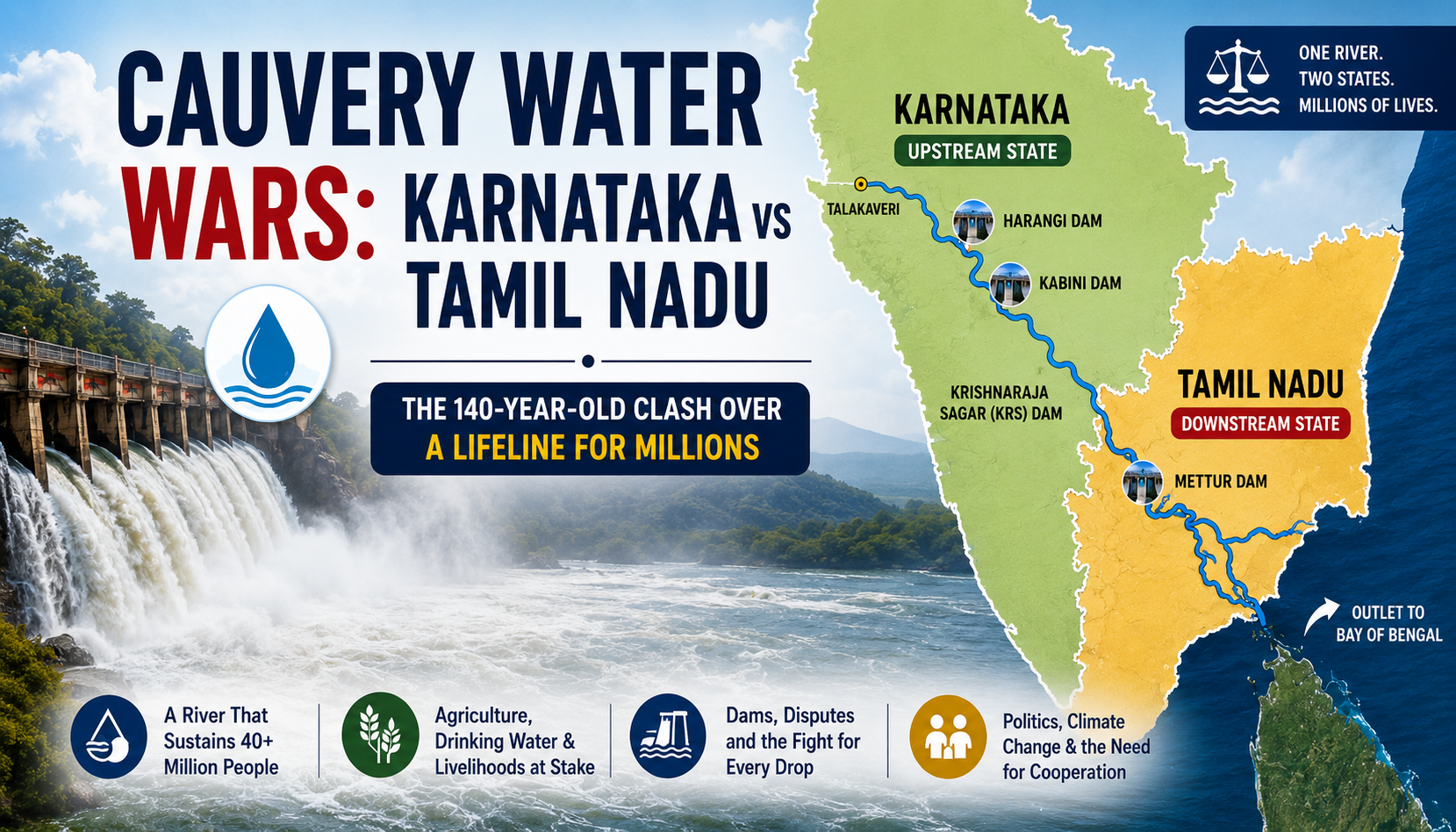
The Cauvery River, often called the “Ganga of the South,” originates in Karnataka’s Talakaveri and flows nearly 800 km before meeting the Bay of Bengal. Its basin spans Karnataka, Tamil Nadu, Kerala, and Puducherry, sustaining over 40 million people and powering one of India’s most fertile agricultural belts. From Bengaluru’s drinking water to Tamil Nadu’s rice cultivation, the river is lifeblood for both states.
Why the Dispute Never Dies?
The conflict is rooted in geography: Karnataka, the upstream state, controls the flow, while Tamil Nadu, downstream, depends on timely releases. This natural imbalance has fueled disputes for more than a century. Agreements in 1892 and 1924 sought to regulate usage, but once they expired in 1974, tensions escalated.
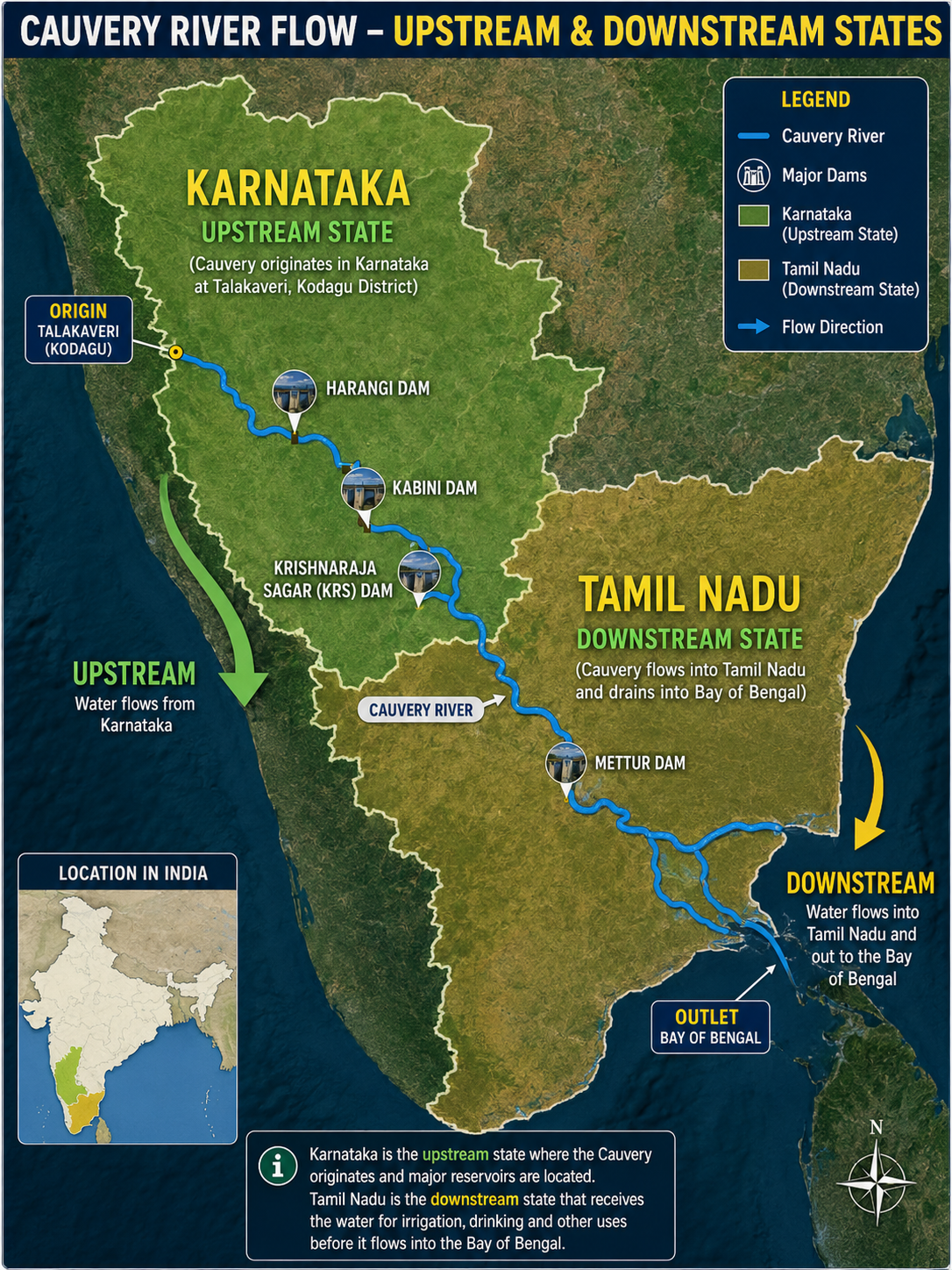
In 1990, the Cauvery Water Disputes Tribunal was formed, and in 2007 it allocated shares of the river’s 740 TMC (thousand million cubic feet). Tamil Nadu received the largest portion, but Karnataka argued for more, citing Bengaluru’s exploding population. In 2018, the Supreme Court slightly revised allocations, giving Karnataka additional water.
2026: A Perfect Storm
This year, weak monsoons in Karnataka’s Kodagu region left reservoirs underfilled. With drinking water scarcity looming, Karnataka resisted the Cauvery Water Regulation Committee’s order to release 3,500 cusecs daily for 15 days to Tamil Nadu.
Tamil Nadu countered that its standing paddy crops would fail without Cauvery water, insisting Karnataka had sufficient reserves. The Cauvery Water Management Authority (CWMA) stepped in, rejecting Karnataka’s plea and mandating compliance. The water will be measured at Biligundlu, the official border station, ensuring accountability.
Politics, Crops, and Cities Collide
For Tamil Nadu, the stakes are agricultural survival. For Karnataka, it’s drinking water security in Bengaluru, a city of millions. Add climate change, erratic rainfall, and election politics, and the dispute becomes explosive. Protests, bandhs, and street demonstrations have already erupted, showing how deeply emotional this issue is for both states.
Mekedatu: Karnataka’s Bold Gamble for a “Permanent Solution”
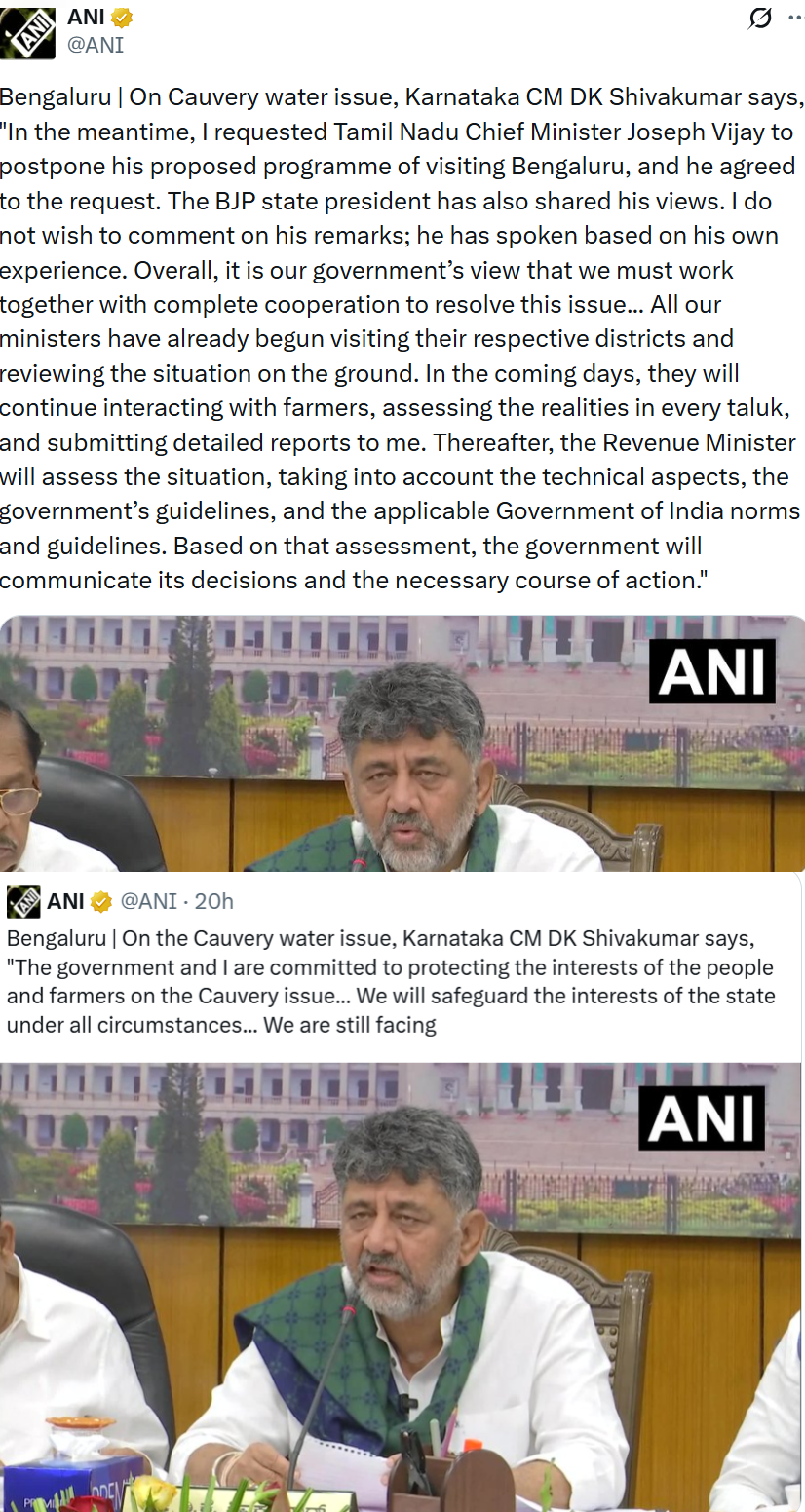
In a fiery all‑party meeting, Karnataka Chief Minister D.K. Shivakumar pitched the long‑awaited Mekedatu dam project as the ultimate game‑changer in the century‑old Cauvery water war. Calling it a “permanent solution”, he urged the state to move forward without delay, stressing that both the Supreme Court’s November 2025 dismissal of Tamil Nadu’s objections and its rejection of a review petition earlier this year have cleared the legal roadblocks.
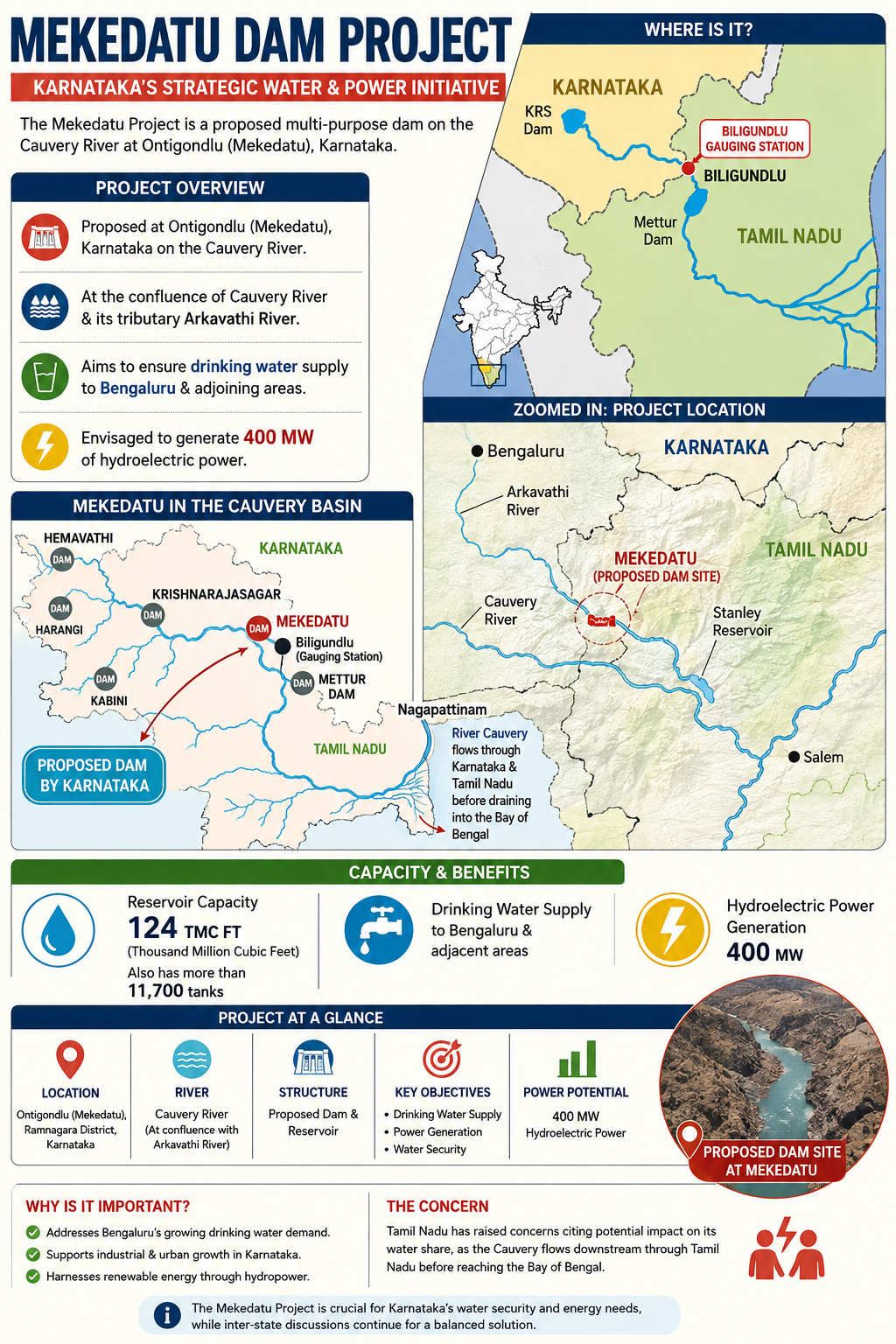
With the Centre’s stance also on record, Shivakumar framed Mekedatu not just as an infrastructure project, but as Karnataka’s bold gamble to secure drinking water for Bengaluru and end the endless cycle of disputes with Tamil Nadu.
From Shortage to Surplus: Karnataka Opens the Floodgates
After weeks of heated debate over water scarcity, nature flipped the script. Torrential monsoon rains sent inflows soaring across the Cauvery basin, pushing reservoirs like Kabini, Harangi, and Krishnaraja Sagar (KRS) to near‑capacity. Authorities were forced to ramp up releases dramatically, from just 5,000 cusecs to nearly 25,000 cusecs, triggering flood alerts in low‑lying villages. With water levels rising, Karnataka began releasing surplus Cauvery water to Tamil Nadu, monitored at the Biligundlu gauging station.
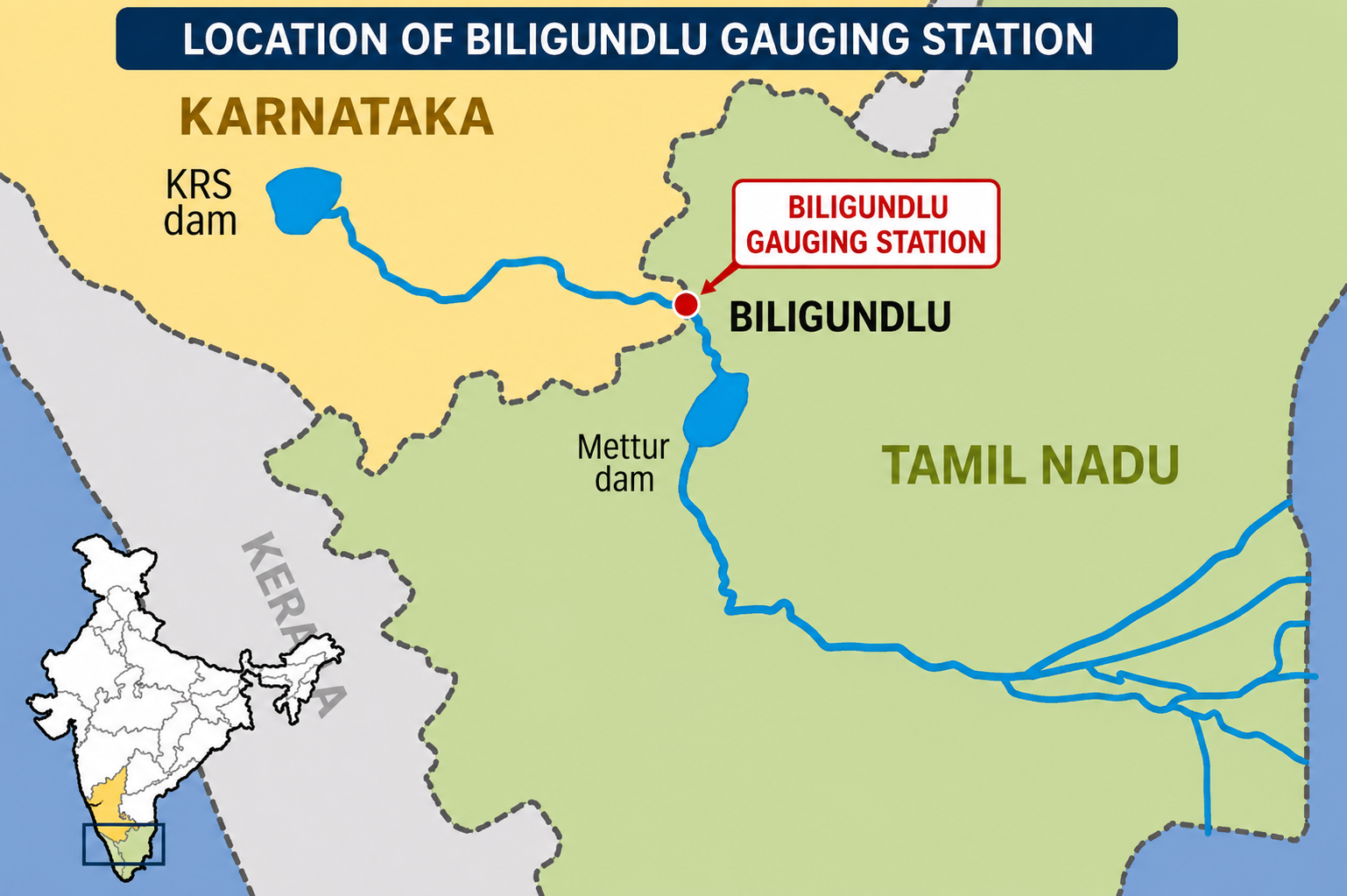
What was once a battle over scarcity suddenly became a story of abundance, highlighting how unpredictable the river remains in this century‑old conflict.
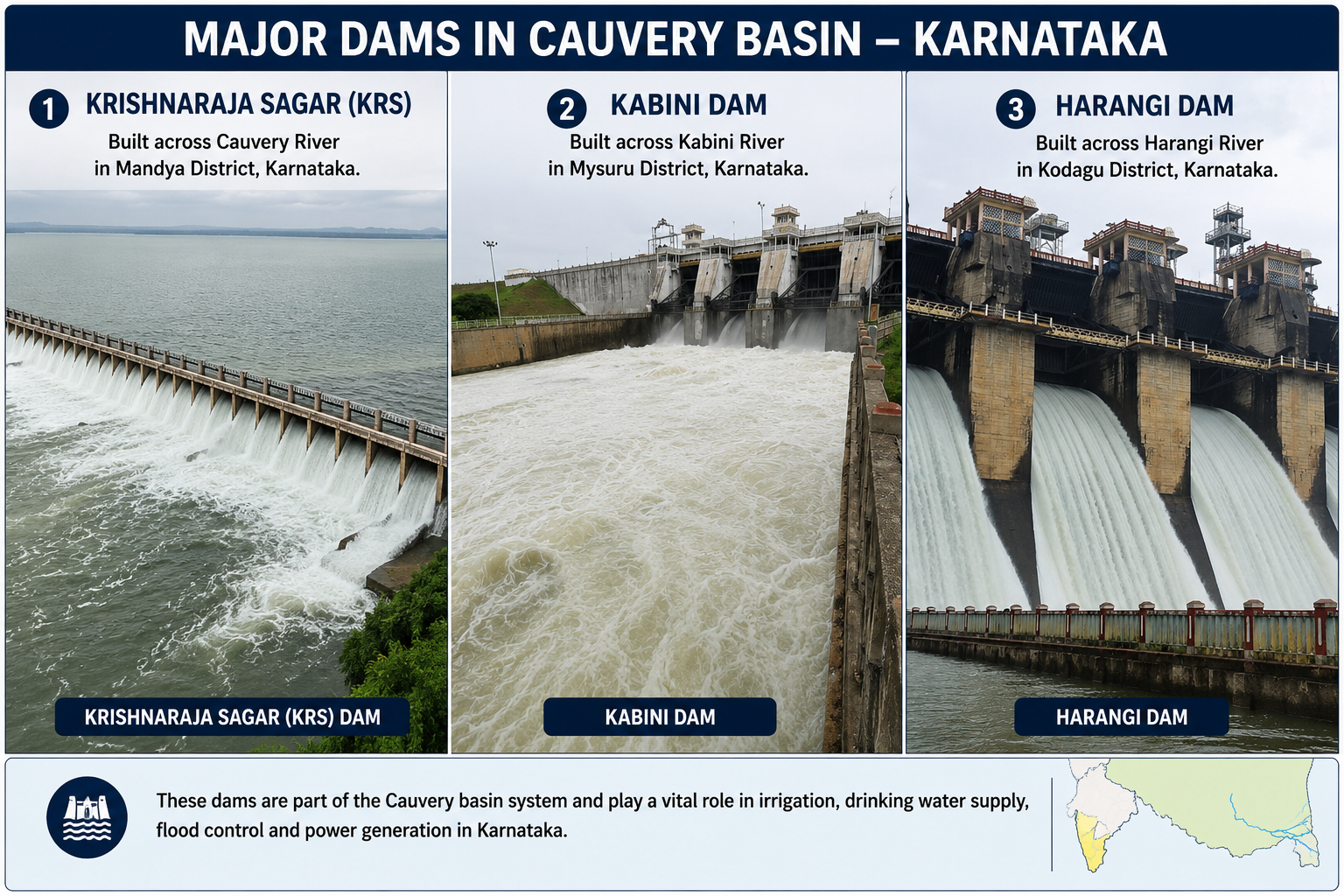
The Bigger Picture
The Cauvery dispute is not just about water; it’s about climate resilience, interstate trust, and equitable resource sharing. With rainfall patterns shifting, India urgently needs a distress-sharing formula that balances agriculture, urban needs, and environmental sustainability.
The Bottom Line
The Cauvery is more than a river; it’s a lifeline, a flashpoint, and a test of cooperative federalism. Until India finds a lasting solution, the water wars will keep returning like monsoon clouds.
What do you think? Should drinking water take priority over agriculture, or should farmers’ needs come first?
Share your thoughts and join the conversation, because the future of India’s rivers depends on it.
Written by
Devansh KaulDiscussion (0)
Sign in to join the discussion.
Loading comments…