
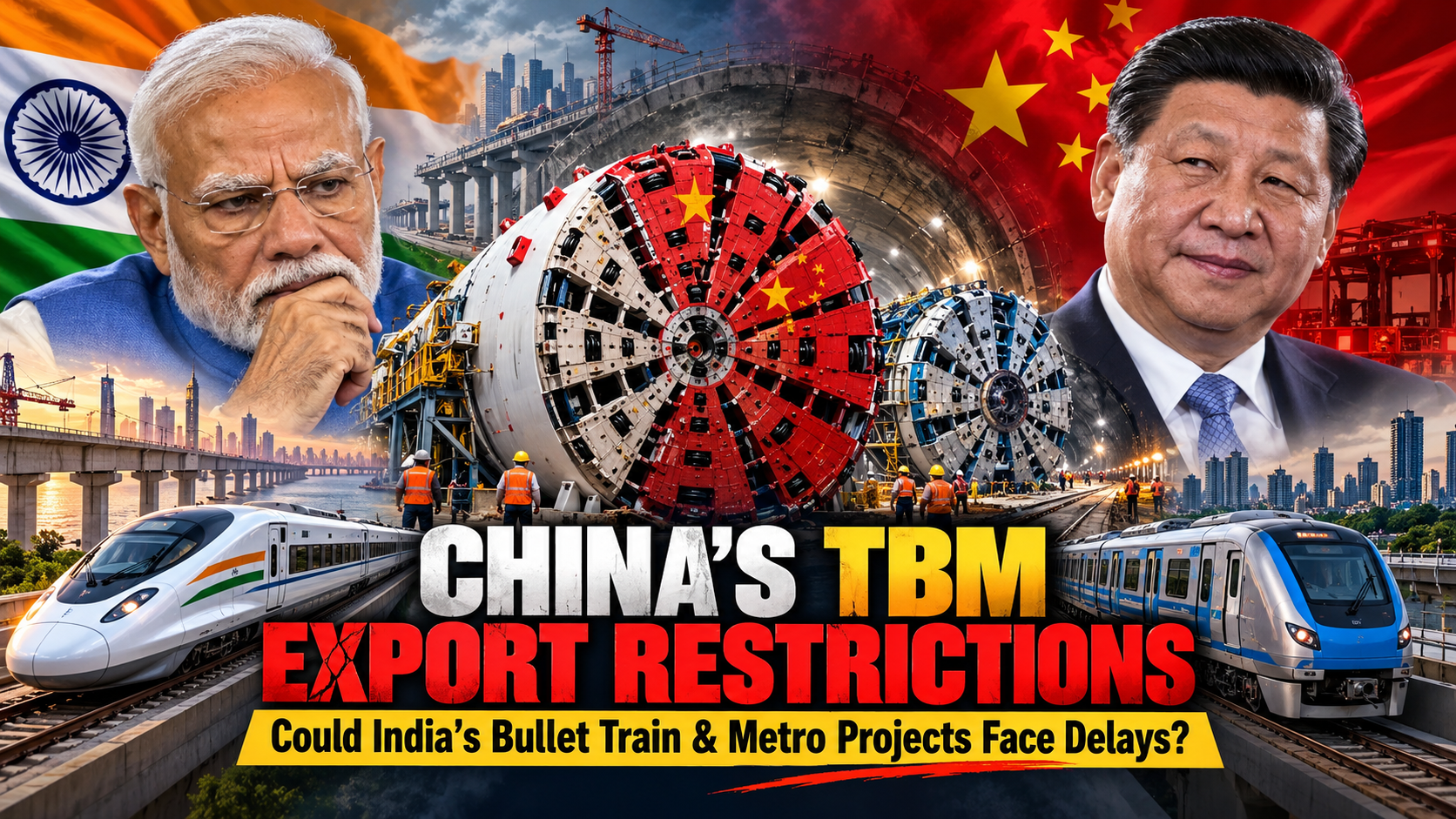
China’s Latest Move Raises Alarm for India’s Infrastructure Ambitions as Beijing’s New TBM Export Restrictions Threaten Metro Expansion, Bullet Train Projects, and Other Mega Developments.
India’s rapid infrastructure transformation, from sprawling metro networks to the ambitious Mumbai-Ahmedabad Bullet Train project, depends heavily on a little-known but highly critical technology: Tunnel Boring Machines (TBMs).
Now, China has introduced new export controls on specific TBMs and related technologies, sparking concerns about potential delays, rising costs, and increased vulnerability in India's infrastructure sector. The restrictions take effect on November 18, 2026.
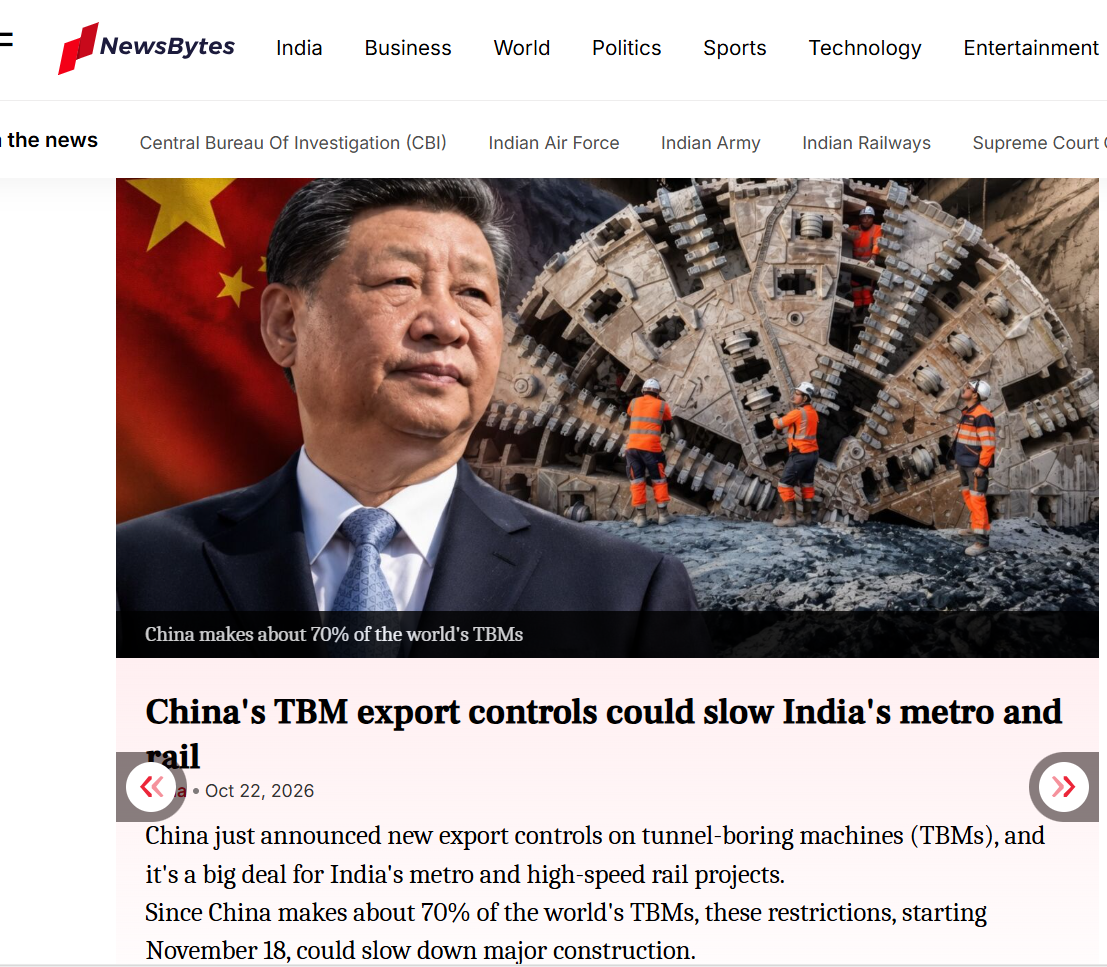
While Beijing has not imposed an outright ban on exports to India, the new restrictions could make procurement more difficult and expose a deeper challenge: India’s dependence on foreign technology for critical infrastructure projects.
The question is simple but significant: Can India continue building its underground future if access to these machines becomes uncertain?
What Exactly Is a Tunnel Boring Machine?
A Tunnel Boring Machine, often called a TBM, is a highly specialized piece of engineering equipment designed to excavate tunnels efficiently and safely through soil, rock, and even under water bodies.
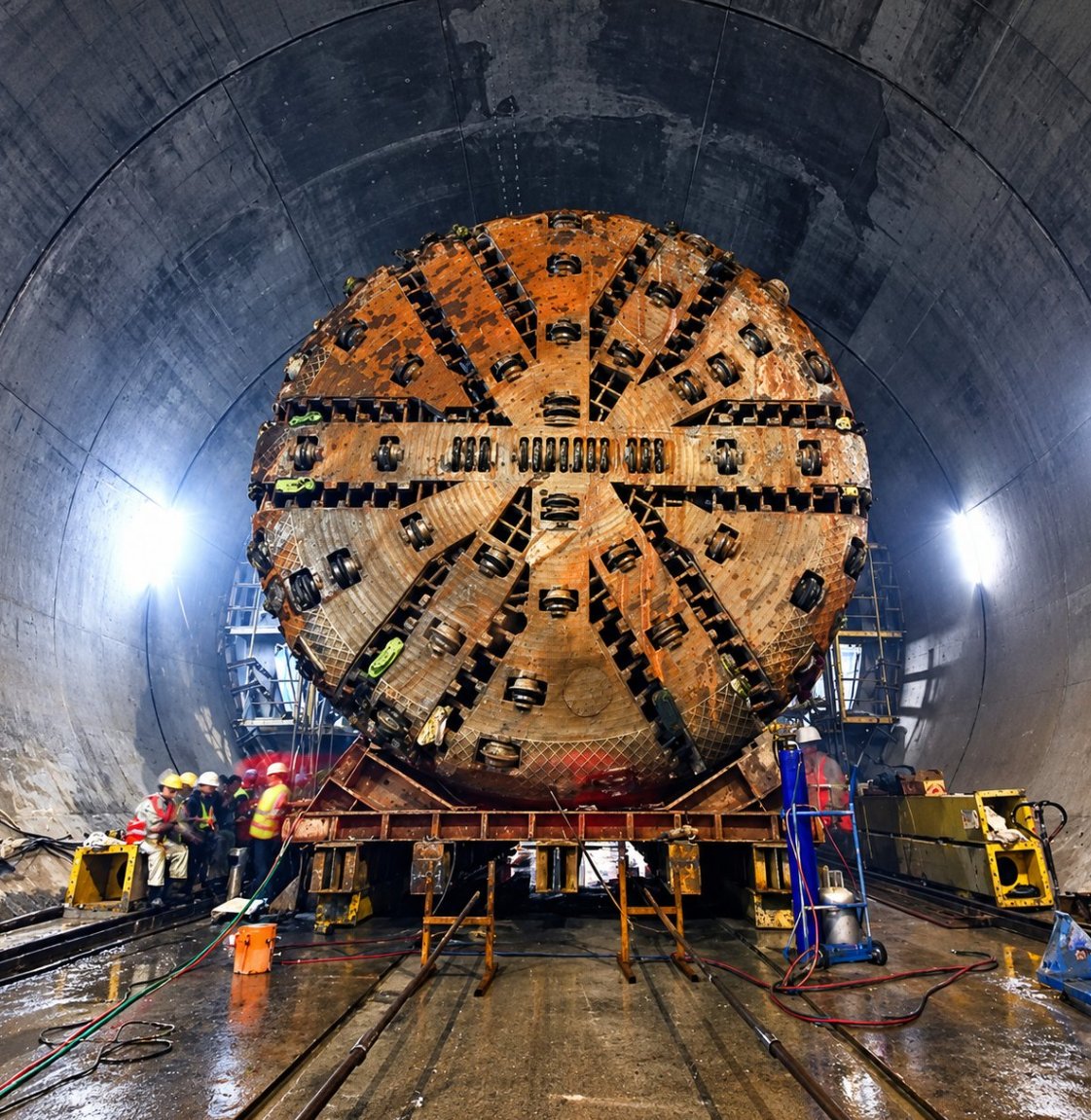
Without TBMs, constructing underground metro lines, railway tunnels, road corridors, or underwater passages would be far more difficult, expensive, and time-consuming.
These giant machines:
1. Cut through rock and soil using a rotating cutter head.
2. Remove excavated material automatically.
3. Reinforce tunnel walls with concrete segments as they advance.
4. Minimize vibrations and surface disruptions.
5. Improve worker safety and project efficiency.
This is why cities like Delhi, Mumbai, Bengaluru, Chennai, and Kolkata rely heavily on TBMs for underground metro construction.
Why Are TBMs So Important for Modern Cities?
Imagine building a metro tunnel beneath densely populated neighbourhoods filled with skyscrapers, roads, markets, and utilities. Traditional blasting methods would not only take longer but could also create safety risks and structural damage.
TBMs solve this problem by working deep underground with remarkable precision. Their advantages include:
1. Faster Construction
TBMs continuously excavate and reinforce tunnels, dramatically reducing project timelines.
2. Improved Safety
The machines stabilize the tunnel as they progress, reducing risks for both workers and nearby structures.
3. Lower Surface Disruption
Traffic, businesses, and residents above ground experience minimal disturbance.
4. Cost Efficiency in Large Projects
Although expensive initially, TBMs often lower long-term costs through faster execution and reduced risks. For a nation investing billions in transport infrastructure, these benefits are crucial.
What Has China Actually Done?
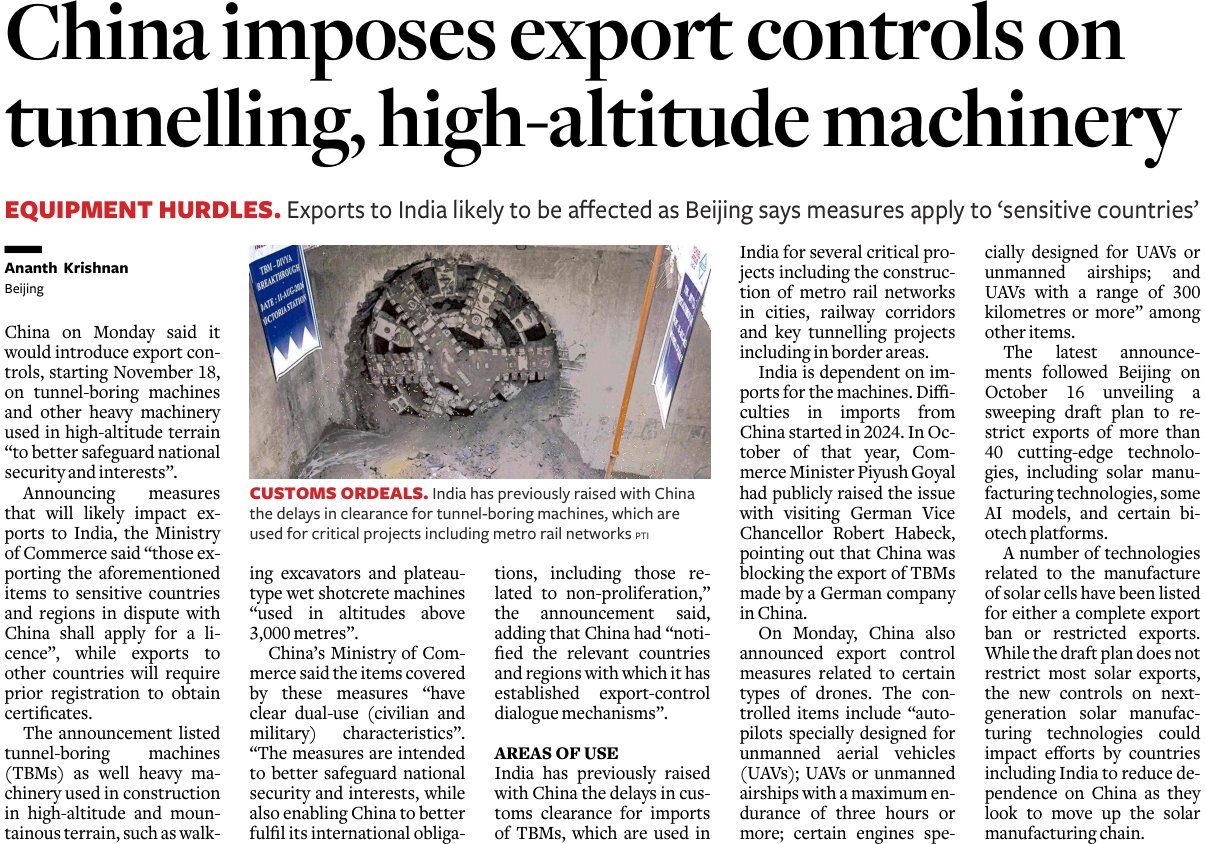
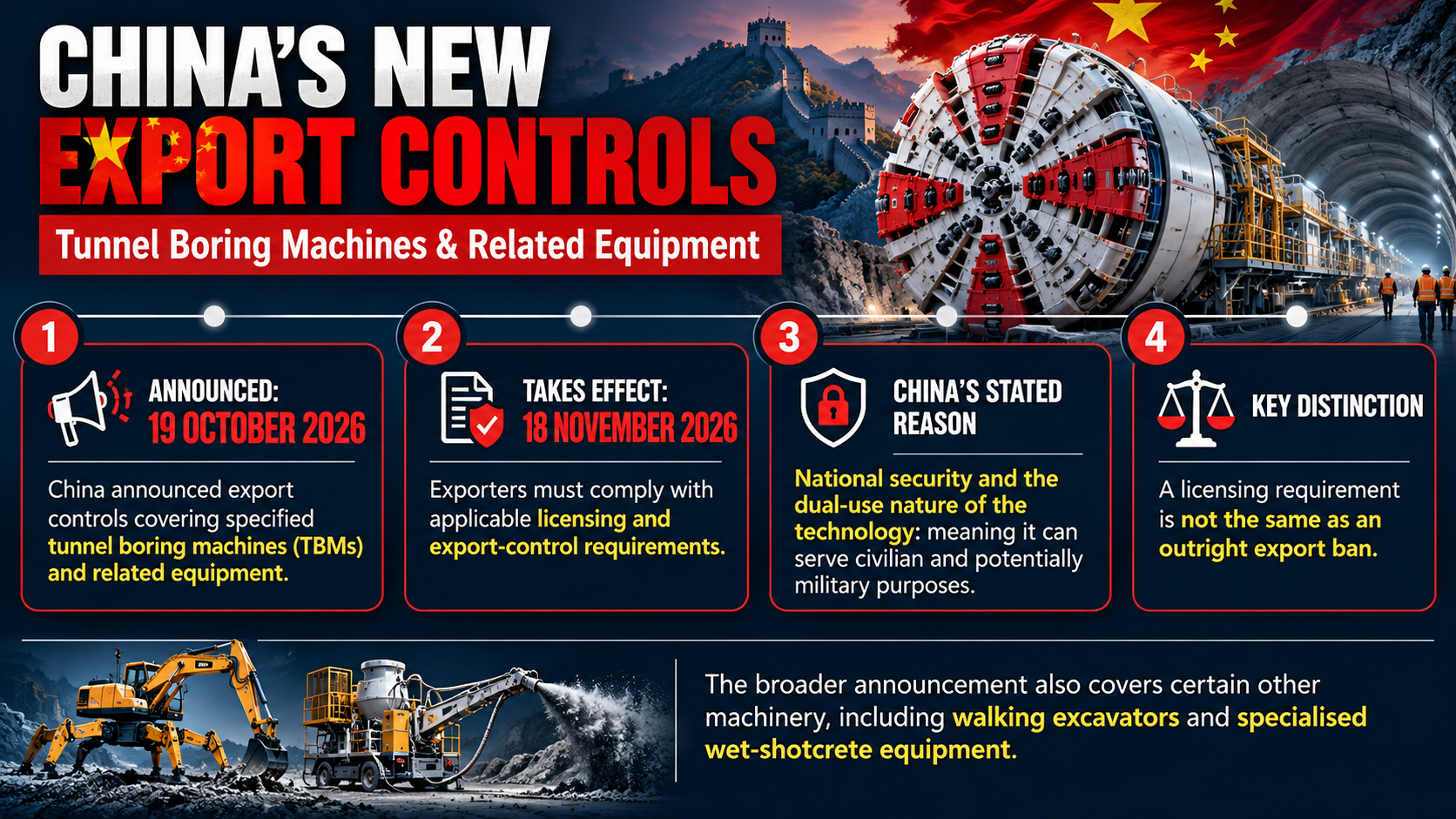
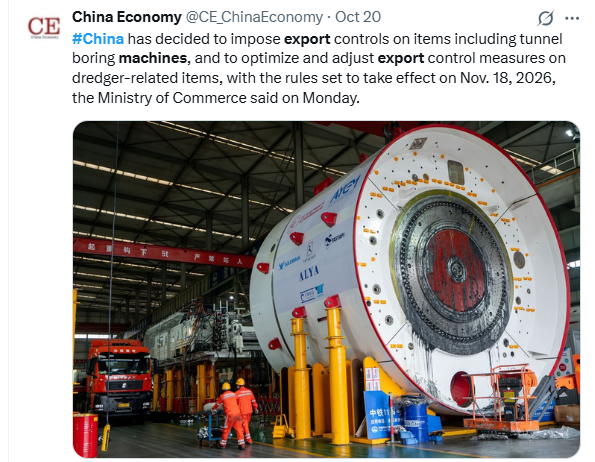
China recently announced new export controls covering certain categories of Tunnel Boring Machines and related equipment.
According to Beijing, these restrictions are linked to the dual-use nature of the technology, meaning the machines could potentially have both civilian and military applications.
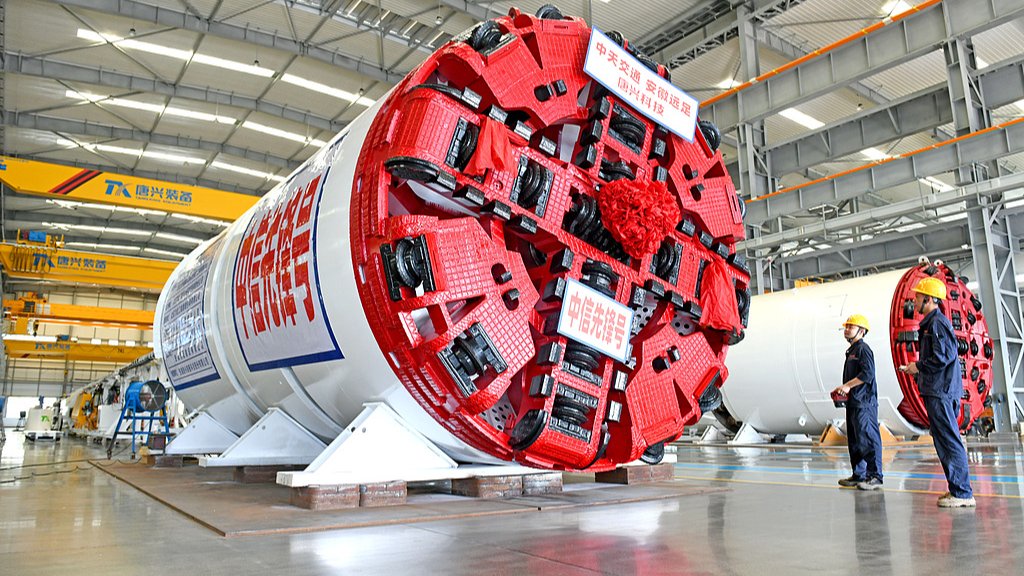
China maintains that exports are not completely prohibited and that applications meeting regulatory requirements can still receive approval.
However, such restrictions can create delays, additional compliance requirements, and uncertainty in procurement processes. This is particularly concerning because infrastructure projects depend on uninterrupted access to equipment, spare parts, and maintenance support.
Even minor supply disruptions can slow construction schedules and increase costs.
The Bigger Problem: India's Dependence on Foreign Technology
The TBM issue highlights a broader challenge facing India's infrastructure ecosystem. For years, India has relied heavily on imported technology for large-scale underground construction.
When geopolitical tensions rise, supply chains become vulnerable. The concern is not just about acquiring new machines. Even existing TBMs require:
a) Replacement cutter heads
b) Bearings
c) Gearboxes
d) Hydraulic systems
e) Electronic control components
f) Specialized maintenance parts
If access to these components becomes difficult, ongoing projects could face operational bottlenecks.
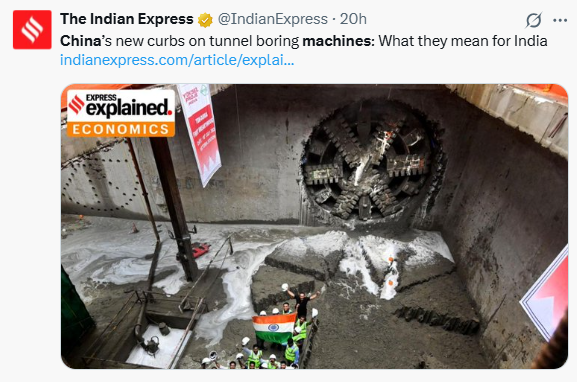
In other words, India isn't merely dependent on imported machines. It is dependent on an entire international supply chain.
Why Does China Hold So Much Leverage?
Many people assume TBMs can simply be sourced from Europe, Japan, or other advanced economies.
Technically, that is true. The reality, however, is far more complicated.
China has become the world's manufacturing hub for heavy industrial equipment and components. Even when a TBM is designed by a European company, significant parts of the manufacturing process may occur in China.
The Herrenknecht episode revealed how deeply China influences the TBM supply chain, as machines bound for India were reportedly held up by Chinese clearance requirements despite being sourced from a German manufacturer.
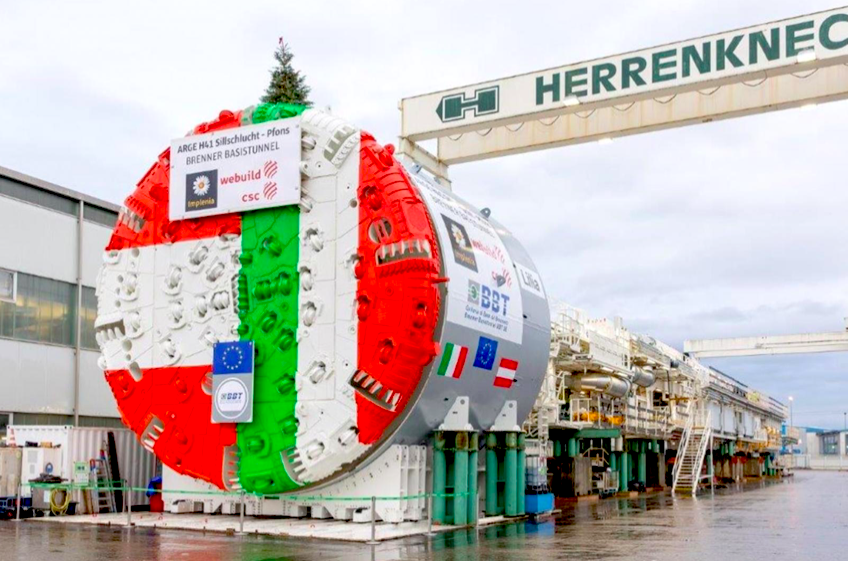
This means that restrictions imposed by Beijing can affect global supply chains, not just Chinese manufacturers. As a result, India's alternatives may not be as readily available as they appear.
Could India's Bullet Train Project Be Affected?
One of the projects most closely watched in this context is the Mumbai-Ahmedabad High-Speed Rail Corridor.
The 508-kilometre bullet train route includes complex underground sections, particularly around Mumbai and the Thane Creek region.
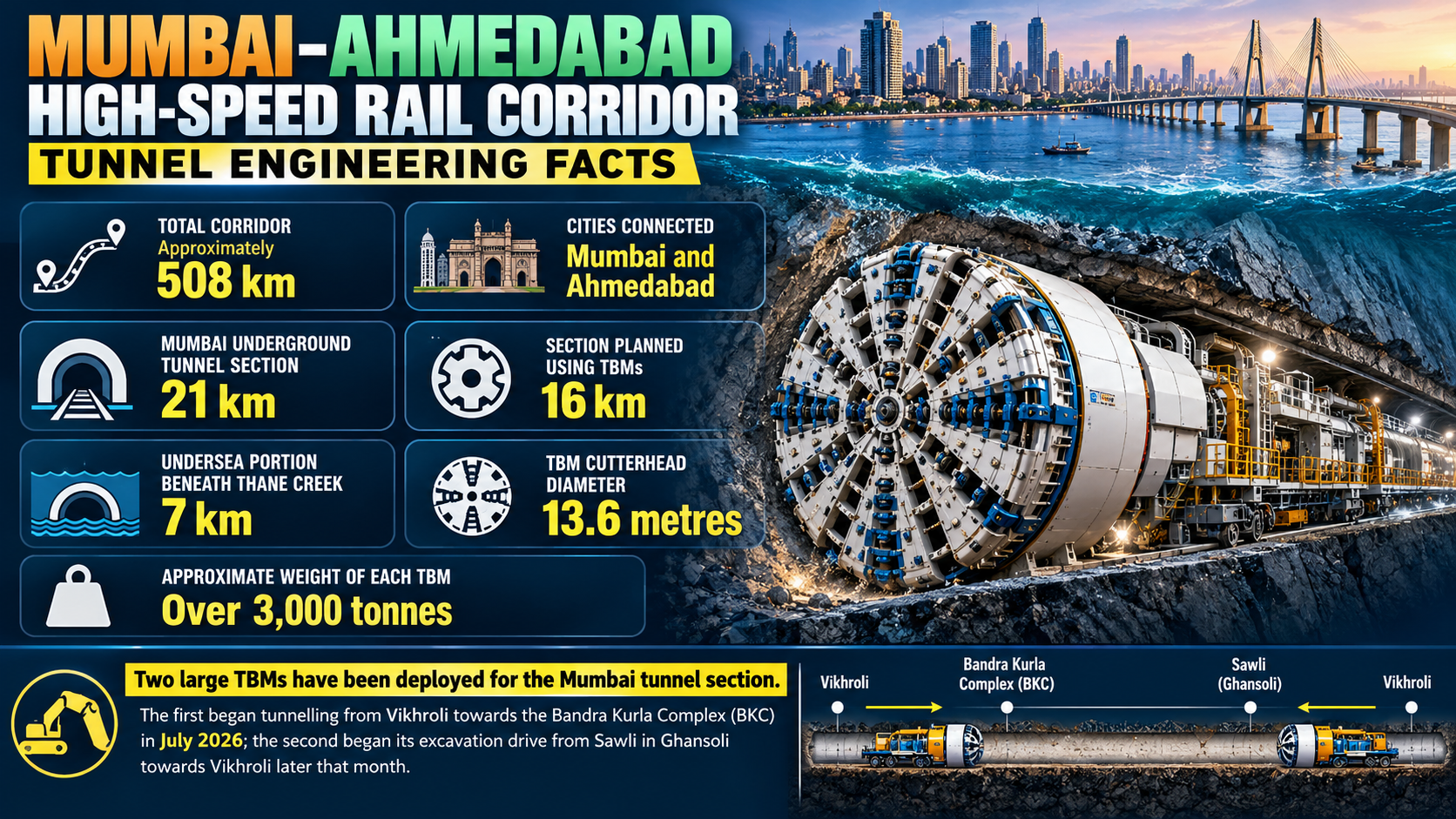
Several stretches require sophisticated tunnelling solutions, including:
1. Long underground corridors beneath urban areas.
2. Tunnels passing under water channels and creek sections.
3. Construction beneath densely developed infrastructure.
TBMs are essential for executing these works safely and efficiently. Any delay in acquiring machines, spare parts, or technical support could impact project timelines, maintenance schedules, and construction costs.
While work continues, the episode has highlighted how strategically important TBMs have become for India's flagship infrastructure programs.
Beyond the Bullet Train: A Nationwide Impact
The implications extend far beyond a single project. TBMs are widely used in:
1. Metro Rail Networks
Underground metro corridors across major Indian cities rely on TBMs.
2. Railway Infrastructure
Mountain tunnels and high-speed rail projects increasingly depend on advanced tunnelling technology.
3. Road Tunnels
Strategic highway projects in difficult terrain require large-scale underground construction.
4. Hydropower Projects
Water diversion tunnels and underground power infrastructure often utilize TBMs.
Any sustained disruption could increase:
g) Equipment procurement costs
h) Financing expenses
i) Contractor overheads
j) Construction timelines
k) Project risks
Ultimately, the burden could be reflected in higher infrastructure costs nationwide.
Is This Also a Geopolitical Signal?
Some analysts believe China's decision may not be solely about export regulations. The restrictions come at a time when strategic competition and border sensitivities continue to shape India-China relations.
Certain experts speculate that concerns over infrastructure development near sensitive regions may also influence Beijing's approach to advanced construction technologies.
While there is no official confirmation of such motivations, the episode demonstrates how technological dependence can become a geopolitical vulnerability.
How Can India Reduce Its Dependence?
The long-term solution lies in building domestic capabilities. Several pathways are being discussed:
1. Develop Indigenous TBM Manufacturing
Indian public and private sector companies can invest in designing and manufacturing TBMs domestically.
2. Technology Transfer Partnerships
Collaboration with firms from Germany, Japan, France, and Austria could help India acquire critical know-how.
3. Local Manufacturing by Global Companies
Encouraging international manufacturers to establish production facilities in India can strengthen supply chain resilience.
4. Diversify Import Sources
Reducing dependence on a single country lowers strategic risks.
5. Government Incentives
Production-linked incentive (PLI)-style schemes could encourage investment in heavy infrastructure equipment manufacturing. Reports indicate that India may introduce a $1.2 billion incentive scheme to promote indigenous manufacturing of construction and infrastructure equipment, helping strengthen supply chains and attract new investments.
These efforts will not deliver results overnight, but they could significantly improve India's self-reliance over the coming decade.
🚨 The Bigger Lesson: A Wake-Up Call for India's Infrastructure Future
China's new restrictions on Tunnel Boring Machines may not immediately halt India's infrastructure projects, but they have exposed a strategic vulnerability that can no longer be ignored.
As India races to build metros, bullet trains, road tunnels, and next-generation transport networks, access to critical technologies will be just as important as financial investment.
The real challenge is no longer simply building infrastructure, but ensuring that the tools required to build it are available without geopolitical constraints. India's underground revolution is underway. The question now is whether the country can also develop the technological independence needed to sustain it.
👉 What Do You Think?
Should India aggressively invest in domestic Tunnel Boring Machine manufacturing, even if it takes years and costs billions, or continue relying on global supply chains for critical infrastructure technology?
Share your views in the comments and stay tuned for more insights on geopolitics, infrastructure, technology, and India's strategic future.
Written by
Vedant BhardwajDiscussion (0)
Sign in to join the discussion.
Loading comments…