
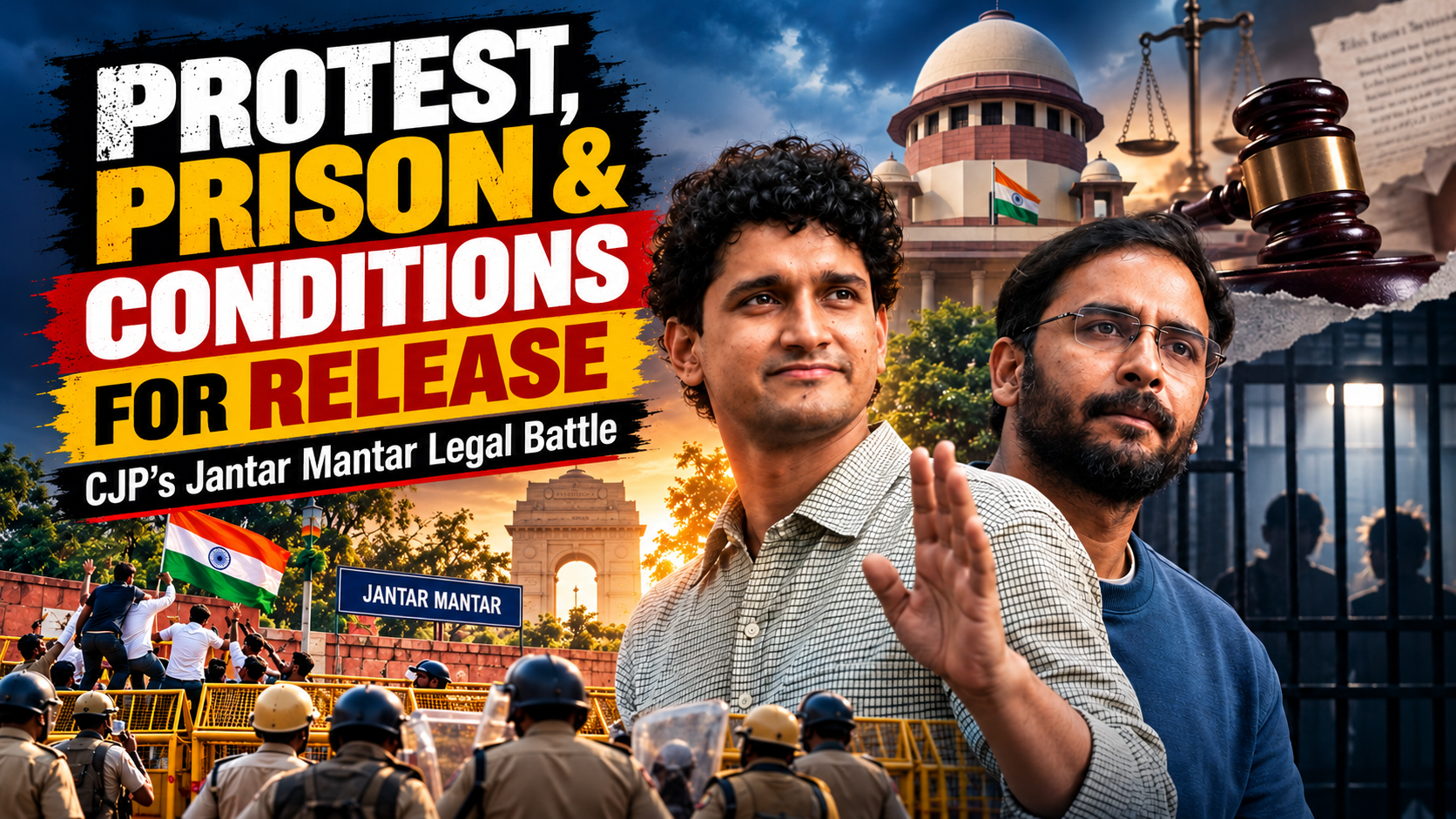
Released After a Week Behind Bars, But at What Cost? The Arrest, Court Battle, and Strict Conditions Now Shaping the Future of the CJP Movement
In a dramatic turn of events, two prominent leaders of the Cockroach Janata Party (CJP), Ashutosh Ranka and Saurabh Das, have finally been released after spending nearly seven days in Delhi's Tihar Jail. However, their release was far from unconditional.
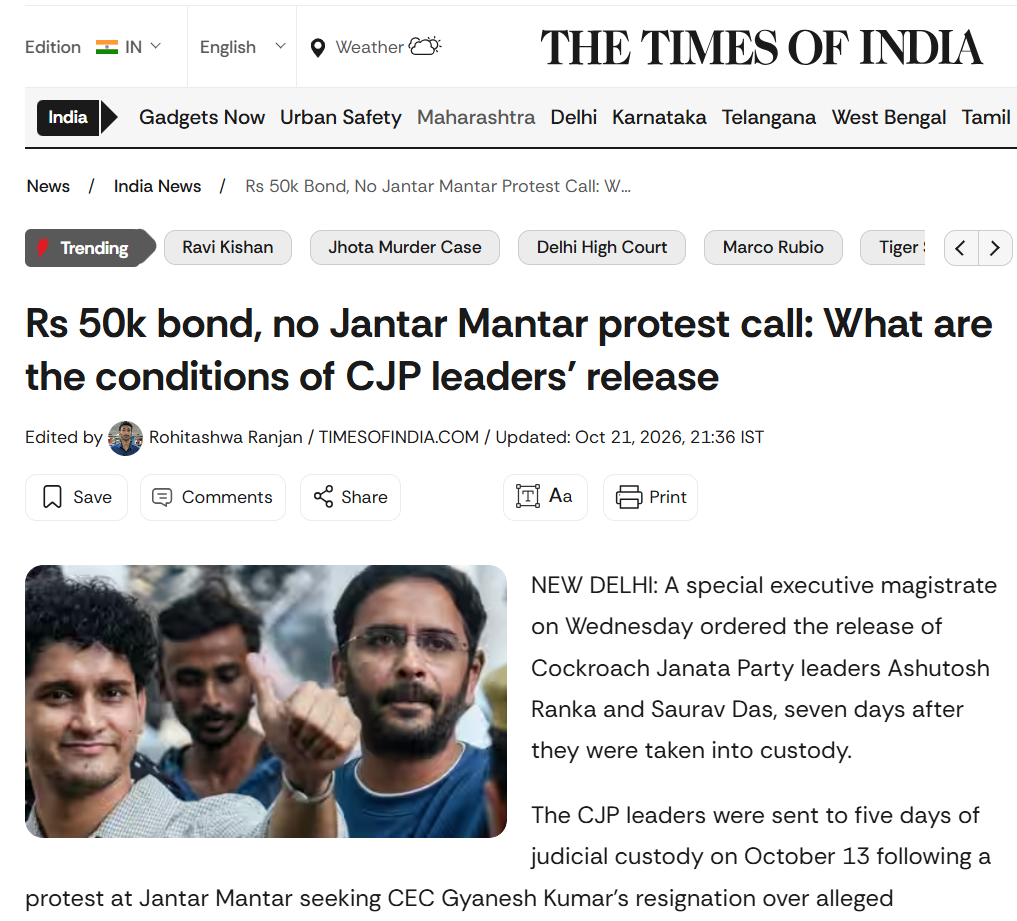
The case has sparked a wider debate about the balance between the constitutional right to protest and the government's responsibility to maintain public order. With the Delhi High Court, executive magistrates, preventive detention laws, and Jantar Mantar's controversial de-notification all becoming part of the controversy, the episode has quickly evolved into a major political flashpoint.
What Triggered the Arrests?
The controversy began when CJP announced a major protest at Delhi's iconic Jantar Mantar on October 10.
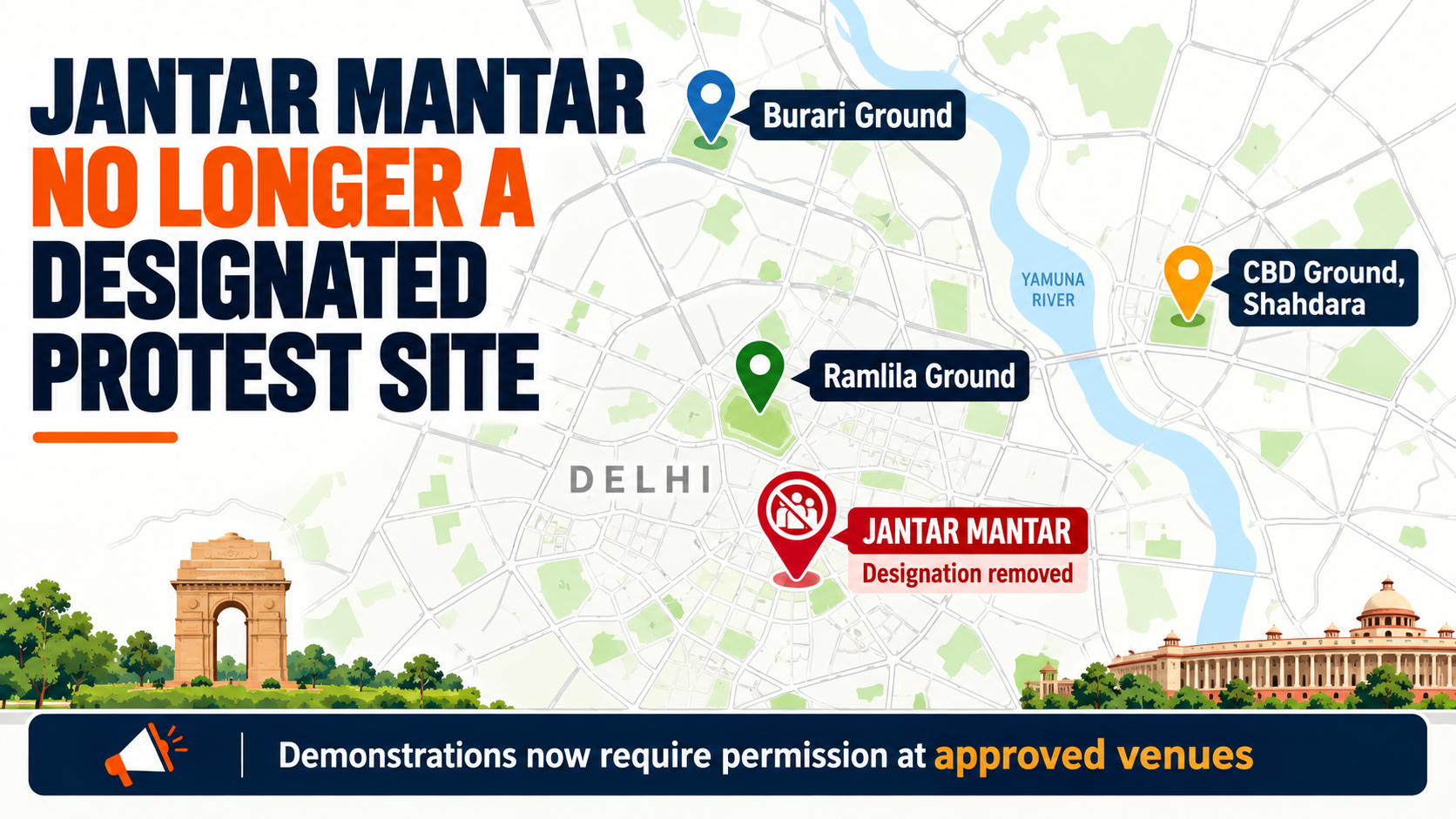
Authorities had already made it clear that Jantar Mantar was no longer an officially designated protest site. Instead, protesters were advised to seek permission at alternative locations such as:
1. Ramlila Ground
2. CBD Ground (East Delhi)
3. Burari Ground (North Delhi)
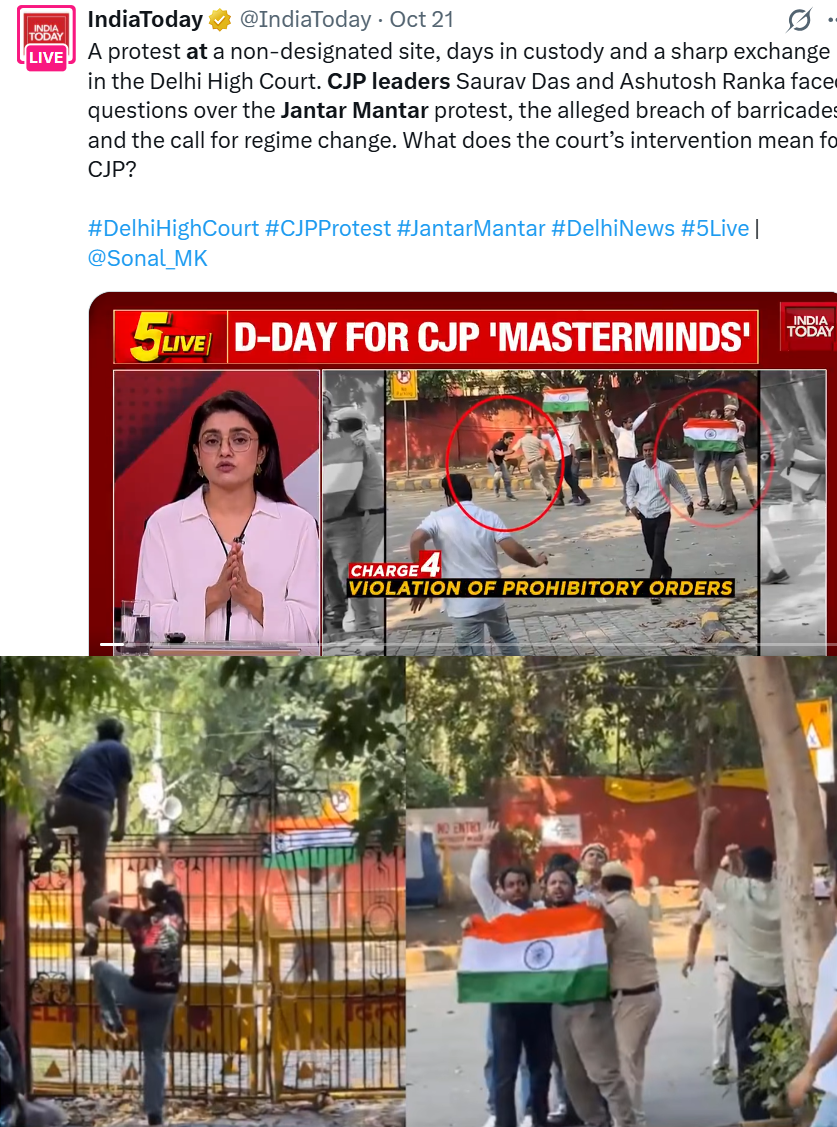
Despite these restrictions, several CJP leaders and supporters reportedly attempted to move toward Jantar Mantar, crossed police barricades, and staged symbolic demonstrations.
According to supporters, they were merely exercising their democratic right to peacefully assemble and hoist the national flag. Authorities, however, viewed the move as a violation of public-order restrictions and prior undertakings signed by party leaders.
The result: arrests, judicial custody, and an escalating legal battle.

The Bond That Changed Everything
A key aspect of the dispute revolves around a bond signed by party leaders shortly after an earlier detention.
Legal observers pointed out that by signing a peace bond, the leaders effectively entered a legal framework that empowered authorities to impose stricter restrictions if future violations occurred.
When the alleged Jantar Mantar violation took place shortly afterward, authorities argued that the terms of the bond had been breached, strengthening the legal case for detention and preventive action.
This single decision became one of the most debated aspects of the entire controversy.
Delhi High Court Steps In
As judicial custody continued, CJP leaders approached the Delhi High Court seeking relief. However, the High Court declined to intervene immediately, pointing out that the matter was already scheduled for consideration before a Special Executive Magistrate (SEM).
The court advised the petitioners to first pursue remedies before the SEM, leading to the withdrawal of their plea and shifting the focus back to the magistrate's proceedings.
The development was significant because it signalled the court's preference for following the established legal process before considering higher judicial intervention.
Release Ordered, But Under Strict Conditions
The Special Executive Magistrate eventually ordered the release of Ashutosh Ranka and Saurabh Das. However, the release came with multiple conditions designed to ensure future compliance with public-order regulations.
1. Personal and Surety Bonds
Both leaders were required to furnish fresh personal bonds and surety bonds of Rs. 50,000. In practical terms:
a) The personal bond places responsibility directly on the individual.
b) The surety bond involves another individual acting as a guarantor for future compliance.
If conditions are violated, both the individual and the guarantor may face financial consequences.
2. Maintain Peace and Public Order
The released leaders have reportedly undertaken to avoid any actions that could disturb public peace or violate the conditions laid down by authorities.
This condition is commonly imposed in preventive proceedings and is intended to reduce the likelihood of future confrontations.
3. No Protest Calls at Jantar Mantar
Perhaps the most politically significant restriction relates to Jantar Mantar itself. As long as the site remains de-notified as a protest venue, the leaders have agreed not to organize or call for demonstrations there.
This does not prohibit all protests. Instead, it requires future demonstrations to be conducted at approved locations and through official permissions.
4. Future Protests Must Remain Constitutional
The undertaking reportedly emphasizes that future agitations must operate within the constitutional and legal framework. This means obtaining necessary permissions, following prescribed procedures, and adhering to restrictions imposed by authorities.
The condition has fueled debate, with supporters describing it as limiting political activism while authorities argue it is simply enforcing existing rules.
5. Mandatory Court Appearances
The legal proceedings are far from over. The leaders have been directed to appear before the court whenever required as investigations and hearings related to the matter continue.
In other words, the release marks a pause in the legal struggle, not its conclusion.
Why the Delhi High Court's Observations Are Being Discussed
The High Court's remarks during proceedings have generated significant attention.
The court reportedly questioned why barricades had been crossed despite restrictions being in place, noting that barricades exist for a purpose and that breaching them can encourage larger crowds to follow, potentially creating law-and-order challenges.
The court also emphasized a broader principle: protests are a democratic right, but they must be conducted within lawful boundaries. This distinction has become central to the entire controversy.
The Larger Debate: Protest Rights vs Public Order
The case has reignited a familiar national discussion. On one side are those who argue that preventive detentions and restrictive conditions can chill democratic dissent and discourage civic activism.
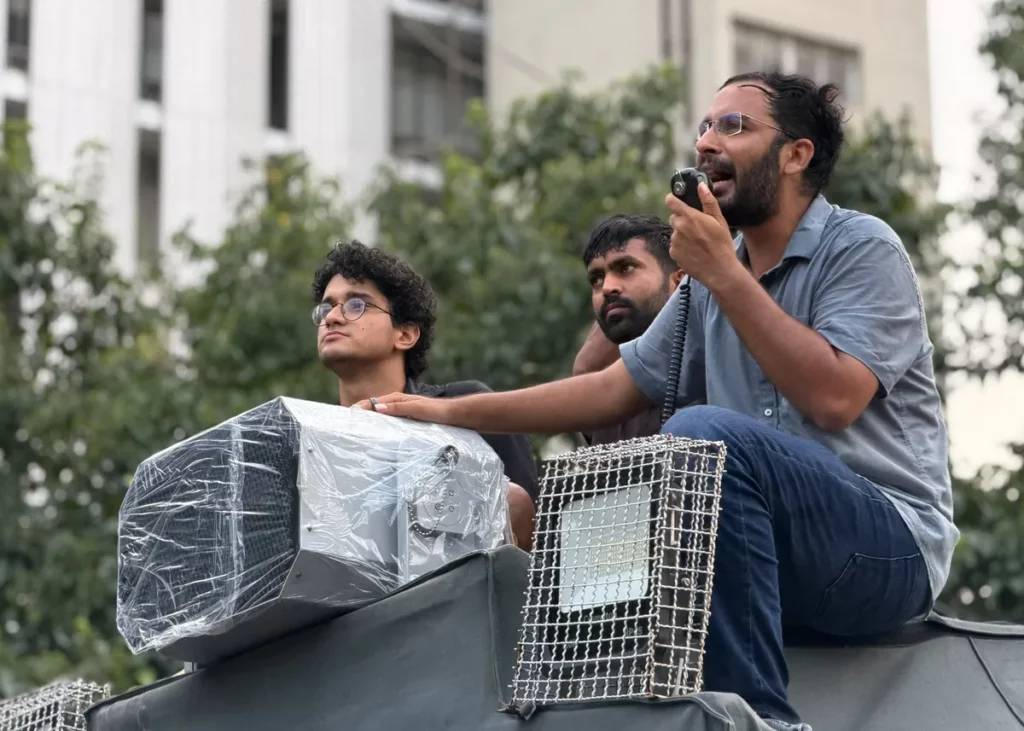
On the other side are those who contend that authorities have a legitimate responsibility to avoid situations that could escalate into disorder, particularly when official restrictions are already in place.
The tension between these two principles lies at the heart of the current dispute.
Understanding the Role of the Special Executive Magistrate
Many people became familiar with the term "Special Executive Magistrate" only because of this case.
Unlike a regular criminal court, which tries individuals for alleged offences after they occur, executive magistrates often deal with preventive measures intended to maintain public peace and order. Their powers can include:
a) Requiring individuals to execute bonds.
b) Initiating preventive proceedings.
c) Imposing conditions aimed at preventing breaches of peace.
d) Authorizing certain preventive actions under the law.
Supporters argue these powers are necessary for maintaining order. Civil liberties advocates, constitutional scholars, and some legal experts caution that such powers must be exercised carefully to avoid excessive restrictions on fundamental rights and democratic freedoms.
🔥 From Protest Mode to Pause Mode: What Next for the CJP?
Perhaps the biggest question now is whether CJP will continue pursuing aggressive street mobilization or adopt a more cautious strategy. Recent statements from party leadership suggest a temporary pause and reassessment may be underway.
CJP leadership signals a temporary reset, asking supporters to reconnect with family and prepare for the road ahead.
Acknowledging the hardships faced by volunteers, the party appealed to supporters to focus on family and recovery for the next few days. Leaders emphasized that the movement should be driven by unity, empathy, and discipline, not hostility.
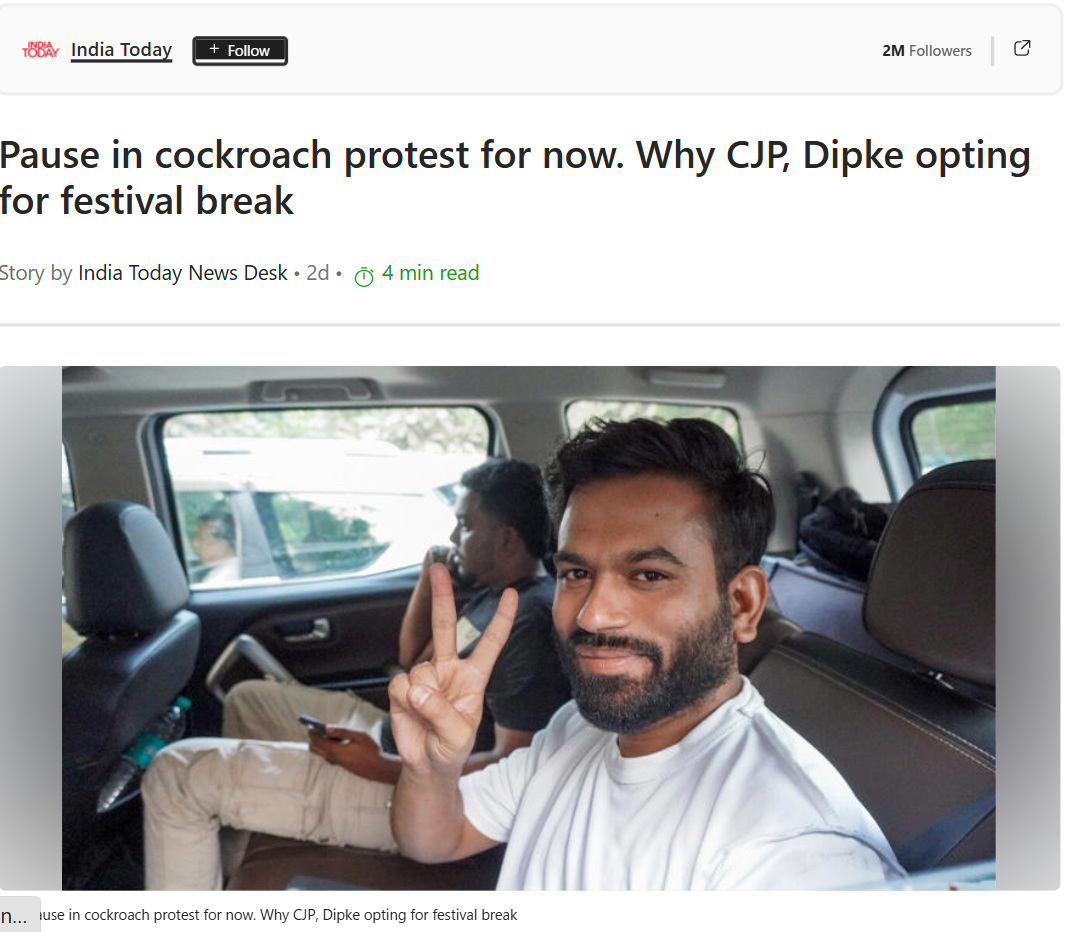
After weeks of confrontation, arrests, and court proceedings, the party appears likely to focus on regrouping, supporting volunteers, and recalibrating its next steps before launching any major public campaign.
The government's firm response has clearly altered the political landscape, forcing the movement to reconsider how future protests will be conducted.
One thing is certain: the battle has shifted from the streets to the legal and strategic arena.
🚨 CJP Leaders Finally Join Probe After Skipping Initial Summons
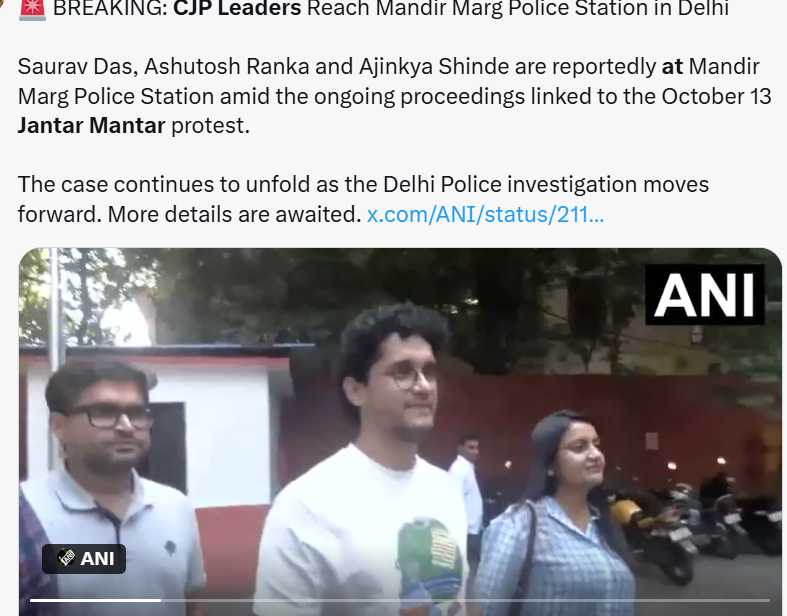
After missing their first Crime Branch appearance, key CJP figures have now reported to Delhi Police as the Jantar Mantar investigation gathers momentum.
CJP leaders Saurav Das, Ashutosh Ranka, and Ajinkya Shinde arrived at Delhi's Mandir Marg Police Station in connection with the ongoing probe into the October 13 Jantar Mantar protest. Notably, the trio had earlier skipped a Crime Branch summons and sought additional time to participate in the investigation.
With their appearance before Delhi Police, the case enters a fresh phase, signalling that the investigation is moving forward even as legal and political questions surrounding the protest continue to intensify.
🚨 Global Protest Nexus? Report Claims Links Between French Riots and Indian Demonstrations
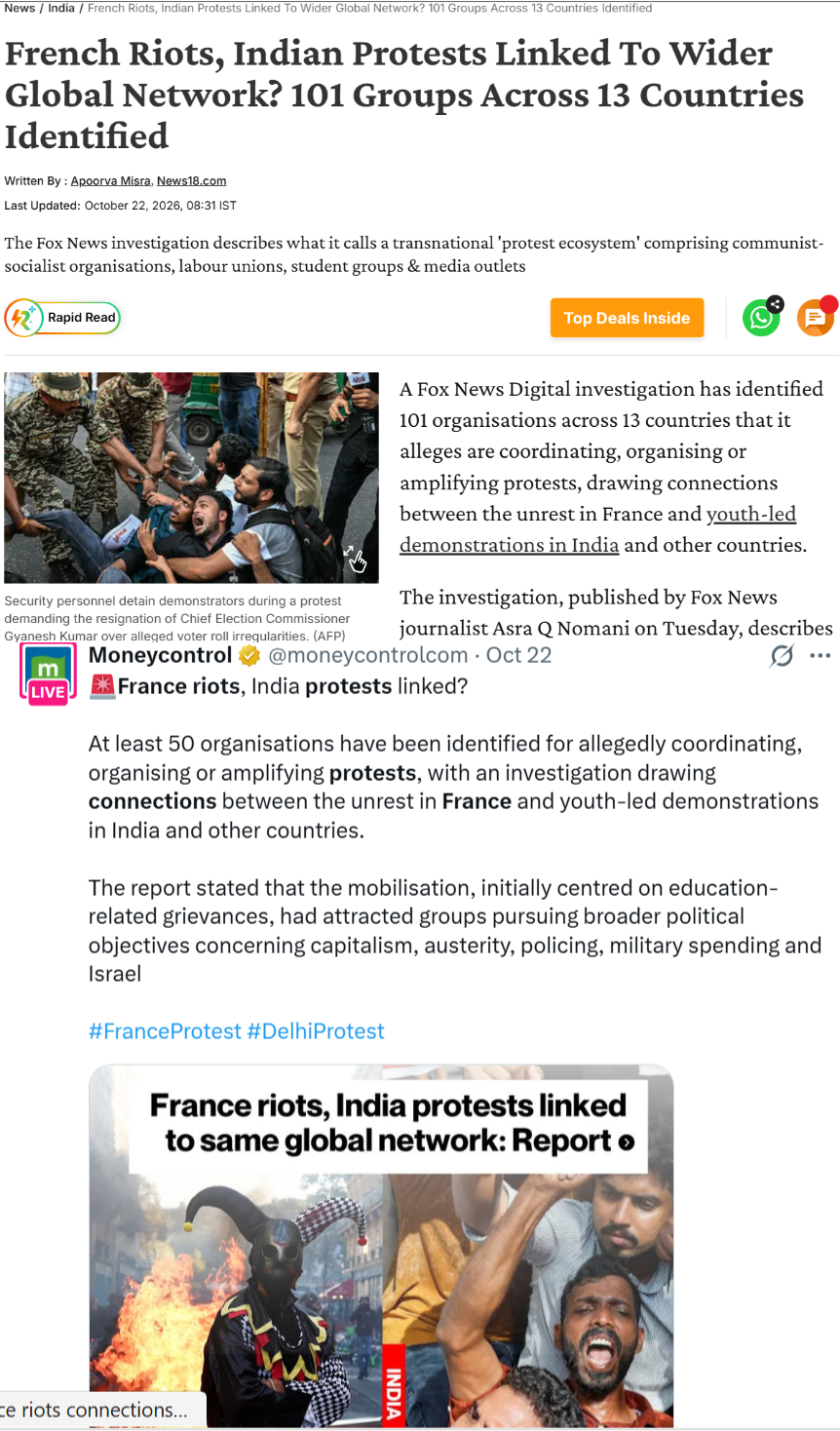
Investigation alleges a cross-border protest network spanning 13 countries, raising fresh questions about the forces shaping modern street movements.
A recent report claims that 101 organizations across 13 countries may be connected through a wider international protest ecosystem, linking unrest in France with demonstrations in several other nations, including India. The findings have sparked debate over whether today's protest movements are largely local expressions of public anger or part of broader transnational activist networks.
⚖️ Rights vs Restrictions: The Debate Continues
The release of Ashutosh Ranka and Saurabh Das may have ended their immediate stay in jail, but it has opened a much larger conversation about protest rights, state authority, preventive detention, and the future of political mobilization in India.
As courts continue examining the matter and authorities maintain their stance on public order, the coming weeks could prove crucial not only for CJP but also for broader debates surrounding democratic dissent and constitutional freedoms.
👉 What Do You Think?
Should protest movements be allowed greater freedom even when authorities impose restrictions, or are stricter rules necessary to maintain public order and prevent unrest?
📢Share your views in the comments below and stay tuned for more updates, legal developments, and in-depth political analysis.
Written by
Ishaan TrivediDiscussion (0)
Sign in to join the discussion.
Loading comments…