

Record-Breaking Copper Prices Are Sending a Warning Signal to the Global Economy
Copper prices are soaring to historic highs, leaving investors, industries, and policymakers scrambling for answers. Traditionally, rising copper prices are viewed as a sign of strong global economic growth. After all, copper is used in everything from construction and power grids to automobiles and electronics.
But this time, the story is very different.
Despite slowing global growth, trade tensions, and geopolitical uncertainty, copper prices have surged to unprecedented levels. The reason? A powerful combination of supply shortages, tariff fears, stockpiling in the United States, and booming demand from emerging technologies.
The result is a global copper crunch that could reshape industries, trade patterns, and investment strategies for years to come.
Why Copper Is Called "Dr. Copper"

In financial markets, copper is often nicknamed "Dr. Copper" because of its ability to diagnose the health of the global economy. Copper is a critical component in:
1. Construction projects
2. Electrical equipment
3. Power transmission networks
4. Telecommunications infrastructure
5. Consumer electronics
6. Automotive manufacturing
When economic activity rises, copper demand usually rises alongside it. Therefore, increasing copper prices often reflect expanding industrial production and economic growth.
However, today's copper rally is no longer driven purely by economic expansion. Something much bigger is happening behind the scenes.
Copper’s Record-Breaking Surge
From $7,500 to Nearly $14,700 Per Ton: Why Copper Is Defying Global Economic Uncertainty
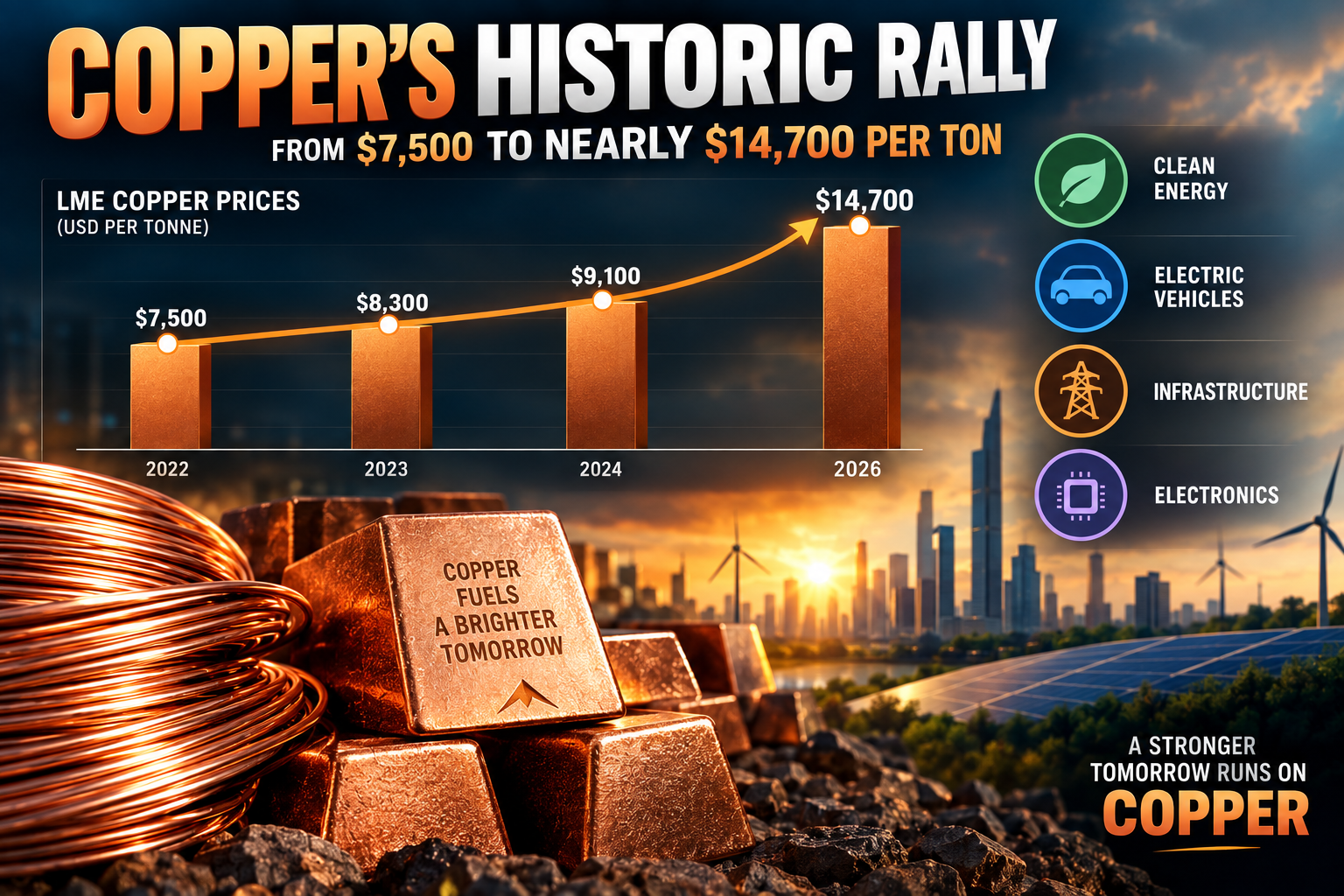
Copper prices have soared to unprecedented levels, with benchmark London Metal Exchange (LME) rates nearly doubling from around $7,500 per tonne in 2022 to $14,700 per tonne in 2026. What makes this rally unusual is that it is unfolding amid slowing global growth, US-China trade tensions, and geopolitical uncertainty. Rather than being driven solely by economic activity, the surge reflects a powerful mix of supply bottlenecks, trade-related disruptions, and booming demand from sectors such as clean energy, electric vehicles, and AI infrastructure. In short, copper has evolved from a simple industrial metal into one of the world's most strategically important resources.
The Trump Tariff Effect: Fear Is Driving the Market
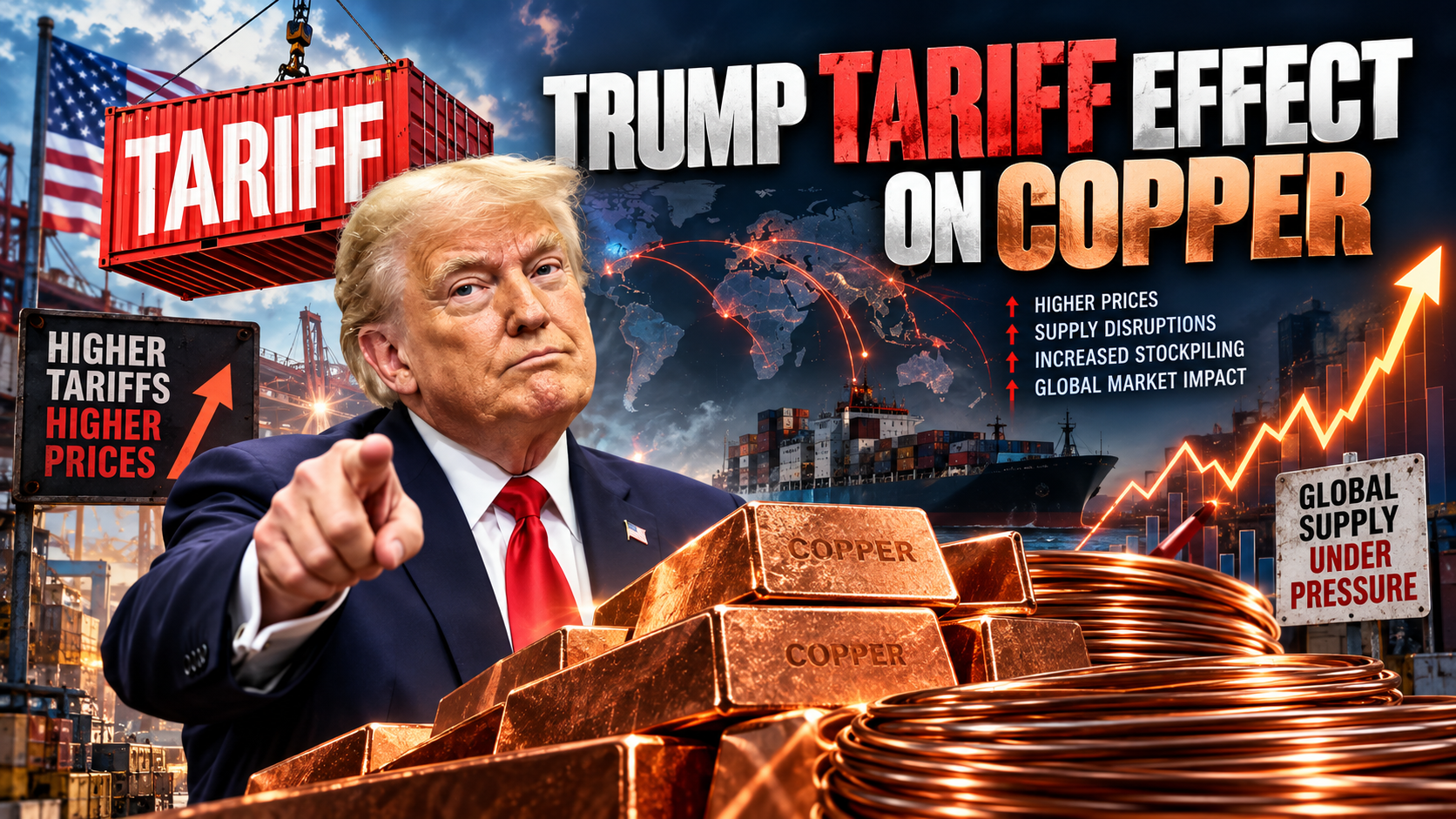
One of the biggest catalysts behind the copper rally is the growing fear of future US import tariffs. Although refined copper imports have not faced widespread tariff restrictions yet, many traders and importers believe stricter measures could arrive soon.
As a result, companies are engaging in what economists call "anticipatory buying." Instead of waiting for tariffs to be imposed, US importers are rushing to secure massive copper inventories today. The logic is simple:
1. If tariffs arrive later, imported copper will become more expensive.
2. Buying now protects companies from future price shocks.
3. Large stockpiles ensure supply security.
This has triggered a massive wave of copper accumulation across the United States.
America Has More Copper. The Rest of the World Has Less.
The current copper situation presents a fascinating paradox. The world may not actually be running out of copper in absolute terms. Instead, copper is being concentrated in specific locations, particularly within the United States.
Example: Sand in a Truck
Picture a truck carrying 10 tons of sand. As the truck drives uphill, the sand slides toward the back. The total load remains the same, but its distribution shifts dramatically.
That is what is happening in the copper market today. Supply has not disappeared, but it is becoming concentrated in fewer places.
Large quantities of copper that would normally be distributed across global supply chains are being redirected toward American warehouses and inventories. This inventory surge, driven by heightened activity on COMEX (CME Group) and guided by benchmark prices set by the London Metal Exchange (LME), has tightened global supply chains and contributed to record-high copper prices across international markets.
In essence, tariff fears have distorted the global flow of copper before any actual policy changes have fully taken effect.
Supply Constraints Are Making Matters Worse
Demand may be rising, but the supply side is struggling to keep pace. Unlike many manufactured products, copper production cannot be increased overnight. Launching a new copper mine requires:
1. Geological exploration
2. Reserve assessments
3. Environmental approvals
4. Infrastructure development
5. Mining and processing facilities
This entire process can take years, and sometimes even decades. As a result, when demand suddenly jumps, supply remains largely fixed in the short term.
This structural rigidity is one of the primary reasons copper prices continue climbing.
The World's Copper Supply Depends on a Few Countries
Another challenge is the concentration of copper production. A handful of countries dominate global output, including:
1. Chile
2. Peru
3. Democratic Republic of Congo
4. China
5. Indonesia
Any disruption in these regions can significantly impact global supply.
Chile, the world's most important copper-producing nation, has faced operational challenges in recent years, reducing production growth and creating additional pressure on global markets.
When supply is heavily dependent on only a few countries, even minor disruptions can trigger major price spikes.
Mining Copper Is Becoming More Difficult and Expensive
Even existing copper mines face a growing problem: declining ore quality. Years ago, miners could extract relatively high concentrations of copper from each ton of rock.
Today, many mature mines contain lower-grade ore. That means miners must process significantly more rock to produce the same amount of copper. This creates several challenges:
1. Higher production costs
2. Increased energy consumption
3. Greater water requirements
4. Larger environmental impact
5. Reduced profitability
As production becomes more complex and expensive, copper prices continue moving upward.
The Green Energy Revolution Is Creating Massive Demand
While supply faces challenges, demand is exploding due to the global clean energy transition. Modern economies are becoming increasingly electrified. This transformation requires enormous amounts of copper because copper remains one of the best conductors of electricity.
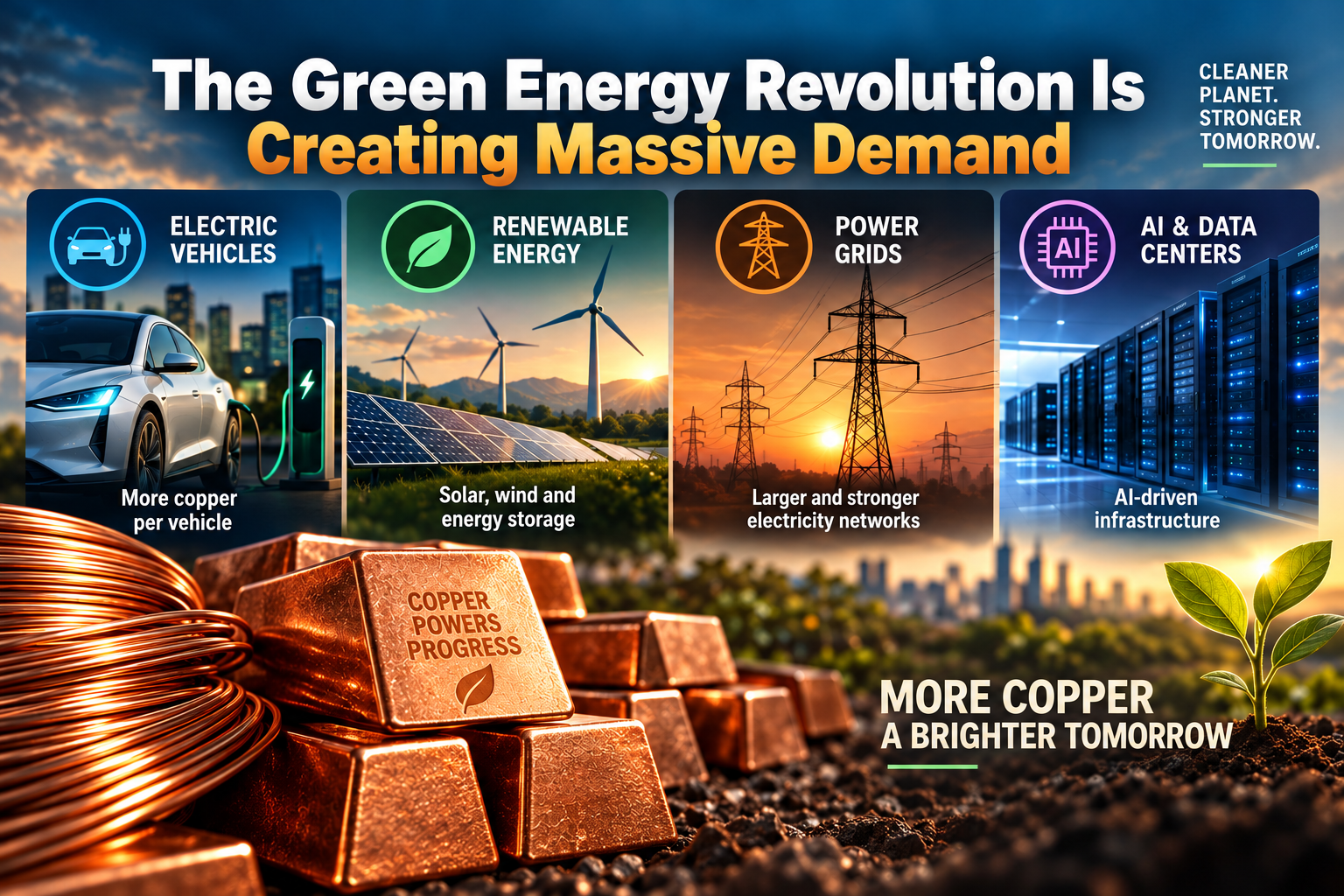
Major demand drivers include:
1. Electric Vehicles (EVs)
Electric vehicles contain significantly more copper than conventional cars. Copper is used in:
a) Electric motors
b) Battery systems
c) Charging infrastructure
d) Wiring networks
As EV adoption accelerates worldwide, copper consumption is expected to surge.
2. Renewable Energy Infrastructure
Solar panels, wind farms, battery storage systems, and smart grids all depend heavily on copper. Every new renewable energy project adds long-term demand for the metal.
3. Power Grid Expansion
Future economies will require stronger and larger electricity transmission networks. From transmission lines to transformers, copper remains an essential component.
4. AI and Data Centers Are the New Copper Super Consumers
Another major factor driving copper demand is the explosion of Artificial Intelligence. The AI boom has triggered massive investments in:
a) Data centers
b) High-performance computing infrastructure
c) Advanced cooling systems
d) Grid expansion projects
Every data center requires vast amounts of electrical wiring, power distribution equipment, and cooling technology, all of which depend heavily on copper. As AI adoption expands globally, copper demand could reach entirely new levels.
This is one reason many analysts are calling copper the most strategically important metal of the digital age.
Could Aluminum Become the Next Big Winner?

As copper prices continue climbing, industries are increasingly exploring alternatives.
One of the strongest contenders is aluminum. While copper offers superior electrical conductivity, aluminum has several advantages:
a) Lower cost
b) Lighter weight
c) Wider availability
As the price gap widens, manufacturers may gradually substitute aluminum in certain applications. If this trend accelerates, aluminum prices could experience a significant rally as well.
The Bottom Line: Copper Is Entering a New Era
The copper price surge is no longer just a story about economic growth. It is the result of a powerful convergence of factors:
✅ US tariff fears driving unprecedented stockpiling
✅ Global supply constraints and mining challenges
✅ Limited production capacity in major exporting nations
✅ Rapid expansion of EVs and renewable energy
✅ Massive AI and data center investments
✅ Structural shifts in global trade flows
Copper has become the backbone of the world's energy transition and digital future. And as demand keeps rising while supply struggles to catch up, the pressure on prices may continue for years to come.
🚀Stay Ahead of the Next Global Commodity Boom
Want more insightful analysis on global economics, geopolitics, AI, energy markets, and emerging investment trends?
Subscribe to our newsletter today and get expert breakdowns of the world's biggest economic shifts before they become headline news.
👉 Follow us, share this article, and stay informed about the forces shaping tomorrow's economy.
Written by
Vedant BhardwajDiscussion (0)
Sign in to join the discussion.
Loading comments…