
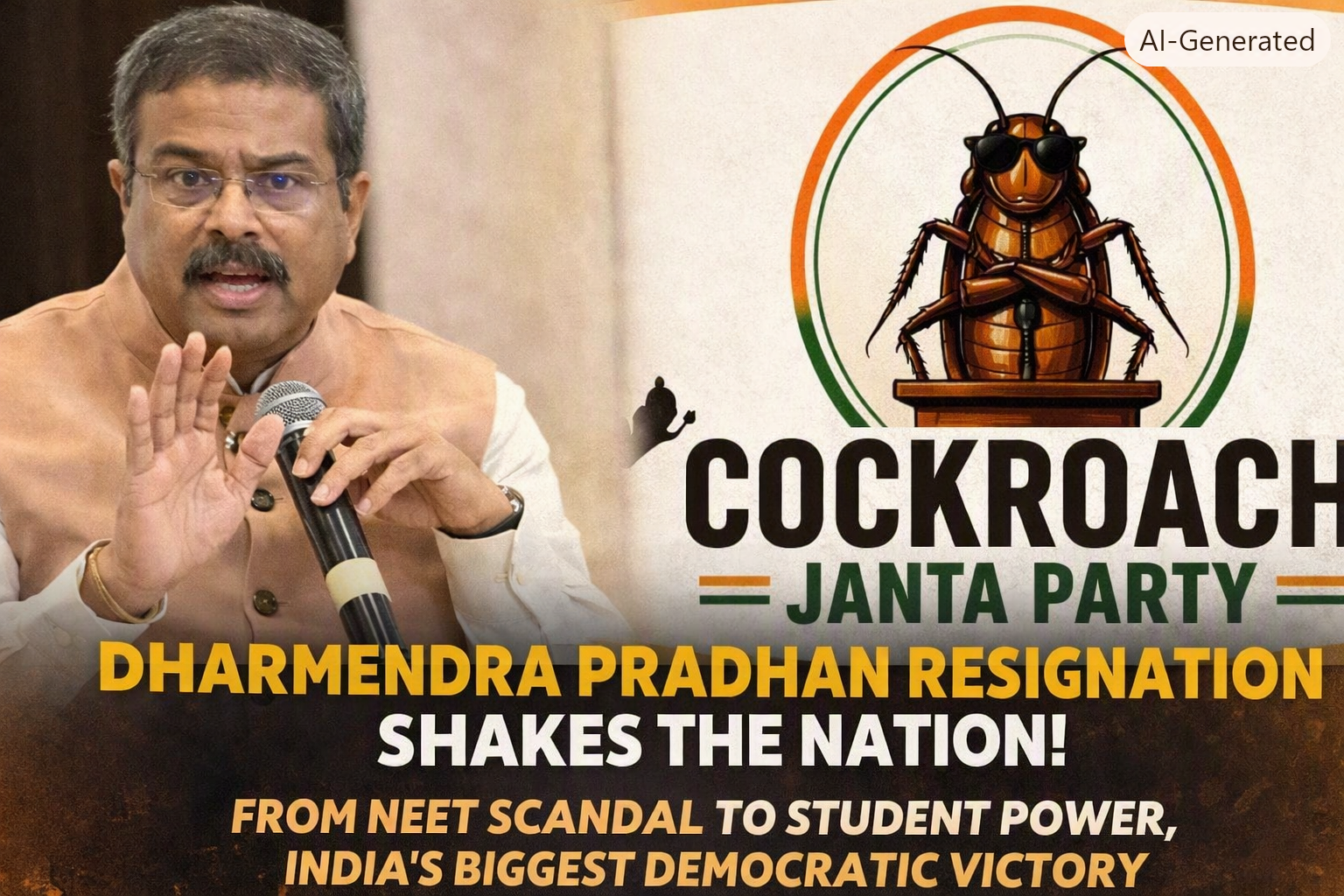
The Shockwave
India’s Education Minister, Dharmendra Pradhan, has officially resigned, sending tremors across the nation’s political and academic landscape. His exit comes after weeks of nationwide student protests and mounting opposition pressure over the NEET exam paper leak scandal.
“Ultimately, accountability lies with the minister,” protesters argued, demanding his resignation as a moral responsibility.
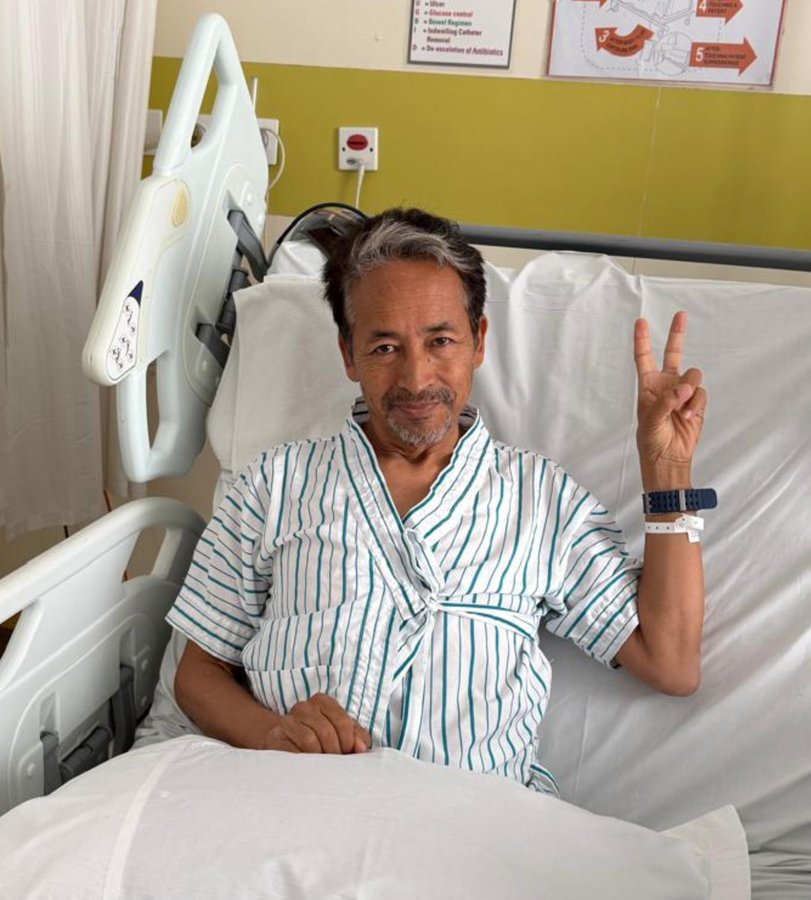
This resignation is not a victory for any political party or individual; it is a victory for democracy itself. As Sonam Wangchuk aptly summarized: “This is not a win for any party or section. This is a win for the rights of the people.”
The Minister’s Letter
In his resignation letter, Pradhan directly addressed students:
He highlighted his four-decade-long dedication to education reforms.
He recalled his own activism against paper leaks back in 1997.
He expressed gratitude to Prime Minister Narendra Modi for the opportunity to serve.
He promised that future exams would shift to computer-based testing to eliminate leak risks.
Pradhan wrote: “The youth of India is the true strength of this country. I will not let their power fall into confusion.”
Why Now? The Pressure Cooker
Several factors converged to make his resignation inevitable:
Political Pressure: Opposition leaders, including Rahul Gandhi, vowed to stall Parliament until Pradhan stepped down.
Student Power: Protests spread nationwide, with candle marches and rallies organized by student unions.
Parliamentary Deadlock: With crucial bills pending and no two-thirds majority, the government risked a complete washout of the monsoon session.
Dipke’s Reaction
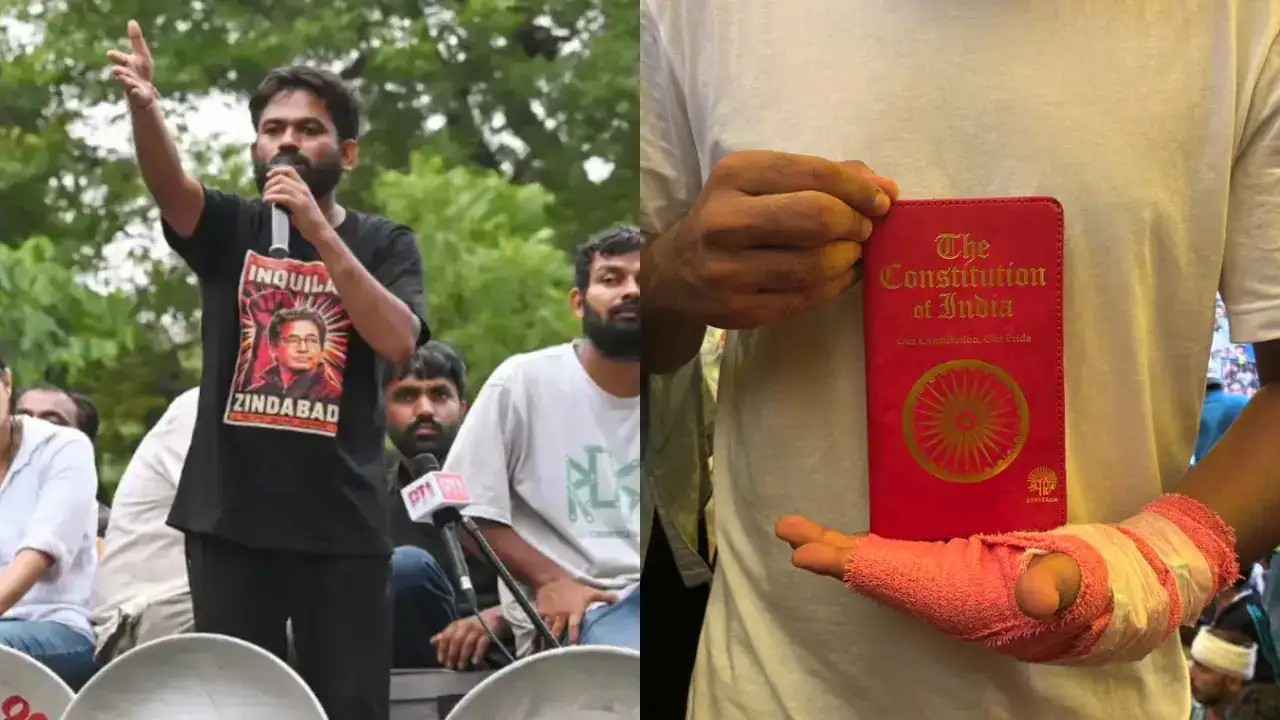
CJP founder Abhijeet Dipke hailed the resignation as a victory for students. He said, “Today the students got justice. Dharmendra Pradhan has stepped down, showing that in a democracy, if you stand firm and refuse to be intimidated, even the most powerful can be held accountable. Don’t lose courage; change is possible when you don’t give in.”
He further commented, "Kaha jaata tha iss sarkar main istife nahi hote. Jhukti hai duniya, jhukaane vaala chahiye,".
The Bigger Picture: Education vs. Infrastructure
The resignation also reignited debate on India’s education spending:
In 2013–14, education received 4.6% of the national budget.
By 2026, despite absolute spending doubling, its share dropped to 2.5%.
Meanwhile, road transport and highways now consume 5.8% of the budget, overshadowing health and education combined.
This shift reflects a policy prioritization of physical infrastructure over human capital development, raising questions about India’s long-term vision for becoming a developed nation by 2047.
Democracy’s Legacy of Resignations
Pradhan’s resignation joins a long tradition of ministers stepping down in the face of moral responsibility:
Lal Bahadur Shastri resigned after a railway accident, later becoming India’s Prime Minister.
V.K. Menon resigned following the Indo-China war.
Nitish Kumar stepped down after a tragic railway accident in 1999.
Ashwani Kumar resigned during the coal allocation scam in 2012.
These moments remind us that no minister, no ministry, no party is bigger than democracy itself.
What Next?
Pradhan’s resignation may satisfy immediate political demands, but the real test lies ahead:
Will systemic reforms prevent future exam leaks?
Can education regain its rightful share in India’s budget priorities?
Will student activism continue to reshape national policy?
Who Could Be the Next Education Minister?
Speculation is rife about who will take charge of the Education Ministry:
Jayant Chaudhary – Minister of State for Skill Development & Education.
Sukanta Majumdar – Minister of State under the Education Ministry.
Raghav Chadha – A surprising contender, seen as connected to the student movement.
While names circulate, one thing is certain: the next minister will inherit a legacy of accountability.
Why This Day Matters
This historic resignation proves that India’s democracy is not ornamental; it is functional. Ministers may not be legally bound to resign, but moral responsibility remains the soul of governance.
From 1956 to 2026, one truth stands tall: Accountability will always remain in India.
Closing Note
Dharmendra Pradhan’s exit is more than a political resignation; it’s a symbol of accountability, student power, and the urgent need to rethink India’s education priorities. Whether this marks the beginning of genuine reform or just another political compromise remains to be seen.
India can proudly say today: Democracy wins at last. This is not just about one resignation; it is about a nation reaffirming its values. Every future government will now remember: the people are watching, and accountability is non-negotiable.
India’s democracy is alive. India’s democracy will thrive. And India’s democracy will always belong to its people.
Written by
Ritvik DeshmukhDiscussion (0)
Sign in to join the discussion.
Loading comments…