
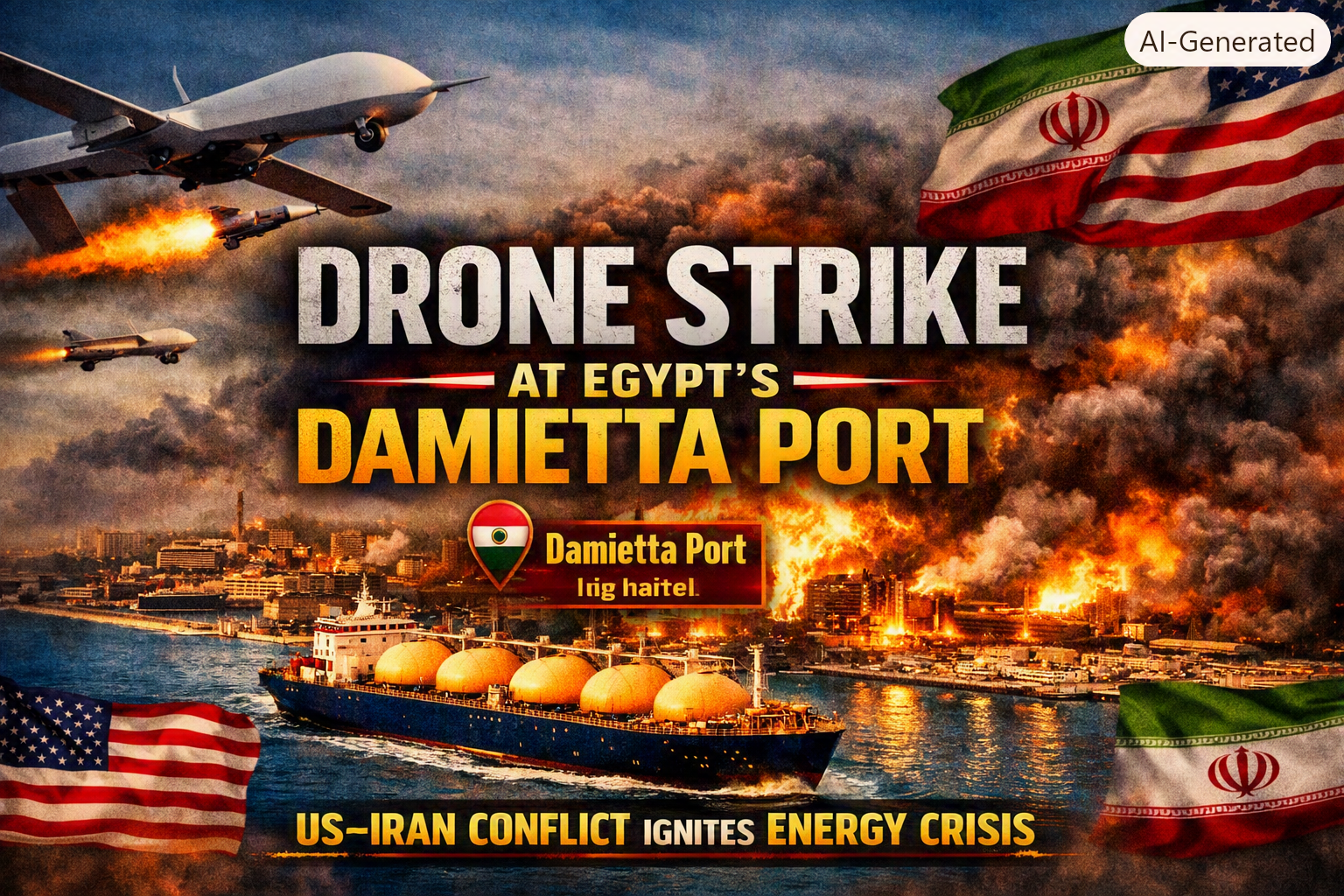
The Incident That Shook Egypt
A sudden fire broke out at Egypt’s Damietta Port, located about 200 km north of Cairo on the Mediterranean coast. Initially, authorities believed it was a routine accident. The Petroleum Ministry confirmed a blaze involving two vessels, both linked to LNG (Liquefied Natural Gas) storage and processing. Emergency teams quickly contained the fire, and thankfully, no casualties were reported.
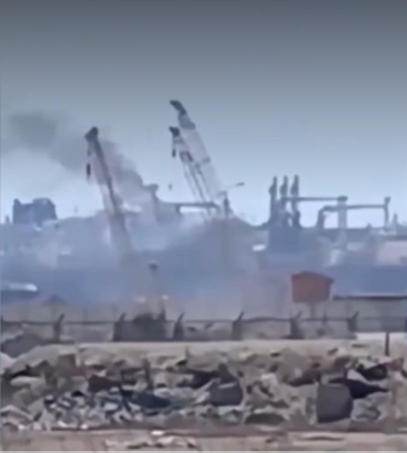
But the calm didn’t last long. By morning, Egypt’s Cabinet revealed that preliminary investigations point to a drone attack. No group has claimed responsibility yet, but suspicions immediately turned toward Iran and its regional proxies.
Why Damietta Port Matters?
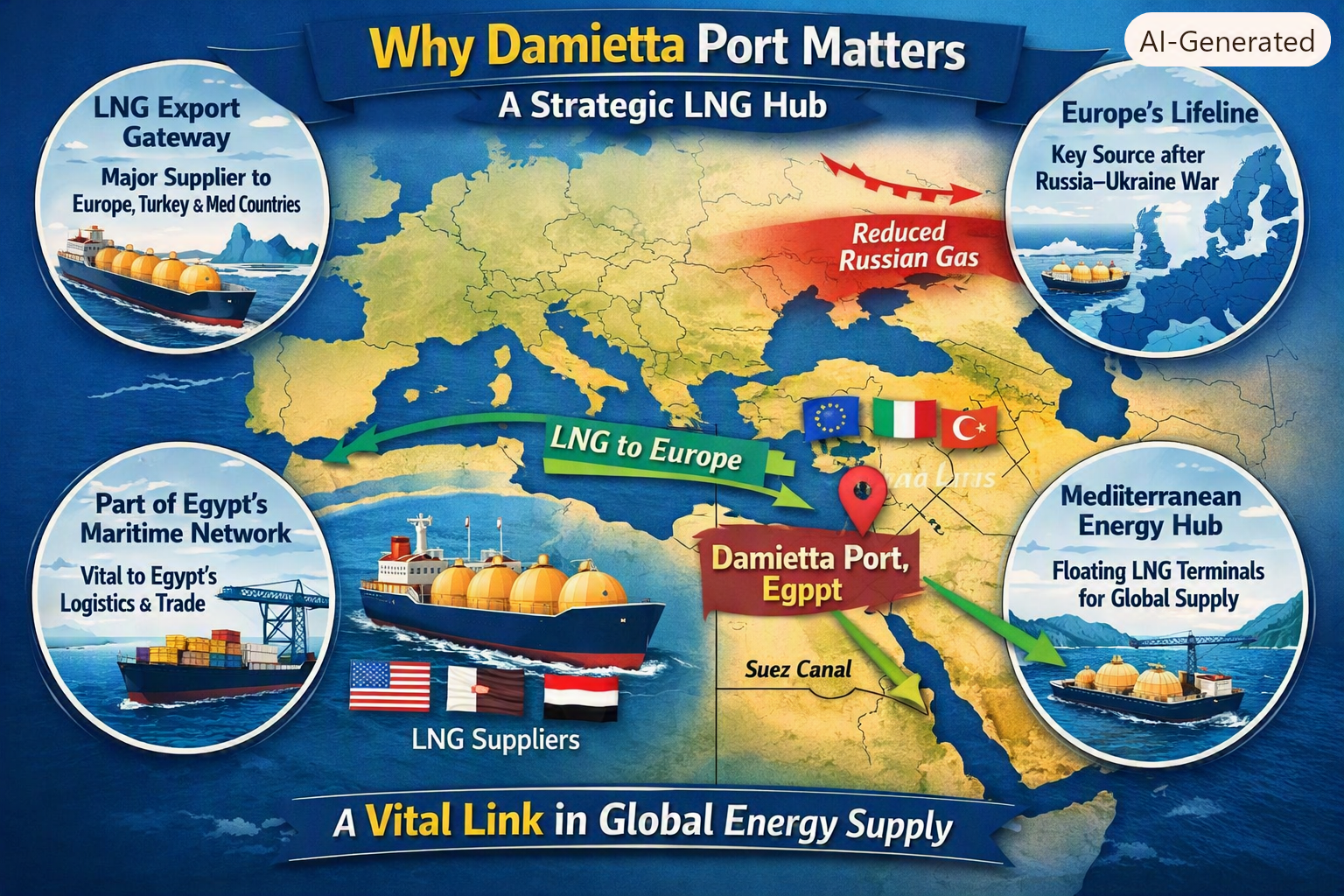
Damietta isn’t just another commercial port; it’s a strategic energy hub with four critical roles:
LNG Export Gateway: Egypt exports most of its LNG through Damietta, supplying Europe, Turkey, and Mediterranean countries.
Europe’s Lifeline: After the Russia–Ukraine war disrupted pipeline gas supplies, Europe turned to LNG imports from the US, Qatar, and Egypt. Damietta became a vital artery for Europe’s energy security.
Part of Egypt’s Maritime Network: Though not directly on the Suez Canal, Damietta is integral to Egypt’s broader logistics and energy infrastructure.
Mediterranean Energy Hub: Its floating LNG terminals make it flexible, cost‑effective, and indispensable for global energy flows.
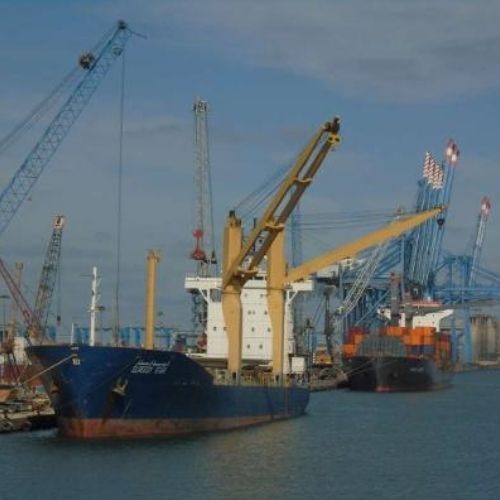
The Targets: US-Owned Vessels
Two vessels were hit:
Energos Winter – A US‑owned Floating Storage and Regasification Unit (FSRU), essentially a floating LNG terminal.
Gaslog Salem – A carrier transporting LNG across regions.
Both ships are crucial for LNG storage, conversion, and distribution. Attacking them wasn’t just sabotage; it was a direct strike on US energy assets.
Geopolitical Shockwaves
This attack comes amid escalating tensions in the Middle East:
The US has been striking Iranian targets.
Iran retaliates with drones and missiles, often via proxies like Hezbollah and militias in Iraq.
Saudi Arabia, after repeated Houthi and Iranian attacks, has now joined the US in military operations.
Targeting energy infrastructure is a deliberate strategy: disrupt supply chains, raise economic costs, undermine investor confidence, and pressure governments.
Egypt, meanwhile, is walking a tightrope. With strong ties to the US, Gulf states, Israel, and the EU, Cairo is cautious about openly blaming Iran. Escalation could drag Egypt deeper into the conflict, a risk its leadership is keen to avoid.
The Bigger Picture: Energy Security at Risk
If attacks on Damietta continue, Egypt’s LNG export capacity will shrink, leaving Europe vulnerable. With Russian gas supplies reduced, Europe’s dependence on Egypt has grown. Any disruption here could trigger energy shortages, price spikes, and political instability across the continent.
What’s Next?
The US has already launched strikes on Iran’s IRGC facilities, missile launch sites, and drone production hubs. Iran has vowed retaliation, declaring: “We will punish the aggressor today.”
The danger is clear: if Iran expands attacks beyond the Gulf, into Egypt or other regional states, the war could spiral into a full‑scale Middle East energy crisis.
Key Insight
The Damietta drone strike isn’t just another skirmish; it’s a warning shot at the heart of global energy security. With Europe’s reliance on Egyptian LNG, the stakes are higher than ever. What began as a localized fire may well ignite the next phase of the US-Iran confrontation.
Written by
Aarav VashishtDiscussion (0)
Sign in to join the discussion.
Loading comments…