
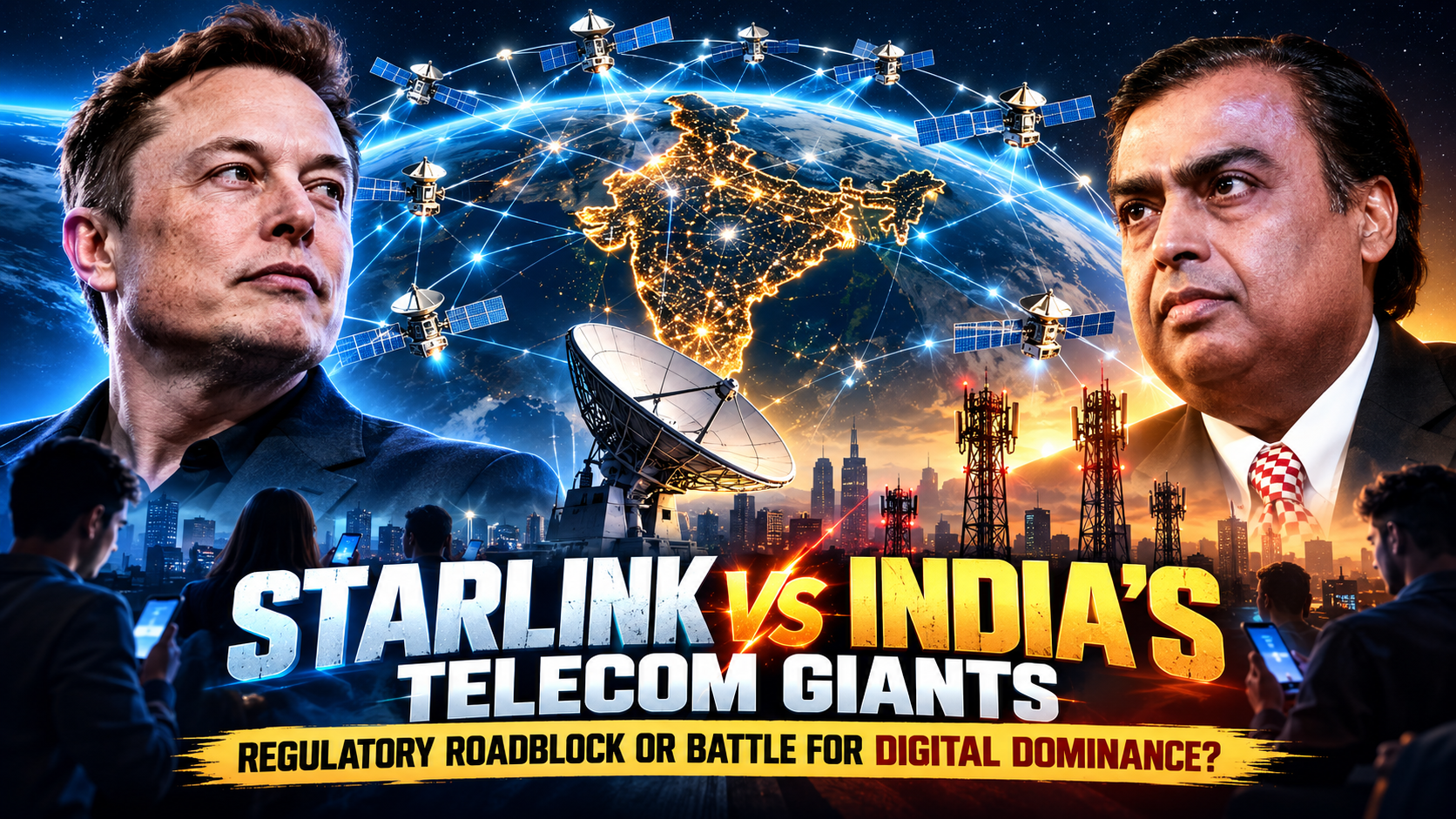
As Elon Musk accuses powerful interests of blocking Starlink’s entry into India, a fierce debate has erupted over telecom competition, national security, and the future of internet connectivity. Is corporate pressure delaying Starlink, or are legitimate regulatory concerns holding back its launch?
Elon Musk’s Explosive Allegation Shakes India’s Telecom Sector
India’s telecom market is already dominated by a handful of major players, with Reliance Jio and Bharti Airtel leading the industry while Vodafone Idea continues to struggle financially. Against this backdrop, a fresh controversy has erupted after Elon Musk publicly expressed frustration over Starlink’s delayed commercial launch in India.
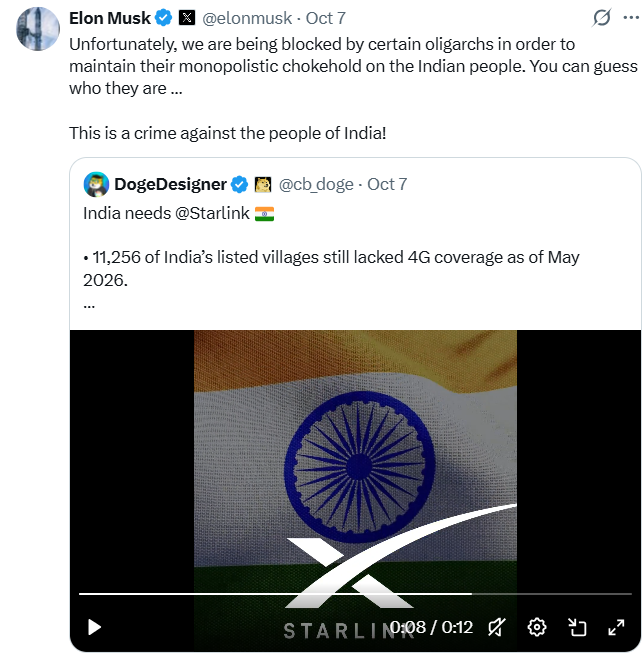
Musk suggested that "oligarchs" were preventing Starlink from operating in the country, alleging that powerful business interests were trying to protect their dominance over India’s telecom market. In a strongly worded statement, he went as far as calling the delay a “crime against the people of India.”
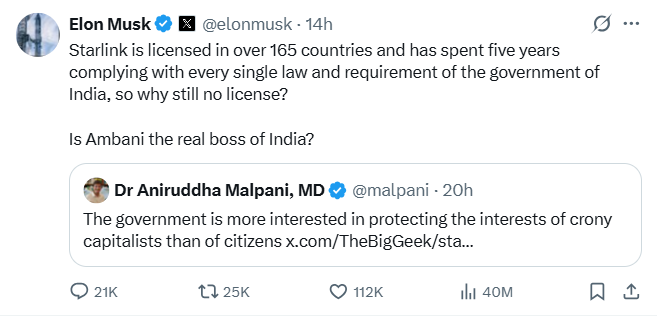
The remarks immediately sparked intense discussion across political, business, and technology circles, with many interpreting Musk’s comments as indirect criticism of India’s largest telecom companies
If Starlink Has Approvals, Why Isn’t It Operating in India?
This is the key question at the center of the debate.
According to Starlink, the company has already secured several crucial regulatory approvals required to operate in India. It has obtained the GMPCS (Global Mobile Personal Communication by Satellite) license from the Department of Telecommunications and received key approvals for space operations.
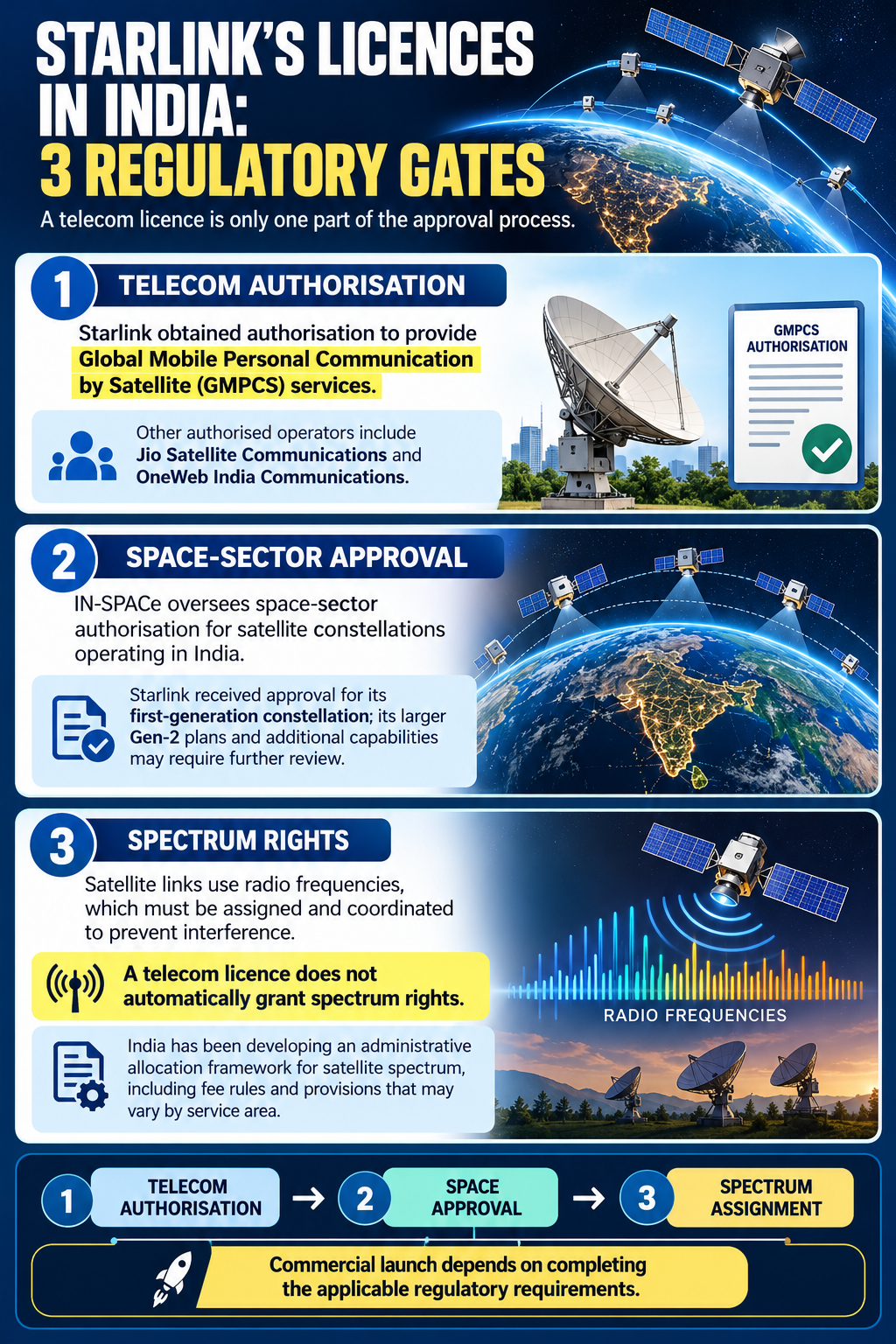
Starlink claims it has invested heavily in building infrastructure within India, including 20 gateway sites designed to support secure satellite communications and comply with Indian regulations.
Yet despite these developments, full-scale commercial operations have not begun. This apparent contradiction has fueled Musk’s argument that factors beyond routine regulation may be contributing to the delay.
What Exactly Is Starlink and Why Is It Different?
Unlike traditional internet services that rely on fibre-optic cables and mobile towers, Starlink provides internet connectivity through a vast network of satellites orbiting the Earth.
These satellites operate in Low Earth Orbit (LEO), typically a few hundred kilometres above the planet. This is significantly lower than conventional geostationary satellites, which orbit at around 36,000 kilometres above Earth.
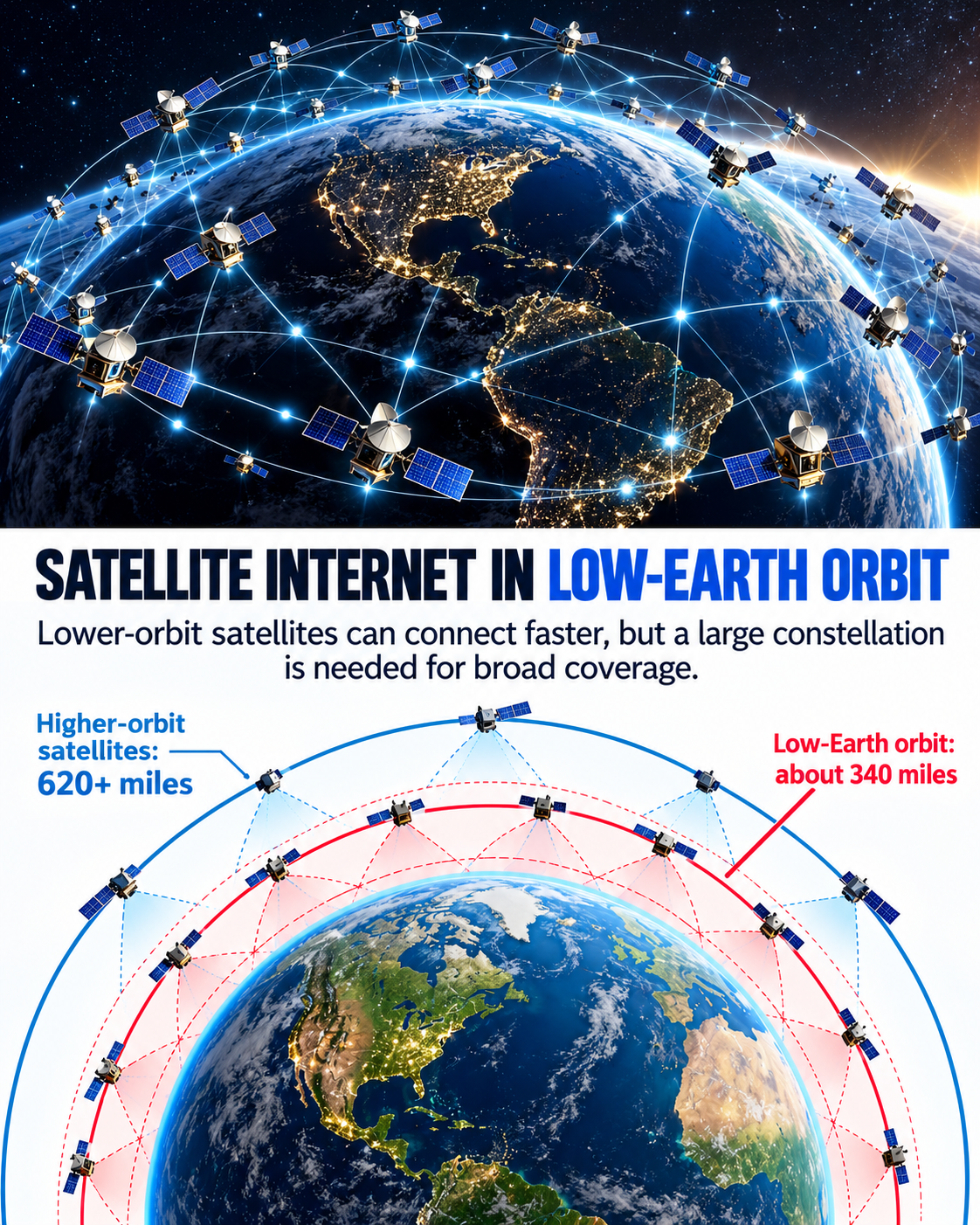
The benefits of this approach include:
1. Lower latency
2. Faster response times
3. Improved internet reliability
4. Connectivity in remote locations
Because the satellites are much closer to Earth, users experience a more responsive internet connection compared to traditional satellite communication systems.
Why India Could Benefit from Satellite Internet
In major cities such as Delhi, Mumbai, Bengaluru, Hyderabad, and Chennai, high-speed internet is already widely available through fibre and mobile networks.
However, the real opportunity for Starlink lies elsewhere. India still has many regions where traditional telecom infrastructure is difficult, costly, or impractical to build. These include:
1. Himalayan regions
2. Border areas
3. Islands such as Andaman & Nicobar and Lakshadweep
4. Remote villages
5. Desert regions
In such locations, laying fibre cables or building telecom towers can be challenging. Satellite internet can bridge this gap by delivering connectivity directly from space, helping expand digital access to people who remain underserved by conventional networks.
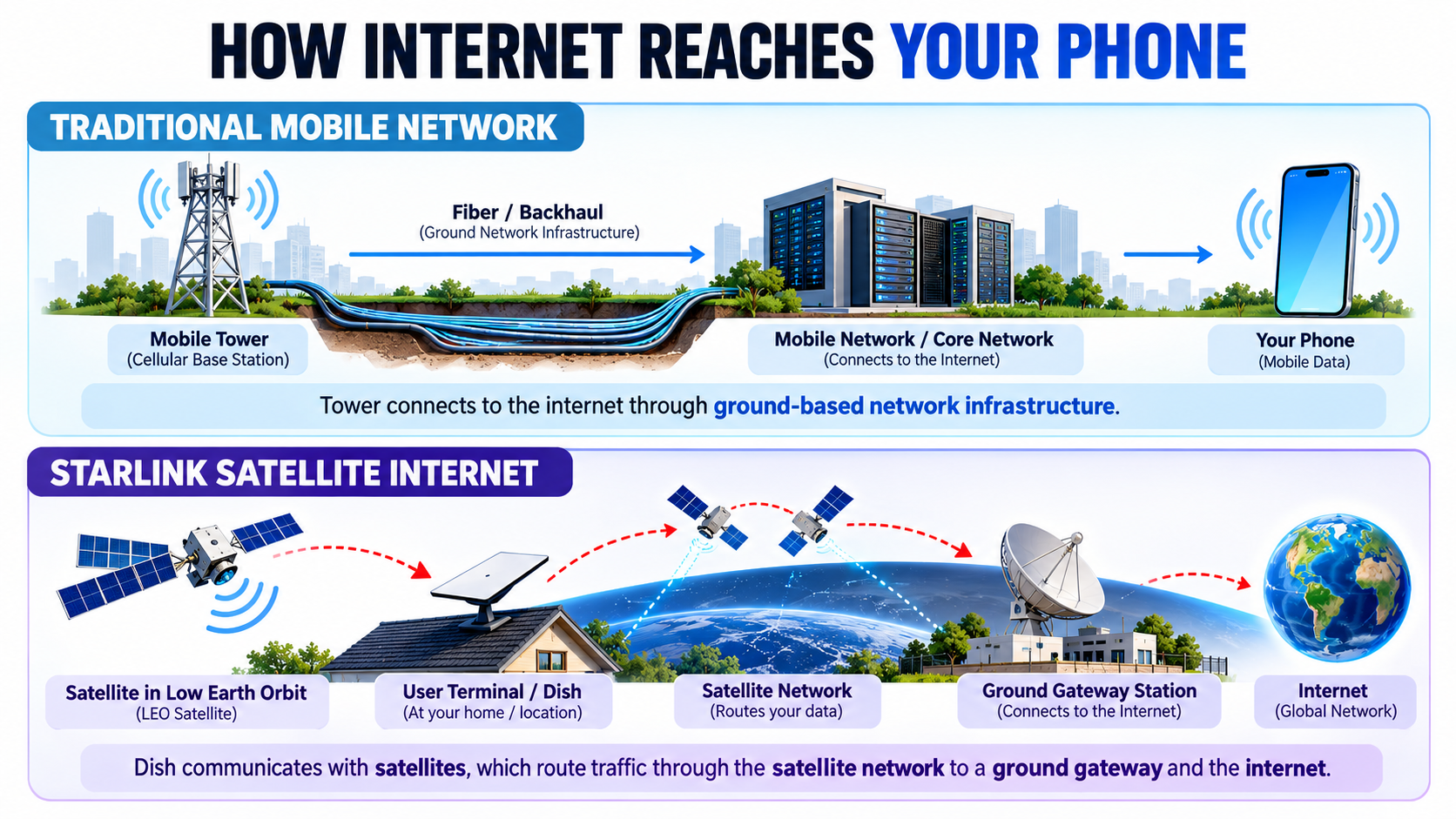
The technology could also play a vital role during natural disasters when terrestrial communication infrastructure becomes damaged or inaccessible.
Government’s Concerns: Competition or National Security?
While Musk has blamed powerful business interests, Indian authorities have consistently emphasized a different set of concerns. The government's primary focus appears to be national security.
Unlike traditional telecom networks that are geographically limited, satellite-based networks can potentially transmit signals across borders. This raises questions about monitoring, control, surveillance, and data security.
Officials are reportedly examining issues such as:
1. Border Security Risks
Satellite internet signals may extend beyond national boundaries, creating concerns in sensitive regions near Pakistan, China, Nepal, and Bangladesh.
2. Data Sovereignty
Authorities want assurances regarding where user data is processed, stored, and controlled.
3. Network Oversight
Unlike conventional telecom infrastructure located within the country, satellite systems involve space-based assets managed by foreign entities.
4. Strategic Dependence
Policymakers are also evaluating whether excessive dependence on a foreign satellite provider could create vulnerabilities during geopolitical crises.
“The conflict in Ukraine is often cited as an example of how satellite connectivity can become strategically significant during wartime.”

Are Jio and Airtel Really Threatened by Starlink?
Interestingly, many industry observers argue that Starlink is not a direct threat to India’s leading telecom operators.
The reason is simple: their target markets are largely different.
Jio and Airtel currently provide high-speed internet and mobile connectivity at relatively affordable prices through extensive on-ground infrastructure. In populated urban and semi-urban markets, their services remain cheaper and often faster for everyday consumers.
Starlink, on the other hand, is expected to serve users in areas where traditional internet access is unavailable or unreliable. From this perspective, Starlink may complement existing telecom networks rather than replace them.
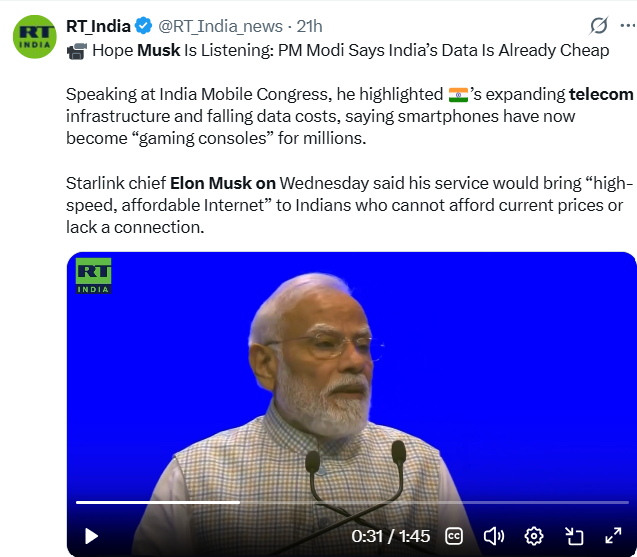
However, Musk appears to believe that established industry interests are influencing the pace of regulatory approvals and market access.
The Bigger Picture: India’s Digital Future at a Crossroads
The Starlink controversy is about more than one company entering a new market. It highlights a broader challenge facing India: how to balance innovation, competition, connectivity, and national security.
On one hand, satellite internet could accelerate Digital India initiatives, improve rural connectivity, support emergency communications, and bring underserved regions online. On the other hand, governments must ensure that critical communication infrastructure remains secure, regulated, and strategically reliable.
The final decision will likely shape the future of India's satellite broadband ecosystem for years to come.
What Happens Next?
For now, Starlink insists it has met major regulatory requirements and invested significantly in India’s infrastructure. The company wants a clear path to launch operations.
Meanwhile, Indian authorities continue to evaluate security, spectrum, and operational issues before granting final clearance. As the standoff continues, one question remains unanswered:
“Is Starlink facing resistance from powerful telecom interests, as Elon Musk claims, or is India simply taking a cautious approach toward a technology with major national security implications?”
The answer could redefine the future of internet access in the world's most populous nation.
📢 Join the Conversation
What do you think?
✅ Should India fast-track Starlink’s launch to improve rural connectivity?
✅ Or is the government right to prioritize national security and regulatory scrutiny before granting full approval?
💬 Share your views in the comments below.
📲 Follow us for sharp insights on technology, telecom, geopolitics, and the future of digital infrastructure.
🔔 Stay informed. Stay ahead.
Written by
Ritvik DeshmukhDiscussion (0)
Sign in to join the discussion.
Loading comments…