
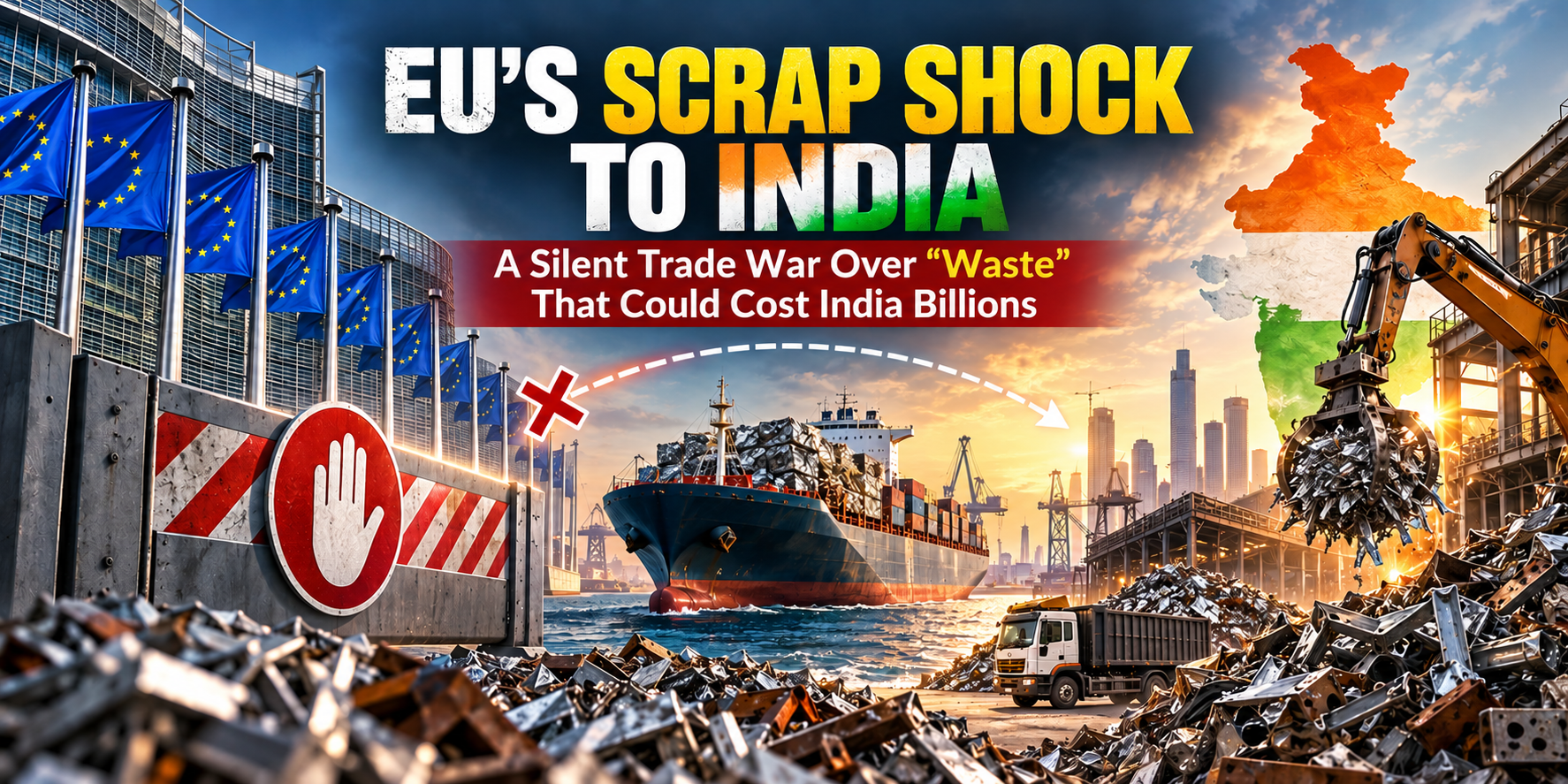
A Silent Trade War Over “Waste” That Could Cost India Billions
What if a material often dismissed as "junk" turned out to be one of the most critical inputs powering India's factories, automobiles, construction projects, and MSMEs (Micro, Small, and Medium Enterprises)?
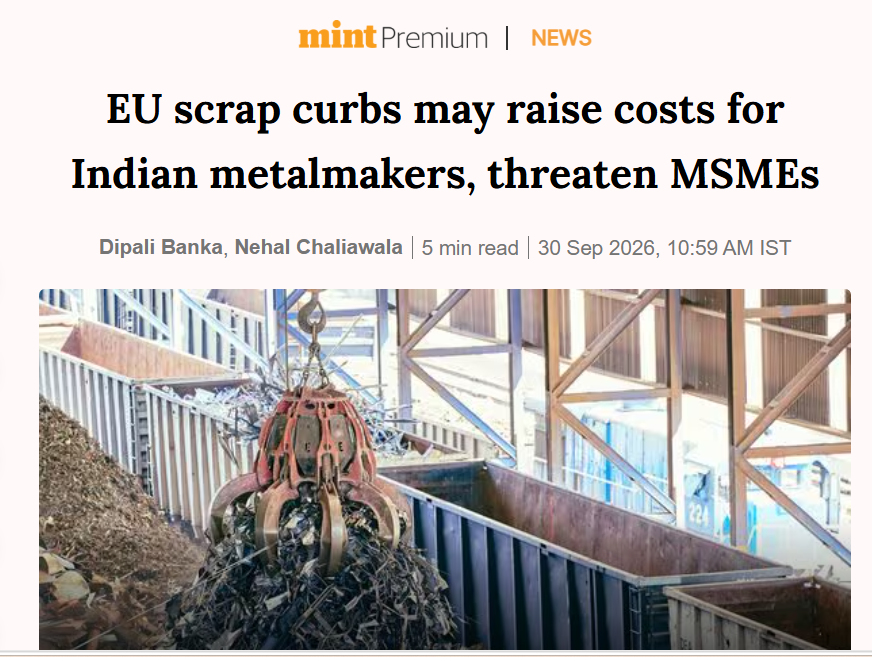
That is exactly why a recent move by the European Union (EU) has triggered concern across India's manufacturing ecosystem. The EU has proposed restrictions that could limit India's access to crucial metal scrap imports from Europe, raising fears of higher production costs, disrupted supply chains, and increased pressure on small businesses.
At first glance, it may sound insignificant. After all, we're talking about scrap metal. But in reality, this "waste" is a strategic industrial resource that fuels a significant portion of India's manufacturing sector. Let's understand why this development matters and what it could mean for India's industrial future.
What Exactly Has Happened?
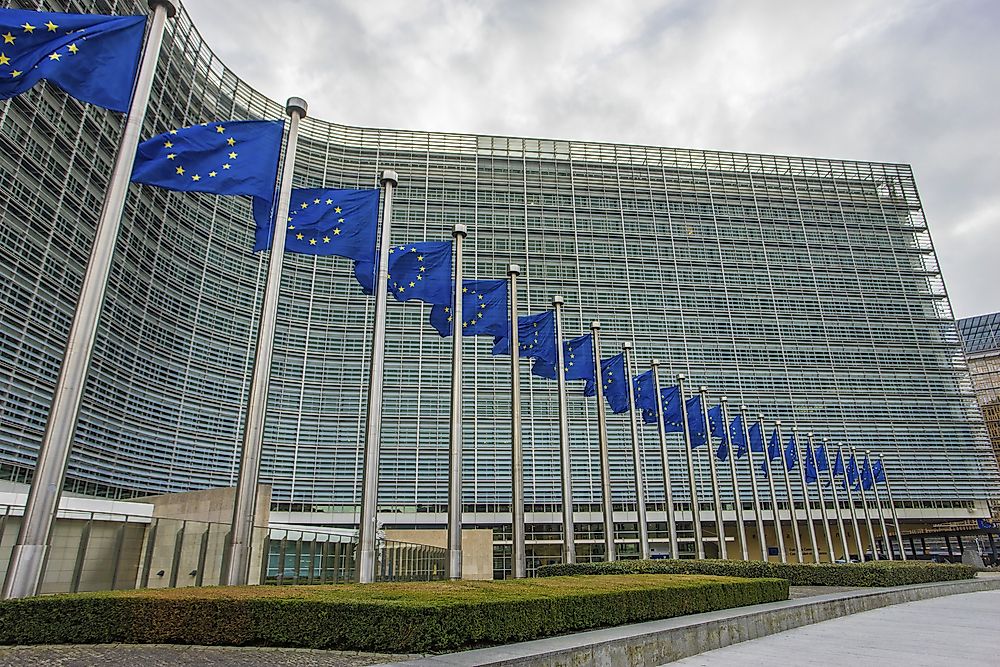
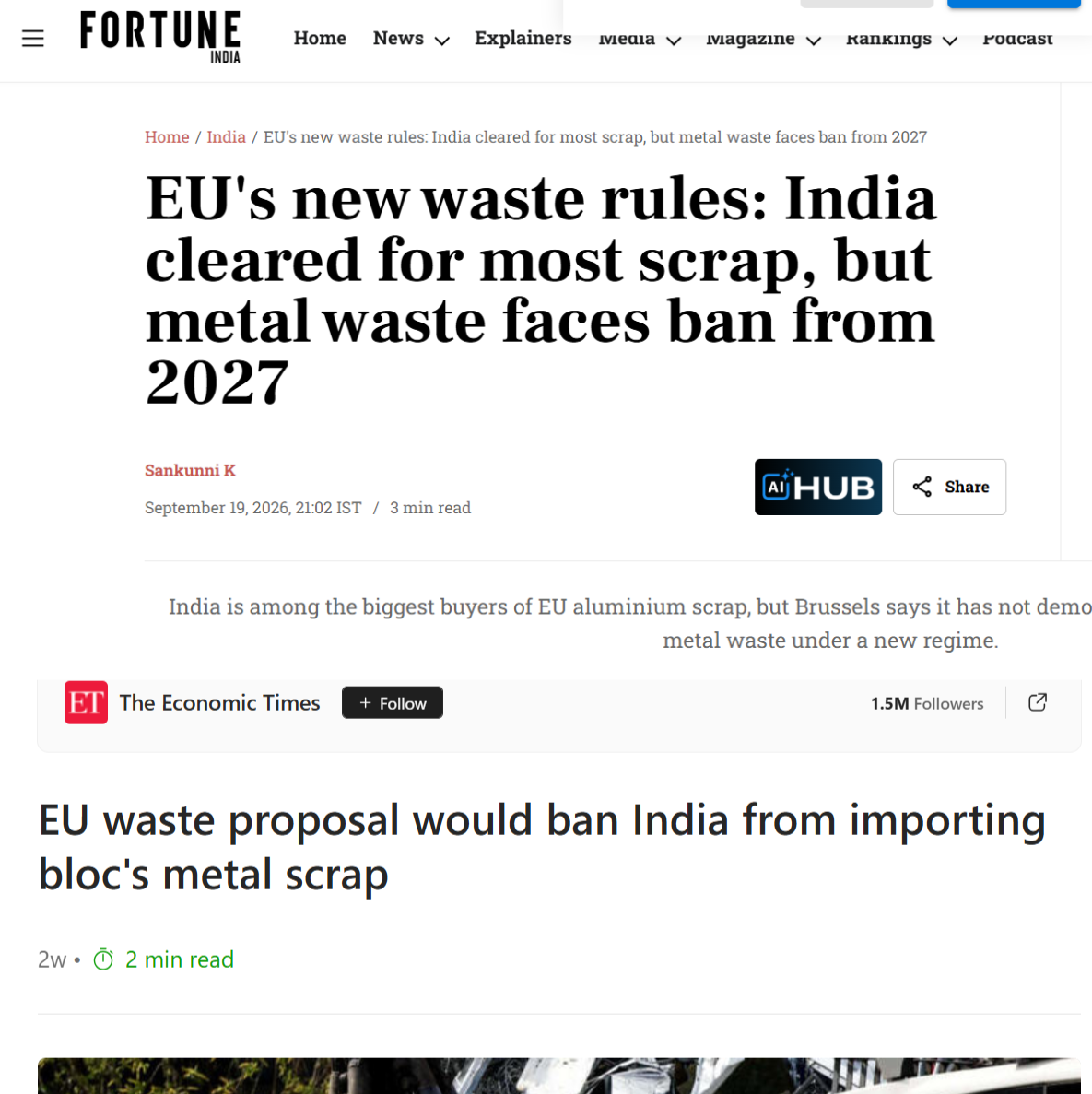
In 2024, the European Union introduced the Waste Shipment Regulation (WSR), a framework designed to regulate the export of waste materials from EU countries. The regulation is scheduled to come into effect on May 21, 2027.
As part of the process, the EU released a draft list of non-OECD countries eligible to receive certain categories of waste and recyclable materials.
Here lies the problem:
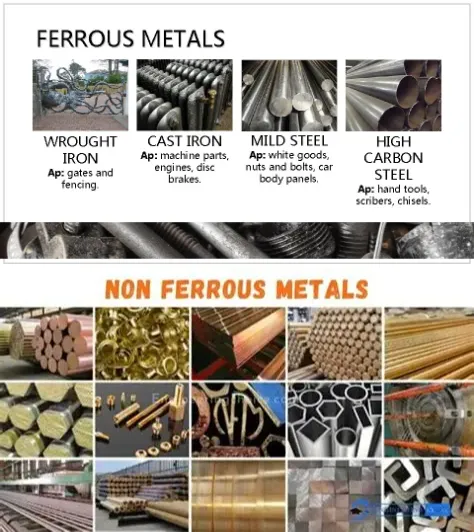
Although India appears on the broader list, key categories such as ferrous and non-ferrous metal scrap have reportedly not been included for the country. If the final list remains unchanged, India could lose access to significant volumes of European metal scrap. And that is where the alarm bells start ringing.
Europe’s New Gatekeeping Standard
The EU shipped nearly 32 million tonnes of waste in 2025, with about 40% destined for non-OECD nations. The message is straightforward: access to EU waste streams comes with a condition: prove that recycling and disposal can be carried out responsibly and sustainably.
Why Is Metal Scrap So Important for India?
Many people hear the word "scrap" and imagine useless junk lying in a scrapyard. The reality is very different.
Modern metal scrap consists of valuable materials recovered from industries such as:
1. Automobiles
2. Construction
3. Electrical equipment
4. Machinery manufacturing
5. Consumer appliances
For example, old European vehicles contain recoverable steel, aluminium, copper wiring, zinc components, and other metals that can be recycled and reintroduced into production. Instead of mining fresh raw materials, manufacturers can process scrap and transform it into usable industrial inputs.
This makes scrap:
✅ Cost-efficient
✅ Environment-friendly
✅ Energy-saving
✅ Essential for circular manufacturing
India's Massive Dependence on Imported Scrap
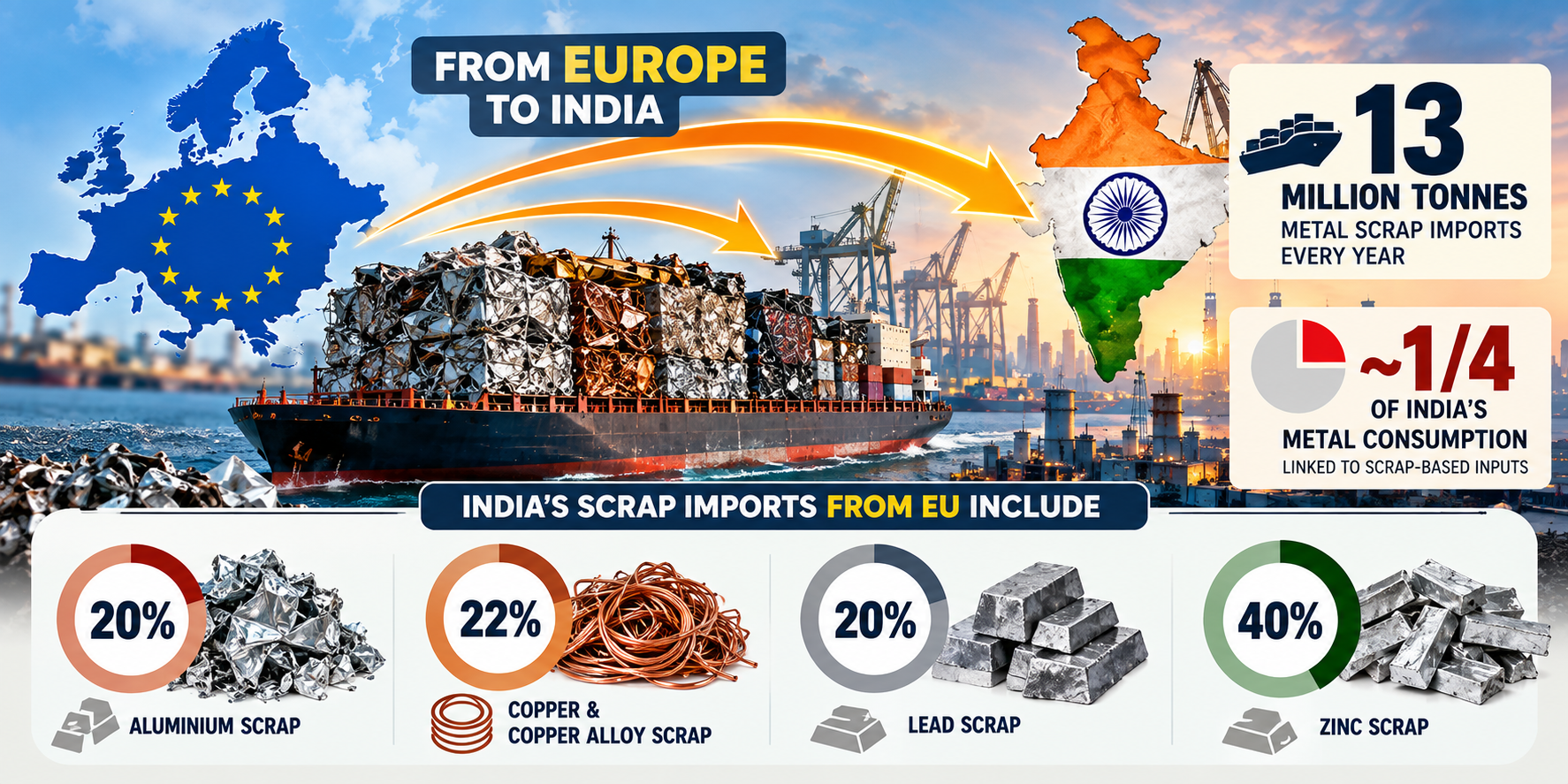
India is one of the world's fastest-growing manufacturing economies, and its demand for metals continues to surge. Every year, India imports approximately 13 million tonnes of metal scrap.
Even more striking is the fact that nearly one-fourth of India's metal consumption is linked to scrap-based inputs.
Europe plays a major role in this supply chain. A significant share of India's imported metal scrap comes from the EU, including:
1. Around 20% of aluminium scrap imports
2. Around 22% of copper and copper alloy scrap imports
3. Around 20% of lead scrap imports
4. Around 40% of zinc scrap imports
These numbers reveal a critical reality: India is deeply connected to European scrap markets. If this pipeline faces restrictions, industries across the country could begin feeling the effects almost immediately.
The EU's Official Reason: Environmental Protection
The European Union argues that the regulation is primarily about ensuring environmentally sound waste management. According to the EU's position:
1. Exported waste should be processed responsibly.
2. Illegal waste shipments need stronger monitoring.
3. Greater traceability and transparency are necessary.
4. Recipient countries must demonstrate adequate environmental safeguards.
In simple terms, the EU wants to ensure that exported waste is recycled using environmentally compliant methods. Countries receiving European waste would need to prove that their processing systems meet required environmental standards.
But Is Environment the Entire Story?
Many industry observers believe there is another factor at play. Metal scrap has become an increasingly valuable global resource.
As countries pursue green manufacturing and carbon reduction goals, recycled metals are becoming more important than ever. Producing metal from scrap generally requires significantly less energy compared to extracting and processing virgin ores.
As a result, nations are beginning to treat recyclable materials as strategic assets. Rather than exporting valuable scrap, many governments now prefer to retain these resources for their domestic industries.
This trend is often described as "Resource Nationalism."
The Rise of Resource Nationalism
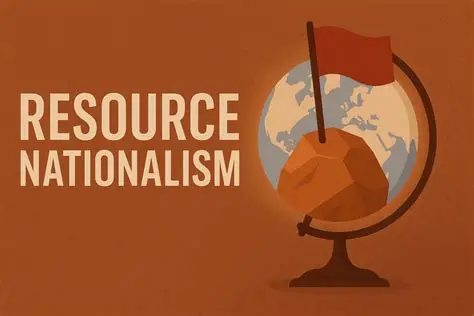
Traditionally, resource nationalism referred to governments restricting exports of resources such as crude oil, natural gas, coal and iron ore.
Today, the concept is evolving. Countries are increasingly applying similar restrictions to:
1. Recycled metals
2. Industrial waste streams
3. Critical mineral by-products
4. Strategic scrap materials
The logic is simple: "Why export valuable recyclable resources when domestic industries can use them?"
The EU's latest approach appears to be part of this broader global trend.
Who Will Be Hit the Hardest in India?
The impact would ripple through multiple levels of the economy.
1. Scrap Importers
Companies directly importing metal scrap would face immediate supply disruptions and higher procurement costs.
2. Recycling Industry
Indian recyclers rely heavily on imported feedstock. Reduced availability could shrink margins and increase operational challenges.
3. Metal Producers
Manufacturers processing aluminium, copper, zinc, and other metals would encounter cost pressures due to limited raw material availability.
4. Downstream Industries
Sectors such as:
1. Automobile manufacturing
2. Construction
3. Electrical equipment
4. Engineering goods
5. Infrastructure
could all experience rising input costs.
5. MSMEs
Perhaps the biggest victims could be India's Micro, Small and Medium Enterprises (MSMEs). Large corporations often have diversified supplier networks and greater purchasing power. Smaller businesses typically do not.
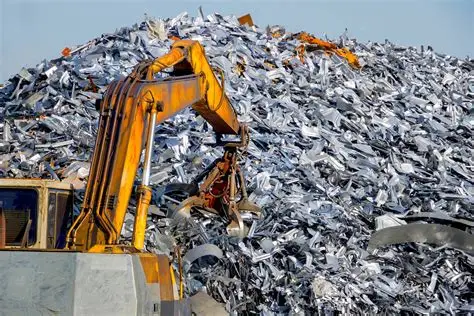
If scrap becomes scarce or expensive, MSMEs may struggle to secure alternative supplies, making them particularly vulnerable.
Why Simply Buying Scrap Elsewhere Isn't Easy
Some may wonder: if Europe stops supplying scrap, why not source it from other regions?
The problem is that global supplies are already becoming constrained. India currently imports scrap from multiple regions, including:
1. West Asia
2. North America
3. Europe
However, several countries are increasingly imposing restrictions of their own. Some have limited scrap exports, while others have introduced additional duties or policy barriers to retain resources domestically.
If more buyers suddenly shift toward North American markets, competition will intensify.
And when demand rises while supply remains limited, prices inevitably increase. This means India may still obtain scrap, but at significantly higher costs.
The Environmental Contradiction
One of the most debated aspects of this issue is the environmental paradox it creates. Recycling scrap metal is generally considered more sustainable than mining new ores.
For example, steel production can follow two paths:
1. Traditional Route
Mining → Processing → Blast Furnace → Steel Production
2. Recycling Route
Scrap Collection → Processing → Recycled Steel Production
The second route typically consumes less energy and requires fewer raw resources.
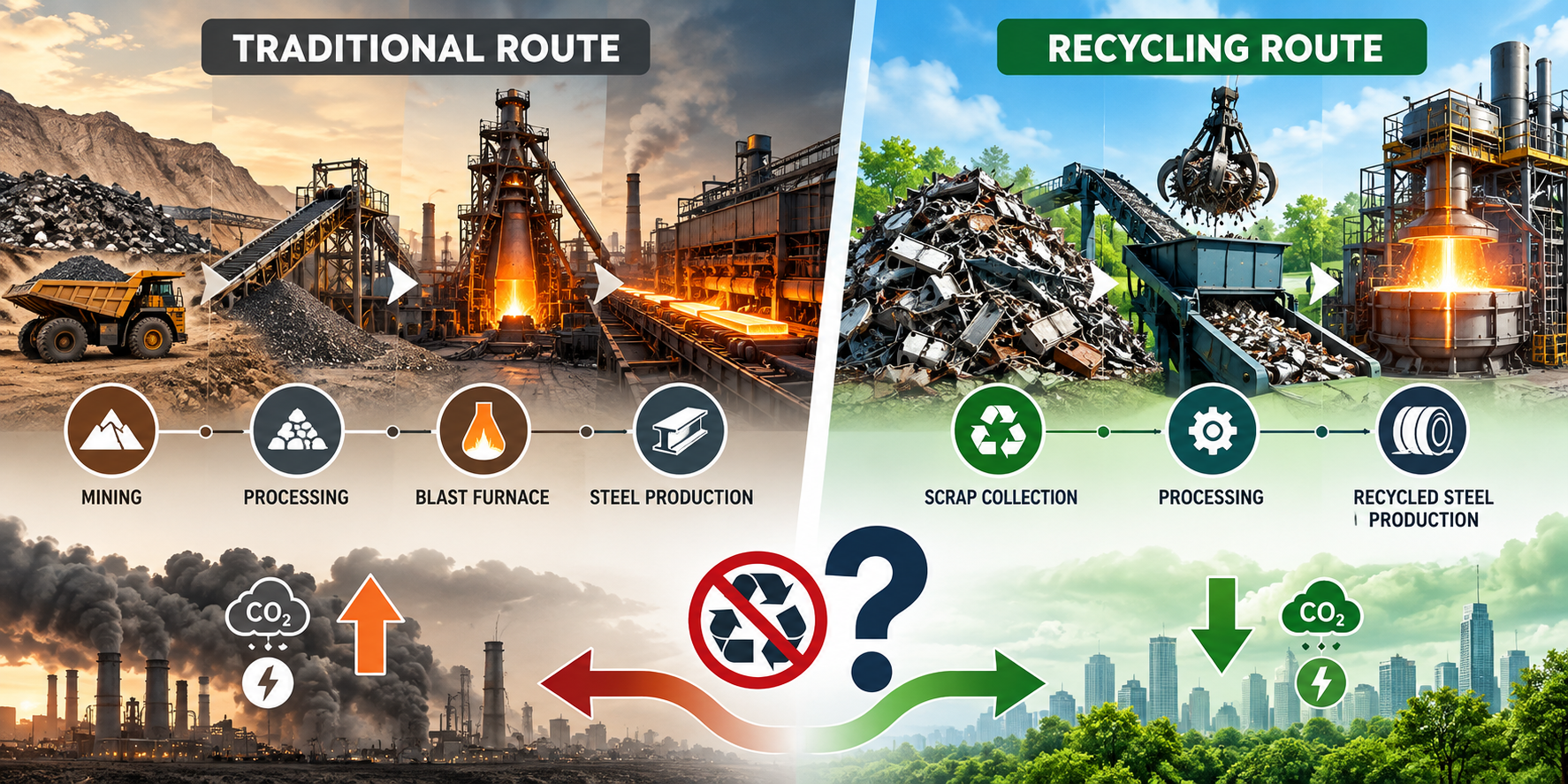
This raises a crucial question: If countries are encouraged to lower emissions and adopt circular economy practices, wouldn't restricting recycled metal flows push industries back toward more resource-intensive production methods?
Environmental economists, recycling industry representatives, and circular economy advocates argue that such restrictions may unintentionally increase mining activity and carbon emissions elsewhere.
India’s Time to Act: A Narrow Window, A Big Opportunity
The situation is not yet final. The current EU list remains in draft form, and the EU proposal is still under consultation until 16 October 2026, giving India a critical opportunity to strengthen its case.
With the first list of approved countries expected by the end of 2026 and the new export rules taking effect on 21 May 2027, India still has an opportunity to secure inclusion in the relevant metal scrap categories. To strengthen its case, India may need to demonstrate:
1. Strong environmental compliance
2. Better regulatory oversight
3. Effective pollution control systems
4. Robust waste traceability mechanisms
5. Internationally recognized recycling standards
If successful, India could continue receiving crucial metal scrap imports from Europe even after the new regulation takes effect.
The Bottom Line
This is not merely a dispute over waste. It is a strategic battle over resources that power modern manufacturing.
What appears to be scrap on the surface is actually a vital raw material supporting India's industrial growth, exports, sustainability goals, and millions of jobs.
If the EU's restrictions move forward without adequate exemptions for India, manufacturers could face higher costs, recyclers may come under pressure, and MSMEs could bear the heaviest burden.
The coming months will be crucial as India works to prove its environmental compliance and protect access to a resource that is far more valuable than its name suggests.
🚨 What Do You Think?
Should the European Union prioritize environmental safeguards, or is this a form of resource nationalism disguised as green regulation?
Share your thoughts in the comments below.
👉 Follow us for more deep dives into global trade, geopolitics, manufacturing, and the economic decisions shaping India's future.
📩 Subscribe to our newsletter and never miss the stories that impact businesses, investors, and industries across the world.
Written by
Bhavana SharmaDiscussion (0)
Sign in to join the discussion.
Loading comments…