
A Shockwave Across World Markets
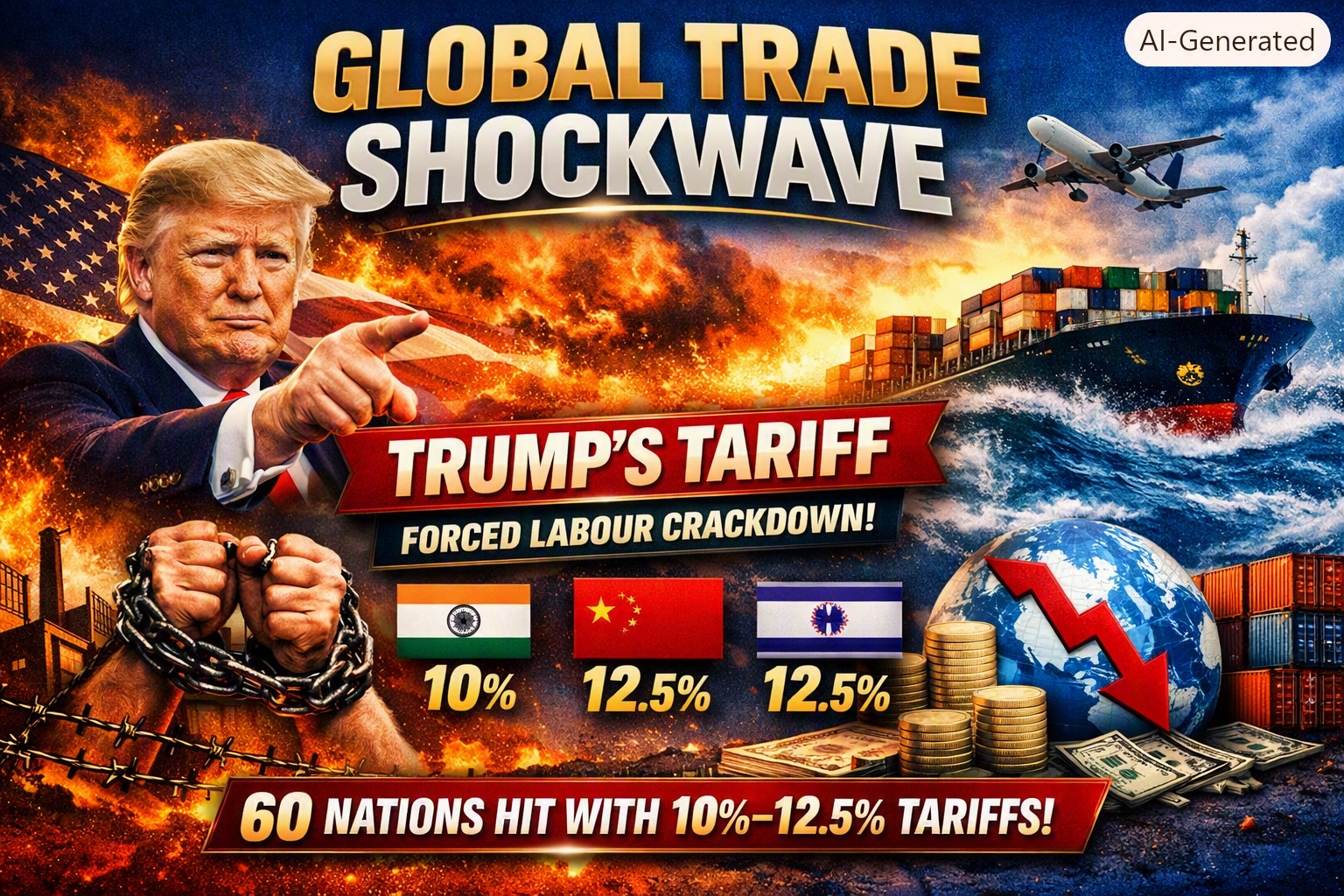
Donald Trump’s administration has once again jolted the global economy, announcing sweeping tariffs on nearly 60 trading partners, including India, the UK, Pakistan, Bangladesh, and Canada. The move, framed as a crackdown on forced labour in global supply chains, imposes 10% tariffs on countries like India and 12.5% on China and Israel.
Why Forced Labour Became Trump’s Weapon?
Traditionally, Section 301 of the U.S. Trade Act has been used to address issues such as intellectual property theft or unfair market restrictions. But for the first time, Trump has invoked it to target forced labour practices. According to the International Labour Organization, forced labour includes coercion, human trafficking, bonded labour, and modern slavery, affecting an estimated 28 million people worldwide.
Trump argues that countries using exploitative labour gain an unfair cost advantage. Consider an example of solar panels: In the U.S., manufacturers must comply with strict labour laws, safety standards, and fair‑wage requirements, which drive production costs higher. In regions where forced labour is alleged, such as Xinjiang in China, panels can be produced at a fraction of the cost because workers are coerced, underpaid, or denied basic rights. A panel that costs $200 to produce in the U.S. might be exported from China for just $80. This price gap, Trump claims, gives an unfair advantage to exploitative supply chains and distorts global competition.
What Exactly Is Forced Labour?
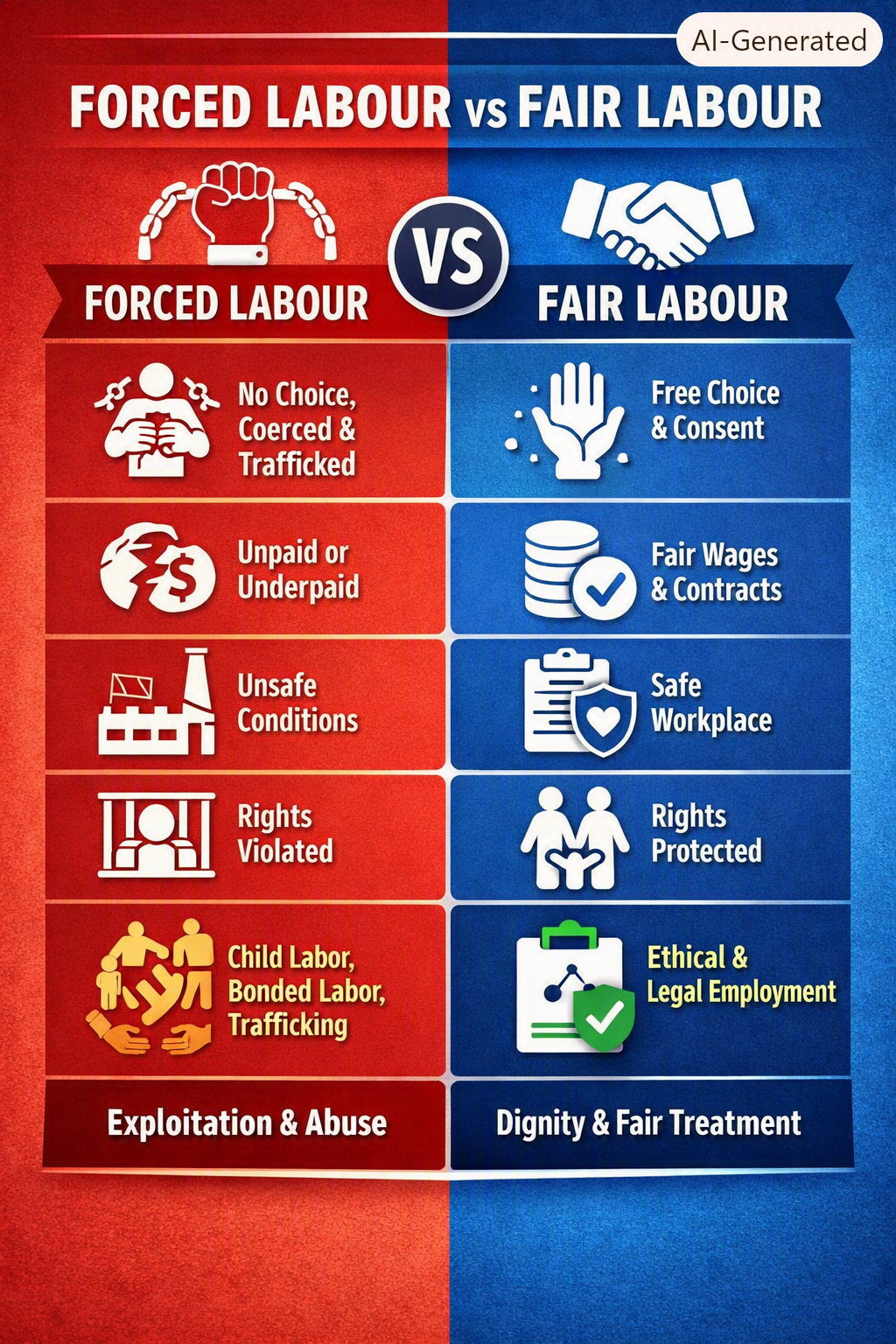
Forced labour is any work or service extracted from a person under threat, coercion, or without consent. Unlike low‑wage employment, where workers voluntarily accept poor pay, forced labour involves no choice; people are compelled to work through intimidation, trafficking, debt bondage, or slavery.
Global Examples of Forced Labour
Xinjiang, China: Alleged use of Uyghur Muslims in cotton, textiles, and solar panel factories.
Agriculture & Mining: Millions worldwide trapped in bonded labour in farms, brick kilns, and mines.
Domestic Work: Migrant workers forced into long hours without pay or freedom.
Manufacturing: Products like shoes or solar panels produced cheaply by exploiting coerced workers, creating unfair competition in global trade.
India’s Strong Stand Against Exploitation
India has robust constitutional and legal safeguards to prevent forced labour:
Article 23 of the Constitution prohibits trafficking, beggar (unpaid labour), and all forms of forced labour.
Bonded Labour System (Abolition) Act, 1976 abolishes bonded labour and cancels bonded debts.
Child Labour (Prohibition and Regulation) Act bans child labour in hazardous industries.
Supreme Court Rulings have held that paying below minimum wage amounts to forced labour.
Just ten days before Trump’s announcement, the Indian government declared a ban on imports of goods produced with forced labour, empowering the Directorate General of Foreign Trade (DGFT) to investigate supply chains and restrict unethical products. This aligns India with global standards while reinforcing its commitment to human rights and ethical trade practices.
India in the Crosshairs
India has been placed in the 10% tariff category, sparing it from the harsher 12.5% bracket reserved for China. Analysts suggest this reflects recognition of India’s recent efforts to regulate imports linked to forced labour.
Still, the impact will be severe: nearly 99% of India’s exports to the U.S., including textiles, garments, leather, gems, jewellery, and chemicals, will face tariffs. Compliance costs are expected to rise, especially for small businesses, and trade disputes may escalate to the WTO.
China: The Primary Target
While India faces collateral damage, China remains the central focus. The U.S. has long accused Beijing of using forced labour, particularly involving Uyghur Muslims in Xinjiang’s cotton, textile, solar panel, and tomato industries. Washington had already passed the Uyghur Forced Labour Prevention Act, blocking such imports. Trump’s new tariffs broaden this battle, extending scrutiny to dozens of other nations.
What’s Next?
This tariff war marks a new era in which human rights and labour ethics have become instruments of trade. For India, the challenge lies in balancing compliance with safeguarding its exporters.
For global markets, the key question is whether these tariffs will truly curb forced labour or merely spark another round of trade disputes.
By standing firm on labour laws and banning forced‑labour imports, India positions itself as a responsible player in global trade. The challenge, however, lies in verifying complex supply chains and ensuring compliance without overburdening small businesses.
Written by
Ritvik DeshmukhDiscussion (0)
Sign in to join the discussion.
Loading comments…