
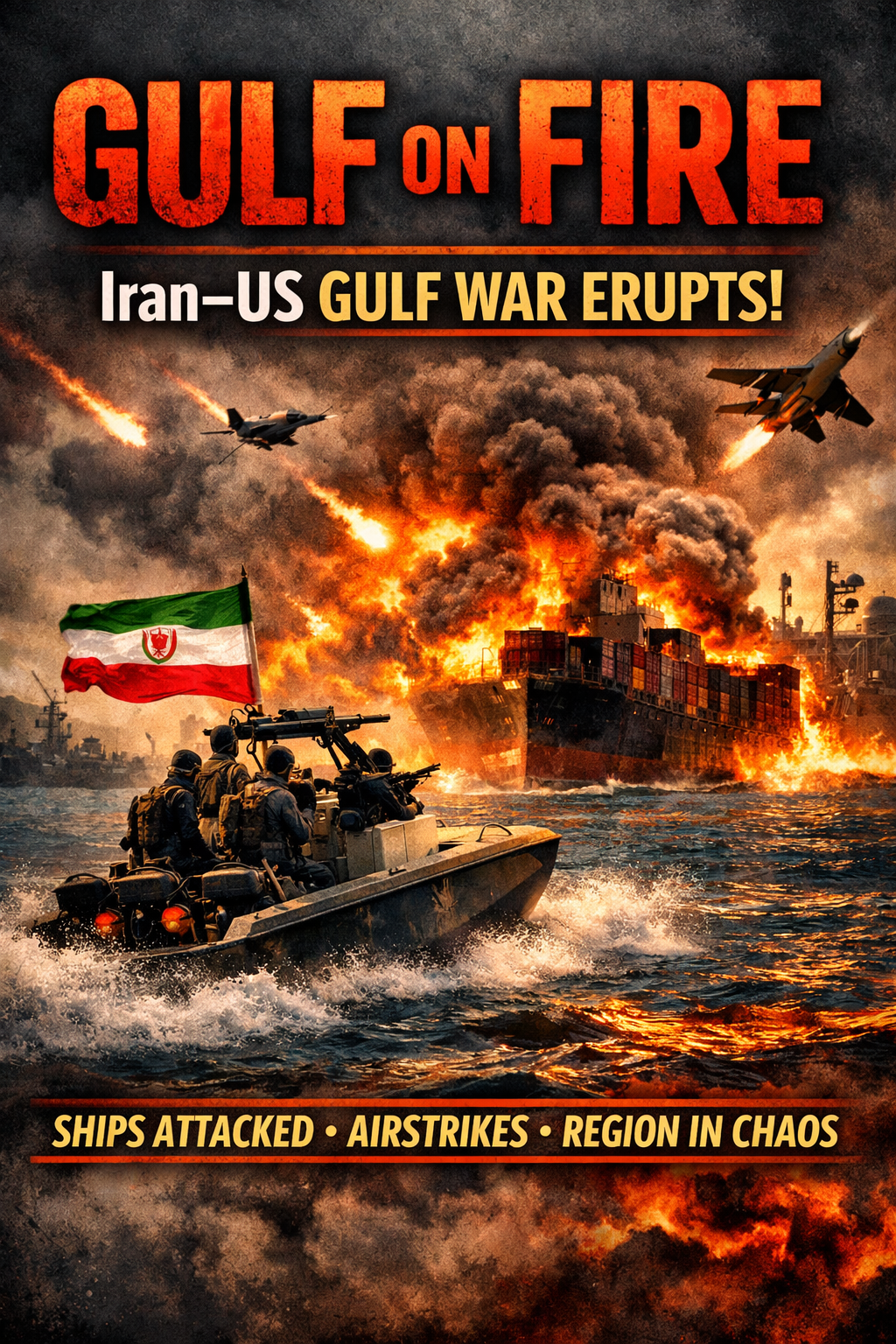
The Middle East has once again become the epicenter of global anxiety. On July 12, the Iran–US conflict entered what analysts are calling one of its most dangerous phases yet.
Attack in the Strait of Hormuz
The flashpoint came when Iran’s Islamic Revolutionary Guard Corps (IRGC) launched a strike on a Cyprus‑flagged container ship near the Gulf of Oman. The vessel carried 11 Indian crew members, 10 were rescued, but one sailor remains missing. India’s embassy in Muscat immediately sought Omani assistance, triggering a search‑and‑rescue operation.
This wasn’t just another maritime skirmish. It was a direct assault on freedom of navigation, threatening global energy supply chains. Thousands of merchant ships pass through the Strait of Hormuz annually; even a single successful attack can send oil prices, freight costs, and insurance markets spiraling.
The United States Strikes Back
The United States responded with overwhelming force, hitting 140 Iranian military sites, missile launch facilities, drone bases, coastal radars, naval installations, and IRGC command centers. Washington’s message was clear: Iran’s ability to target commercial shipping must be crippled.
Iran’s Counteroffensive
Iran retaliated with a barrage of missiles and drones across Gulf nations—Qatar, Bahrain, Kuwait, UAE, Oman, and Jordan. Sirens blared, explosions rocked cities, and the region plunged deeper into chaos.
Why these countries?
Because they host critical US military infrastructure:
Qatar – Al Udeid Air Base, the nerve center of US air power in West Asia.
Bahrain – Headquarters of the US Fifth Fleet.
Kuwait – A logistics hub for ground operations.
UAE – Al Dhafra Air Base, key for surveillance and intelligence.
Oman – Maritime logistics support for US forces.
Iran’s asymmetric warfare strategy is simple: if it cannot strike the US directly, it will raise the cost of war by targeting America’s allies.
Shockwaves for India and Global Markets
For India, the impact is immediate. Rising crude oil prices threaten to destabilize the economy, while stock markets brace for turbulence. Analysts warn that Nifty could crash again if the conflict drags on.
Diplomacy on Life Support
Peace talks have collapsed. The 60‑day memorandum of understanding between Washington and Tehran is dead, with President Trump announcing at the NATO summit that negotiations are suspended. Yet, Oman continues to mediate, keeping a faint hope alive that dialogue might resume unexpectedly.
Closing Signal
This isn’t just a regional war—it’s a global crisis. The Strait of Hormuz is the world’s energy lifeline, and its closure would send shockwaves across continents. As missiles fly and oil prices surge, the question remains: Is the world witnessing the prelude to a long US military campaign against Iran, or will diplomacy snatch the region back from the brink?
Written by
Bhavana SharmaDiscussion (0)
Sign in to join the discussion.
Loading comments…