
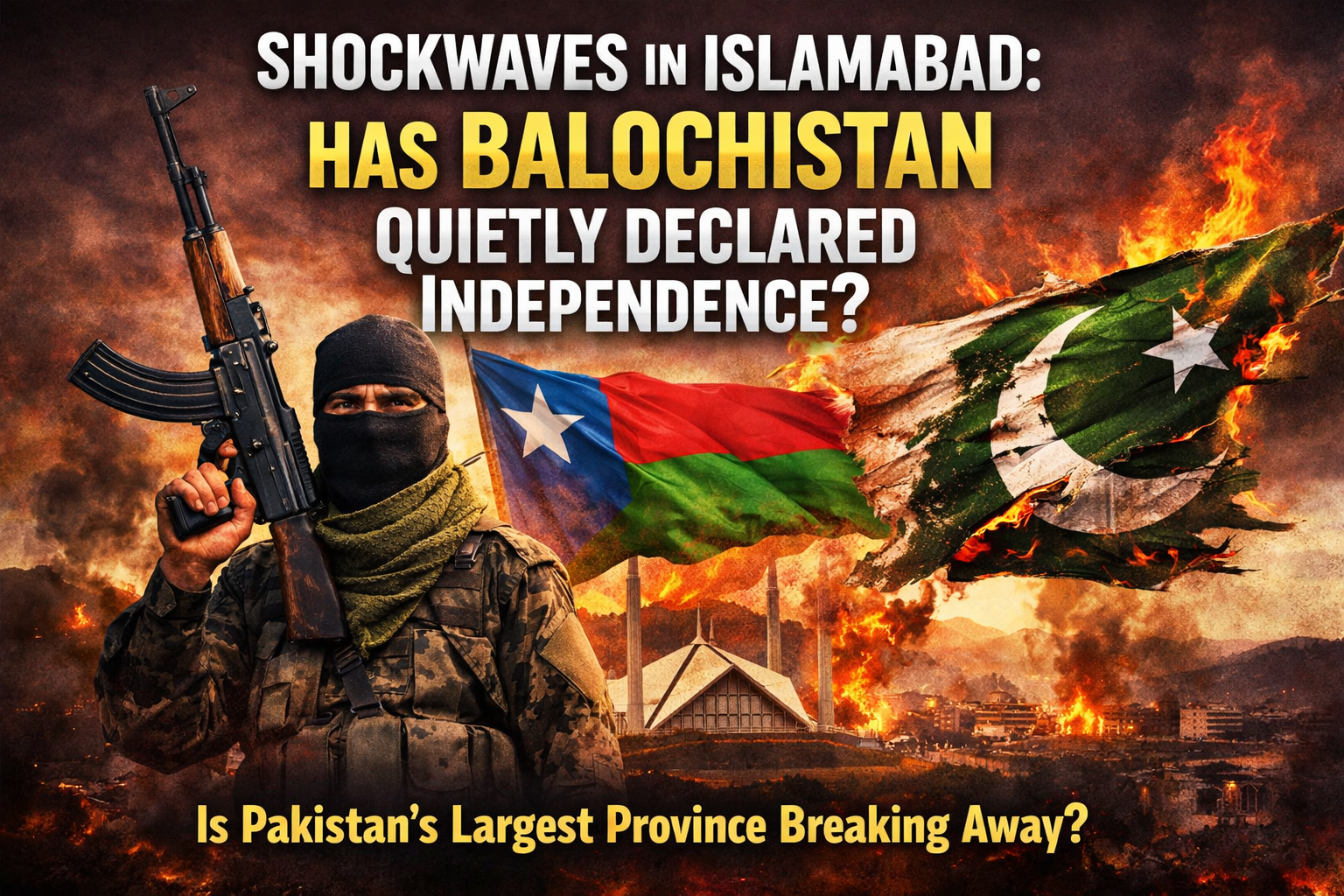
Sensational headlines and viral online circulars are sending shockwaves across South Asia: "Balochistan Declares Independence from Pakistan." Rumours are swirling that nationalist groups have seized control of nearly 85% of the territory, established their own administration, and are actively seeking international recognition.
But what is the ground reality behind these viral claims? Is the map of South Asia truly changing, or is this the latest chapter in a decades-long, slow-burning insurgency? Let’s dive deep into the history, the strategic stakes, and the geopolitical chess match involving India, China, and Pakistan.
The Core of the Crisis: What is Being Claimed?
Recent online reports and statements from prominent Baloch nationalist factions, most notably the Balochistan Liberation Army (BLA), claim the establishment of the "Republic of Balochistan.
The Separatist Checklist
According to the viral declarations, the separatists claim to meet the fundamental criteria of statehood:
Territorial Control: Claiming authority over 85% of the province.
Resource Governance: Asserting control over the region's vast mineral wealth (gold, copper, gas, and coal).
Independent Administration: Establishing localised governance structures separate from Islamabad.
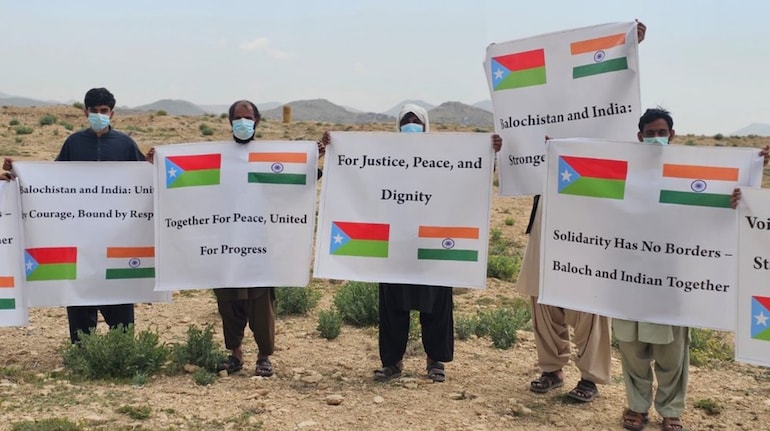
Diplomatic Outreaches: Appealing to India, the United Nations, and the global community for formal recognition, drawing parallels to Taiwan’s ongoing quest for international legitimacy.
The Reality Check
While insurgent groups maintain a strong presence in the rugged, inhospitable terrain of the province, Balochistan remains officially administered by Pakistan. No foreign government or the United Nations has extended diplomatic recognition to a sovereign Baloch state.
Why Balochistan Matters: The Trapped Treasure House
To understand why this conflict is so fierce, you have to look at the map and the math. Balochistan makes up a staggering 44% of Pakistan's total landmass, bridging South Asia, Central Asia, and the Middle East. It is also Pakistan's economic goldmine, yet its people remain among the poorest.
Resource
Strategic Importance
Natural Gas
Home to the Sui Gas Field (discovered in 1952), which fueled Pakistan's major cities for decades.
Gold & Copper
Houses the Reko Diq mine, one of the world's largest undeveloped copper-gold deposits.
The Gwadar Port
The crown jewel—a deep-water commercial port sitting right next to the critical Strait of Hormuz.
The Root of Baloch Grievances
Baloch nationalists argue that while their land supplies the wealth that powers Islamabad, Punjab, and Karachi, the local population sees none of the profits. This economic exploitation, paired with severe human rights violations and alleged forced disappearances by the Pakistani military, has fueled an insurgency that has flared up repeatedly since 1947.
The Billion-Dollar Factor: Why China is Terrified
If Balochistan slips out of Pakistan's hands, Beijing loses its most expensive foreign bet: the China-Pakistan Economic Corridor (CPEC).
Part of China's Belt and Road Initiative, CPEC runs from Kashgar in Xinjiang right down to Balochistan’s Gwadar Port. China has poured billions into highways, pipelines, and power plants here to bypass the vulnerable Malacca Strait for its energy imports.
Because the BLA views Chinese projects as an imperialist exploitation of their resources, Chinese engineers and infrastructure have frequently been targeted. A successful Baloch rebellion completely derails China's dream of direct Arabian Sea access.
The Indian Angle: A Double Dilemma for Pakistan
The timing of these rising Baloch demands coincides with growing unrest in Pakistan-Occupied Kashmir (POK), where local leaders are openly protesting against Islamabad's rule.
Baloch nationalist leaders have openly supported India’s stance on POK and are calling on New Delhi for diplomatic and logistical aid. While India officially maintains a cautious watch and has never recognized Balochistan as an independent country, Islamabad frequently accuses New Delhi of covertly backing the insurgents.
With fires burning on both its eastern border (POK) and western border (Balochistan), Pakistan's military establishment is facing unprecedented internal strain.
The Verdict: Is Balochistan Free?
Under international law and the UN charter, a nation requires four things: a defined territory, a permanent population, an effective government, and the ability to conduct foreign relations.
While the Baloch people’s resistance is fiercer than ever, Balochistan has not achieved independence. However, the symbolic declaration of a "Republic" highlights a failing status quo. As long as Islamabad relies on military force rather than political and economic equity, Balochistan will remain a volatile fault line capable of reshaping the geography of South Asia.
Written by
Aarav VashishtDiscussion (0)
Sign in to join the discussion.
Loading comments…