
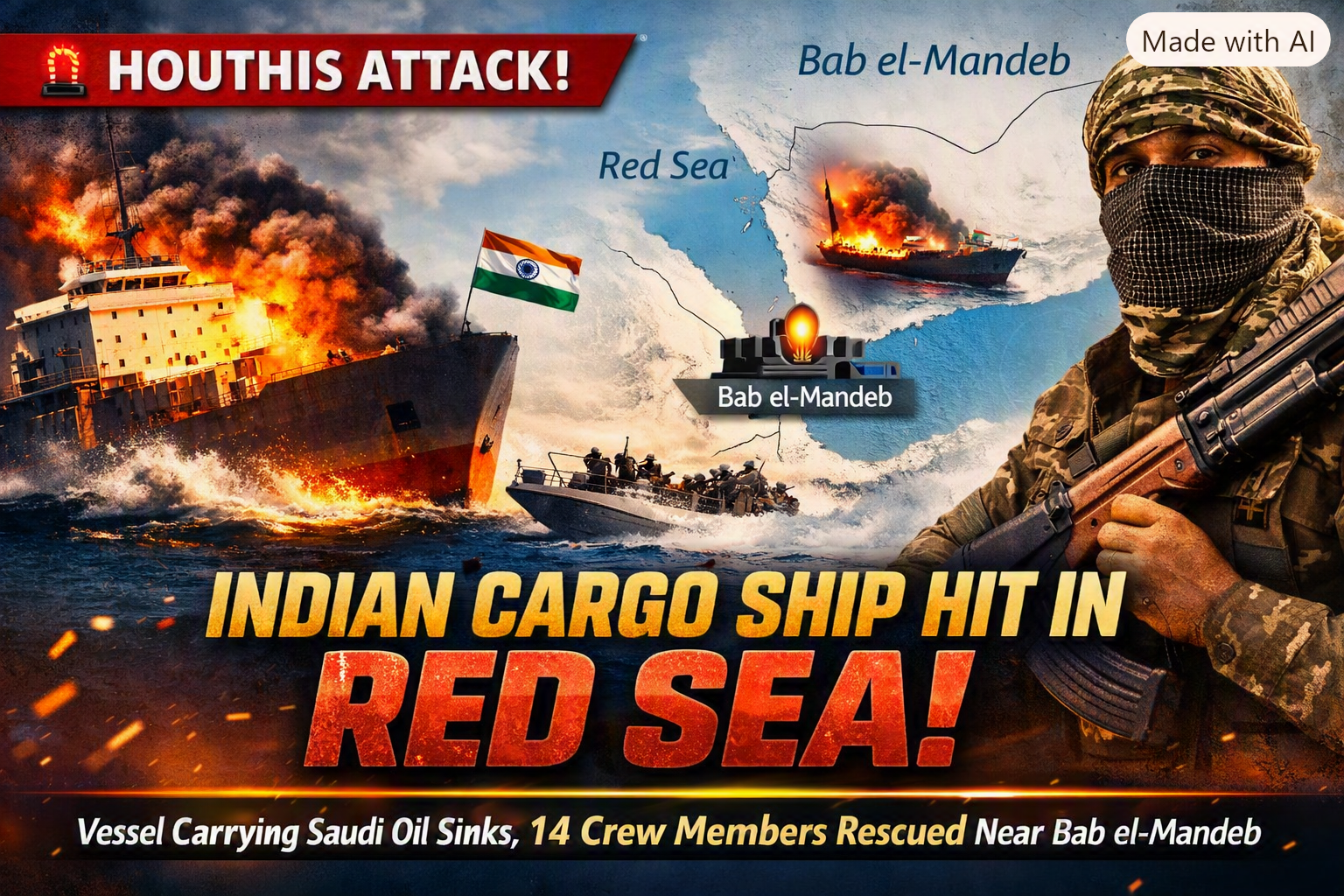
From Hormuz to the Red Sea: Tensions Spread Westward
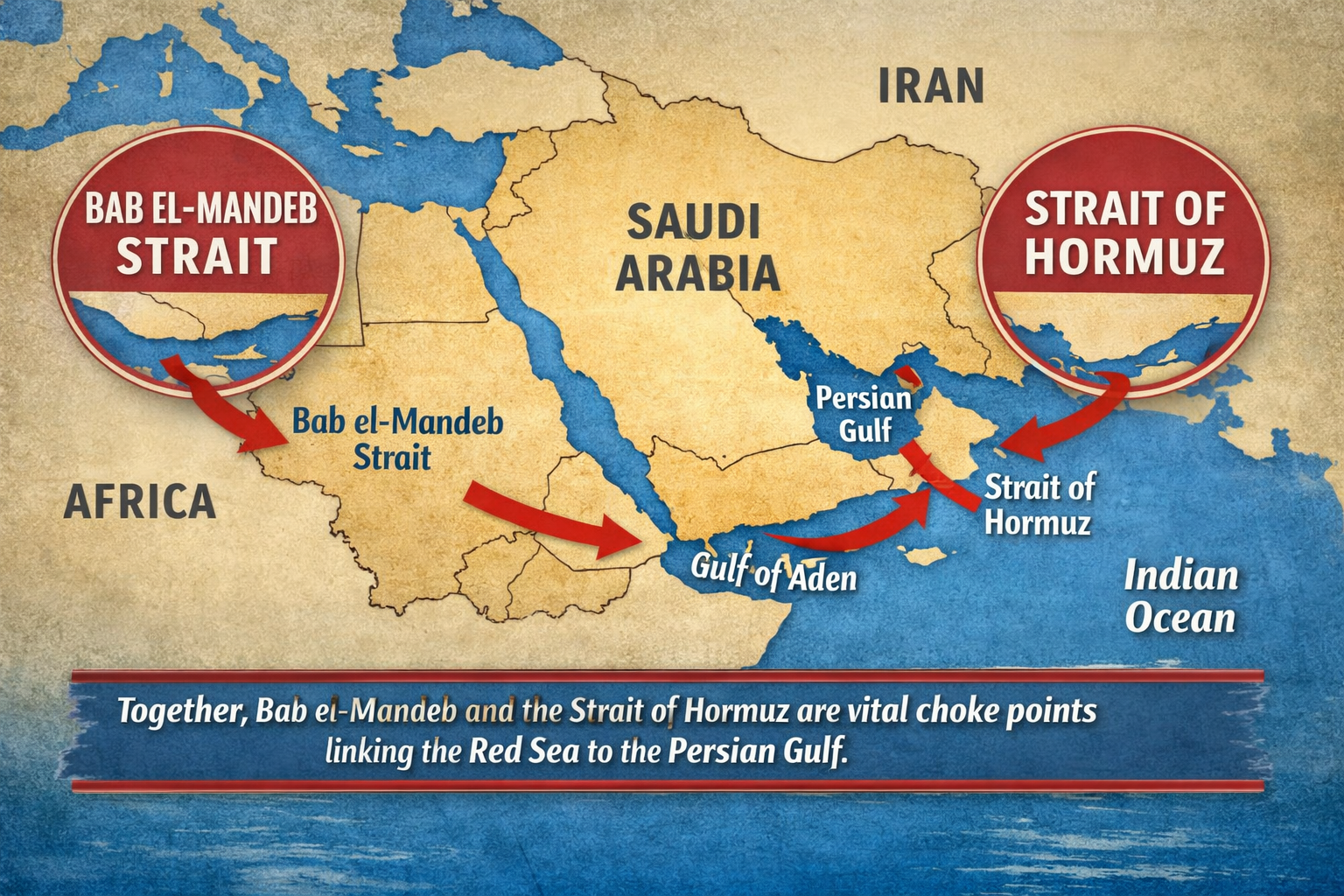
For months, the Persian Gulf and Strait of Hormuz have been the epicenter of geopolitical strain. Now, the crisis has shifted west, into the Red Sea and the Bab el‑Mandeb Strait, one of the world’s most critical maritime choke points.
First Strike on an Indian Vessel in the Red Sea
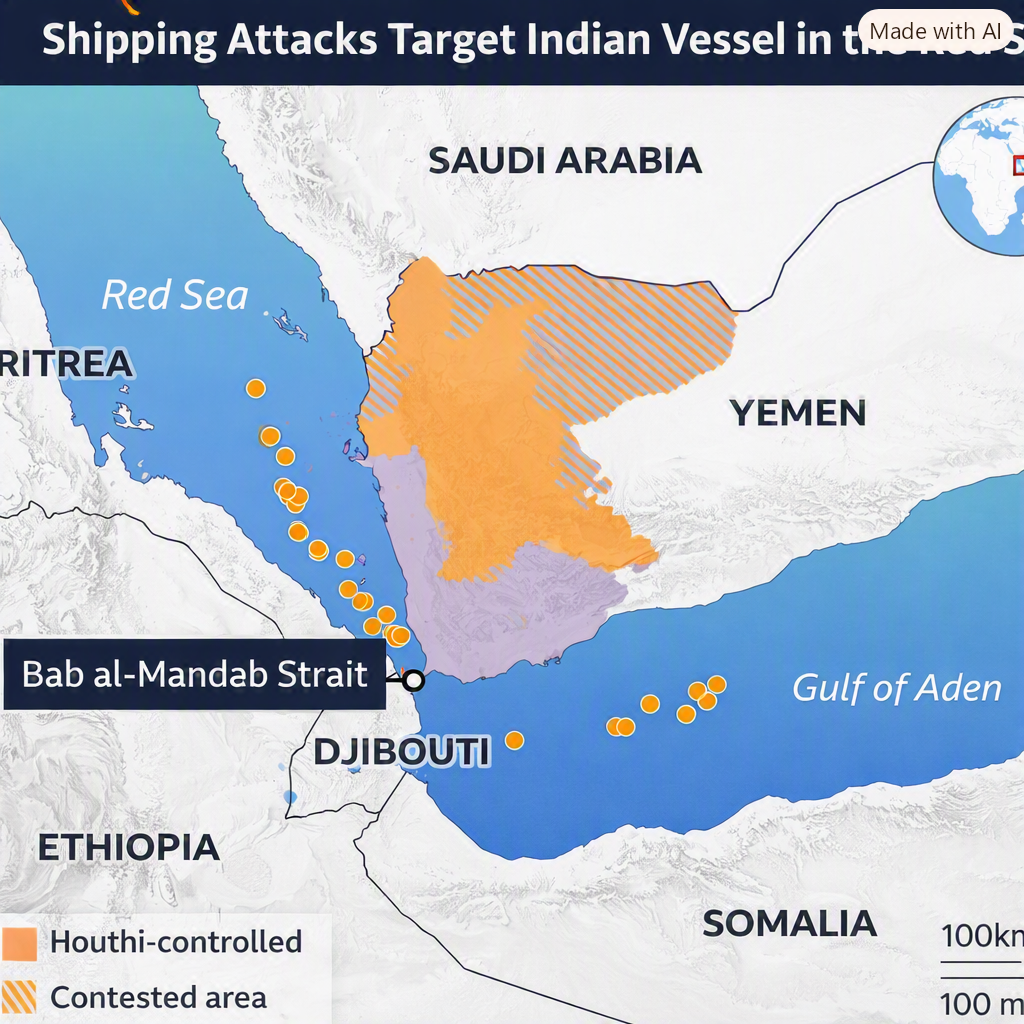
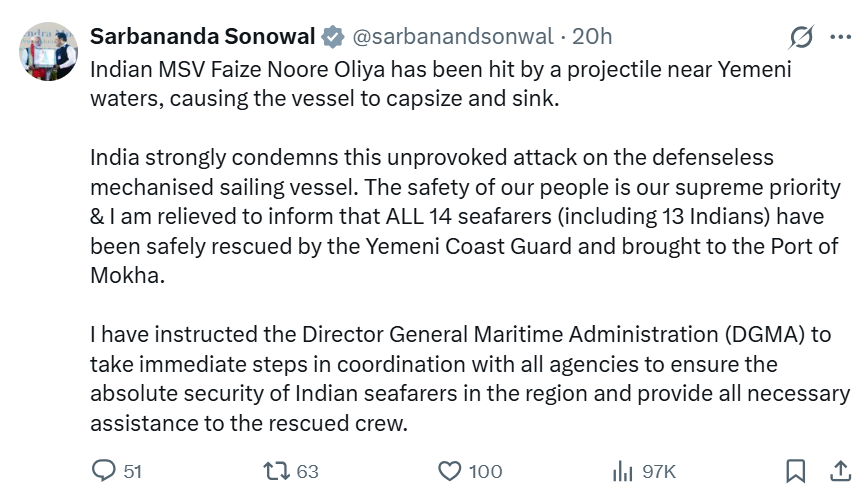
Yesterday, an Indian‑flagged cargo vessel was struck by a projectile off Yemen’s western coast, near Bab el‑Mandeb. The ship sank, but all 14 crew members, including 13 Indians, were rescued.
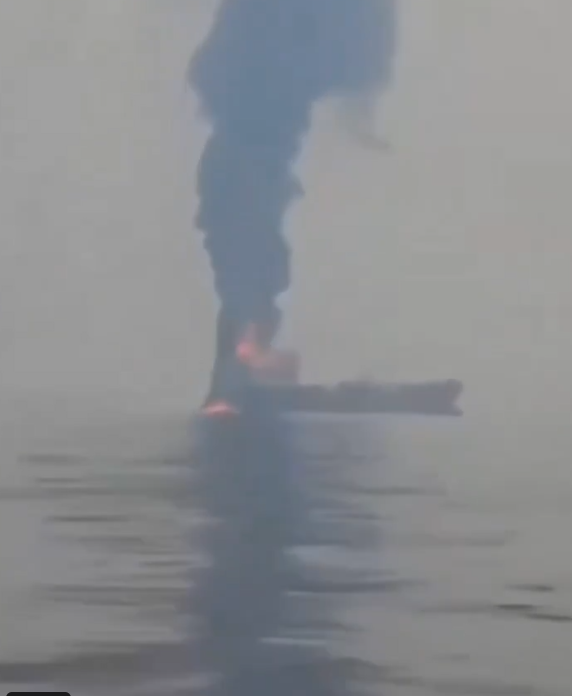
It came under attack when a Yemeni suicide boat rammed into it roughly 13 nautical miles off Hodeidah, near the Bab al‑Mandab Strait. This marks the first-ever strike on an Indian ship in the Red Sea, a chilling escalation in the region’s maritime tensions. At the time, the vessel was transporting Saudi crude oil, underscoring the high‑stakes nature of the incident.
Why Bab el‑Mandeb Matters?
The Bab el‑Mandeb Strait, connecting the Gulf of Aden to the Red Sea, is one of the busiest maritime choke points on Earth. This strait is not just a shipping lane; it is a lifeline for Europe, Asia, and global energy security.
Connects the Mediterranean Sea, Suez Canal, Red Sea, Gulf of Aden, and Indian Ocean.
Handles 12–15% of global trade and a major share of container traffic.
Narrowest point: just 30 km wide, making it highly vulnerable to blockades.
Thousands of ships annually transport food, oil, LNG, electronics, automobiles, and machinery through this corridor.
The Houthi Factor and Regional Escalation
The attack is suspected to have been carried out by Yemen’s Houthi rebels, who are backed by Iran. Since the Hamas–Israel war in 2023, Houthis have vowed to strike Israeli vessels passing through the Red Sea. Recently, they expanded their threats to include Saudi ships, intensifying regional instability.
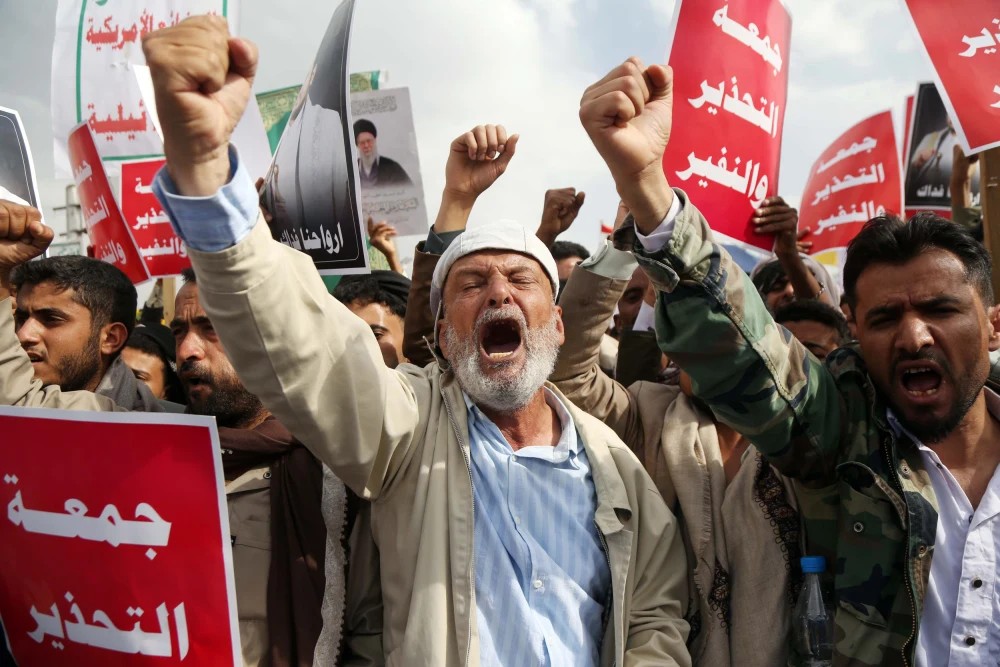
In response, Saudi Arabia and 13 other nations, including Pakistan and Bangladesh, have formed a maritime defense alliance to safeguard commercial shipping. Yet, ensuring safe navigation in such a volatile zone remains a daunting challenge.
Houthis’ Strategy: Small Group, Big Impact
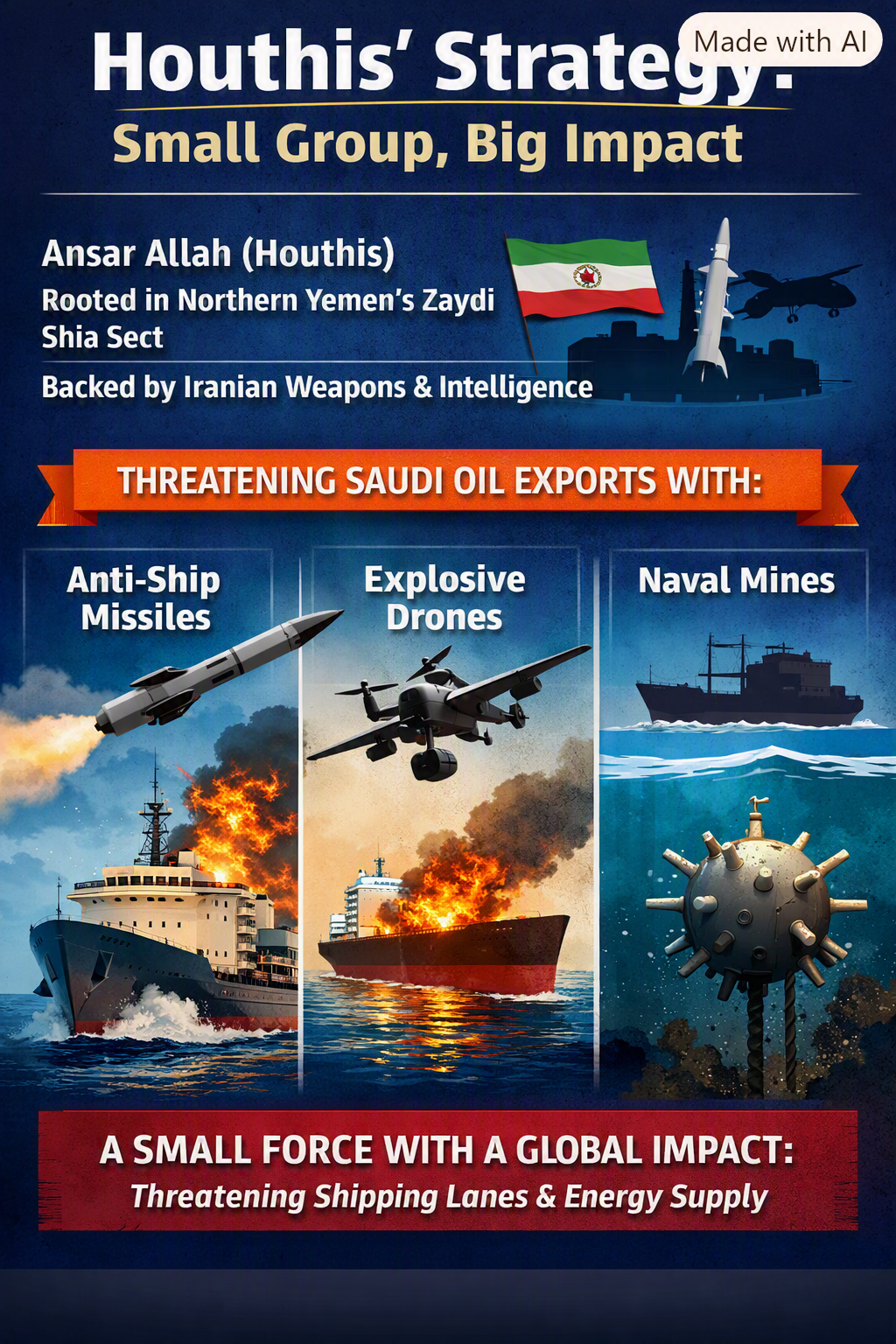
The Houthis, officially known as Ansar Allah, are a political‑religious armed movement rooted in northern Yemen’s Zaydi Shia community. Backed by Iranian weapons, drones, and intelligence, they now threaten Saudi oil exports through:
Anti‑ship missiles
Explosive drones
Naval mines
Even as a smaller force, these tactics could paralyze global shipping lanes and destabilize energy markets.
Why This Incident Matters for India?
India has over 300,000 seafarers working worldwide.
95% of India’s trade by volume and 70% by value moves via sea routes.
Heavy dependence on energy imports (crude oil, LNG) makes maritime security vital.
Rising risks mean higher insurance costs, disrupted trade, and inflationary pressures.
India has already deployed Operation Sankalp, with naval ships patrolling the region to protect vessels from piracy and attacks. But the question remains: is this enough in the face of escalating conflict?
India’s Response
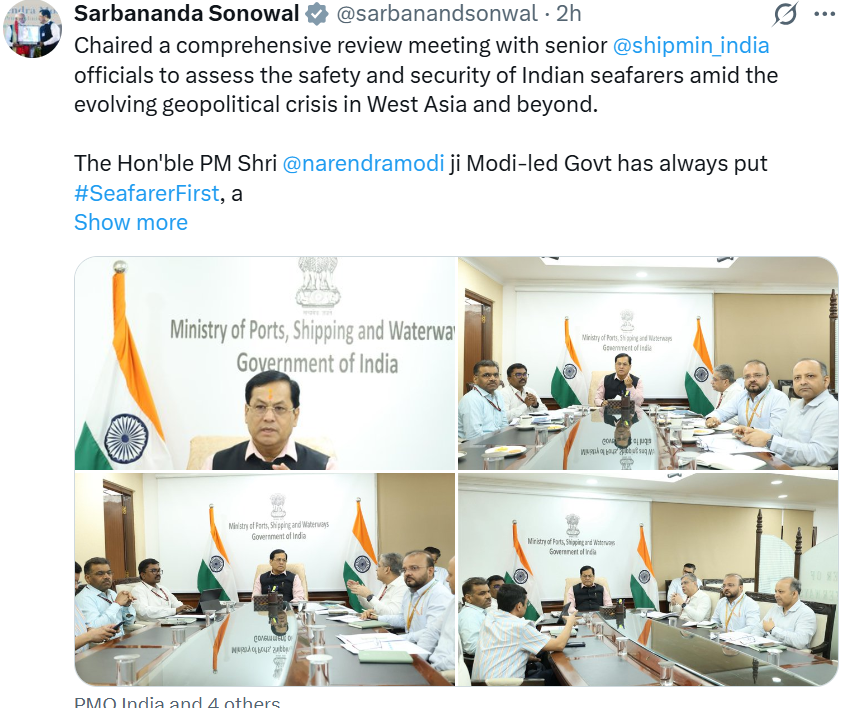
Union Minister Sarbananda Sonowal strongly condemned the “cowardly attack on a civilian vessel,” emphasizing that the safety of Indian seafarers is the government’s top priority. The rescued crew was brought safely to Yemen’s Port of Mocha with the help of the Yemeni Coast Guard.
The Ministry of External Affairs has instructed the Indian Embassy in Riyadh to closely monitor developments and coordinate with Yemeni authorities to ensure the protection of Indian nationals.
What Lies Ahead?
The Bab el‑Mandeb crisis underscores how regional conflicts ripple into global trade. Unless tensions between Iran, Israel, and Saudi Arabia ease, attacks on commercial shipping may continue, threatening not just India’s economy but the stability of global supply chains.
India’s maritime community, policymakers, and global partners must act decisively to safeguard international waters by strengthening naval presence at key chokepoints, fostering global cooperation to secure trade routes, and investing in resilient supply chains that can withstand future disruptions.
Stay informed, stay prepared, because what happens in Bab el‑Mandeb today could shape the future of global trade tomorrow.
Written by
Ritvik DeshmukhDiscussion (0)
Sign in to join the discussion.
Loading comments…