

A historic privatization move could reshape India’s banking landscape, bring massive foreign investment, and mark the end of an era for IDBI Bank.
For years, rumours swirled around the government's plans to privatize IDBI Bank. Every budget season and every disinvestment discussion seemed to revive the same question: Will IDBI Bank finally be sold?
Now, after years of speculation, delays, and negotiations, the answer is finally here.
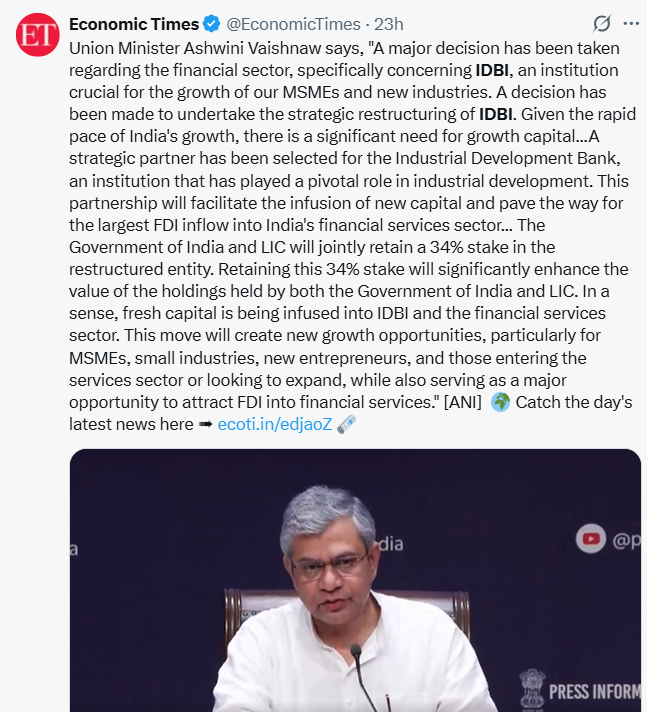
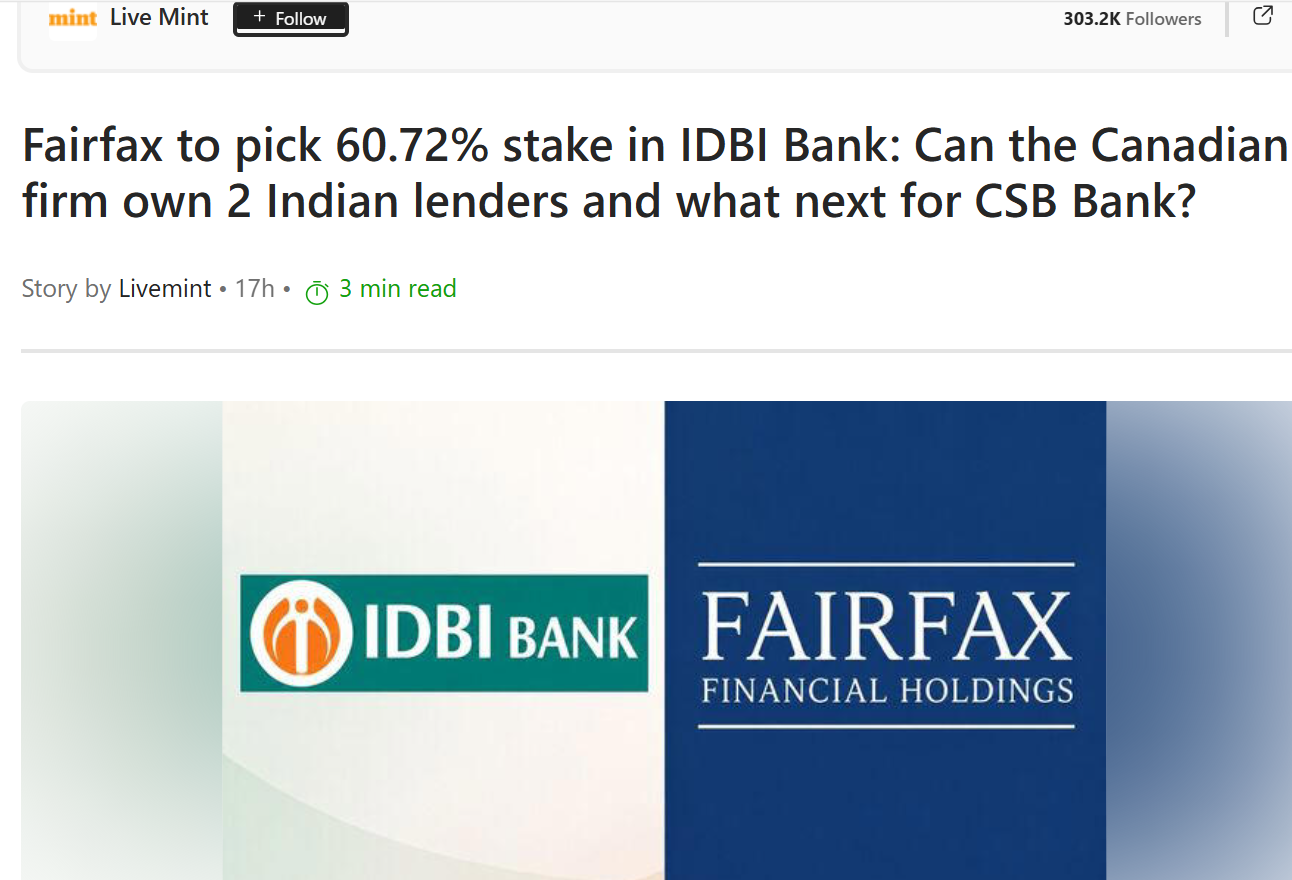
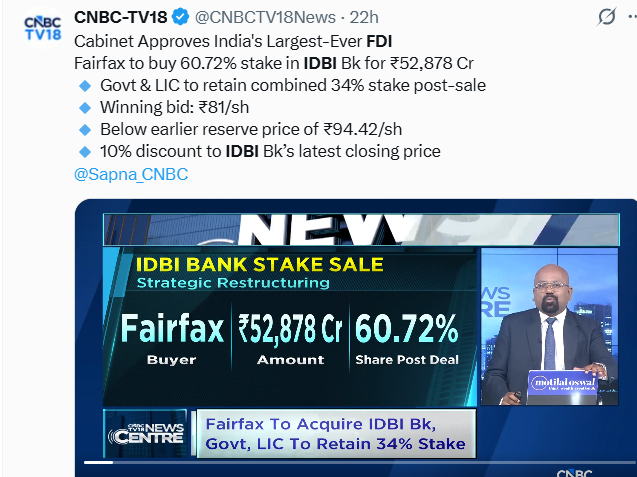
The Indian government has approved the strategic sale of its majority stake in IDBI Bank to Fairfax Financial Holdings, a Canada-based financial services and investment giant, in a deal valued at approximately ₹52,878 crore. The transaction is being described as the largest-ever Foreign Direct Investment (FDI) in India's financial sector, making it one of the most significant banking deals in the country's history.
🏦 What Exactly Has Been Approved?
The Cabinet Committee on Economic Affairs (CCEA), chaired by the Prime Minister, has reportedly approved the strategic disinvestment of IDBI Bank.
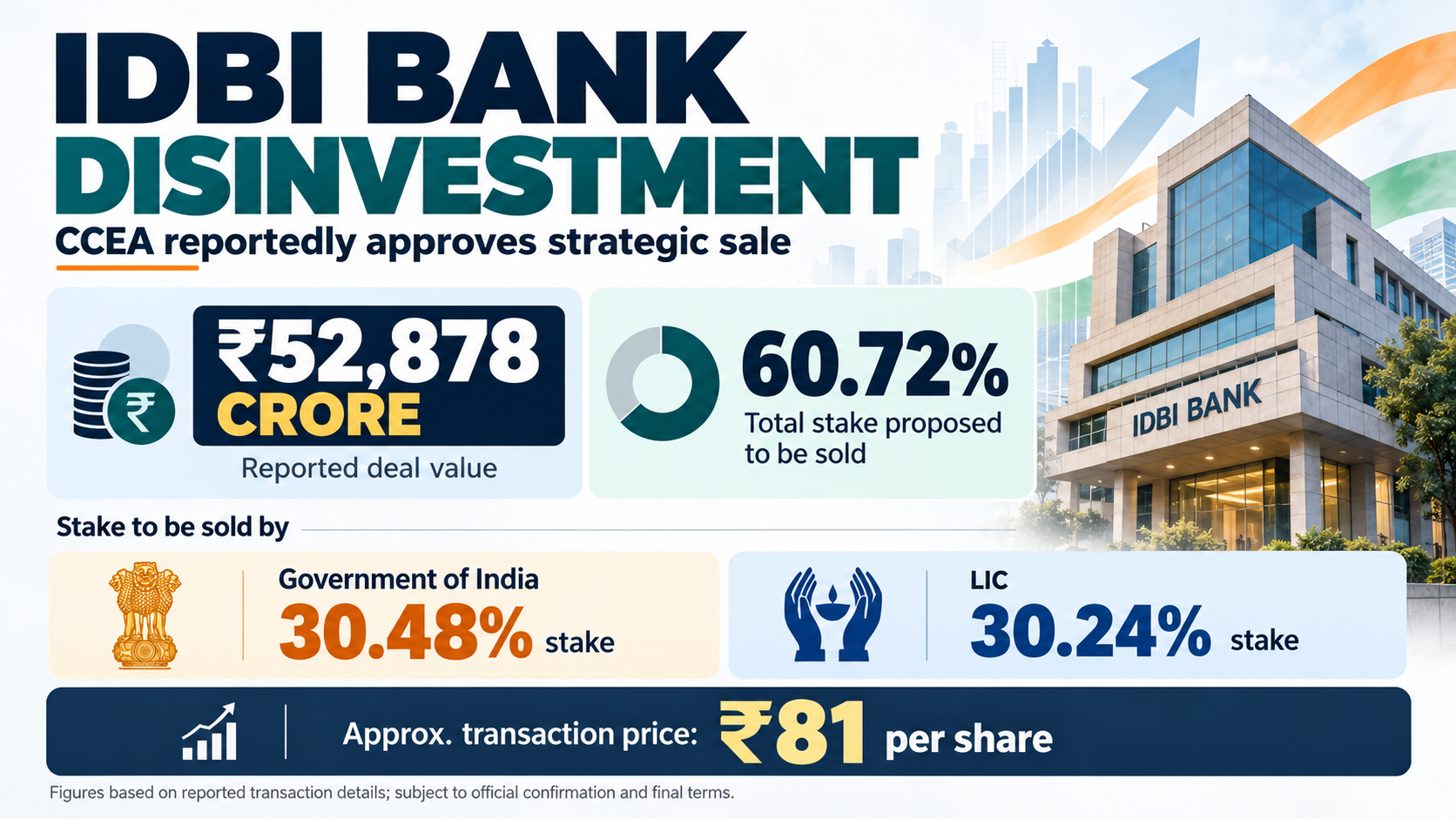
Under the proposed transaction:
1. Government of India will sell 30.48% stake
2. LIC (Life Insurance Corporation of India) will sell 30.24% stake
3. Total stake being sold: 60.72%
4. Deal value: ₹52,878 crore
5. Approximate transaction price: ₹81 per share
Once completed, Fairfax will emerge as the dominant shareholder and gain effective control of the bank.
🌍 Why Is This Deal Being Called Historic?
This is not just another stock market investment. The deal represents a controlling stake acquisition in a major Indian bank and is therefore classified as a long-term strategic investment rather than a portfolio investment.
That distinction is important.
Foreign Portfolio Investments (FPI) involve purchasing small quantities of shares that can be bought and sold quickly. In contrast, Foreign Direct Investment (FDI) involves acquiring significant ownership and long-term managerial control.
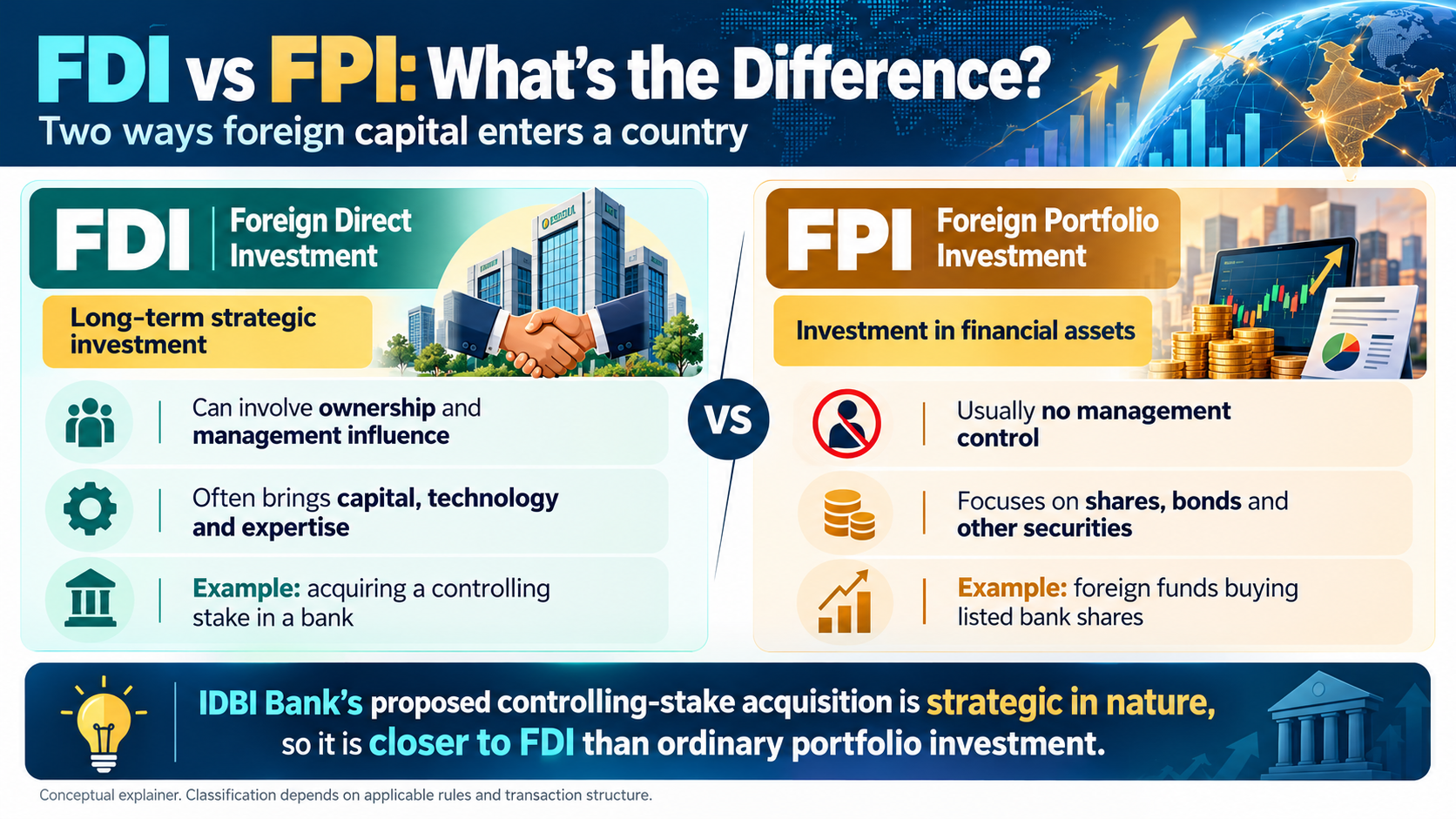
Because Fairfax is purchasing a majority ownership position, the transaction is being hailed as the largest FDI deal ever witnessed in India's financial sector.
👤 Who Is Prem Watsa and What Is Fairfax?
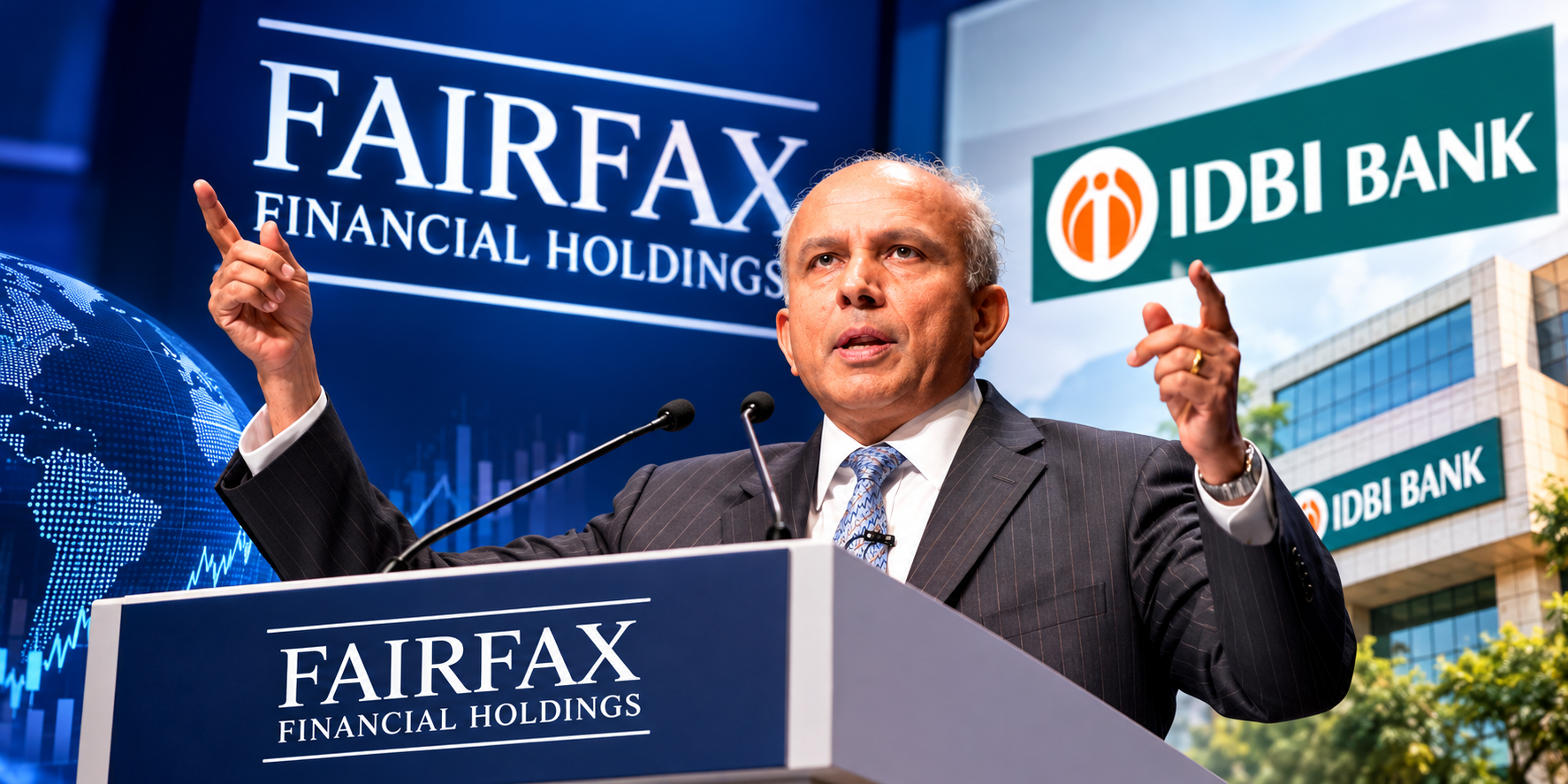
Prem Watsa is an Indian-born Canadian billionaire businessman, investor and the Chairman & CEO of Fairfax Financial Holdings. Born near Hyderabad in 1950 and an IIT graduate, he is widely known as the "Warren Buffett of Canada" for his long-term value investing approach and successful investments in the insurance and financial sectors.
The company has a strong presence in global financial markets and has previously invested in India's banking sector, including CSB Bank. Its proposed acquisition of a majority stake in IDBI Bank marks one of the largest foreign investments ever made in India's financial industry.
The company is known for:
1. Insurance and reinsurance businesses
2. Long-term value investing
3. Strategic investments in financial institutions
4. Existing experience in India's banking sector through investments such as CSB Bank
Fairfax has maintained a strong interest in India for years and sees the country's rapidly expanding financial sector as a major long-term opportunity.
💡 Why Does Fairfax Want IDBI Bank?
Buying a banking license from scratch is almost impossible in most jurisdictions due to strict regulations and approval requirements. By acquiring IDBI Bank, Fairfax gains:
✅ An Existing Banking License
A fully operational banking platform with regulatory approvals already in place.
✅ Large Customer Base
Millions of customers, existing deposits, and lending relationships provide an immediate foundation for growth.
✅ Nationwide Infrastructure
Hundreds of branches, established technology systems, and experienced employees.
✅ Strong Growth Potential
India remains one of the world's fastest-growing banking markets with increasing demand for digital banking, loans, wealth management, and financial services.
✅ Strategic Control
With more than 50% ownership, Fairfax can implement long-term business strategies and operational reforms more effectively.
📈 The Remarkable Turnaround of IDBI Bank
The most fascinating aspect of this story is IDBI Bank's dramatic recovery. A few years ago, the bank was in severe financial distress.
The Crisis Years
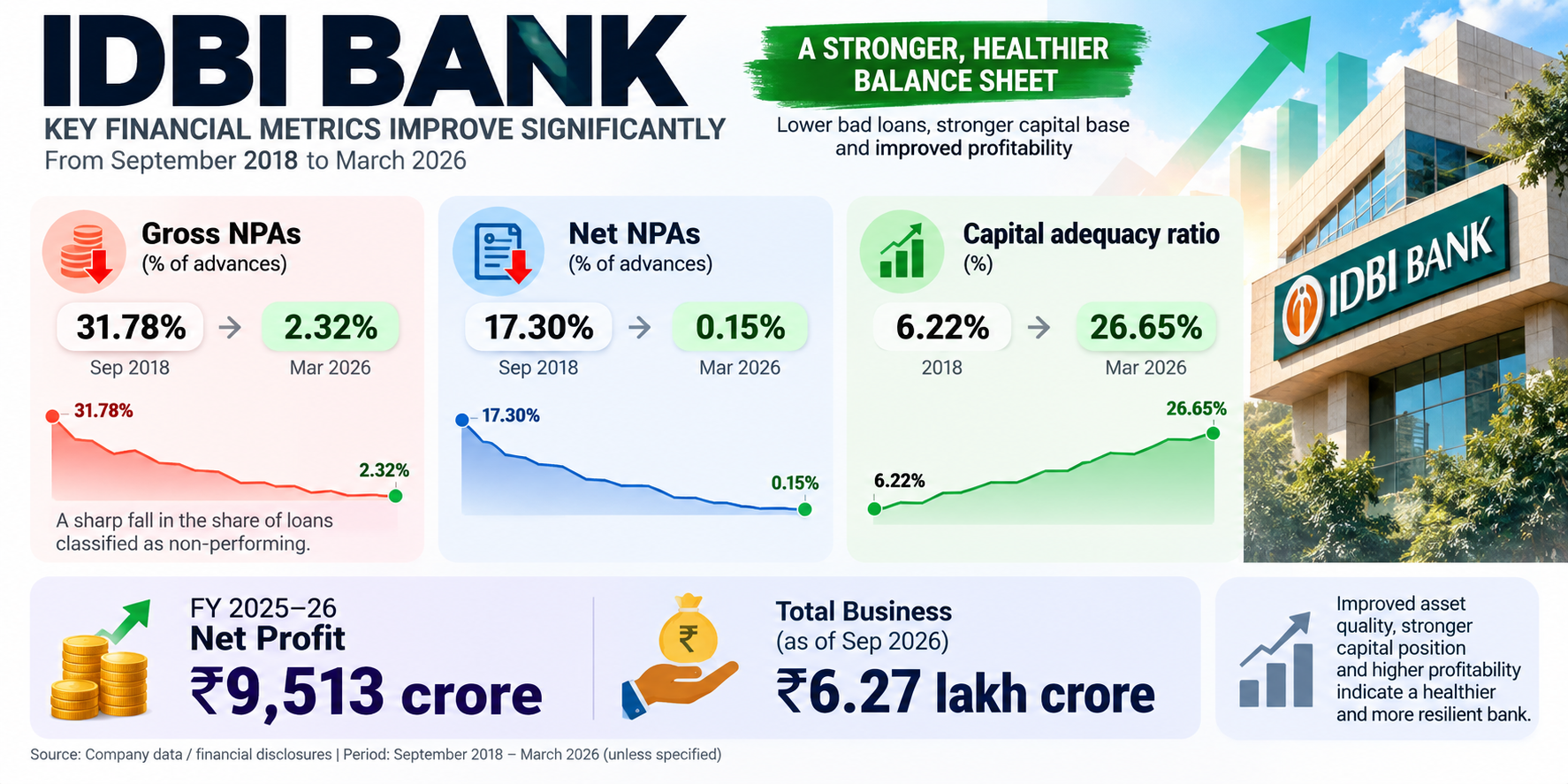
In September 2018:
1. Gross NPA stood at a staggering 31.78%
2. Net NPA was around 17%
3. Capital adequacy levels were under pressure
4. RBI placed the bank under Prompt Corrective Action (PCA) monitoring
✅Imagine lending ₹1,000 to various borrowers, but ₹320 never comes back. That was roughly the challenge IDBI Bank faced during its bad-loan crisis.
At that stage, finding a buyer would have been extremely difficult.
The Comeback Story
Fast forward to today:
1. Gross NPA reduced to approximately 2.32%
2. Net NPA dropped to around 0.15%
3. Capital Adequacy Ratio improved to 26.65%
4. Net profit crossed roughly ₹9,500 crore
5. Total business reached approximately ₹6.27 lakh crore
The transformation turned IDBI Bank from a troubled lender into an attractive acquisition target.
🔄 How Will Ownership Change?
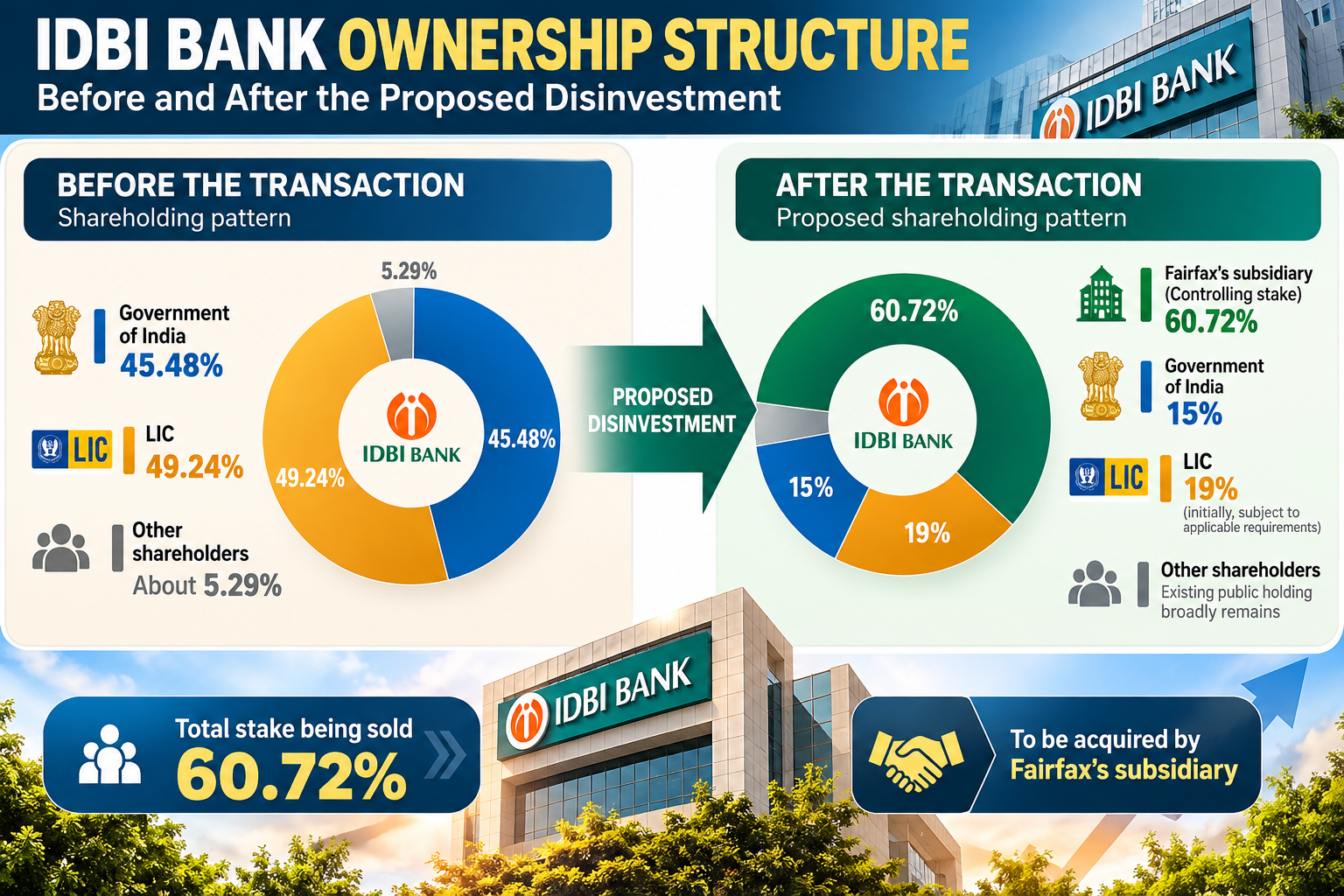
The change effectively shifts the bank from government-led ownership to private strategic control.
🤔 Why Is the Government Selling IDBI Bank?
The government has several objectives behind the move.
1. Reduce Burden on Public Finances
When struggling banks require repeated capital injections, taxpayer resources can become stretched.
Privatization transfers future capital requirements to private investors.
2. Improve Efficiency
Private ownership often introduces:
a) Faster decision-making
b) Better technology adoption
c) Enhanced customer services
d) Improved operational efficiency
3. Increase Competition
Greater competition among banks can lead to:
a) Better loan products
b) Improved digital services
c) Faster credit availability
d) More customer-friendly banking solutions
4. Push Financial Sector Reforms
The sale aligns with broader banking-sector reform efforts that have been discussed for years, including recommendations favouring greater efficiency and professional management within financial institutions.
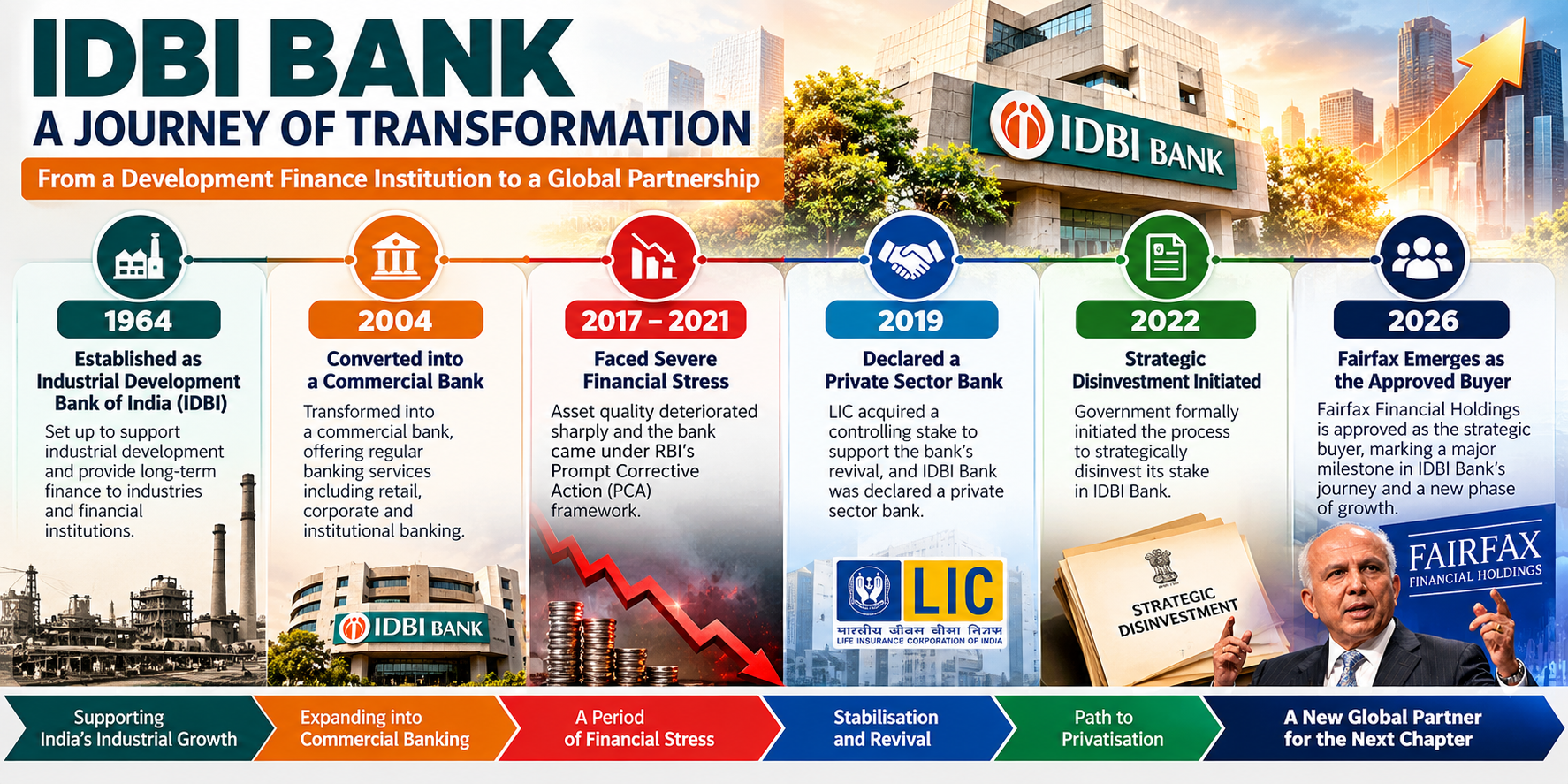
🏛️ A Quick Look at IDBI Bank's Journey
👥 What Will Happen to Existing Customers?
For depositors and borrowers, the immediate impact is expected to be minimal. Customers can expect:
✅ Existing savings accounts to continue normally
✅ Current loans and EMIs to remain unchanged
✅ Existing banking services to function as usual
✅ RBI supervision to continue
✅Deposit insurance protection to remain available as per applicable regulations
Any future operational changes would typically be communicated directly to customers through official channels.
⚠️ Concerns and Criticism Surrounding the Sale
Not everyone is celebrating the transaction. Several concerns have been raised:
1. Public Sector Role
Banking unions, public-sector bank employees, and some economists argue that public sector banks play an important role in financial inclusion, government welfare delivery, rural outreach, and priority sector lending.
2. Valuation Questions
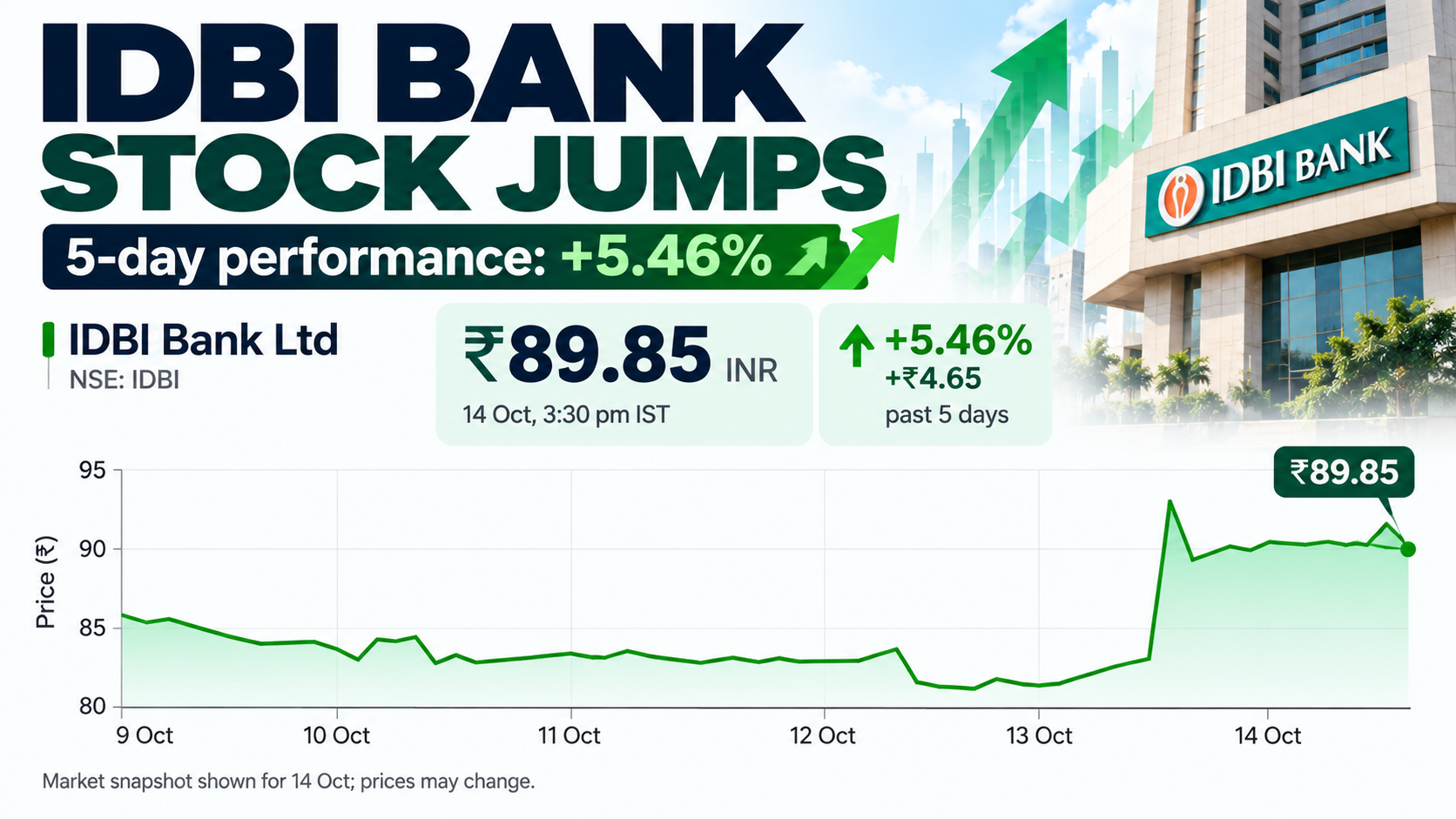
Some observers may question whether ₹81 per share accurately reflects IDBI Bank's future growth potential.
3. Foreign Ownership Concerns
Banking is considered a strategic sector involving customer data, savings, and credit infrastructure. Banking unions, some economists, and critics of privatization argue that greater foreign ownership in the banking sector could raise concerns about data security, financial sovereignty, and long-term strategic control.
4. Employment Uncertainty
Large ownership changes sometimes trigger restructuring, leading to concerns among employees regarding future workforce decisions.
5. Regulatory Challenges
A privately controlled bank with foreign ownership may require closer regulatory monitoring to ensure financial stability and compliance.
🔍 What Happens Next?
The Cabinet approval is a major milestone, but the deal is not fully completed yet. The transaction will still require:
1. RBI approvals
2. Regulatory clearances
3. Statutory compliances
4. Transaction documentation
5. Open offer obligations where applicable
6. Post-acquisition compliance processes
Only after these steps are completed will the ownership transfer be formally finalized.
🏦 A New Chapter for IDBI Bank
The sale of IDBI Bank marks a watershed moment in India's banking history. What was once a struggling lender burdened by massive bad loans has transformed into a valuable banking franchise attractive enough to draw one of the world's leading financial investors.
For supporters, the deal symbolizes confidence in India's financial system, a major inflow of foreign capital, and a strong push toward banking reforms. For some banking unions, public-sector bank employee associations, economists, and critics of privatization, the deal raises questions about valuation, continued public ownership, and the growing role of foreign investors in strategically important sectors such as banking.
Either way, one thing is clear: the ₹52,878 crore IDBI Bank deal could become one of the defining financial-sector reforms of this decade.
📢 What Do You Think?
Is the sale of IDBI Bank a bold reform that will modernize India's banking sector, or should strategic banks remain under greater public ownership?
💬 Share your views in the comments below!
📲 Follow us for sharp insights on banking, business, economy, and policy developments.
🔔 Don't forget to bookmark this story and share it with fellow investors and finance enthusiasts.
Written by
Ritvik DeshmukhDiscussion (0)
Sign in to join the discussion.
Loading comments…