
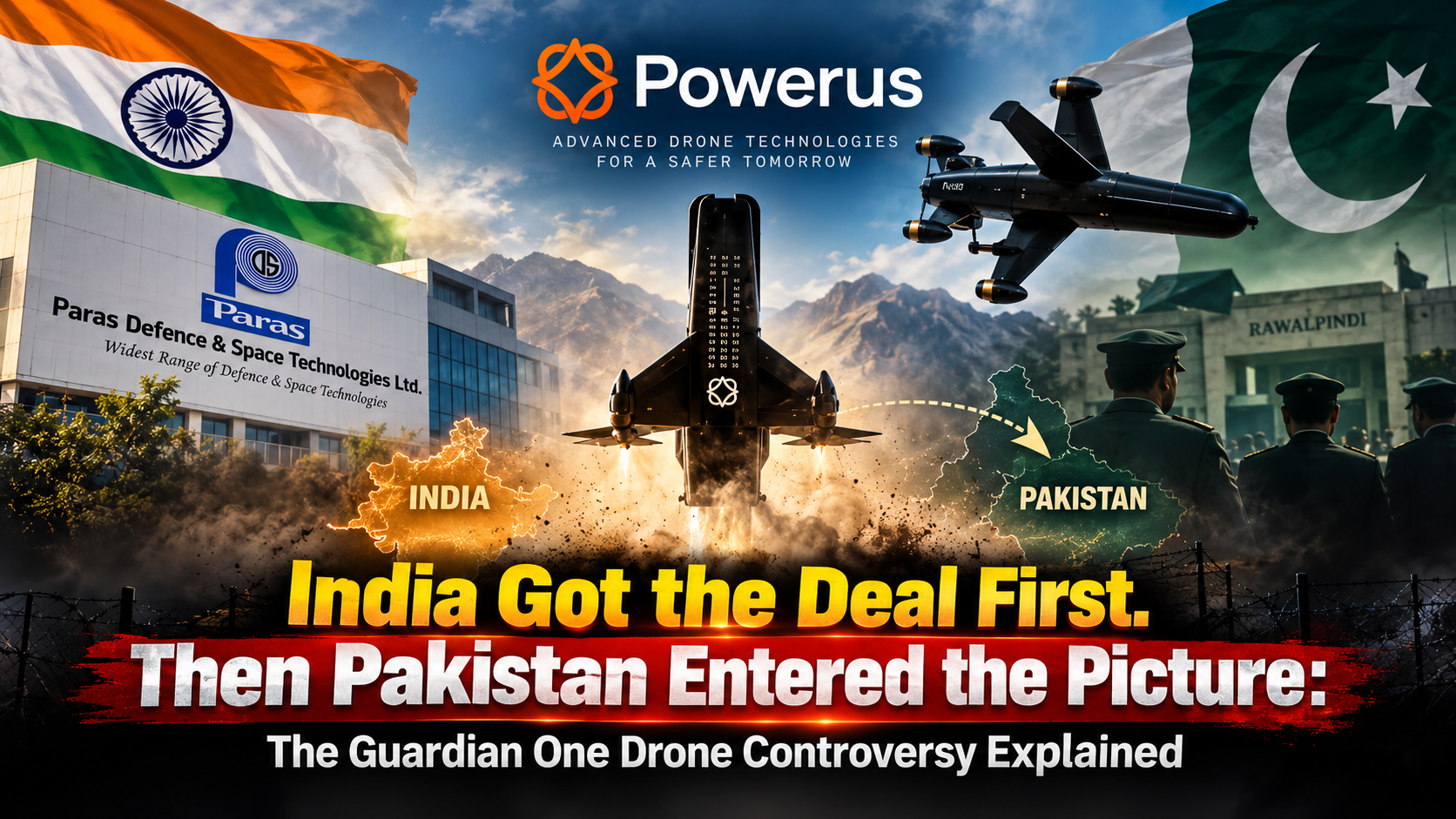
India Secures Advanced Counter-Drone Technology, But Pakistan’s Parallel Engagement with the Same US Company Raises Serious Strategic Questions
In a development that has caught the attention of defense analysts and security observers alike, a surprising twist has emerged in the rapidly evolving drone warfare landscape. A US drone technology company that recently partnered with an Indian defense firm to manufacture advanced counter-drone systems has reportedly also entered into discussions and agreements with Pakistan's military establishment.
For India, the question is simple yet unsettling: Could a critical anti-drone technology developed in partnership with an Indian defense company eventually find its way into Pakistan's security ecosystem as well?
Let's break down what is happening and why it matters.
The Deal That Put Guardian One in the Spotlight
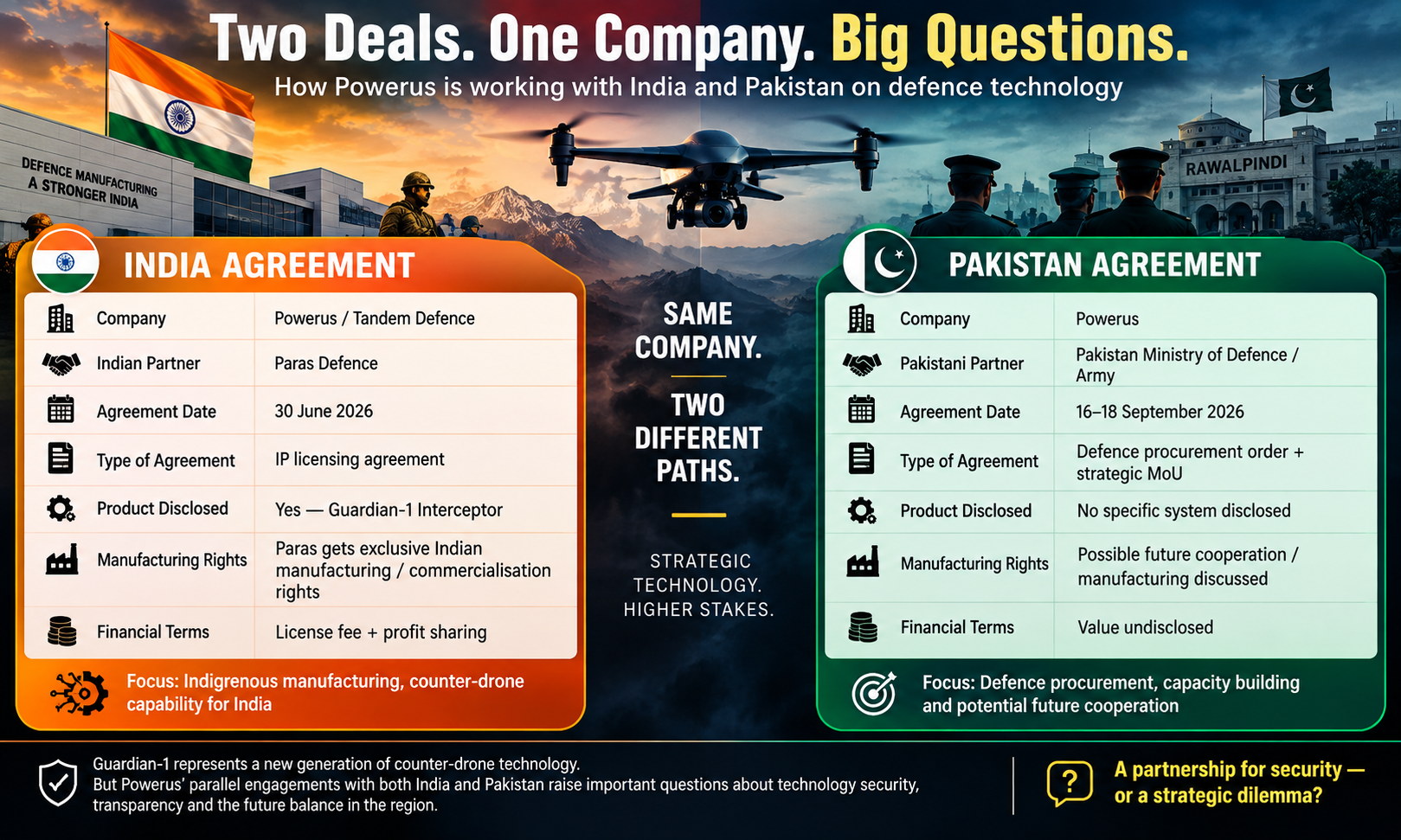
Earlier this year, US-based drone technology company Powerus granted a manufacturing license to India's private defense company Paras Defence & Space Technologies.
The agreement focuses on the production of the Guardian One Counter-Drone System, an advanced interceptor drone specifically designed to neutralize hostile unmanned aerial vehicles (UAVs).
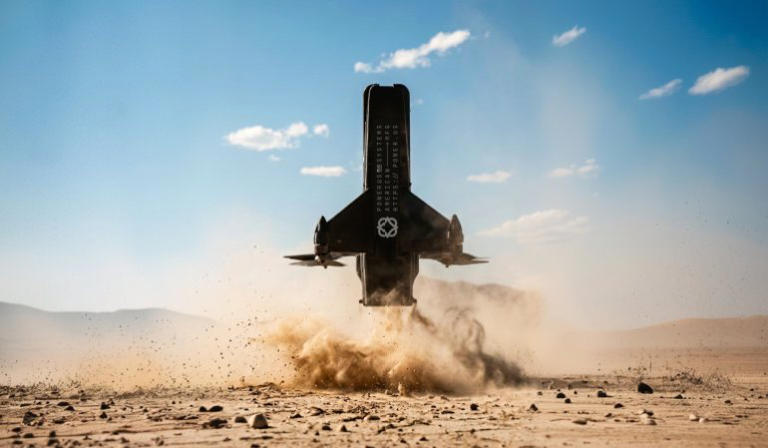
Unlike conventional air defense systems that rely on expensive missiles, Guardian One is designed to use a more cost-effective approach: destroying drones with drones. For India, this represented a major opportunity to strengthen indigenous defense manufacturing while gaining access to cutting-edge anti-drone capabilities.
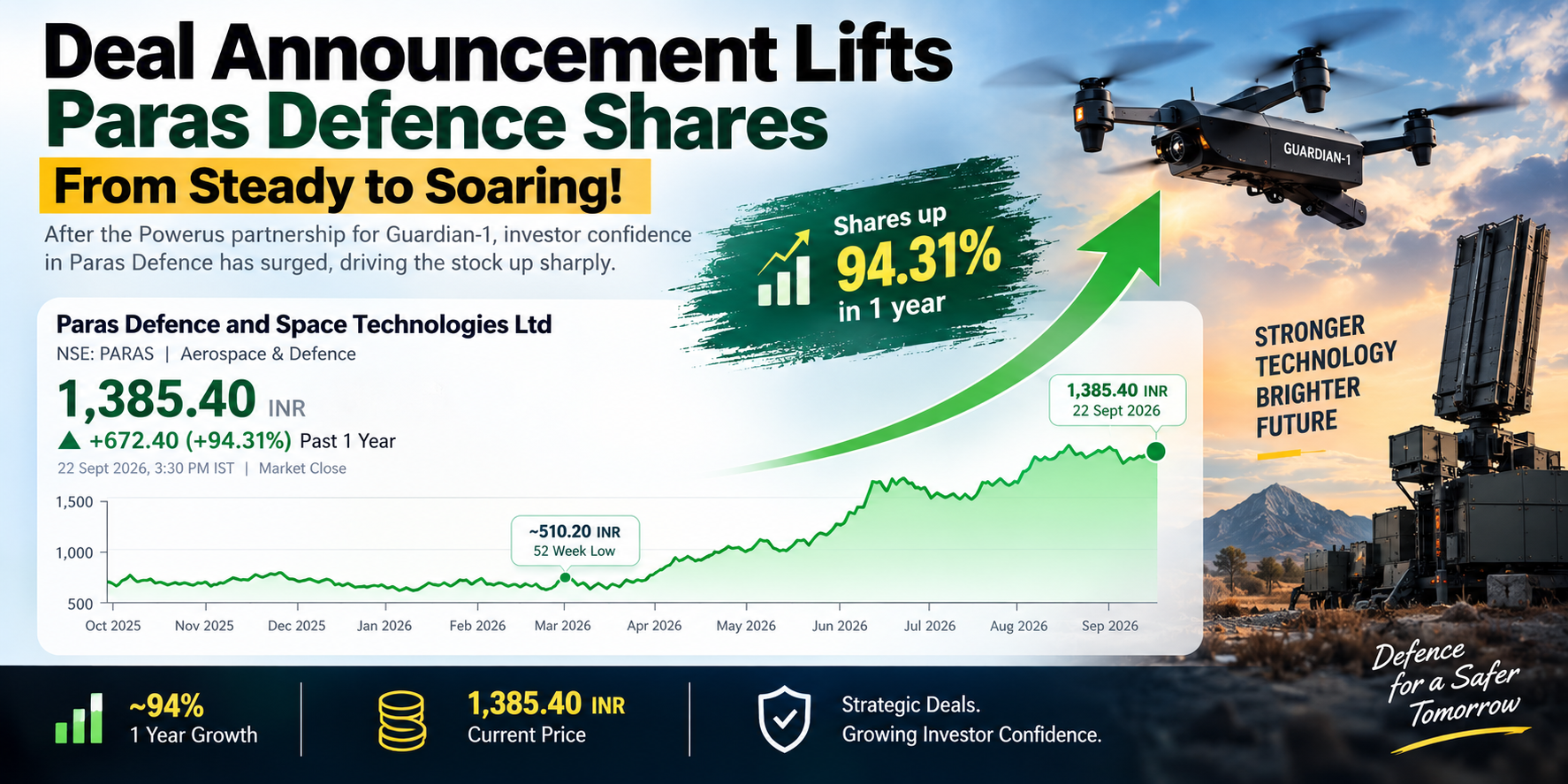
However, the story did not end there.
The Twist: Pakistan's Military Enters the Picture
Just months after the India agreement, reports surfaced that representatives from the same US company held meetings with Pakistan's military leadership in Rawalpindi.
According to Pakistani military statements, discussions reportedly covered:
1. Defense technology cooperation
2. Defense procurement
3. Capacity building
4. Production partnerships
5. Acquisition of unmanned aerial systems
While Pakistan has not publicly disclosed the exact systems involved, the timing of the engagement raised eyebrows.

India's deal was publicly announced, including details regarding Guardian One manufacturing. Pakistan, on the other hand, has not revealed precisely what technologies are being discussed or procured.
That lack of transparency has fueled speculation across strategic circles.
What Exactly Is Guardian One?
Guardian One is not an ordinary drone. It is a dedicated counter-drone interceptor platform engineered to detect, pursue, and destroy hostile UAVs before they can reach their intended targets.
As drone warfare becomes increasingly dominant on modern battlefields, systems like Guardian One are rapidly becoming military necessities rather than optional capabilities.
Key Specifications
1. Maximum Speed: Approximately 300 km/h
2. Operational Range: Around 15 km
3. Endurance: Approximately 28 minutes
4. Maximum Altitude: Up to 5 km
5. Weight: Around 2.65 kg
6. Payload Capacity: 0.5 kg
Its primary role is to intercept and eliminate hostile drones in the air before they can inflict damage on military assets, civilian infrastructure, or sensitive facilities.
Why Counter-Drone Technology Matters More Than Ever
Modern warfare is witnessing a dramatic transformation. Countries no longer rely solely on fighter jets, tanks, and missiles. Increasingly, conflicts are being shaped by swarms of low-cost drones that can perform surveillance, strike missions, and electronic warfare operations.
Recent global conflicts have demonstrated a critical challenge: Defending against cheap drones with expensive missiles is economically unsustainable.
Imagine an adversary launching dozens of low-cost drones simultaneously. If each drone requires a costly interceptor missile to shoot it down, the defending side may spend millions to counter an attack worth only a fraction of that amount.
This imbalance has pushed militaries worldwide to search for more affordable solutions. Guardian One represents exactly that shift in thinking. Instead of firing a missile at every incoming drone, operators can launch specialized interceptor drones to neutralize the threat at a significantly lower cost.
How Does Guardian One Work?
The system follows a straightforward but highly effective process:
1. Detection
Enemy drones are identified through radar and surveillance networks.
2. Target Assessment
Operators evaluate which drones represent a genuine threat.
3. Interceptor Launch
Guardian One is launched toward the target drone.
4. Mid-Air Interception
The interceptor engages and neutralizes the hostile UAV before it reaches critical infrastructure or military positions.
The current version, known as Guardian One, requires manual operation by trained personnel. Future versions are expected to offer increasing levels of autonomy.
The Three Generations of Guardian Technology
1. Guardian One: Manual Control
Operators directly control the interceptor drone and make engagement decisions.
2. Guardian Two: Semi-Autonomous
Detection and launch processes become more automated, while the final engagement decision remains with a human operator.
3. Guardian Three: Fully Autonomous
The most advanced concept would be capable of:
a) Detecting threats
b) Assessing targets
c) Engaging enemy drones
with minimal human intervention. This evolution reflects the broader movement toward AI-enabled battlefield systems.
Why Is India Interested?
India's growing interest in counter-drone technology is rooted in changing regional security dynamics.
Cross-border drone activity has become an increasing concern in recent years. Military planners have recognized that future conflicts may involve large numbers of inexpensive drones deployed for surveillance, logistics disruption, or offensive strikes.
The challenge is not simply stopping these drones. The challenge is stopping them cost-effectively.
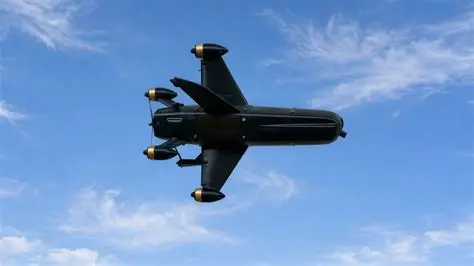
Manufacturing Guardian One systems domestically could help India:
1. Strengthen indigenous defense production
2. Reduce dependence on imports
3. Develop expertise in next-generation drone warfare
4. Expand industrial and technological capabilities
5. Build a scalable counter-drone ecosystem
For a country pursuing defense self-reliance, these advantages are strategically significant.
Has the Indian Army Ordered Guardian One Yet?
This is where many reports are misunderstood. As of now, there is no confirmed large-scale order from the Indian Army for Guardian One systems.
The existing arrangement primarily grants manufacturing and licensing rights to Paras Defence. Before any procurement takes place, several steps are typically required:
1. Testing and evaluation
2. Operational assessments
3. Performance verification
4. Tendering processes
5. Procurement approvals
Only after successfully navigating these stages would a major military order become possible. In other words, the technology may be coming to India, but official induction into military service is still a separate decision.
The Real Security Question
The biggest concern is not the Indian manufacturing agreement itself. The concern is whether Pakistan could eventually gain access to the same or similar technologies from the same company.
At present, there is no public confirmation that Pakistan is acquiring Guardian One specifically. What is confirmed is that discussions between the US firm and Pakistan's military leadership have taken place regarding unmanned aerial systems and defense cooperation.
That uncertainty creates several questions:
⚠️Will Pakistan receive the same technology?
⚠️Will there be restrictions on technology transfer?
⚠️How secure are end-user controls?
⚠️Could operational know-how spread across borders?
⚠️Will India's future procurement decisions be influenced by Pakistan's involvement?
These are issues that Indian defense planners will undoubtedly examine carefully before any large-scale purchase decisions are made.
Trump's Indirect Connection Explained
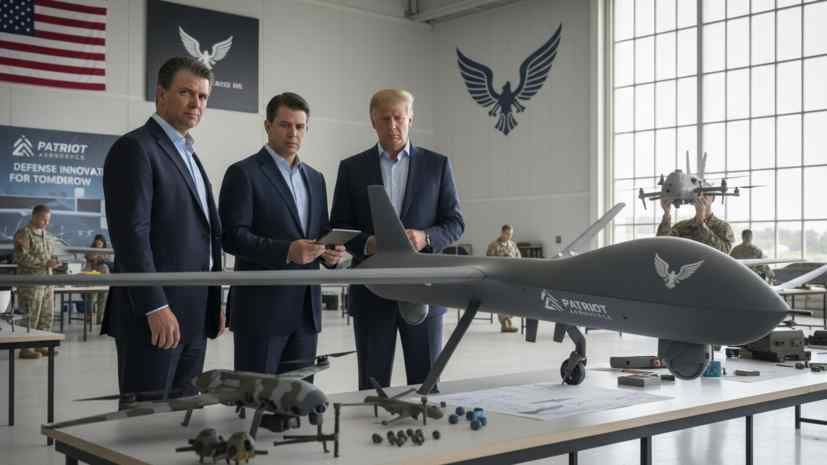
Adding another layer to the story is the reported connection between the drone company and business entities linked to members of the Trump family. The connection appears to be indirect, stemming from corporate interests associated with a company involved in a merger arrangement with the drone firm.
This has led some media reports to describe the development as a "Trump-linked" defense business story, although there is no indication that Donald Trump or his family directly manages the drone company.
Nonetheless, the association has amplified public and media attention surrounding the deals.
Powerus Pushes Back on Trump Influence Claims
Amid growing speculation, Powerus insists its contracts were driven by business decisions alone, while Trump-linked representatives and the White House have denied any involvement in the Pakistan deal.
Merger Plans Add Another Layer

Powerus is preparing to merge with Nasdaq-listed Aureus Greenway Holdings. The transaction is still awaiting approval, but the drone company is expected to continue running day-to-day operations once the deal is completed.
The Bigger Picture
India's Guardian One manufacturing partnership could strengthen its counter-drone capabilities, but the US firm's subsequent engagement with Pakistan has added a new layer of strategic scrutiny. As drone warfare reshapes modern combat, future decisions may hinge not just on acquiring technology, but on securing a decisive edge in the race for next-generation aerial defense. 🚀⚠️
🚨 What Do You Think?
Should India continue pursuing Guardian One despite the company's engagement with Pakistan?
✅Is indigenous manufacturing enough to protect India's strategic interests?
✅Should defense firms be allowed to partner with rival nations simultaneously?
✅Could counter-drone warfare become the defining military technology of the next decade?
💬 Share your views in the comments below and join the conversation.
📢 For more in-depth analysis on defense technology, geopolitics, and South Asian security developments, bookmark our website and subscribe today!
Written by
Kartikeya RaoDiscussion (0)
Sign in to join the discussion.
Loading comments…