
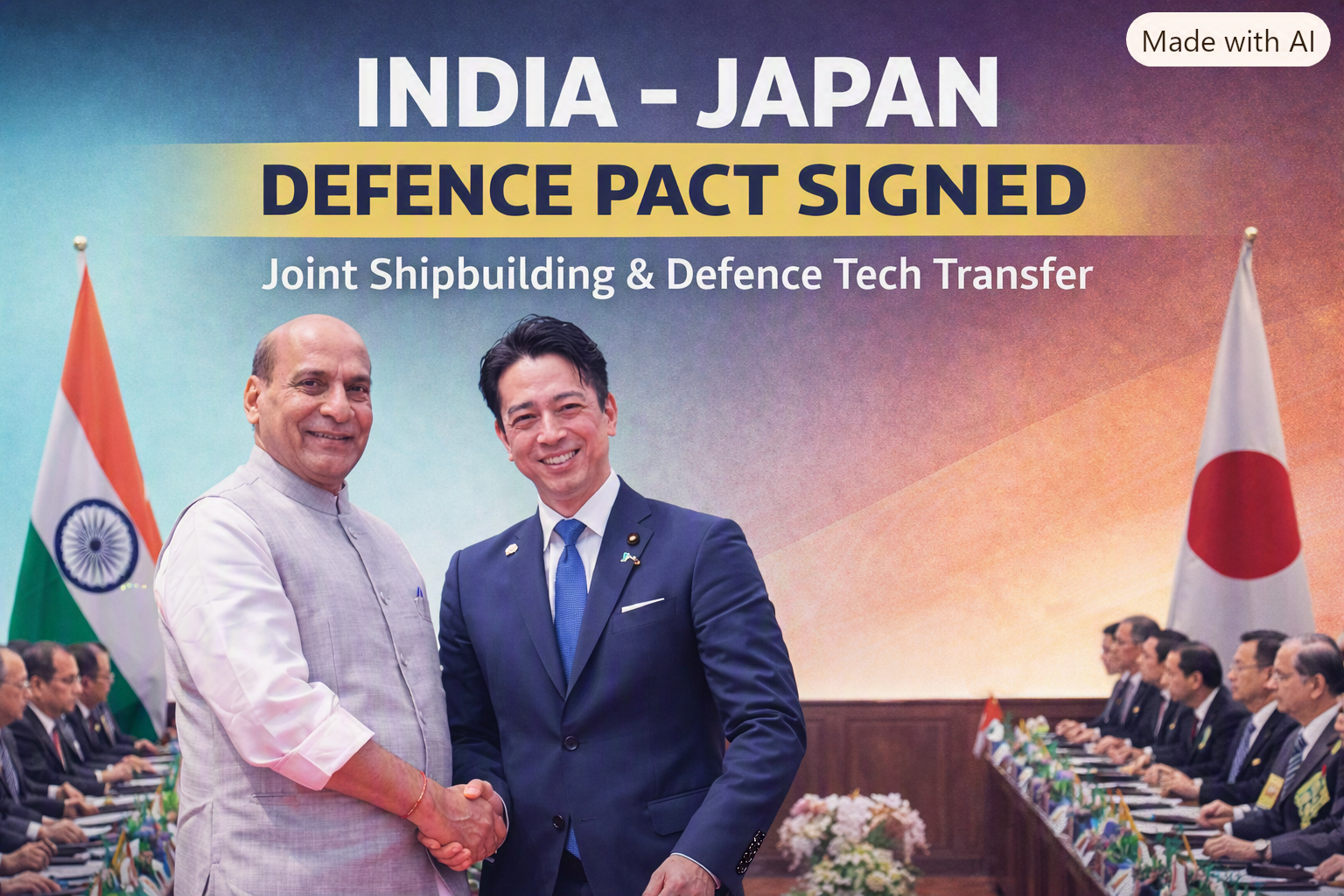
A New Era of Maritime Security and Joint Naval Shipbuilding
🌊 Maritime Security Gets a Boost
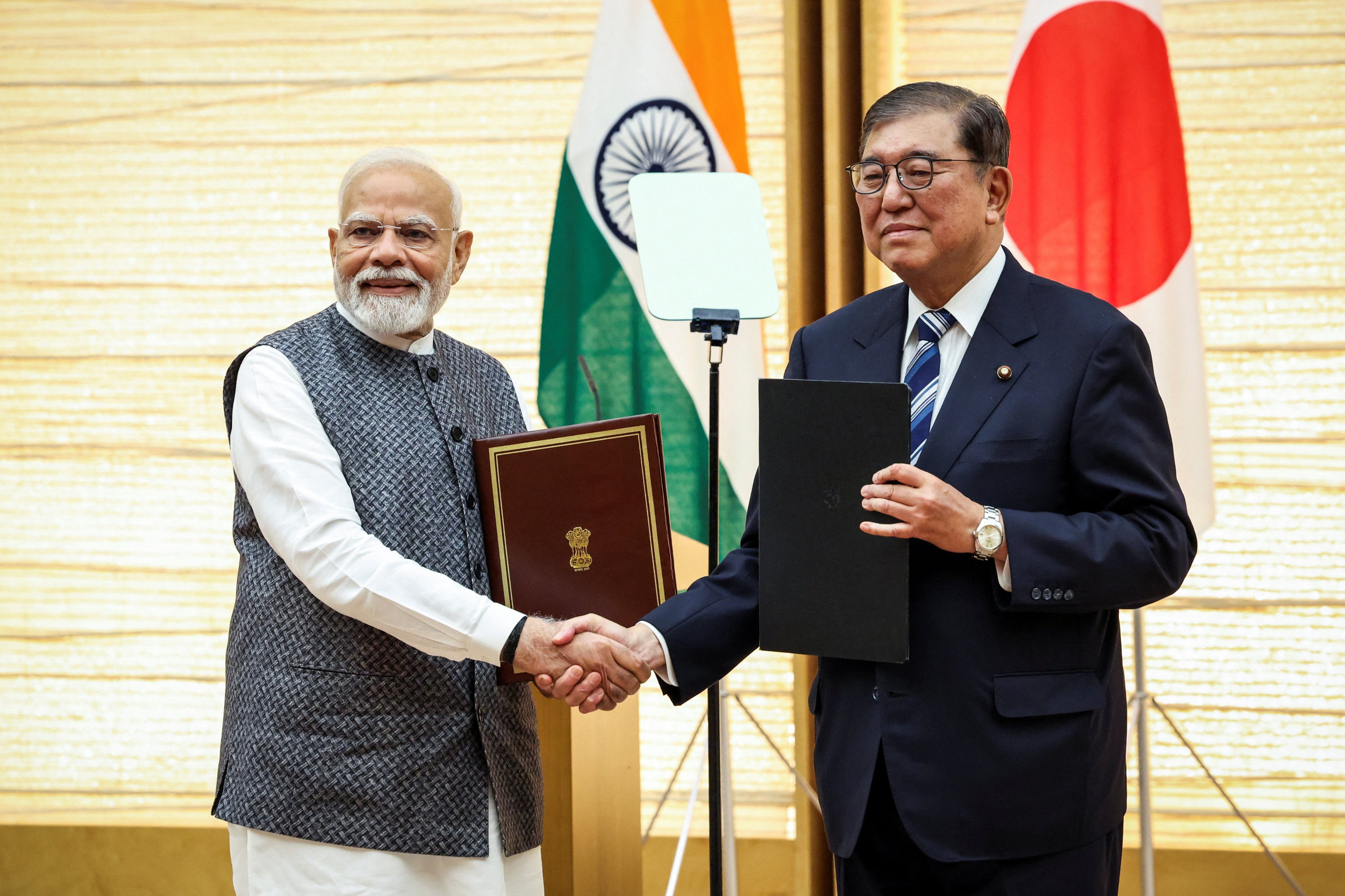
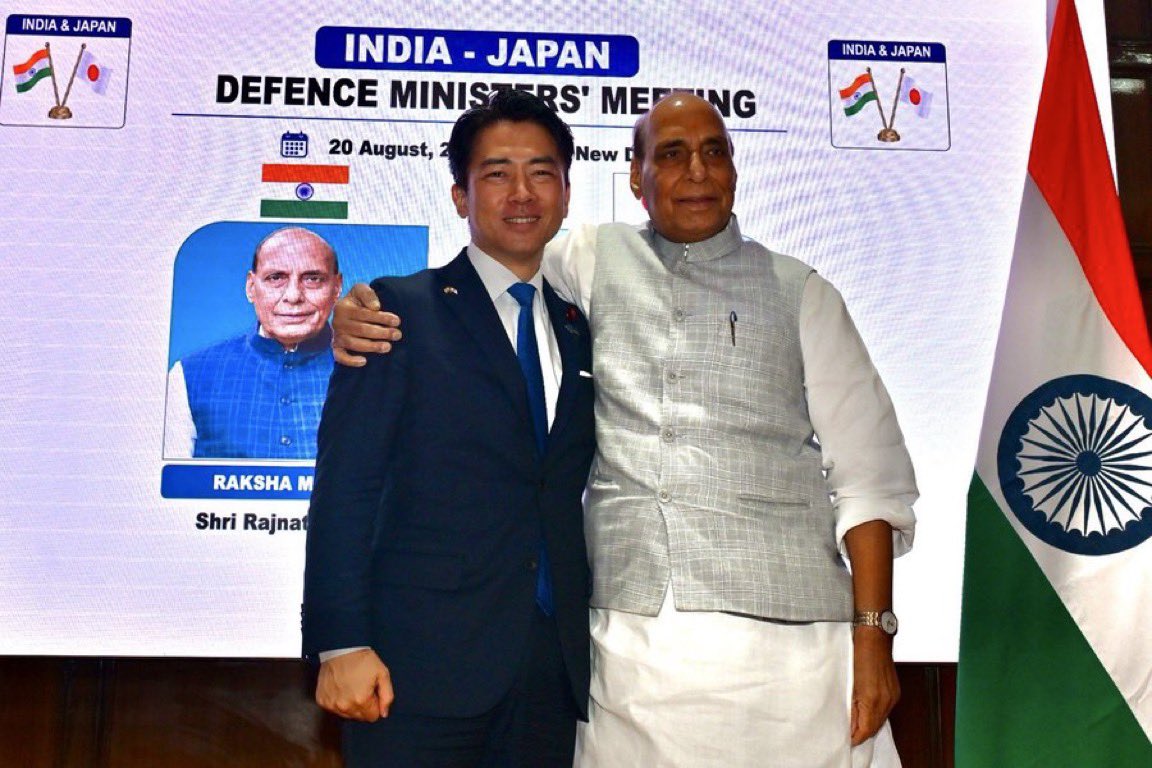
On 20 August, India’s Defence Minister Rajnath Singh and Japan’s Defence Minister Shinjiro Koizumi met in New Delhi, sealing a landmark pact.
A Maritime Security Cooperation Agreement was signed, enabling both nations to collaborate on domain awareness, information sharing, rescue operations, naval visits, and joint exercises.
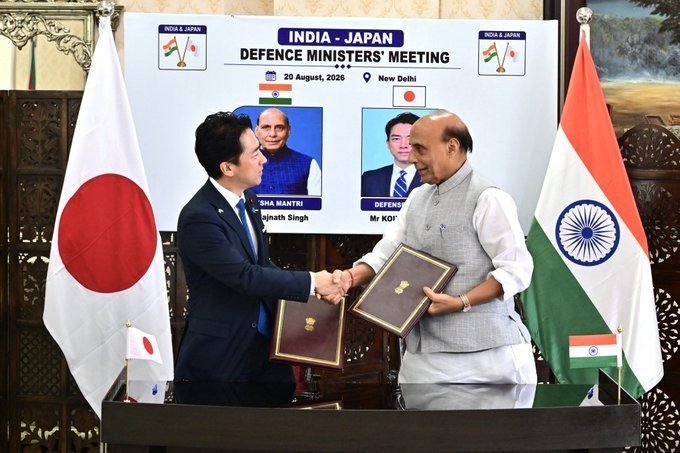
This partnership strengthens the Indo‑Pacific’s security architecture, ensuring freedom of navigation and rule‑based order.
⚓ Beyond Buyer–Seller: Joint Naval Shipbuilding
The real game‑changer? India and Japan agreed to explore joint naval shipbuilding and design development.
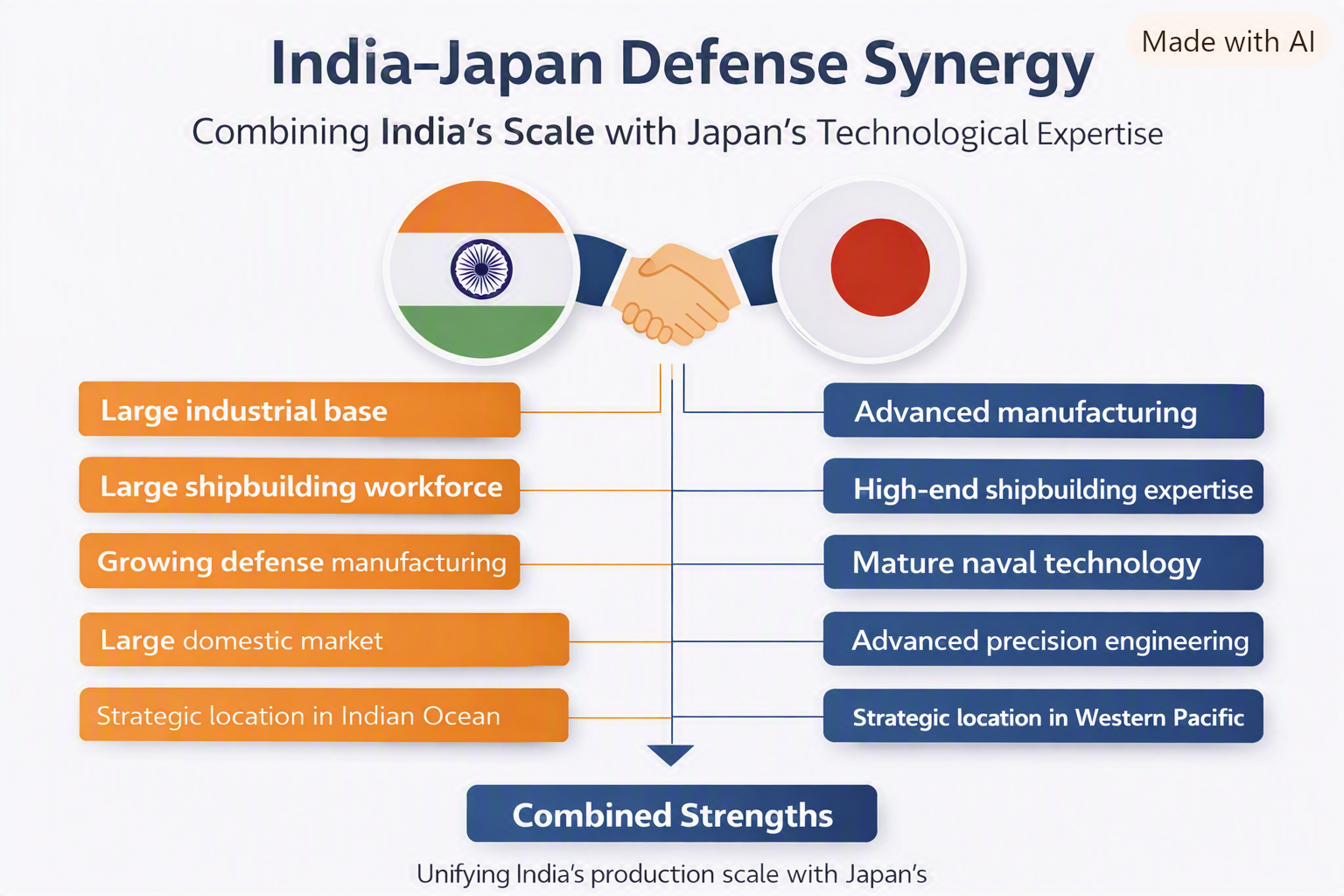
Japan brings precision engineering, advanced technology, and design expertise.
India contributes large‑scale shipyards, skilled manpower, and a growing defense industrial ecosystem. Together, they aim to co‑develop platforms in naval architecture, propulsion, sensors, communication, radar, and sonar systems, creating a deep industrial partnership rather than a transactional buyer–seller relationship.
🔧 Technology Transfer: From Unicorn Antenna to Future Systems
Japan has historically been cautious about technology transfer due to post‑World War II restrictions. But times are changing:
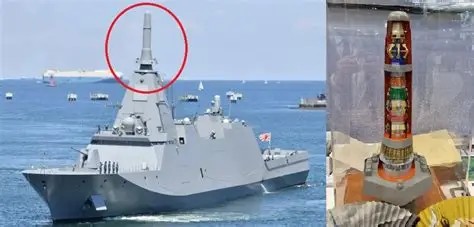
India and Japan already co‑developed the Unicorn Mast Antenna, a breakthrough system that consolidates multiple antennas into one, enhancing communication reliability and reducing electromagnetic signatures.
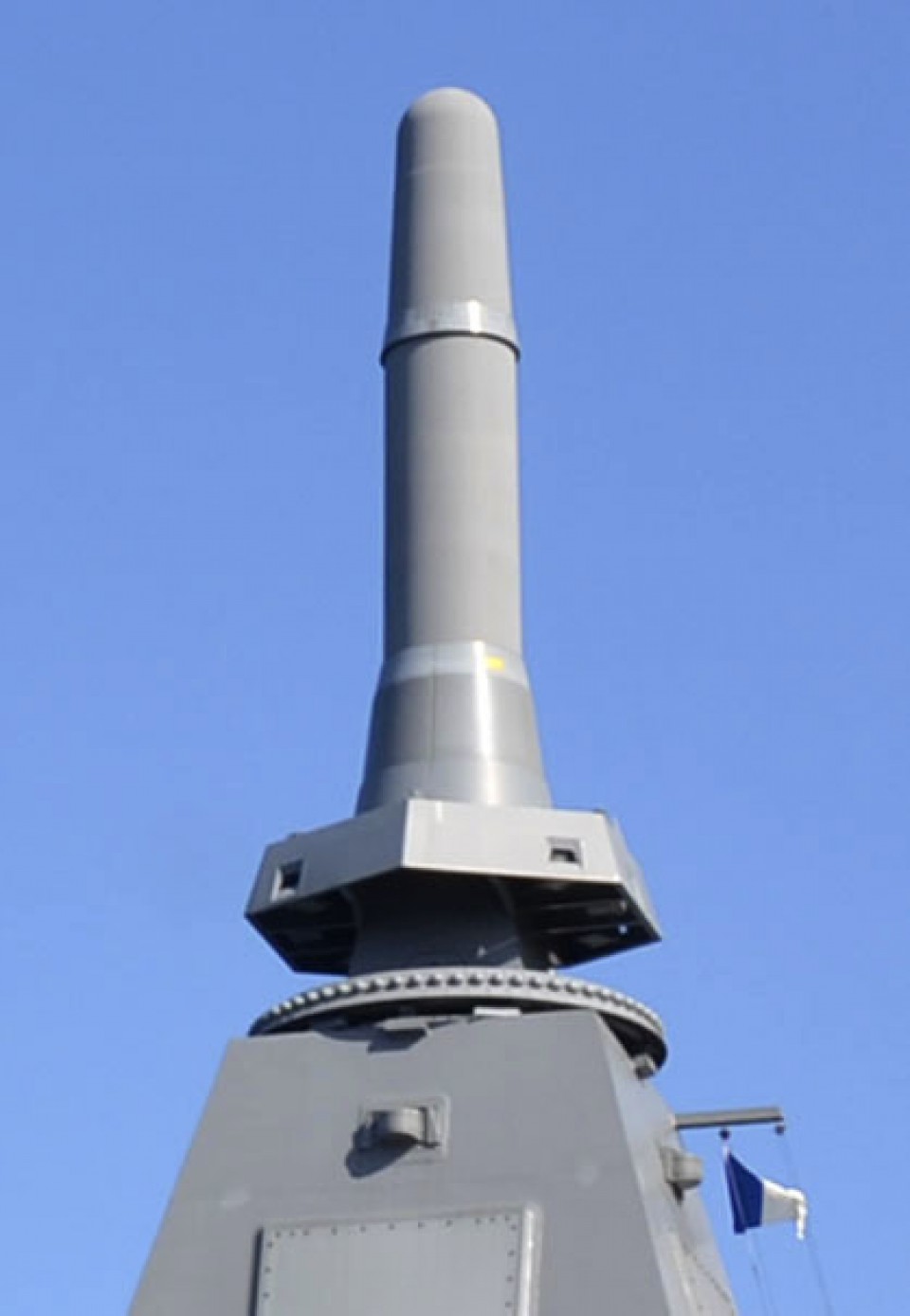
This pact signals India’s entry into Stage 3–5 of tech collaboration: joint research, co‑development, co‑production and an indigenous ecosystem, paving the way for more sophisticated defense technologies.
⚙️ UNICORN: The India–Japan Tech Marvel Redefining Naval Power
In a breakthrough collaboration, India and Japan have co‑developed UNICORN (Unified Complex Radio Antenna), a next‑gen integrated mast system for naval ships. Instead of cluttered arrays of antennas, this innovation merges communication, radar, and sensor functions into a single, sleek structure.
The result?
Enhanced reliability and efficiency.
Reduced electromagnetic signature.
Streamlined ship design and operations.
Prime Minister Modi hailed UNICORN as India’s first India–Japan defense co‑development project, marking a new era of technological synergy. This isn’t a one‑off success - it’s the foundation for deeper co‑production and naval innovation, expanding an already strong defense‑tech partnership between the two nations.
🛡️ The China Factor
Though the agreement avoids naming China directly, the strategic intent is clear.
China’s naval expansion in the East China Sea and its assertiveness in the Indo‑Pacific have raised alarms in Tokyo and New Delhi.
North Korea’s missile tests add another layer of concern. This pact is a calculated response to regional threats, strengthening India–Japan interoperability through exercises like JIMEX (Japan–India Maritime Exercise).
🔗 Interoperability: When Forces Think and Act as One
Interoperability means different armed forces working seamlessly together. Picture an Indian ship detecting a threat and instantly sharing that intel with a Japanese vessel; both respond in perfect sync.
It’s built on shared communication, procedures, data, logistics, and command systems, strengthened through joint drills and information exchange.
When allies achieve interoperability, they don’t just coordinate; they create a unified defense front.
🤝 Towards a Free, Open, Rule‑Based Indo‑Pacific
By combining India’s scale and manufacturing capacity with Japan’s technological sophistication, both nations are building a defense ecosystem that can counterbalance China’s rise. This is not just about ships; it’s about strategic trust, shared values, and long‑term security cooperation.
🛡️ Strategic Outlook
India and Japan’s defense pact marks a historic leap from transactional ties to transformative collaboration. With joint shipbuilding, advanced tech transfer, and enhanced maritime security, the Indo‑Pacific balance of power is shifting.
Do you think this India–Japan partnership can truly counter China’s growing naval dominance? Can interoperability redefine global defense teamwork? Share your thoughts in the comments - your voice matters in shaping the debate on the future of the Indo‑Pacific!
Written by
Vedant BhardwajDiscussion (0)
Sign in to join the discussion.
Loading comments…