
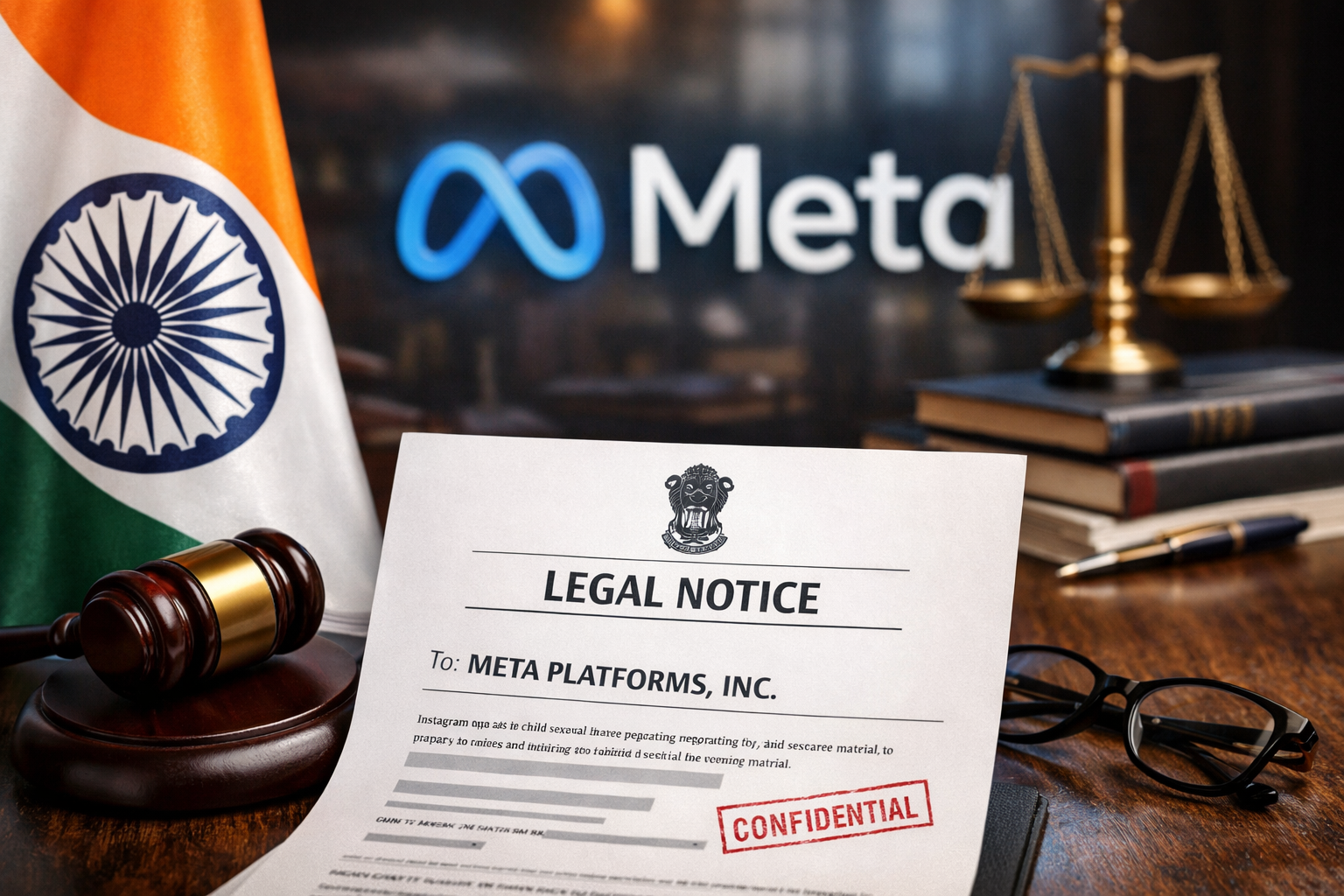
Government Gives Meta 7 Days to Respond, Warns of Strict Action
The Government of India has issued a strong legal notice to Meta, the parent company of Instagram and Facebook, after reports suggested that paid advertisements on Instagram were allegedly being used to promote Child Sexual Exploitative and Abuse Material (CSEAM).
The government has directed Meta to explain within seven days how such advertisements were approved and allowed to appear on its platform. Authorities have also warned that failure to provide a satisfactory response could invite strict legal action.
What Triggered the Government’s Action?
The controversy emerged after investigative findings reportedly revealed that certain paid Instagram advertisements were directing users toward illegal networks distributing child sexual abuse material.
According to the reports, these advertisements often use coded language that appears harmless at first glance. Once users click on them, they may be redirected to external messaging platforms such as Telegram, where illegal CSEAM is allegedly distributed or sold.
This makes the issue far more serious than ordinary objectionable online content. It raises concerns about organized criminal networks, child exploitation, and human trafficking.
Why Paid Advertisements Are Different from Regular Posts
One of the key reasons behind the government’s strict response is the difference between user-generated content and paid advertisements.
Regular posts uploaded by users are generally detected and removed through automated moderation systems or after receiving reports. However, paid advertisements undergo an approval process before being displayed to users.
Since Meta reviews, approves, distributes, and earns revenue from advertisements, the government believes the company’s responsibility is significantly higher in ensuring that illegal content is never promoted.
Understanding CSEAM: Why the Terminology Matters
International organizations, including the United Nations and child protection agencies, no longer use the term “child pornography.”
Instead, they prefer the term Child Sexual Exploitative and Abuse Material (CSEAM) or Child Sexual Abuse Material (CSAM).
The reason is simple. The older term may wrongly suggest consent, whereas children cannot legally or meaningfully consent to sexual exploitation. The updated terminology better reflects the reality that such material represents abuse and exploitation of minors.
Government’s Major Directives to Meta
The legal notice reportedly requires Meta to:
• Immediately remove and disable advertisements linked to CSEAM.
• Delete all related content found on the platform.
• Explain how its advertisement moderation system works.
• Provide details about safeguards used to detect abusive content.
• Share corrective measures being implemented to prevent similar incidents.
• Submit a detailed compliance report within seven days.
Failure to comply could result in legal proceedings under Indian law.
India’s Zero-Tolerance Policy on Child Safety
The government’s response reflects its zero-tolerance approach toward child exploitation.
Its objectives include:
• Preventing online child sexual exploitation.
• Disrupting organized criminal networks.
• Protecting minors from trafficking and abuse.
• Ensuring greater accountability from digital platforms.
• Strengthening India’s digital safety ecosystem.
Laws That Could Apply
Several Indian laws empower authorities to act against platforms that fail to prevent the circulation of illegal child abuse content.
These include:
• Information Technology Act, 2000
• Information Technology (Intermediary Guidelines and Digital Media Ethics Code) Rules, 2021
• Protection of Children from Sexual Offences (POCSO) Act
• Relevant provisions under the Bharatiya Nyaya Sanhita (BNS)
Under the IT Rules, social media intermediaries are expected to exercise due diligence, remove unlawful content promptly, cooperate with government agencies, and maintain effective grievance redressal mechanisms.
What Is Safe Harbour and Why Does It Matter?
Social media platforms generally enjoy Safe Harbour protection, which limits their legal liability for content uploaded by users, provided they act quickly after becoming aware of illegal material.
However, the present controversy is different.
The allegations relate to paid advertisements, which are actively reviewed and approved before publication. Since advertisements generate revenue for the platform, regulators argue that Meta has a greater legal responsibility to prevent illegal promotions from appearing in the first place.
Can Artificial Intelligence Solve the Problem?
Meta says it uses artificial intelligence along with human reviewers to identify and remove illegal images, videos, and advertisements.
However, experts acknowledge that AI has limitations.
Criminals often use:
• Coded keywords
• Hidden language
• Obfuscated images
• Indirect promotional techniques
These tactics can sometimes bypass automated detection systems, making continuous human oversight equally important.
Global Pressure on Big Tech Is Increasing
India is not the only country demanding stricter accountability from technology companies.
Governments around the world have introduced stronger regulations, including:
• The European Union’s Digital Services Act (DSA)
• The United Kingdom’s Online Safety Act
• Australia’s online safety regulations
• Various child protection and digital safety laws in the United States
The common objective is to ensure that technology companies proactively detect illegal content, verify advertisers, improve transparency, and strengthen user safety.
Key Insights
The legal notice issued to Meta marks one of India’s strongest actions against alleged failures in online advertising moderation related to child safety.
While the investigation continues, the case highlights an important question for digital platforms worldwide: Should companies be held to a higher standard when they profit from content distributed through paid advertisements?
As governments tighten regulations and public expectations grow, social media platforms may face increasing pressure to strengthen their moderation systems, improve transparency, and ensure that harmful content never reaches users, especially when children’s safety is at stake.
Written by
Bhavana SharmaDiscussion (0)
Sign in to join the discussion.
Loading comments…