
🚀 The Next Phase of India’s Smartphone Journey
There was a time when India imported almost all its mobile phones, with little to no domestic production. That changed with the PLI scheme, which transformed India into one of the world’s largest mobile phone producers. But the reality was clear: most of this was assembly work, with critical components still imported.
Now, the government has launched a new Mobile Phone Manufacturing Scheme (MPMS) worth ₹62,500 crore (2026–2031), shifting focus from mere assembly to local value addition, R&D, and Indian brands.
💡 What Makes This Scheme Different?
Beyond Assembly: India aims to design, manufacture, and own the intellectual property of mobile phones.
Domestic Value Addition: Instead of importing components, India will build them locally, from displays to batteries.
Indian Brands First: Unlike the PLI scheme that favoured global giants, MPMS prioritizes Indian‑owned brands and technologies.
Incentives:
· 5% incentive for Indian brands.
· Extra 3% for in‑house design & R&D.
· Additional 1.5% if 25% of components are sourced locally.
📊 The Numbers Behind the Push
₹62,500 crore budget allocated for 5 years.
Expected ₹39 lakh crore worth of mobile phones manufactured during the scheme period.
60,000 direct jobs projected, with countless indirect opportunities in logistics, warehousing, and supply chains.
🌍 Why It Matters Globally
India already manufactures 99.2% of the mobile phones used domestically, making it the world’s second‑largest producer or exporter after China. With this scheme, the country is not just assembling devices but capturing the full value chain, from design patents to global brand ownership. This is a leap toward Atmanirbhar Bharat in electronics. Only then can “Made in India” mean more than just assembly.
📱 Assembly vs. Real Value: The Smartphone Example
Think of a ₹50,000 smartphone.
₹8,000 comes from assembly and local labour in India.
₹30,000 worth of components, chips, displays, and batteries are imported.
₹7,000 goes to foreign‑owned patents, operating systems, and software licenses.
₹5,000 covers margins, logistics, and branding.
On paper, the phone is “Made in India.” But in reality, India is only capturing a fraction of the total value. The manufacturing location may be India, yet the value capture, design, IP, and profits largely flow abroad.
This is exactly why the new Mobile Phone Manufacturing Scheme (MPMS) is so crucial. It’s designed to shift India from being just an assembly hub to becoming a value creator, owning the designs, patents, and brands that define the global tech market.
🔄 India’s Mobile Manufacturing Shift: PLI vs. MPMS
📱 From Scale to Value
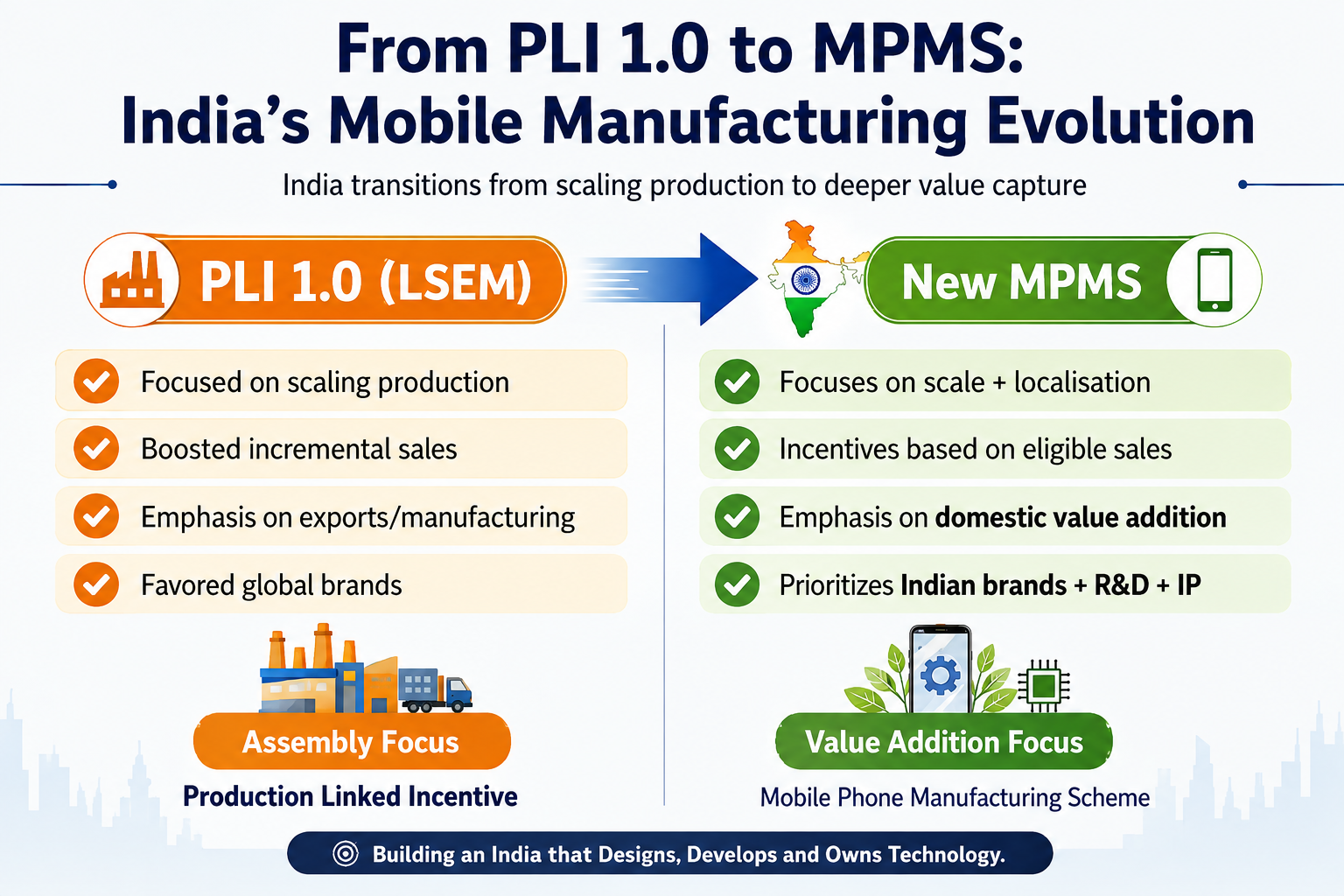
India’s first big leap in smartphone manufacturing came with the PLI‑LSEM scheme (2020–2026). It focused on scaling production, boosting exports, and attracting global brands. The result? India became a global hub for mobile assembly.
But the new Mobile Phone Manufacturing Scheme (MPMS) takes the story further. It’s not just about producing more phones; it’s about localisation, Indian brands, and capturing real value through design, R&D, and intellectual property.
⚖️ Key Differences in Focus
🌍 Why It Matters
The government describes PLI as the catalyst that put India on the global map. But the next challenge is ownership, ensuring Indian companies don’t just assemble but innovate, patent, and profit.
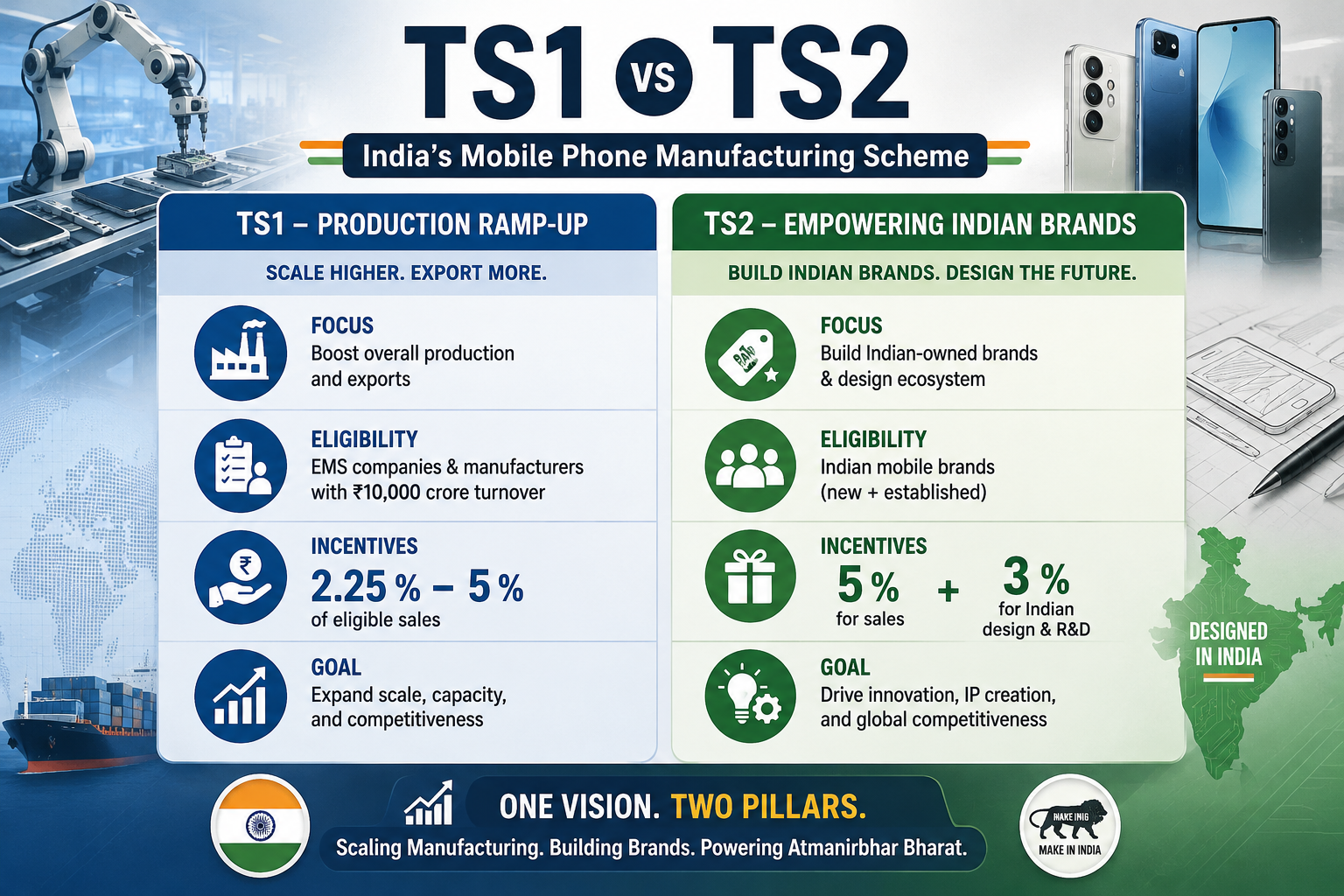
📱 India’s Mobile Revolution: Two Tracks, One Vision
TS1 builds the foundation of scale, while TS2 fuels innovation and ownership, turning India from an assembly hub into a tech powerhouse.
The Big Shift
India is moving beyond simply assembling smartphones to designing, developing, and owning them. With Indian IP, trademarks, and management at the core, the goal is a complete tech ecosystem that innovates, exports, and competes globally.
India’s mobile revolution is unfolding, and it’s more than just gadgets. It’s building technology it can truly call its own. It’s about jobs, innovation, and global competitiveness.
👉 Are you ready to witness India’s transformation from an assembler to a global mobile powerhouse? Do you think India can replicate this shift in laptops, EVs, and other tech sectors too?
Share your thoughts: Will Indian brands rise to challenge Apple and Samsung?
Written by
Ishaan TrivediDiscussion (0)
Sign in to join the discussion.
Loading comments…