
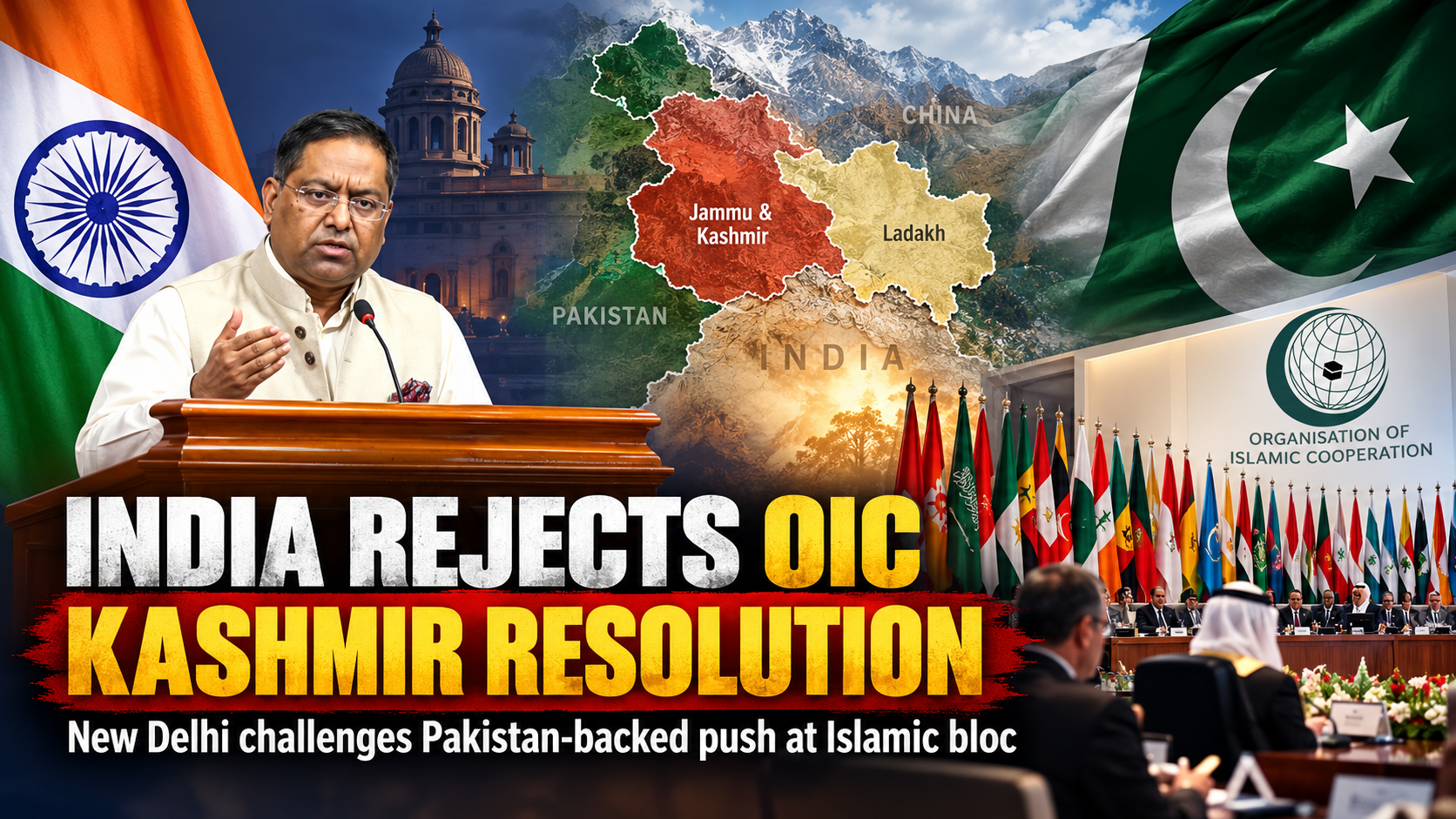
Following the OIC's latest Kashmir resolution, India accused Pakistan of misusing the Islamic bloc to push an anti-India narrative and issued one of its strongest diplomatic responses in recent years.
The Organisation of Islamic Cooperation (OIC) has once again found itself at the center of a diplomatic clash with India after its latest resolution on Kashmir prompted a sharp and unusually detailed response from New Delhi. While such statements from the OIC are not new, India's latest reaction signals a tougher diplomatic approach, directly accusing Pakistan of misusing the organization to push its anti-India narrative.
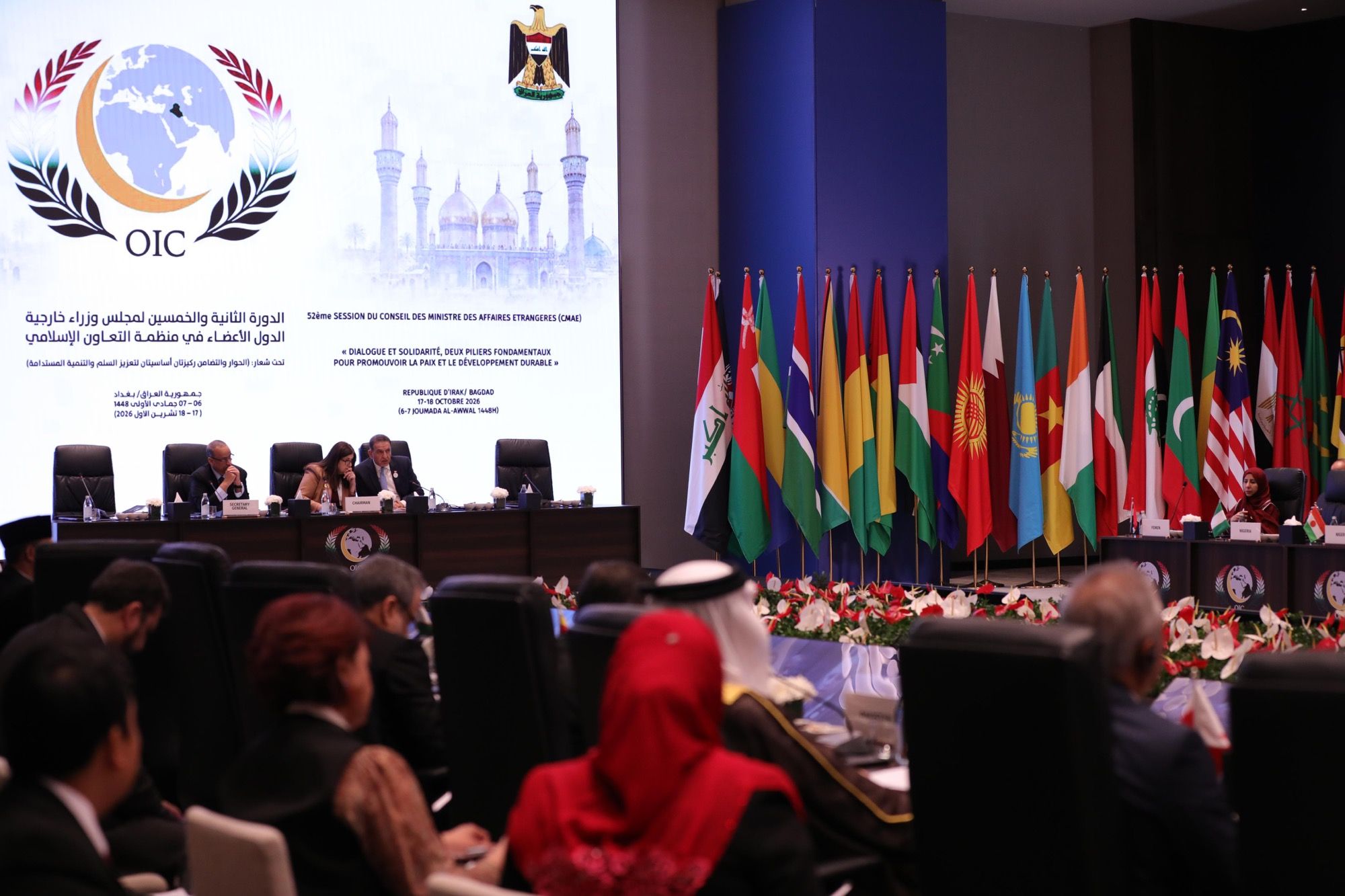
So, what exactly happened in Baghdad? Why did India reject the resolution so strongly? And does the OIC actually have any power to influence the Kashmir issue? Let's break it down.
What Happened at the OIC Meeting?
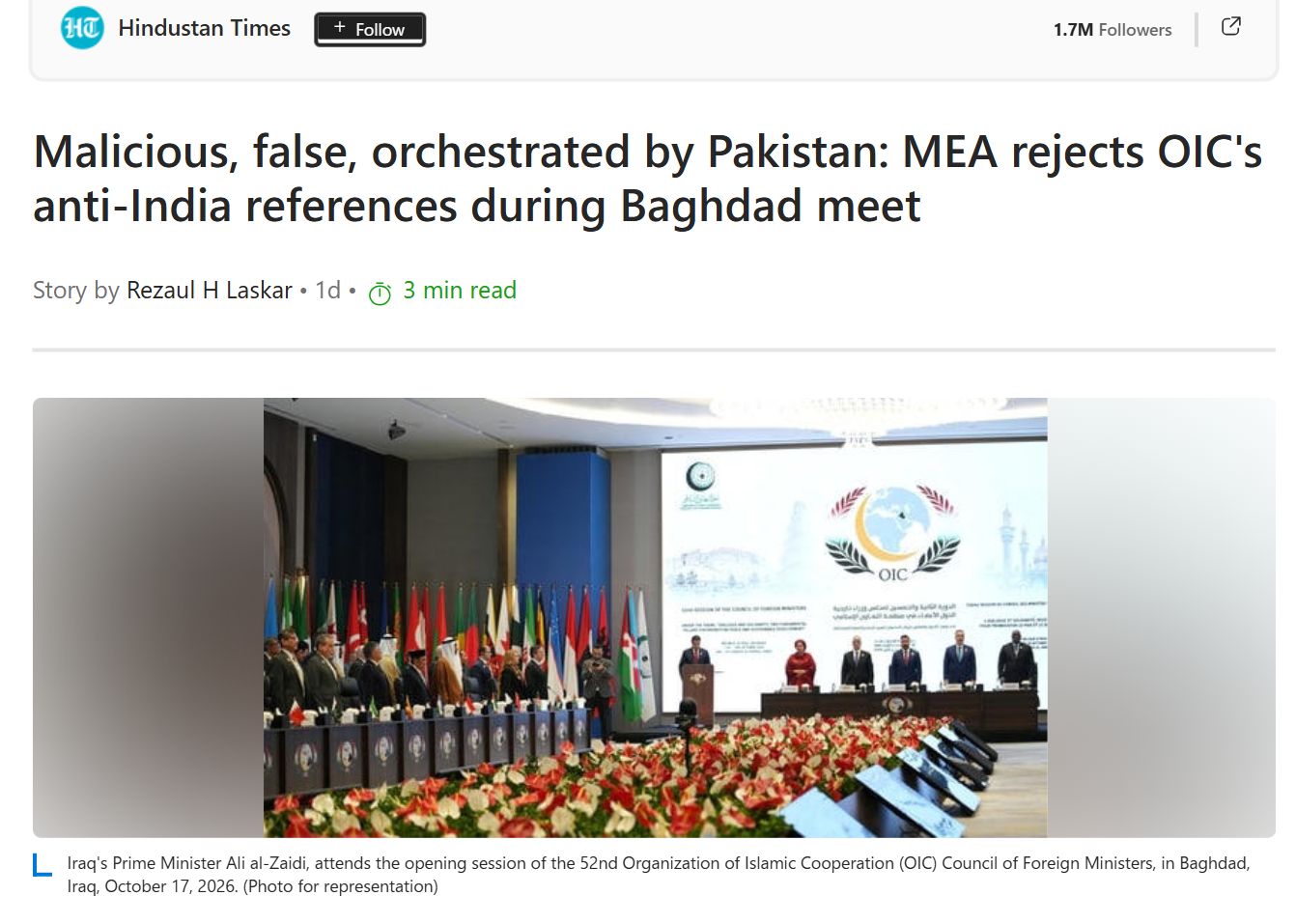
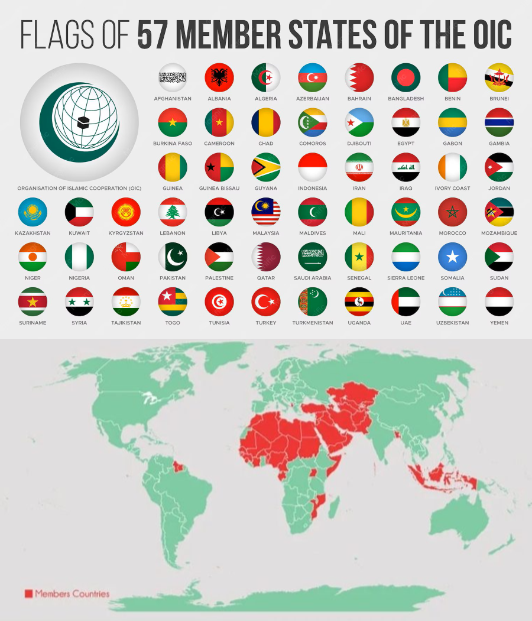
The controversy began during the 51st Council of Foreign Ministers meeting of the OIC, held in Baghdad, Iraq, on October 17-18. Representatives from the organization's 57 member states participated in discussions covering various political, economic, and humanitarian issues affecting the Islamic world.
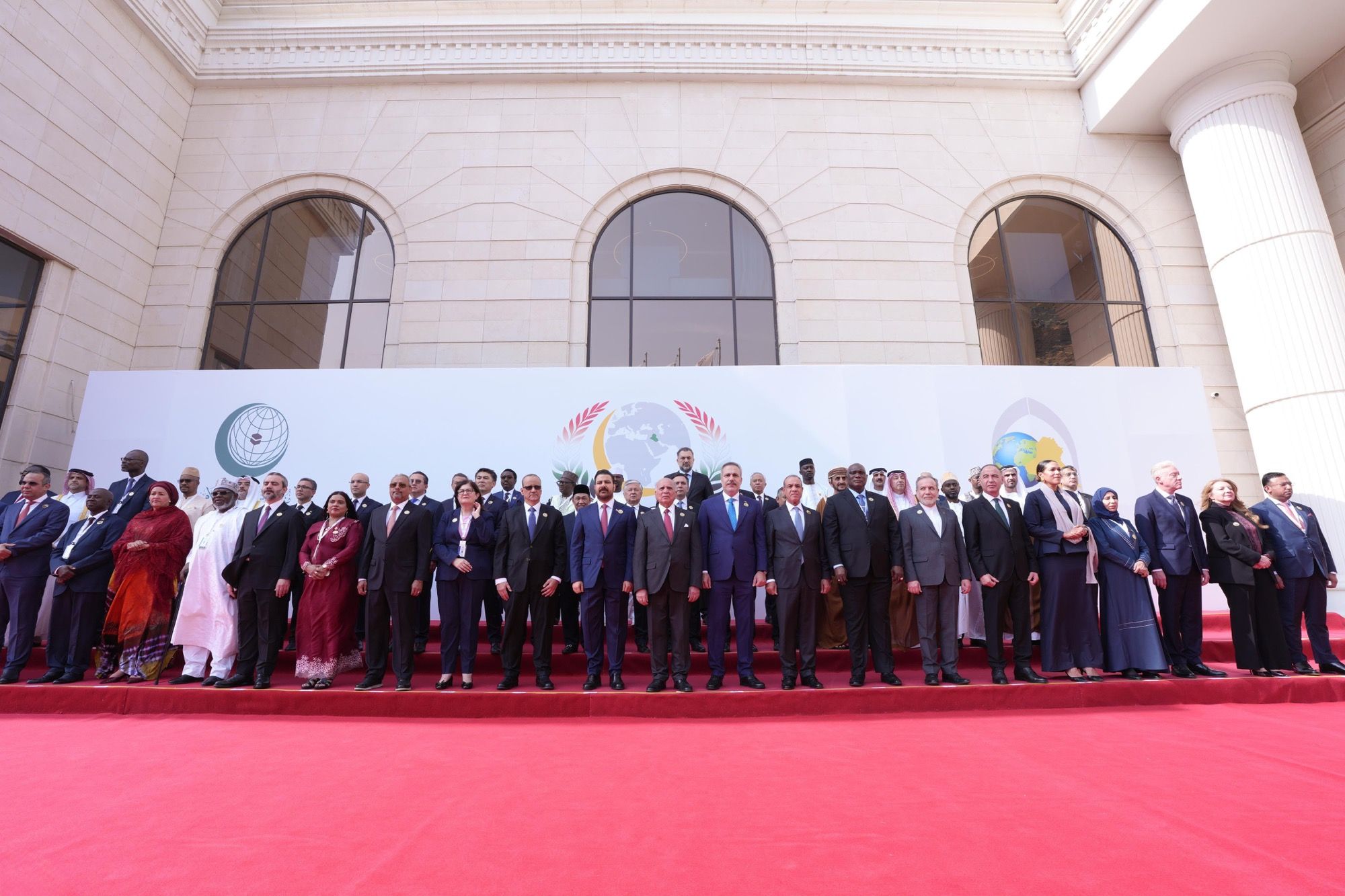
However, one section of the Baghdad Declaration once again mentioned Jammu & Kashmir, calling for the implementation of the right to self-determination, citing references often drawn from older UN resolutions.
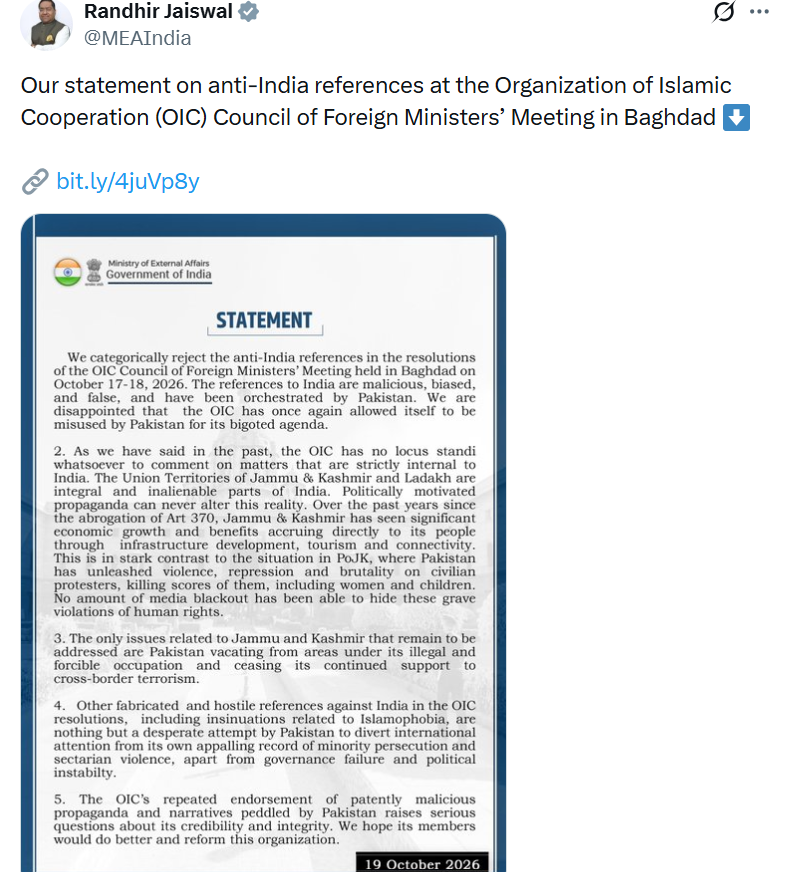
India responded swiftly, categorically rejecting all references to Jammu & Kashmir and Ladakh made in the declaration. New Delhi reiterated its long-standing position:
“Jammu & Kashmir and Ladakh are integral and inalienable parts of India, and no external body has any authority to comment on India's internal affairs.”
What Is the OIC and Why Does It Matter?
The Organisation of Islamic Cooperation (OIC) is an intergovernmental organization established in 1969 following concerns among Muslim-majority nations after the attack on the Al-Aqsa Mosque in Jerusalem.
Today, it comprises 57 member states across the Middle East, Africa, Asia, and other regions, making it one of the world's largest international groupings after the United Nations. Its headquarters are located in Jeddah, Saudi Arabia.
The organization was created to promote cooperation among Muslim-majority countries in areas such as:
1. Political coordination
2. Economic cooperation
3. Trade and investment
4. Humanitarian assistance
5. Human rights issues
6. Religious freedom and Islamophobia
7. International diplomacy
Over the decades, however, the OIC has increasingly discussed geopolitical issues beyond its original mandate, including Palestine, Jerusalem, regional conflicts, and periodically, Kashmir.
How Does Kashmir Keep Appearing on the OIC Agenda?
According to India's view, the answer is simple: Pakistan continuously raises the issue within OIC forums.
For decades, Islamabad has sought international support for its position on Kashmir on various global platforms. While many international organizations have largely viewed Kashmir through the framework of bilateral India-Pakistan relations, Pakistan regularly pushes for references to the issue at OIC meetings.
As a result, OIC declarations often contain paragraphs supporting positions advocated by Pakistan, including references to self-determination and human rights concerns.
India, however, rejects these formulations outright. New Delhi maintains that:
1. Jammu & Kashmir is an integral part of India.
2. Any unresolved matters concerning the region can only be discussed bilaterally between India and Pakistan.
3. No third party has a role in the issue.
The OIC Secretary-General emphasized that merely passing resolutions is no longer enough, urging member states to focus on turning declarations into action.
Why Did India Respond More Aggressively This Time?
What makes this episode different is the length and tone of India's response.
Traditionally, India would issue relatively brief rebuttals. This time, however, the Ministry of External Affairs delivered a significantly stronger statement.
1. India Accused Pakistan of "Motivated Propaganda"
India alleged that Pakistan was exploiting the OIC platform to spread politically motivated narratives against India.
According to New Delhi, the repeated references to Kashmir do not reflect a consensus view of all Muslim-majority nations but are instead driven largely by Pakistan's diplomatic lobbying.
2. India Questioned OIC's "Locus Standi"
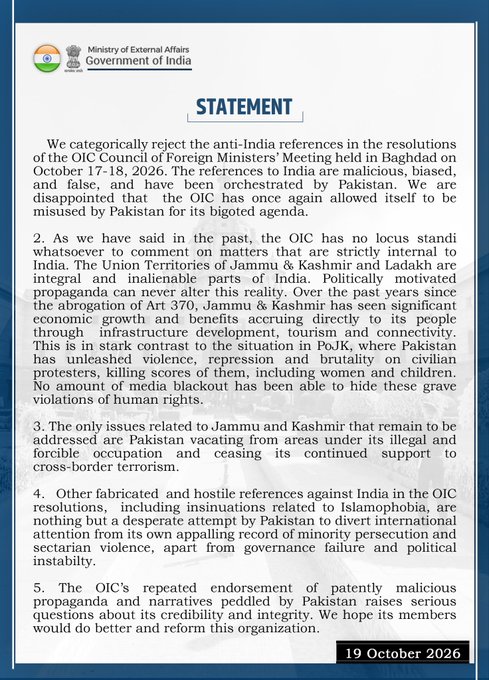
One of the strongest points raised was that the OIC has no locus standi on issues related to Jammu & Kashmir.
In legal and diplomatic language, "locus standi" refers to the right or standing to intervene in a particular matter.
India's message was clear: “The Kashmir issue falls entirely within India's domestic jurisdiction, and external organizations have no authority to interfere.”
3. Sovereignty and Territorial Integrity Took Center Stage
India also highlighted what it sees as a contradiction in the OIC's position. The OIC's own charter emphasizes:
a) Sovereignty
b) Territorial integrity
c) Non-interference in internal affairs
New Delhi argued that by commenting on Jammu & Kashmir, the organization was violating the very principles it claims to uphold.
This argument formed a key pillar of India's response and underscored its insistence that Kashmir remains an internal matter.
Where Does Article 370 Fit Into This Debate?
India's statement also implicitly reinforced the legitimacy of the constitutional changes made in August 2019, when Article 370 was abrogated.
The Indian government's position remains that:
1. The constitutional changes were carried out through a legal and democratic process.
2. The matter was examined through judicial mechanisms.
3. Subsequent electoral and administrative developments have taken place under India's constitutional framework.
From India's perspective, these developments further reinforce that Jammu & Kashmir's status is a settled domestic matter.
Pakistan, however, continues to oppose the 2019 decision and regularly raises the issue in international forums, including the OIC.
🚨 Article 370: The Turning Point
For decades, Article 370 granted Jammu & Kashmir a unique constitutional status. In August 2019, the Indian government revoked these provisions and reorganized the region into two Union Territories: Jammu & Kashmir and Ladakh.
⚖️ Supreme Court Clears the Path
In 2023, India's Supreme Court upheld the repeal of Article 370, endorsed the new administrative structure, and directed the restoration of democratic processes, including assembly elections and the eventual return of statehood.
A New Political Framework
Following the constitutional changes, Jammu & Kashmir entered a new governance model under direct Union Territory administration, while Ladakh became a separate Union Territory with its own administrative setup.
India Turns the Spotlight on Pakistan-Occupied Kashmir
Perhaps the most striking aspect of India's latest response was that it did not stop at rejecting the OIC resolution. Instead, New Delhi shifted attention toward conditions in Pakistan-Occupied Kashmir (PoK).
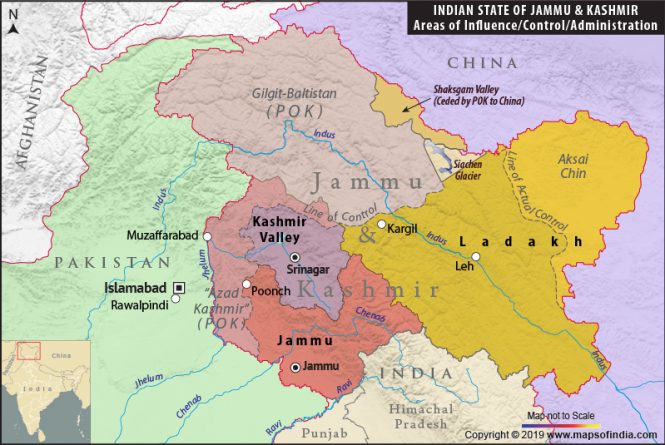
India criticized Pakistan over reports of unrest, protests, and crackdowns in the region, arguing that those raising concerns about Kashmir should first address issues under Pakistan's own administration.
The message was unmistakable: “If any aspect of the Kashmir question remains unresolved, India believes it concerns Pakistan-occupied territories rather than areas administered by India.”
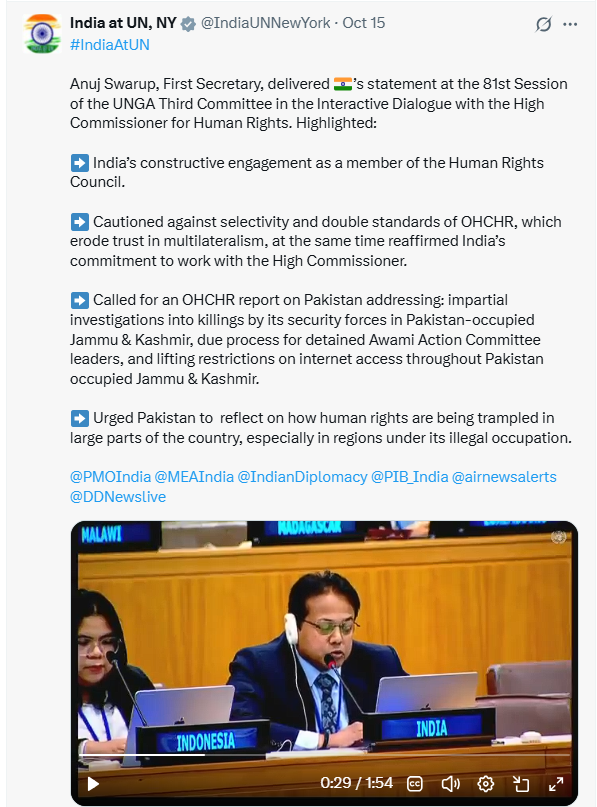
This marked a notable shift from a purely defensive response to a more offensive diplomatic counterattack.
Does the OIC Resolution Have Any Legal Impact?
The short answer is: No.
OIC resolutions are political statements, not legally binding international instruments. They do not:
1. Change international borders
2. Alter India's constitutional position
3. Override bilateral agreements
4. Create binding obligations on member or non-member states
For India, such resolutions are largely symbolic and carry no direct legal consequences.
Will This Affect India's Ties With Muslim-Majority Countries?
Despite recurring OIC resolutions on Kashmir, there is little evidence to suggest they have significantly damaged India's relationships with key Muslim-majority nations.
Over the past decade, India has strengthened strategic, economic, and energy partnerships with several major Islamic countries, including:
1. Saudi Arabia
2. United Arab Emirates (UAE)
3. Indonesia
4. Oman
5. Qatar
Trade, investment, energy cooperation, technology partnerships, and security collaboration between India and many Gulf nations continue to expand.
This is one reason why New Delhi often views OIC resolutions as largely driven by Pakistan's diplomatic efforts rather than a reflection of broader bilateral relations with the Islamic world.
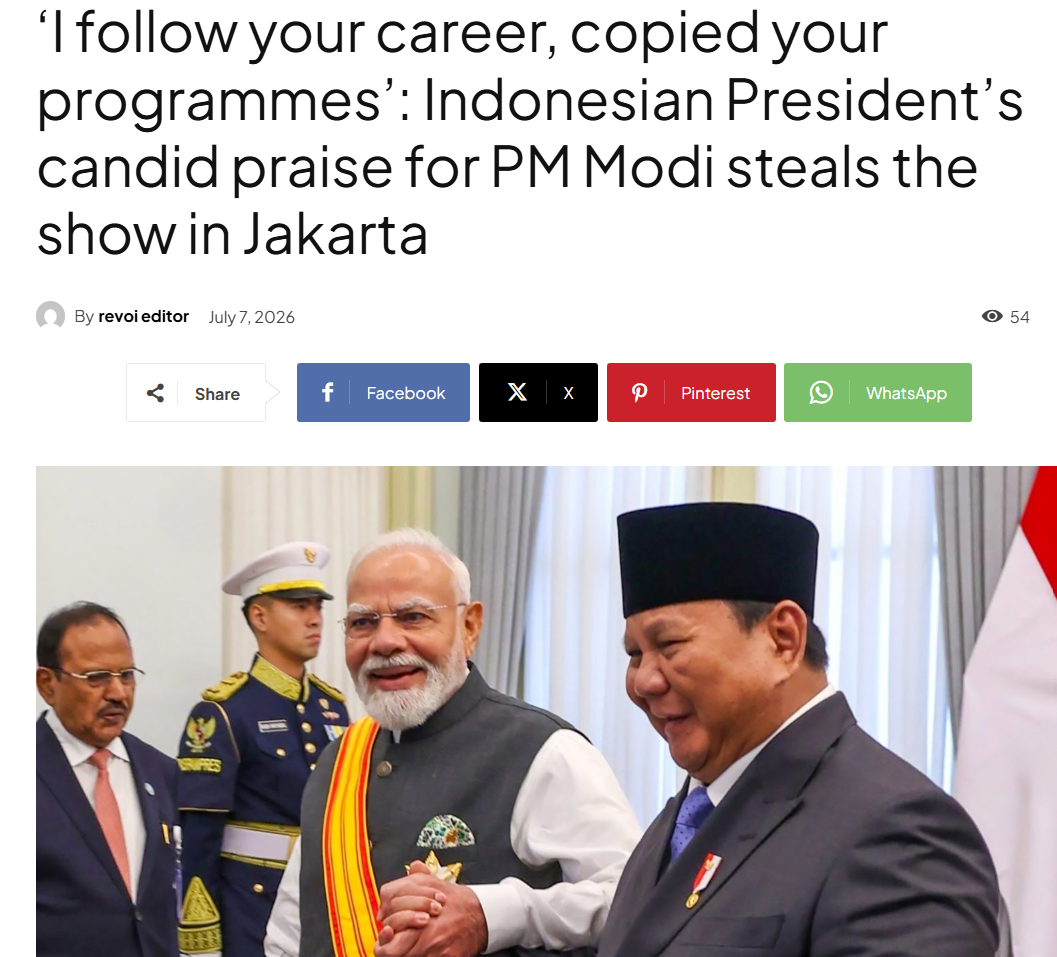
Despite this, Indonesia's leadership openly acknowledges PM Modi's influence, highlighting India's growing global soft power.
🌐 The Geopolitical Takeaway
The latest OIC resolution on Kashmir may have followed a familiar pattern, but India's response did not. By directly accusing Pakistan of misusing the organization, questioning the OIC's authority, invoking principles of sovereignty, and highlighting developments in Pakistan-Occupied Kashmir, New Delhi delivered one of its most forceful rebuttals in recent years.
While the diplomatic exchange is unlikely to alter realities on the ground, it underscores how the Kashmir issue continues to remain a recurring point of contention in international forums, even as India insists that the matter is settled, internal, and beyond the scope of external intervention.
👉 What Do You Think?
Is the OIC acting independently on Kashmir, or is Pakistan using the platform to internationalize the issue? Should international organizations comment on such disputes, or should they remain strictly bilateral matters?
Share your views in the comments below and stay tuned for more in-depth analysis on global geopolitics, diplomacy, and India's strategic affairs. 🌍🔥
Written by
Bhavana SharmaDiscussion (0)
Sign in to join the discussion.
Loading comments…