
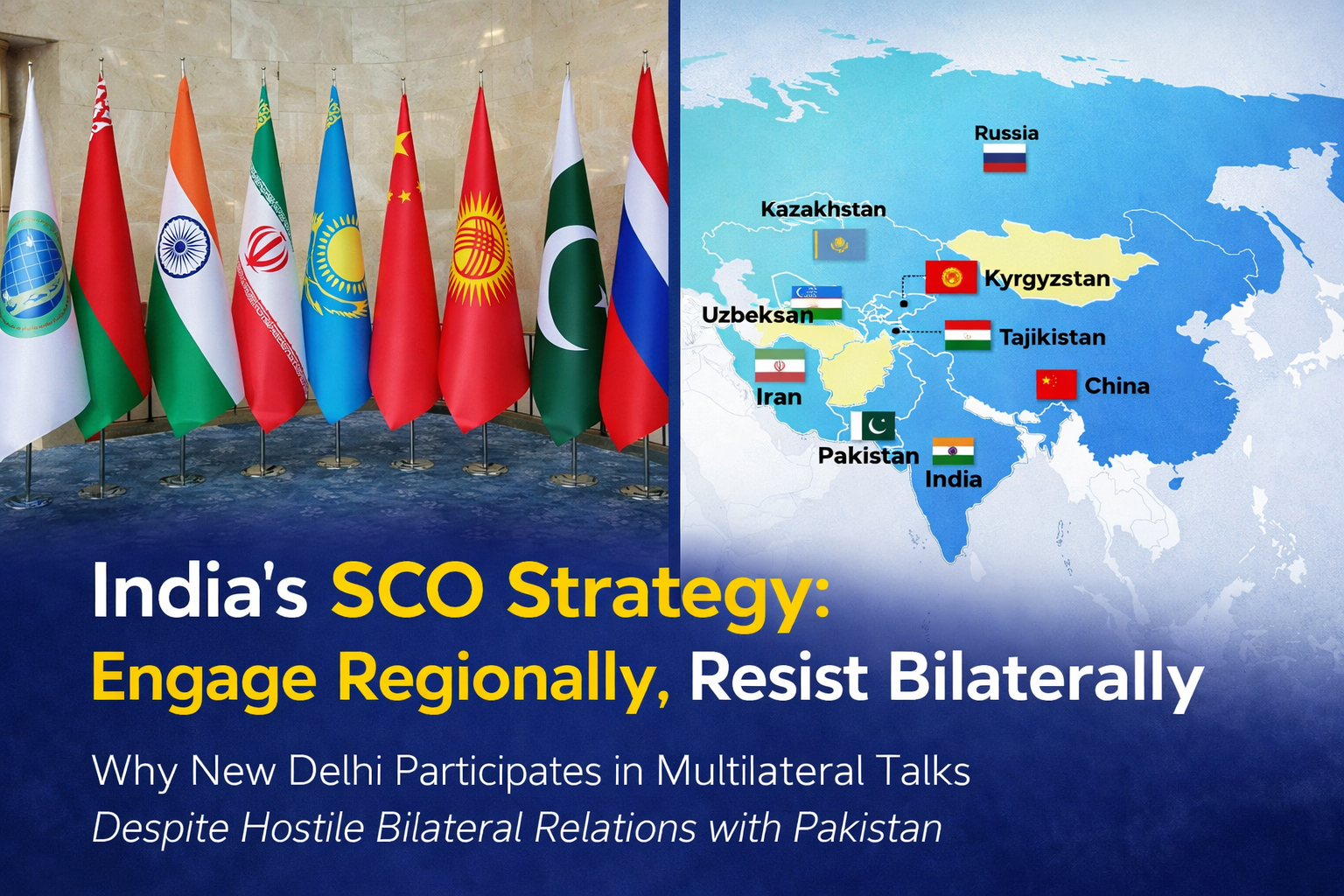
In a move that stunned many observers, Indian officials travelled to Islamabad to attend the 12th Meeting of the Heads of Border Services under the Shanghai Cooperation Organization (SCO). At first glance, this decision seems contradictory; India and Pakistan’s bilateral relations remain deeply strained, with peace talks frozen, trade suspended, and trust eroded after repeated terror incidents. Yet, India’s participation underscores a critical principle of its foreign policy: compartmentalization through multilateral diplomacy.
Why This Meeting Matters?
The Islamabad gathering was not a political dialogue, but a technical and institutional review of border security challenges faced by SCO members. Discussions focused on:
Counter‑terrorism and terror financing
Cross‑border infiltration and radicalization
Drug trafficking, particularly narcotics flowing from Afghanistan into Eurasia
Human trafficking and porous frontier management
Information sharing and border infrastructure coordination
India’s presence was strategic. By engaging at the multilateral level, New Delhi ensured its voice was heard on issues that directly affect its national security, even if bilateral relations with Pakistan remain hostile.
The Bigger Picture: SCO’s Role
Founded in 2001 (evolving from the “Shanghai Five”), the SCO now has 10 full members, including China, Russia, India, Pakistan, and most recently Iran and Belarus.
Its core agenda revolves around the “Three Evils”: terrorism, separatism, and extremism. Security cooperation is complemented by economic, energy, and cultural initiatives, making the SCO a vital Eurasian platform.
India joined in 2017, recognizing that boycotting such forums would only cede space to rivals like China and Pakistan. Participation allows India to strengthen ties with Central Asian states- Kazakhstan, Uzbekistan, Tajikistan, Kyrgyzstan- while safeguarding its strategic interests.
Pakistan’s Chairmanship
Later this year, Pakistan will assume the SCO chairmanship, giving it administrative responsibility for coordinating meetings and setting agendas. While this does not grant Islamabad unilateral authority, it does mean India will face repeated decisions on whether to attend SCO events hosted by Pakistan. For New Delhi, the calculus remains clear: engage multilaterally, resist bilaterally.
India’s Diplomatic Principle: Issue‑Based Engagement
India’s foreign policy thrives on issue‑based engagement.
With Pakistan: no bilateral talks until terrorism is addressed.
With China: despite border tensions, India continues to participate in BRICS and SCO.
With the U.S. and others: trade disputes exist, but negotiations continue at the WTO.
With the UN: political disagreements aside, India remains an active contributor.
This approach allows India to protect its diplomatic interests without compromising its security stance.
The Bottom Line
India’s attendance at Islamabad does not signal a thaw in bilateral relations. Peace talks remain frozen, trade has not resumed, and New Delhi continues to reject Pakistan’s political positions. Instead, this was a calculated move to ensure India’s voice is present in shaping regional security discussions.
By refusing to boycott, India avoids giving China and Pakistan uncontested influence within the SCO, while reinforcing its ties with Central Asia. In essence, New Delhi’s participation reflects a pragmatic balance: fight terrorism, safeguard interests, and engage multilaterally, even in hostile territory.
Written by
Vedant BhardwajDiscussion (0)
Sign in to join the discussion.
Loading comments…