
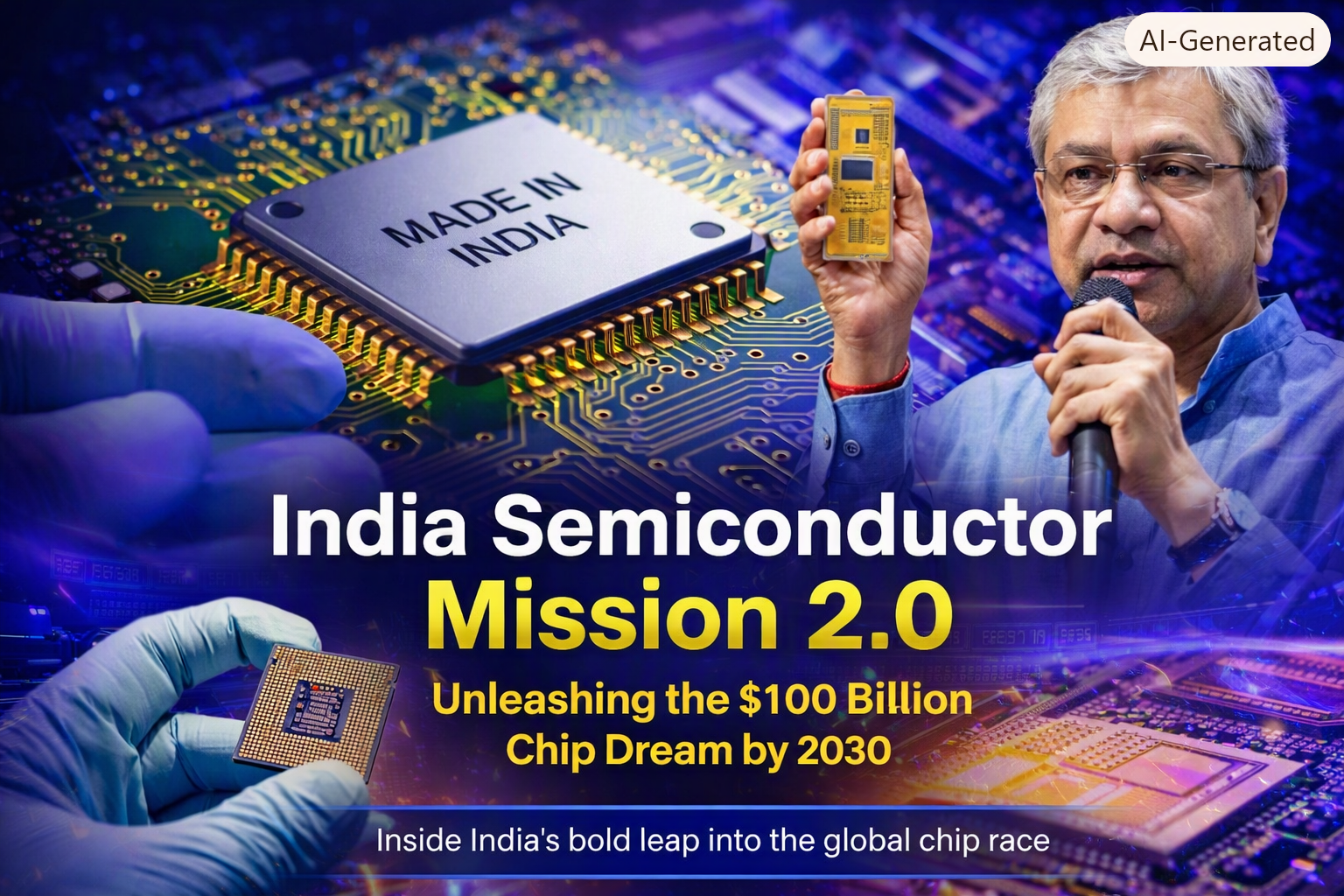
From Oil to Chips – The New Power of Nations
In the 20th century, oil fueled economies. In the 21st century, its semiconductors, the “oil of the digital age.” Whoever controls chip technology controls the future of AI, defense systems, supercomputers, smartphones, healthcare, and space exploration.
India’s Chip Story: From $50 Billion to $100 Billion
India’s semiconductor industry is no longer just warming up, it’s racing ahead. Back in 2024–25, the market was valued at around $45–50 billion. Fast forward to 2030, and experts believe it could double to $100–110 billion. That’s a massive leap, showing how quickly chips are becoming the backbone of India’s tech future.
Why Mission 2.0 Matters? ISM 2.0: A Bigger, Bolder Push
Think of ISM 2.0 as India’s way of saying: “We’re not just joining the global chip race, we want to compete at the front.” By focusing on design, manufacturing, and supply chain resilience, India is aiming to become a trusted hub for semiconductors, which power everything from smartphones and laptops to cars and AI servers.
On 1 February 2026, Finance Minister Nirmala Sitharaman unveiled the next big chapter, India Semiconductor Mission 2.0 (ISM 2.0), during her Union Budget speech.
India’s Union Cabinet Ashwini Vaishnaw has approved the India Semiconductor Mission (ISM) 2.0, with a staggering ₹1.27 lakh crore outlay. According to Minister Ashwini Vaishnaw, the semiconductor package was one of seven key moves approved at a meeting led by the Prime Minister.
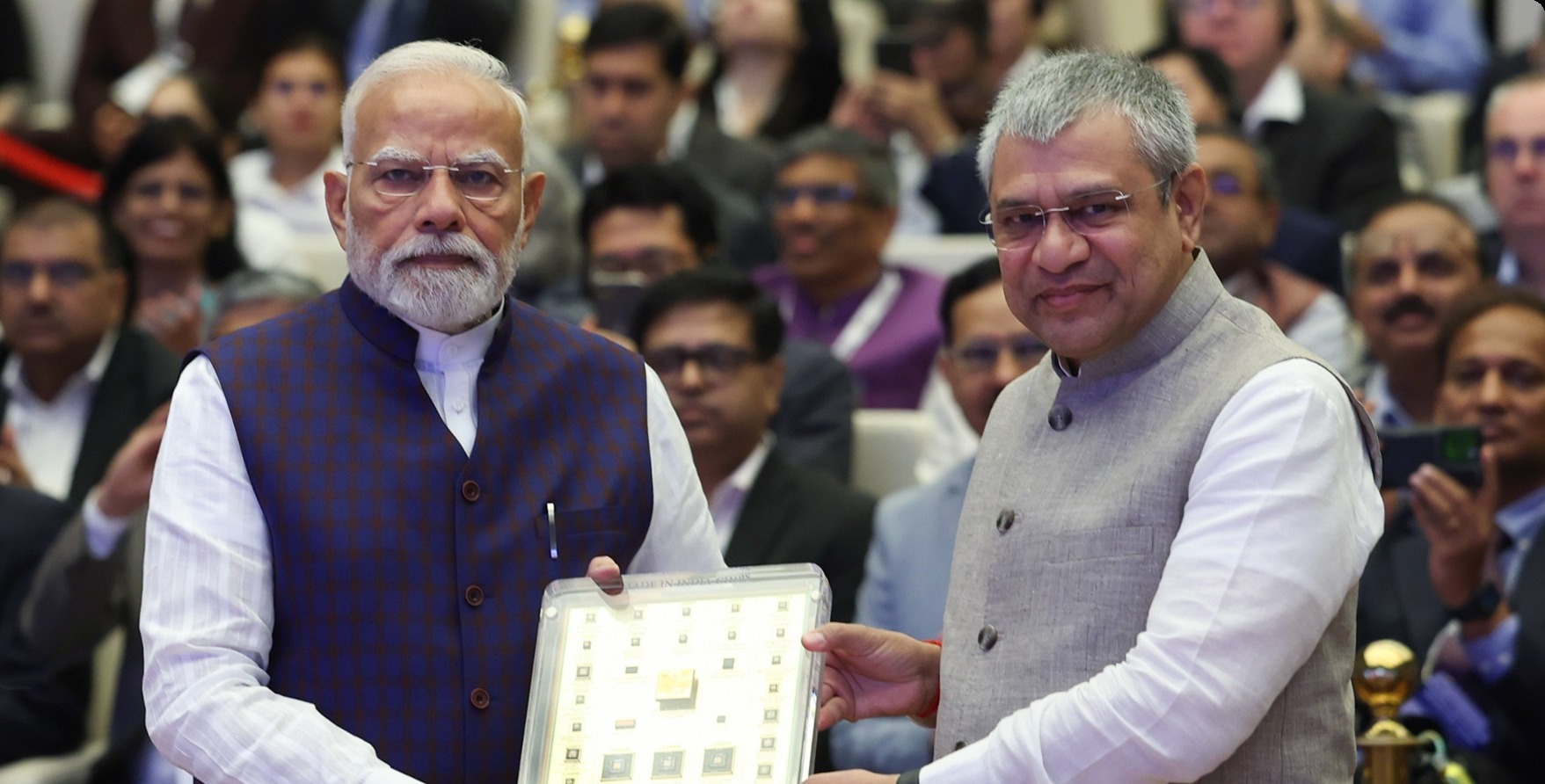
This is one of the largest industrial policy initiatives in India’s history. The government expects this investment to trigger ₹4 lakh crore in private sector funding, creating a robust semiconductor ecosystem and generating massive employment opportunities.
Chips: The Invisible Backbone of Modern Life
Smartphones, TVs, washing machines, cars; all powered by chips.
Modern automobiles use 1,000–3,000 chips, while autonomous vehicles like Tesla rely on 5,000+ chips.
Healthcare: MRI machines, CT scanners.
Defense: radars, fighter jets.
AI & GPUs: NVIDIA’s AI chips pack 200 billion transistors.
Without chips, economies stall, as seen during COVID‑19 when auto production froze due to shortages.
Mission 1.0 vs Mission 2.0
Mission 1.0 (2021): Focused on fabrication plants with ₹76,000 crore investment. Companies like Tata and Micron launched projects, but gaps remained.
Mission 2.0 (2026): Expands beyond fabrication to build the entire value chain, from materials and equipment to design, packaging, and R&D.
Six Pillars of ISM 2.0
Fabrication Units – Converting silicon wafers into integrated circuits.
Packaging & Testing – Ensuring chips reach consumers safely.
Chip Design Ecosystem – Empowering Indian firms to create their own IP.
Semiconductor Materials – Producing silicon wafers, specialty gases, chemicals domestically.
Equipment Manufacturing – Building advanced machinery for chip production.
Research, Innovation & Startups – Funding universities, startups, and indigenous IP creation.
The Challenges Ahead
India’s semiconductor ambitions face formidable hurdles.
High capital costs - Building a single advanced fabrication unit can cost up to $25 billion, making capital expenditure a major barrier.
Dependence on imports - The country still relies heavily on imports for specialized equipment and materials, leaving supply chains vulnerable.
Need for highly skilled engineers - Success also demands a large pool of highly skilled engineers and scientists, which India must scale up rapidly.
Global competition - India is entering a fiercely competitive arena dominated by Taiwan, South Korea, and the United States, where technological leadership is already entrenched.
The Promise – “Semiconductors Are the New Oil, and India Wants the Barrel”
India’s chip journey is shifting gears. With ISM 2.0, the country isn’t just chasing growth; it’s laying the foundation to be a serious global contender in the semiconductor game.
Despite challenges, ISM 2.0 could transform India into a semiconductor powerhouse, creating direct jobs for engineers and scientists, and indirect jobs in construction, logistics, chemicals, and maintenance.
India is no longer just catching up; it’s racing ahead to claim its place in the global semiconductor arena. Mission 2.0 isn’t just policy; it’s a bold declaration that India wants to own the future of technology.
Written by
Vedant BhardwajDiscussion (0)
Sign in to join the discussion.
Loading comments…