
The Indian government is preparing one of the biggest technological reforms in the automobile sector. Starting October 1, 2028, all cars sold in India will be required to have Vehicle-to-Vehicle (V2V) communication systems. This move, announced by Road Transport Minister Nitin Gadkari, aims to drastically reduce road accidents and usher in the fifth generation of road safety - connected vehicles.
Draft Notification: A Roadmap for Safer Roads
The Ministry of Road Transport & Highways has rolled out a draft notification proposing amendments to the Central Motor Vehicles Rules, 1989. This marks the beginning of a phased rollout of Vehicle-to-Vehicle (V2V) communication systems, ensuring India’s roads move toward smarter, connected mobility.
Telecom Support: Powering the Future of Connected Cars
To make this vision a reality, the ministry is working hand-in-hand with the Department of Telecommunications (DoT). The DoT has allocated the 5.875–5.925 GHz frequency band, exempted from licensing requirements, exclusively for V2V and Intelligent Transportation Systems (ITS). This dedicated spectrum will allow vehicles to exchange safety-critical data seamlessly, helping cut down road accidents nationwide.
Phased Implementation: Time for Industry to Adapt
The government is keen on a step-by-step approach. This phased adoption gives automakers, suppliers, and stakeholders the breathing room they need to upgrade technology, infrastructure, and compliance before the rules become mandatory.
AIS-230 Standard: Setting the Benchmark
To ensure uniformity and reliability, the AIS-230 standard has been introduced. It lays down the minimum technical, functional, performance, environmental, and security requirements for V2V systems installed in vehicles across India. This ensures that every car equipped with V2V tech meets global safety benchmarks while being tailored to Indian road conditions.
Why This Matters?
India records over 5 lakh road accidents annually, with 1.7 lakh fatalities and 4 lakh serious injuries.
Road accidents drain 3–5% of India’s GDP in healthcare costs and productivity losses.
Studies show 90–95% of accidents are caused by human error, fatigue, overspeeding, blind spots, or delayed reaction.
V2V technology directly targets these errors by enabling cars to “talk” to each other in real time.
What is V2V Communication?
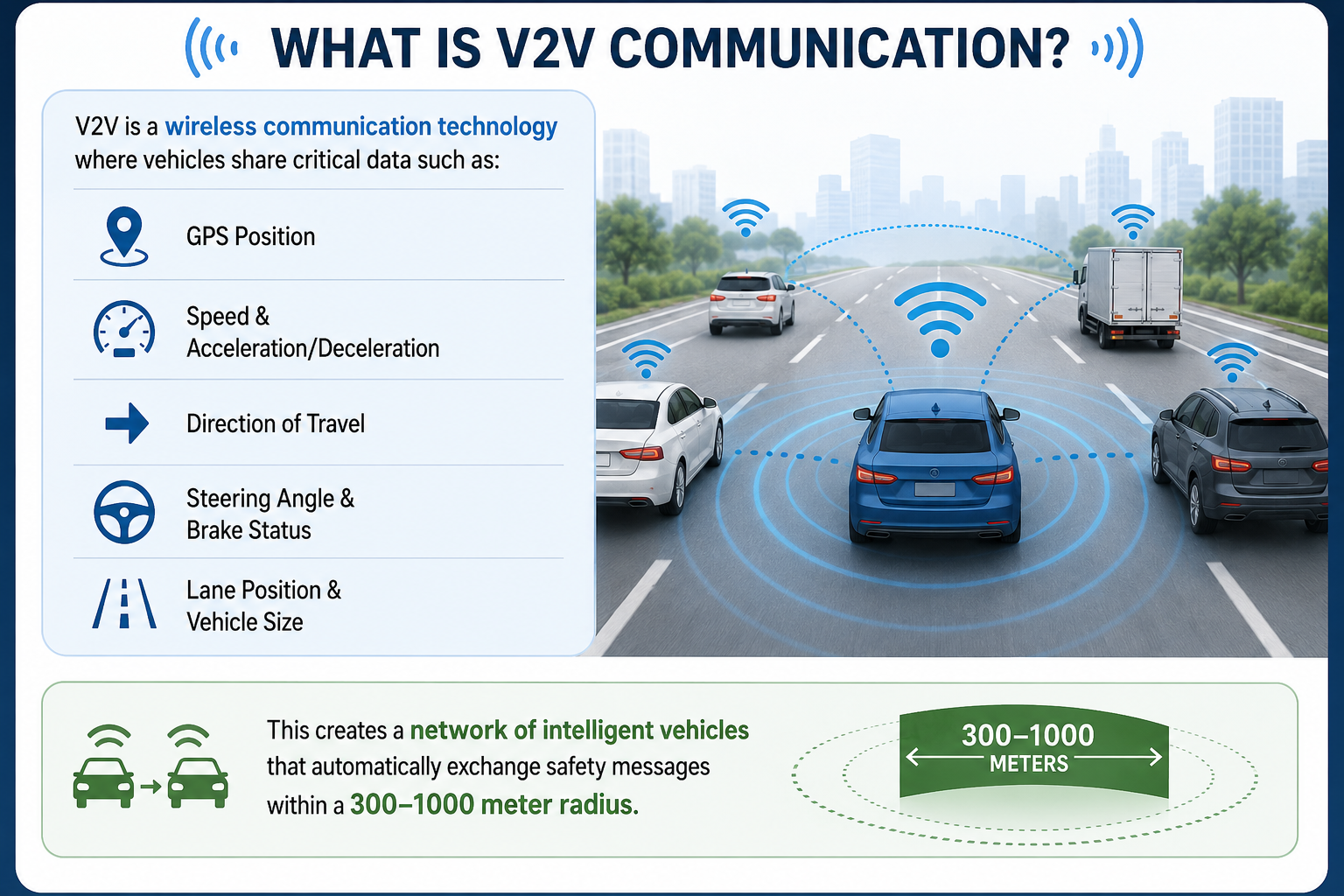
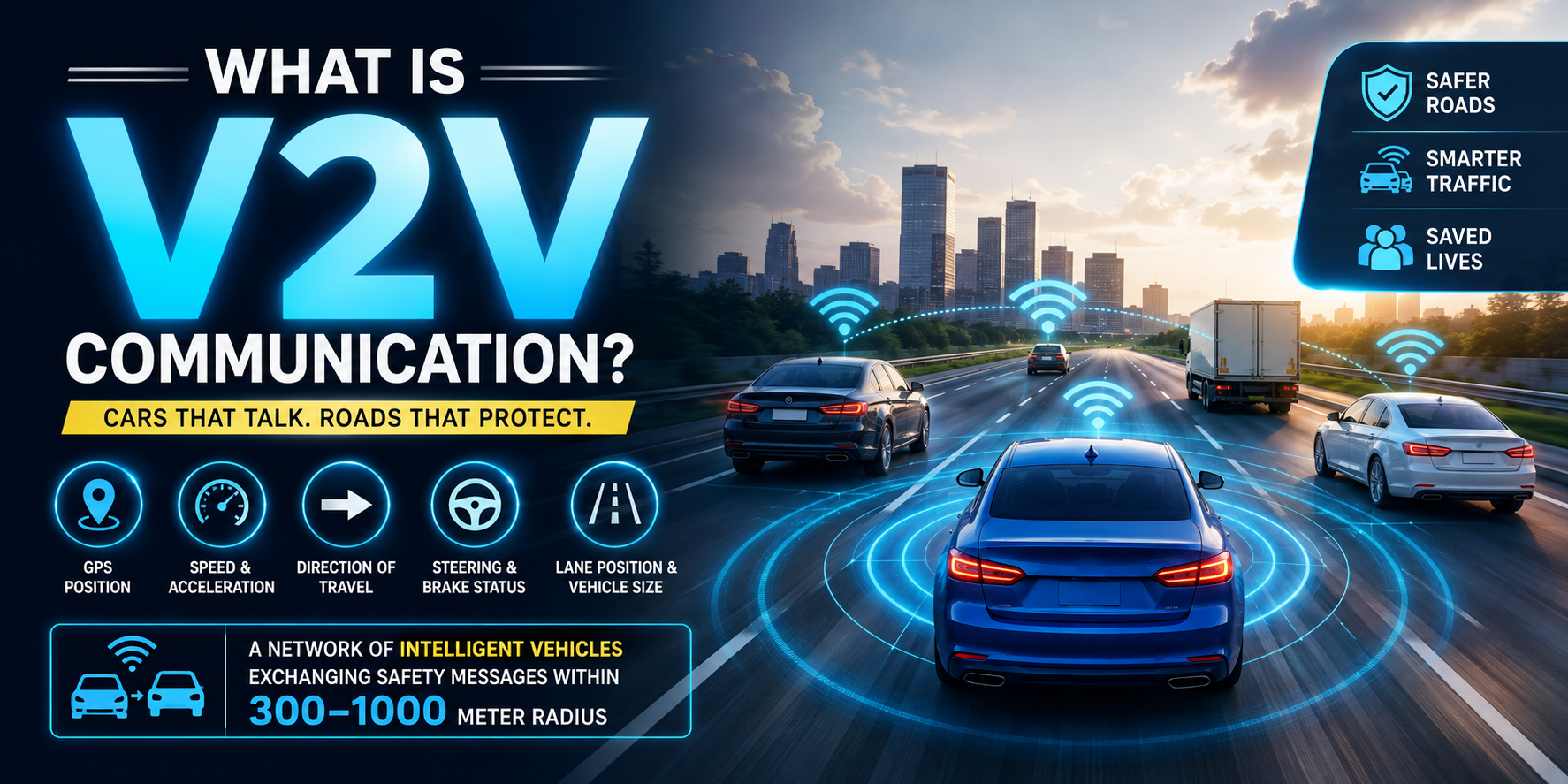
V2V is a wireless communication technology where vehicles share critical data such as:
GPS position.
Speed & acceleration/deceleration.
Direction of travel.
Steering angle & brake status.
Lane position & vehicle size.
This creates a network of intelligent vehicles that automatically exchange safety messages within a 300–1000-meter radius.
How It Works in Real Life?
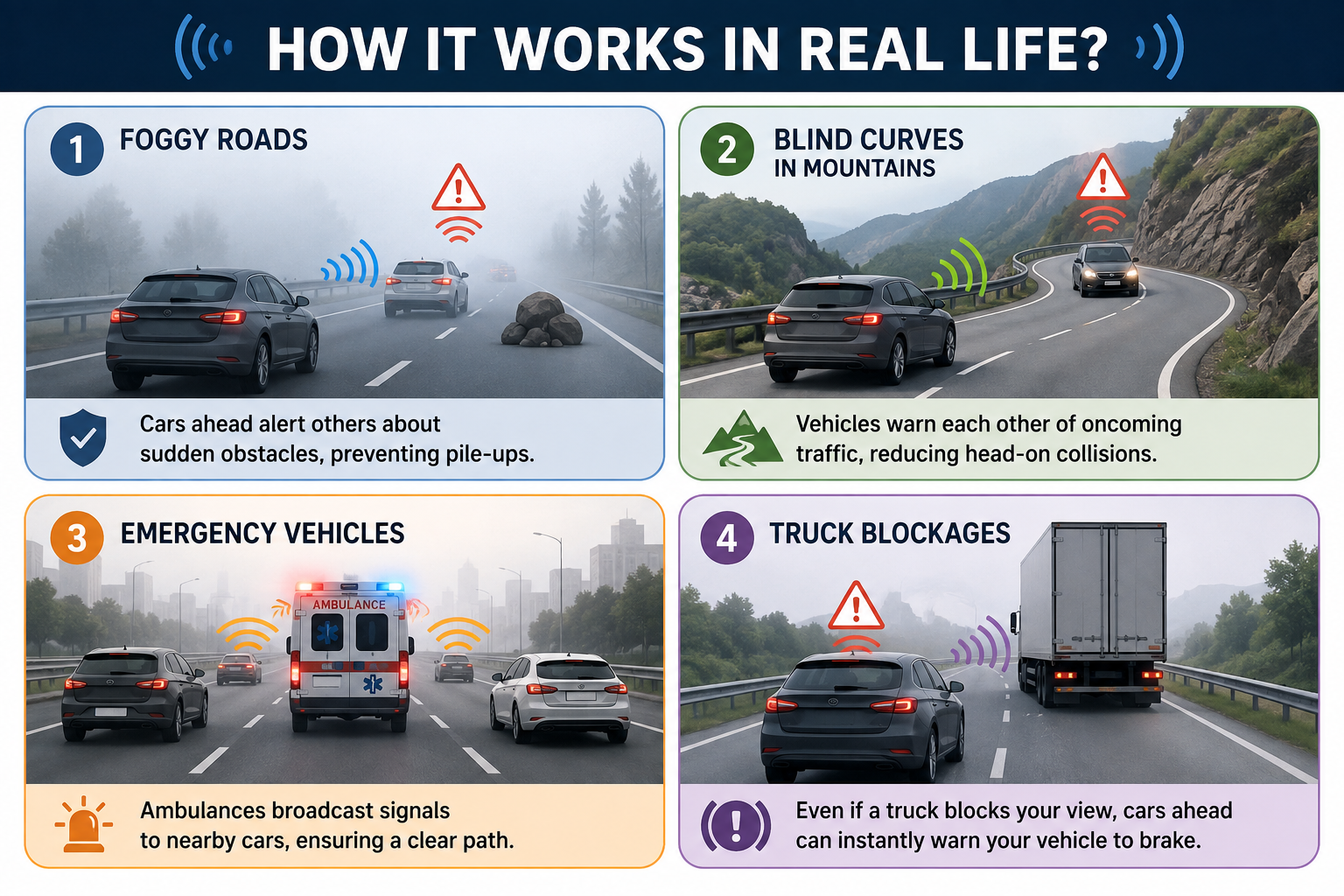
Imagine these scenarios:
Foggy Roads: Cars ahead alert others about sudden obstacles, preventing pile-ups.
Blind Curves in Mountains: Vehicles warn each other of oncoming traffic, reducing head-on collisions.
Emergency Vehicles: Ambulances broadcast signals to nearby cars, ensuring a clear path.
Truck Blockages: Even if a truck blocks your view, cars ahead can instantly warn your vehicle to brake.
Benefits of V2V
Accident Prevention: Stops crashes before they happen.
Reduced Fatalities: Saves thousands of lives annually.
Smarter Traffic Flow: Vehicles coordinate automatically.
Boost to Innovation: Pushes India’s auto industry into the era of smart mobility.
Task Force Blueprint: Driving India’s Connected Future
To accelerate the adoption of Intelligent Transportation Systems (ITS), the Ministry of Road Transport set up a special Task Force with a sharp focus on Vehicle-to-Vehicle (V2V) communication. After extensive deliberations, the panel recommended leveraging the 5.9 GHz ITS/V2X frequency band to strengthen road safety infrastructure.
This proposed framework is designed to:
Boost situational awareness for vehicles on Indian roads.
Deliver timely safety alerts to drivers and passengers.
Integrate connected technologies that minimize human error and reduce accident risks.
What Buyers Need to Know
The upcoming amendments to the Central Motor Vehicles Rules, 1989 will directly impact every new vehicle rolling out after October 1, 2028. Whether it’s a car, bike, or truck, all must come equipped with active V2V safety technology as standard.
This shift means:
Prices may rise: New hardware and software will add to manufacturing costs, though the draft notification remains silent on pricing.
Constant connectivity: Vehicles will exchange hazard alerts in real time, preventing collisions before they happen.
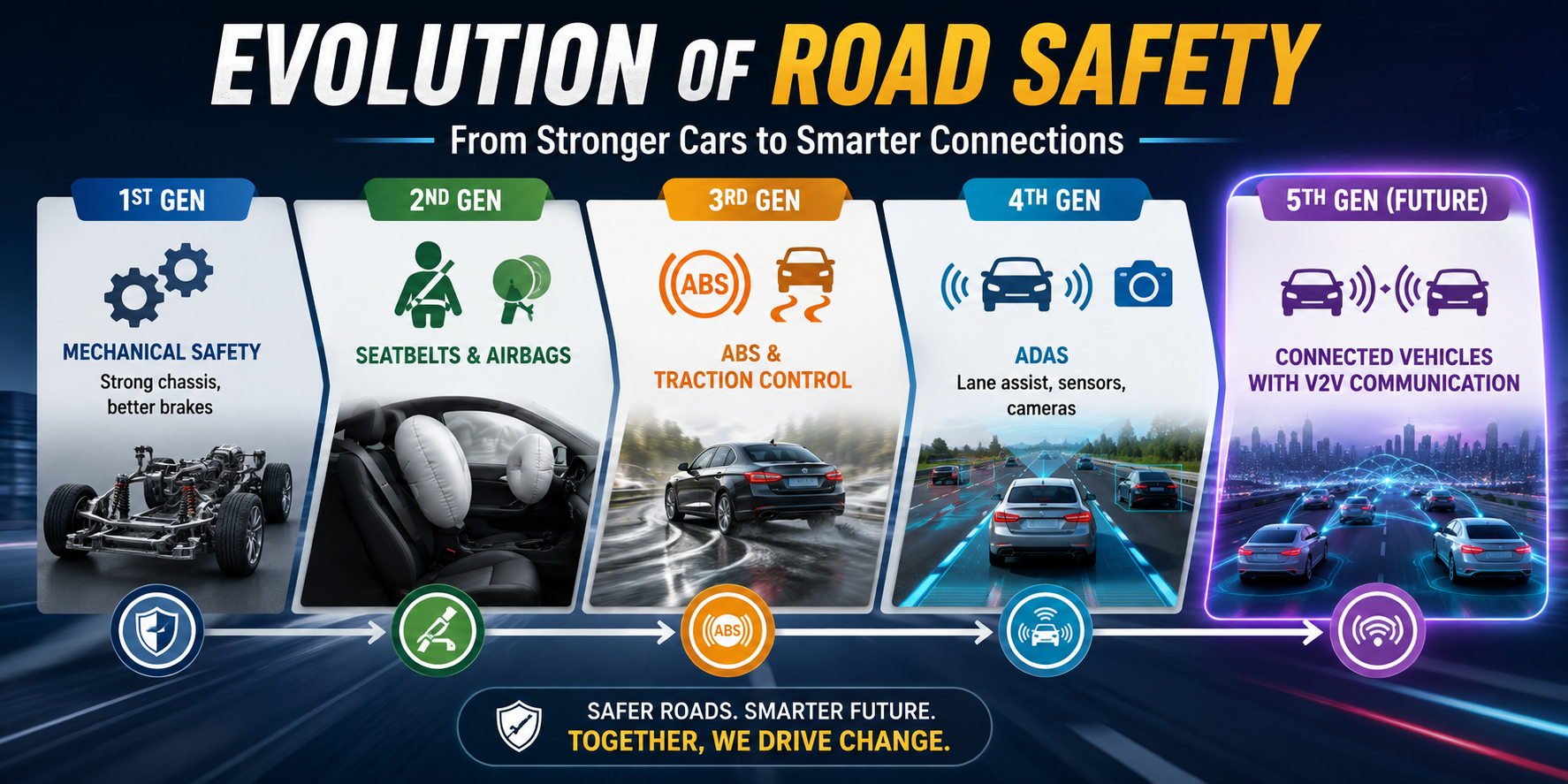
Beyond airbags & sensors: While today’s cars rely on passive safety and isolated ADAS features, V2V introduces a networked safety standard across categories L, M, and N.
In short, this regulation represents the biggest leap in road safety since airbags became mandatory, setting a new benchmark for how vehicles protect lives on Indian roads.
By laying this foundation, India is preparing to transform its highways into smart, responsive networks where vehicles don’t just move; they communicate, coordinate, and protect lives.
India is stepping into a new era of road safety and gearing up for a connected mobility revolution. By 2028, cars won’t just move; they’ll communicate, coordinate, and protect lives.
👉 Are you ready for the future of connected driving? Share your thoughts - Will V2V make Indian roads truly safer and smarter?
Written by
Ishaan TrivediDiscussion (0)
Sign in to join the discussion.
Loading comments…