
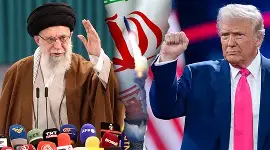
The Middle East is once again at the center of global attention. On February 28, 2026, the United States and Israel launched coordinated military operations against Iran, sparking missile strikes, drone attacks, and escalating tensions that have dominated headlines for months.
While international pressure mounted on Washington and President Trump to enforce a ceasefire, the fragile Memorandum of Understanding (MOU) signed for 60 days has now completely collapsed. This raises the critical question: What triggered the breakdown, and what lies ahead for the region?
Rising Tensions
The collapse of the ceasefire has reignited debates about whether both nations are heading toward a full-scale confrontation. Analysts point to several factors:
Historical mistrust between Washington and Tehran.
Regional instability that magnifies even small skirmishes.
Global stakes, as any conflict in the Middle East impacts oil markets, trade routes, and international security.
Key Triggers Behind the Collapse
Tanker Attacks in the Strait of Hormuz
The U.S. accused Iran of attacking three oil tankers in international waters, a claim Tehran denied. This incident heightened fears over maritime security and disrupted global shipping lanes.
Oil Price Shock
Panic in global markets pushed crude oil prices above $80 per barrel, reversing earlier declines. Insurance costs for shipping skyrocketed, adding to the economic strain.
Freedom of Navigation Concerns
The U.S. Navy emphasized its responsibility to protect international sea lanes. Washington argued that Iran was leveraging commercial shipping as a weapon, threatening global trade stability.
Asymmetric Warfare Strategy
Unable to confront the U.S. directly, Iran sought to exploit its control over strategic waterways. This tactic, according to American officials, forced a military response to restore freedom of navigation and protect energy supplies.
Trump’s Position
President Trump declared the ceasefire “over,” signaling no direct negotiations with Iran. However, he left the door open for U.S. negotiators to engage if deemed necessary. This dual stance reflects both political firmness and diplomatic flexibility.
Why Experts Saw Failure Coming
Analysts argue the ceasefire was “built to fail” due to:
Lack of a formal peace treaty addressing borders, sanctions, and prisoners.
A vague MOU that failed to define violations or establish independent verification mechanisms.
Continued economic sanctions on banking, shipping, and insurance, which fueled resentment in Tehran.
Deep disagreements over Iran’s nuclear program, with Washington demanding strict limits and inspections, while Iran insisted on peaceful nuclear rights.
Escalation Risks
Trump has hinted at larger strikes, potentially targeting civilian infrastructure — a move that could dramatically escalate the conflict. Iran has warned of a “fearless response,” raising fears of a broader regional war.
The Oil Conundrum
Sanctions have left nearly 63 million barrels of Iranian oil stranded at sea, with no buyers willing to risk penalties. This unresolved issue adds another layer of economic instability to the crisis.
Possible Scenarios Ahead
- Limited Military Escalation
Sporadic attacks continue without spiraling into full scale war.
- Regional War
The conflict expands to UAE, Saudi Arabia, and beyond, destabilizing the entire Middle East.
- Return to Diplomacy
Despite setbacks, negotiators reopen talks to prevent catastrophic outcomes.
What Lies Ahead
While some fear that war is inevitable, others argue that both nations may still seek diplomatic off-ramps to avoid catastrophic consequences. The coming weeks will be crucial in determining whether cooler heads prevail or whether the situation spirals into open conflict.
Written by
Bhavana SharmaDiscussion (0)
Sign in to join the discussion.
Loading comments…