
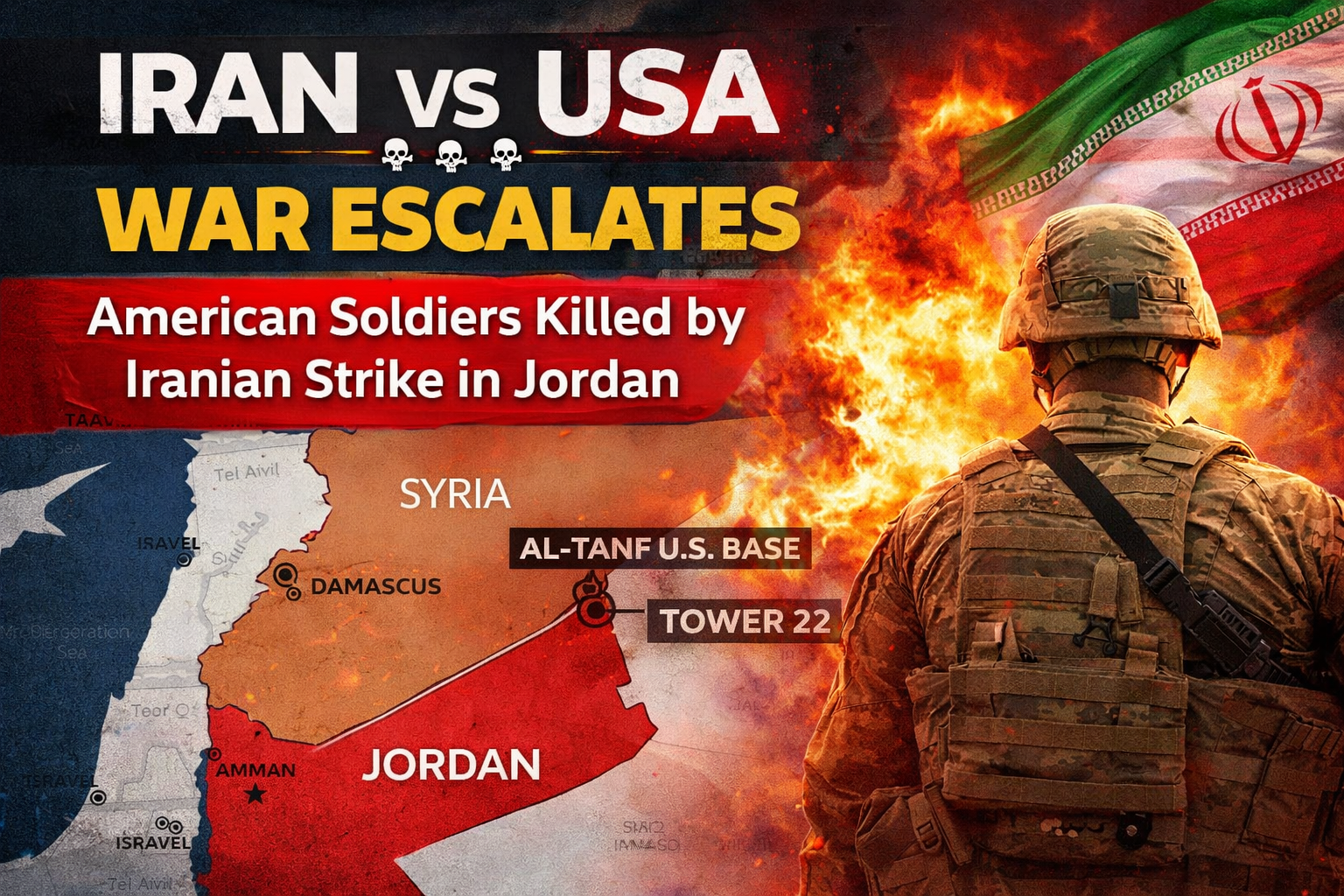
The simmering conflict between the United States and Iran has exploded into a dangerous new chapter. What began as tit‑for‑tat strikes in the Gulf has now spilt into Jordan, shaking the foundations of regional stability.
Iran’s Deadly Strike on Jordan
Iran launched a massive assault using ballistic missiles and armed drones against US military positions in Jordan. The attack overwhelmed air defenses, with several missiles striking the Muwaffaq Salti Airbase in Zarqa Province.
The Pentagon confirmed the grim toll: two US service members killed, one missing, and several wounded. Analysts warn this is among the deadliest direct attacks on US forces in the current war.
Why Jordan?
Iran insists it is not targeting Jordan’s government or civilians. Instead, its objective is clear: strike US military assets wherever they operate. From Tehran’s perspective, any base providing intelligence, logistics, or operational support against Iran becomes a “legitimate target.”
Jordan’s strategic importance makes it a prime focus:
Counterterrorism hub against ISIS in Syria and Iraq.
Intelligence facilities monitoring Iran, Hezbollah, and militant groups.
Logistics base for thousands of US troops, aircraft refueling, and supply chains.
Proximity to Israel, serving as a backup shield for America’s closest ally in the region.
America Strikes Back
In retaliation, the US unleashed waves of airstrikes on Iranian military infrastructure: missile launch sites, drone storage facilities, command centers, and surveillance systems. Washington’s message was unmistakable: Iran will pay for every American life lost.
Escalation Beyond Military Targets
The war is now entering a dangerous infrastructure phase. Both sides are striking critical civilian systems:
Energy facilities - oil fields, refineries, LNG terminals.
Electric grids - risking hospital shutdowns and internet blackouts.
Water plants - threatening shortages and humanitarian crises.
Transport networks - highways, bridges, and ports vital for military logistics.
Recent US strikes hit bridges linking Bandar Abbas port and facilities near Chabahar, while Iran retaliated by targeting power and desalination plants in Kuwait, Bahrain, and Qatar.
Shockwaves for Global Markets
Oil prices, which had dipped below $70, are now surging back toward $90 per barrel. Insurance costs for shipping are skyrocketing, and Gulf nations fear devastating economic fallout.
Diplomacy Collapses
Iran has officially suspended its 60‑day memorandum of understanding with the US, accusing Washington of violating commitments. In Tehran, billboards depicting the White House in flames and coffins for Trump and his family signal a chilling demand: blood for blood.

The Reckoning
The US-Iran war is no longer confined to the Strait of Hormuz. With American soldiers killed in Jordan, retaliatory strikes escalating, and civilian infrastructure under fire, the conflict has entered its most perilous phase yet.
The world now faces a haunting question: Is this the prelude to a full‑scale regional war, or can diplomacy still pull the Middle East back from the brink?
Written by
Bhavana SharmaDiscussion (0)
Sign in to join the discussion.
Loading comments…