
A Protest Echoing Jantar Mantar
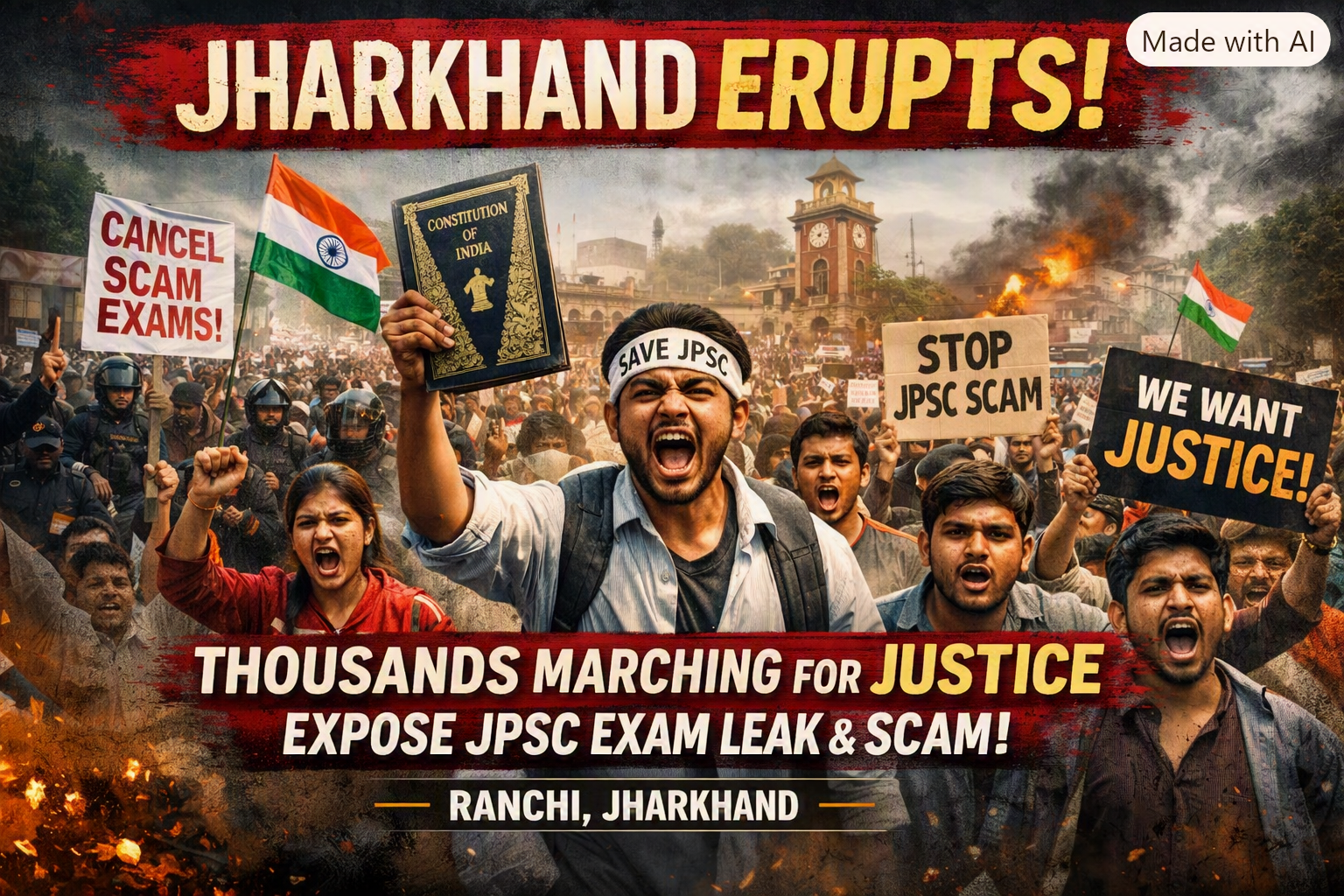
The tremors of Delhi’s Jantar Mantar agitation have reached Jharkhand. Thousands of students have taken to the streets, waving the Constitution and demanding justice. Social media is ablaze with images of massive marches, as the state witnesses one of its biggest student uprisings in recent years.
The Promise of Jharkhand Public Service Commission (JPSC)
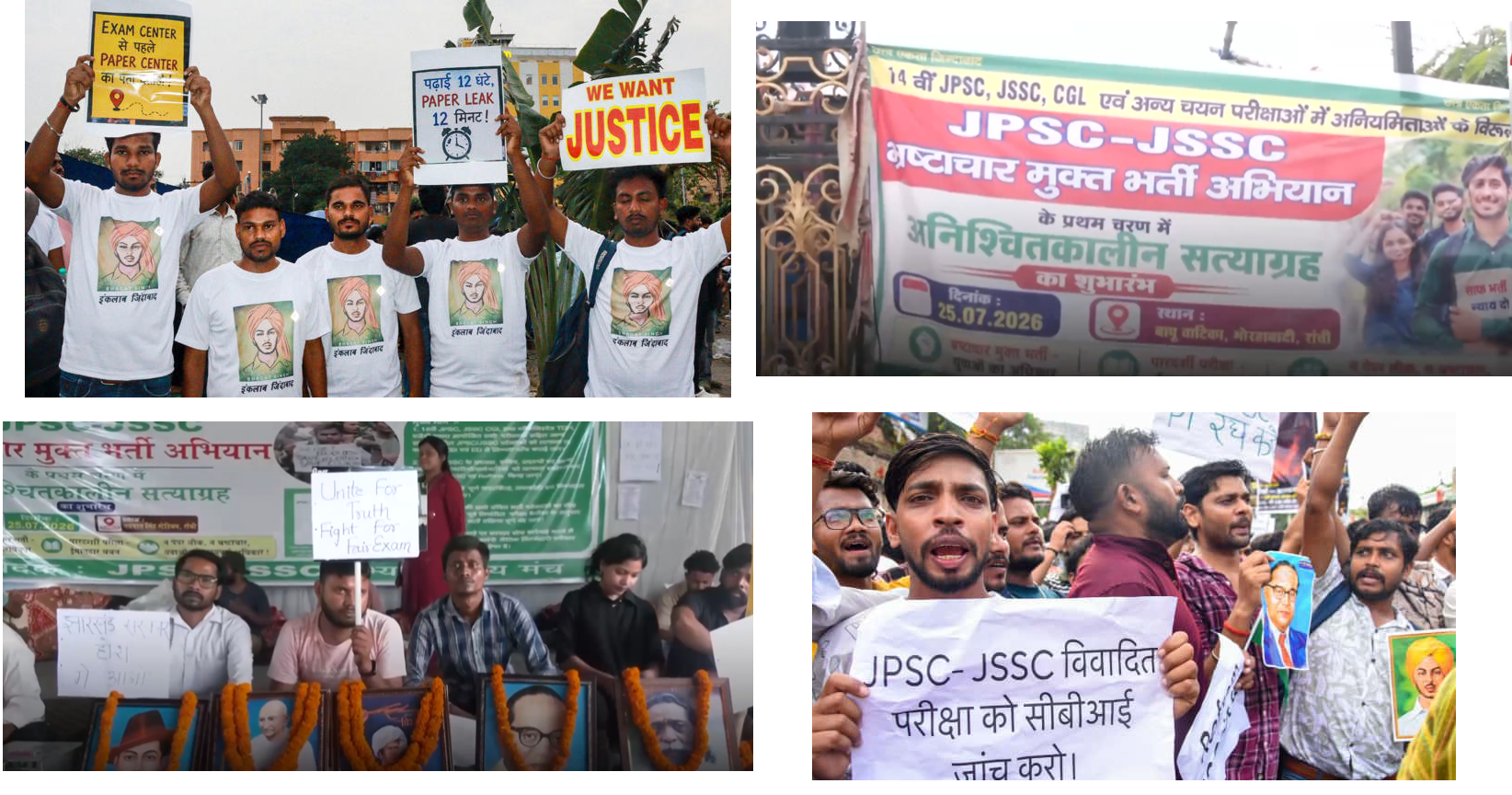
Established in 2000, the Jharkhand Public Service Commission (JPSC) was created to ensure fair recruitment for prestigious state services, including Deputy Collectors, DSPs, Tax Officers, and more. But over two decades later, aspirants argue that the system has failed them, with repeated delays, irregularities, and compromised examinations.
The Trigger: 14th Combined Civil Services Exam
The controversy exploded after the 2026 prelims. Students allege:
No category‑wise cut‑off published: breaking transparency norms.
Merit list without official signatures: raising doubts about authenticity.
OMR sheet manipulation: candidates with fewer attempts allegedly cleared prelims.
Recruitment racket & paper leaks: CID raids and arrests of officials linked to private exam agencies.
Why the Anger Runs Deep?
This isn’t just about one exam. For decades, Jharkhand aspirants have faced:
Endless delays in recruitment.
Court battles over results and answer keys.
Allegations of bribery in interviews.
Reservation disputes and repeated paper leaks.
The Human Cost of Delayed Exams
For many aspirants, years of preparation, often stretching from four to eight years, end up wasted. Families drain their savings, marriages are delayed, and candidates eventually cross the age limit for eligibility. The emotional strain is overwhelming, and this frustration has become the driving force, fueling the intensity of the protests.
Students Demand Accountability
Protesters insist:
Cancel compromised exams, as done with NEET.
Conduct fresh exams under strict supervision.
Ensure transparency in cut‑offs, OMR sheets, and evaluation methods.
Launch an independent CBI inquiry rather than relying solely on the state CID.
Punish officials and middlemen involved in corruption.
A National Crisis of Exams
Jharkhand’s turmoil is part of a larger pattern. From NEET to Punjab’s recruitment scandals, organized criminal networks exploit vulnerabilities in exam systems. Outsourcing to private agencies, weak digital security, and lack of accountability have made paper leaks a nationwide menace.
BJP Turns Up the Heat in Parliament
On Friday, August 1, Bharatiya Janata Party (BJP) MPs from Jharkhand staged a protest inside the Parliament premises, demanding a CBI investigation into alleged irregularities in state recruitment exams. The MPs accused the Jharkhand Mukti Morcha (JMM)‑led government of corruption and criticized the Congress party for what they called “double standards” on exam‑related issues.
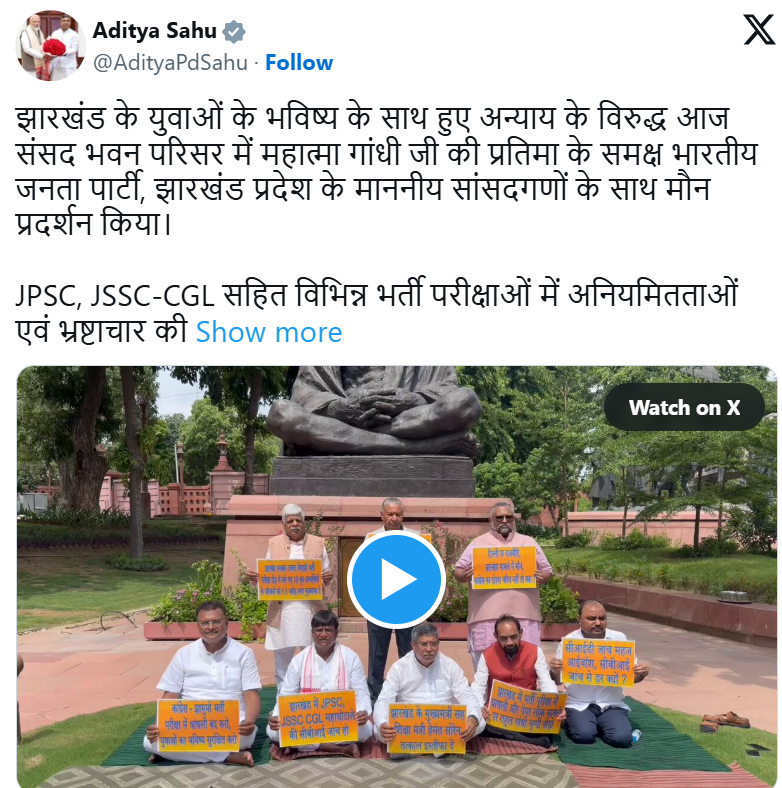
A day earlier, the BJP leaders had staged a demonstration at the historic Makar Dwar, urging the Congress to break its alliance with the JMM in Jharkhand. They also pressed reporters to highlight the ongoing student agitation over irregularities in the Jharkhand Public Service Commission (JPSC) and Jharkhand Staff Selection Commission (JSSC) examinations.
CJP Pledges Support to Jharkhand’s Student Uprising
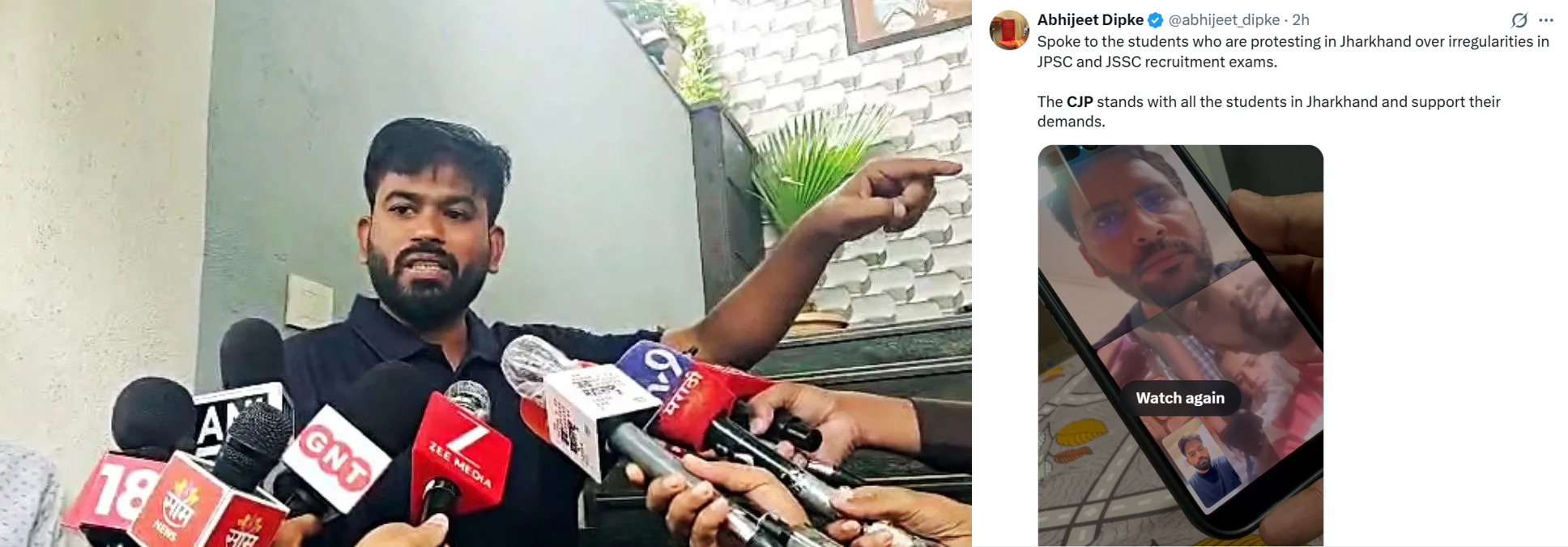
Abhijeet Dipke, founder of the Cockroach Janta Party (CJP), has announced that the movement will stand firmly behind students protesting in Jharkhand. The demonstrations target alleged irregularities in the Jharkhand Public Service Commission (JPSC), the Jharkhand Staff Selection Commission (JSSC), and other recruitment exams across the state. Dipke emphasized that the party’s backing is meant to amplify student voices and demand accountability in the recruitment process.
The Way Forward: Restoring Trust in Exams
Experts believe that rebuilding public confidence in recruitment and examination systems requires bold, structural reforms. Key measures include:
End‑to‑end encryption of question papers to eliminate leaks.
Layered digital safeguards with biometric checks for maximum security.
Mandatory release of answer keys and OMR sheets to ensure transparency.
Independent audits of recruitment agencies to hold them accountable.
Strict legal consequences for paper leaks and exam fraud to deter malpractice.
Fast‑track courts dedicated to recruitment offences for speedy justice.
Time‑bound investigations with public disclosure of findings to maintain credibility.
Together, these steps form a roadmap toward a fairer, more transparent examination process that protects aspirants and restores faith in the system.
The Jharkhand agitation is more than a protest; it’s a cry for justice, transparency, and dignity. If you believe in fair opportunities, share this story, amplify student voices, and demand reforms in India’s recruitment system.
What’s your take - Should exams be handed back fully to constitutional bodies like UPSC, or is stricter digital oversight the real solution?
Written by
Samar PrakashDiscussion (0)
Sign in to join the discussion.
Loading comments…