
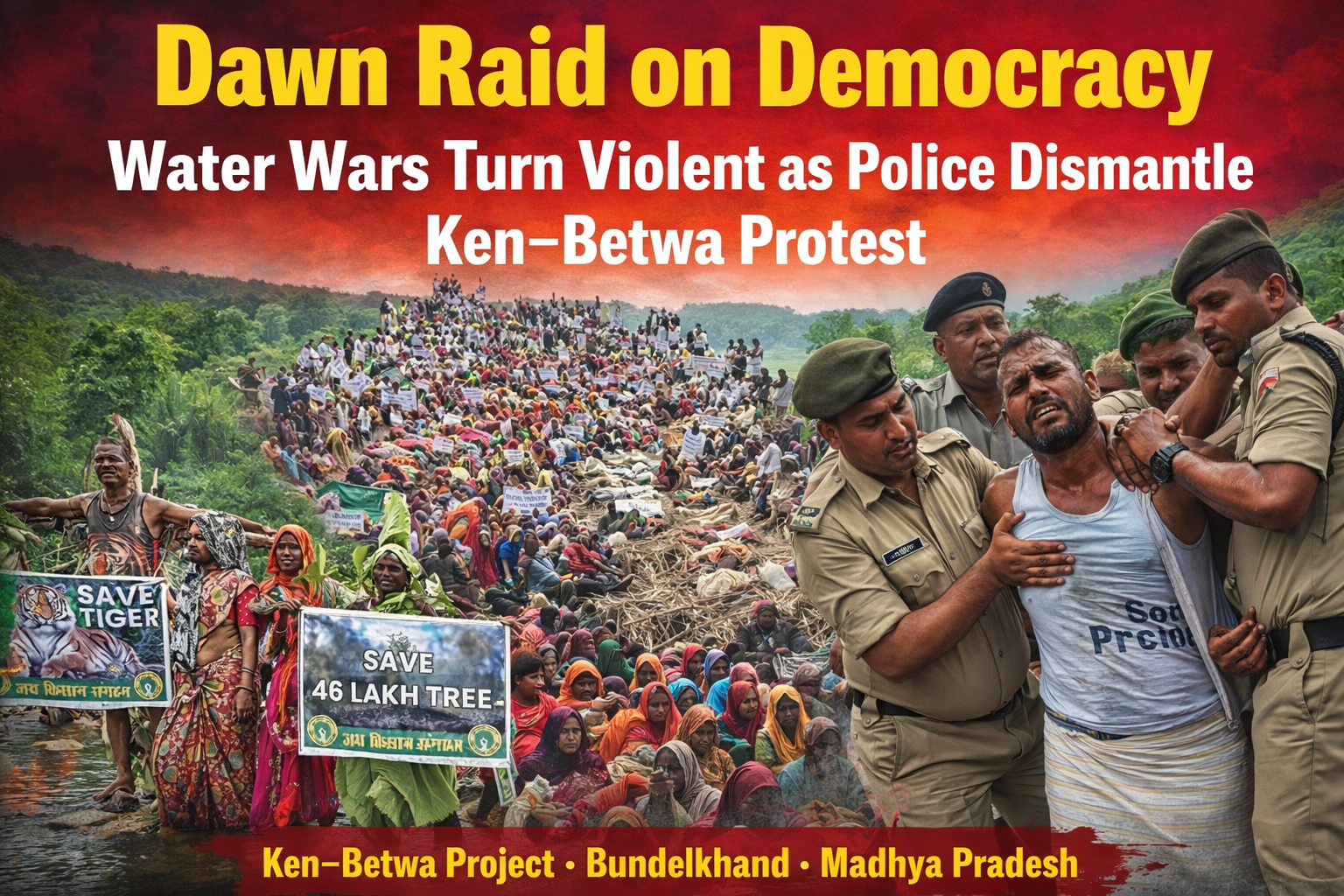
Villagers Cry Foul: “We Were Dragged Away”
In the early hours of July 19, the tranquil banks of the Ken river in Chhatarpur, Madhya Pradesh turned into a battleground. Villagers allege that police used force to dismantle the Ken–Betwa protest, which had been raging for over 16 days. Protesters claim they were forcibly removed, packed into buses, and scattered across nearby villages.
The Arrest of Amit Bhatnagar
Leading the movement was Amit Bhatnagar of Jai Kisan Sangathan, who had been on a 13‑day hunger strike. At around 5:30 AM, police insisted he accompany them for a medical check‑up. Protesters resisted, questioning why such a massive force was deployed if the intent was only to “talk.” Eventually, Bhatnagar was taken away, leaving villagers furious and uncertain about his fate.
Police Clarify: “Detained, Not Arrested”
Additional SP Aditya Patle emphasized that Amit Bhatnagar was not arrested but taken for medical care after two weeks of fasting. SP Patle added that nearly 150 protesters were rounded up, placed in buses, and sent to Panna district, claiming most were outsiders linked to other dam disputes rather than locals from Chhatarpur.
Two Conflicting Narratives
Protesters’ Allegation: Police used brute force, dismantled the protest site, and silenced dissent.
Police’s Defense: No force was used; protesters were relocated peacefully, and Bhatnagar was taken for medical care due to his hunger strike.
Ken–Betwa Project: Bringing Rivers Closer
The Ken–Betwa Link Project was formally inaugurated by Prime Minister Narendra Modi on December 25, 2021, as part of the National River Linking Mission. The project was hailed as a “historic step” toward water security, rural prosperity, and inter‑state cooperation between Madhya Pradesh and Uttar Pradesh.
The Ken–Betwa Link Project (KBLP) is a ₹44,605 crore mega scheme under India’s National Perspective Plan for interlinking rivers. The central aim of the Ken–Betwa project is to channel surplus water from the Ken river into the Betwa river, to alleviate chronic droughts in the Bundelkhand region spanning Madhya Pradesh and Uttar Pradesh.
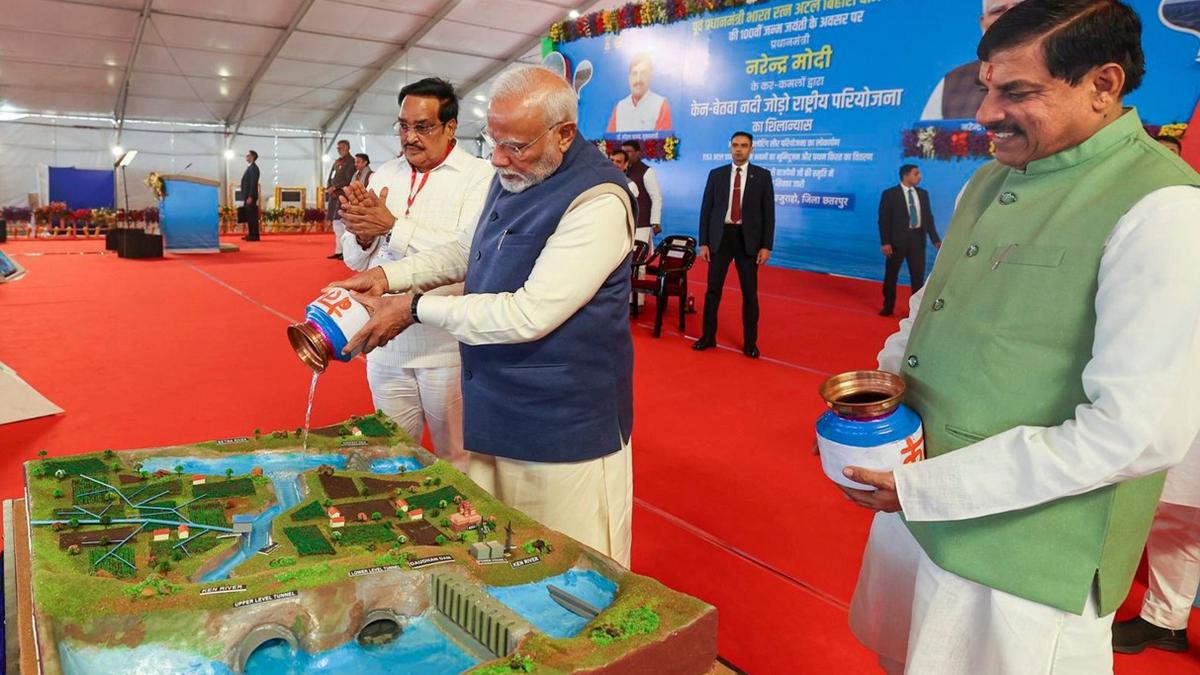
Key Features
Daudhan Dam: A 96.7 m high dam on the Ken river in Panna and Chhatarpur districts.
Ken–Betwa Canal: A 218 km canal carrying water to the Betwa basin near Jhansi.
Irrigation: Expected to irrigate 10.62 lakh hectares of farmland.
Drinking Water: Supply for about 62 lakh people.
Power Generation: 103 MW hydropower + 27 MW solar energy.
Timeline: Planned completion in 6–8 years.
Promised Benefits
Relief for drought‑prone Bundelkhand, reducing distress migration.
Boost to agriculture, employment, and rural prosperity.
Inter‑state cooperation between Madhya Pradesh and Uttar Pradesh for water sharing.
Concerns Raised
Displacement of villages in Chhatarpur and Panna districts.
Compensation disputes and alleged irregularities in land acquisition.
Environmental impact on forests and wildlife, including the Panna Tiger Reserve.
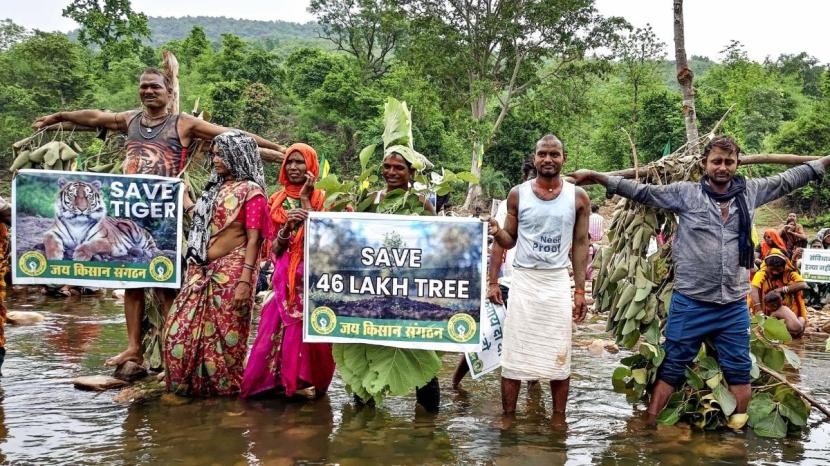
A Movement Interrupted
This isn’t the first time the Ken–Betwa river‑linking project has sparked outrage. Earlier protests in April were temporarily suspended, only to reignite in July. But now, with the site cleared and leaders detained, villagers fear their voices are being erased from the narrative.
What Lies Ahead?
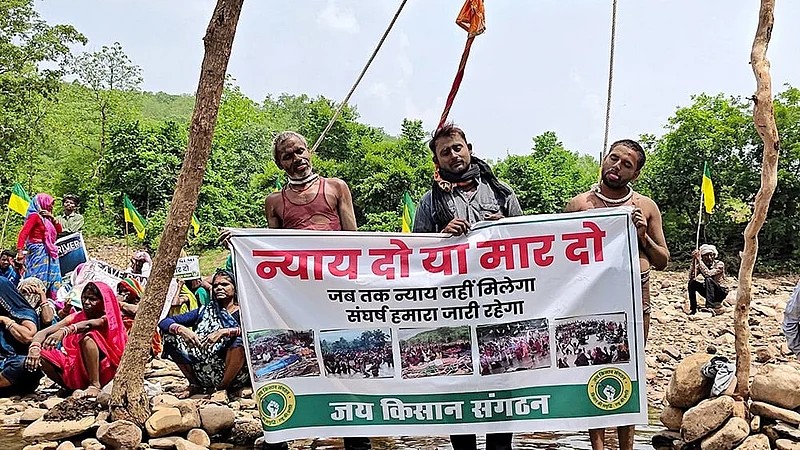
The clash highlights the deep divide between development promises and displacement fears. As the police maintain silence on Bhatnagar’s whereabouts, the villagers’ cry for justice grows louder: “Nyay do ya mrutyu - Give us justice, or give us death.”
Written by
Aditya KulshreshthaDiscussion (0)
Sign in to join the discussion.
Loading comments…