
Nirmala Sitharaman’s Latest Remarks Trigger Market Buzz as Calls Grow to Abolish LTCG Tax on Equity Investments
India's stock market may be on the verge of a major policy shift. A fresh debate has erupted over the future of the Long-Term Capital Gains (LTCG) Tax on equity investments after Finance Minister Nirmala Sitharaman's recent remarks sparked optimism among investors.
The discussion comes as foreign investors have been withdrawing money from Indian equities, market sentiment has remained weak, and concerns over taxation are growing louder. Could the government reduce or even abolish LTCG tax to attract investment and boost market confidence?

Let's break down what is happening and why this debate matters for every investor.
📈 Why LTCG Tax Is Back in the Spotlight
The controversy traces back to the Union Budget 2024, when the government increased the LTCG tax rate on equity investments from 10% to 12.5%.
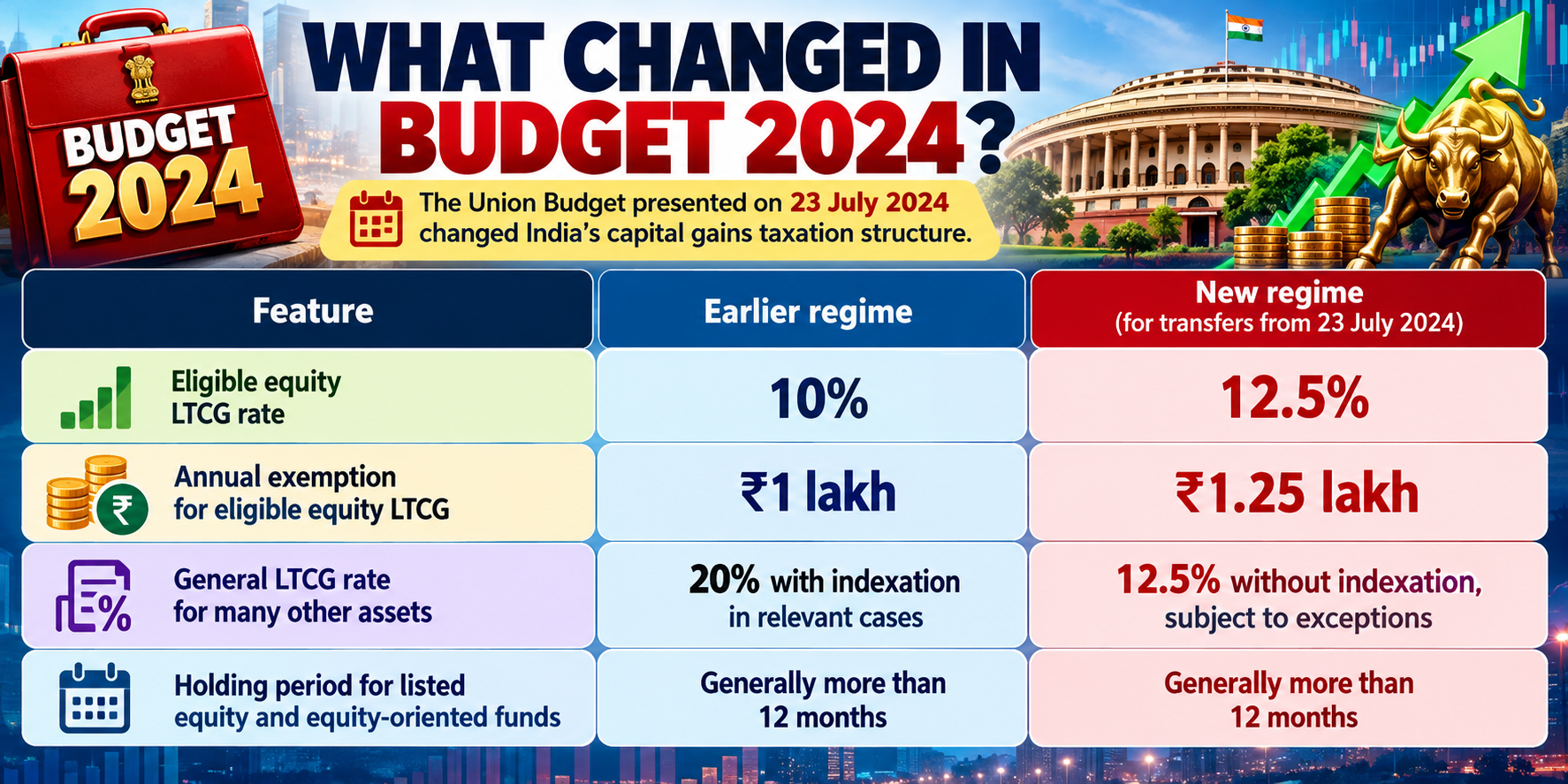
While the move was designed to increase tax revenue, it faced criticism from market participants, especially large domestic and foreign investors. Some market participants, investment professionals, foreign investors, and industry stakeholders argued that the higher LTCG tax could reduce investment returns and potentially affect India's competitiveness as an investment destination.
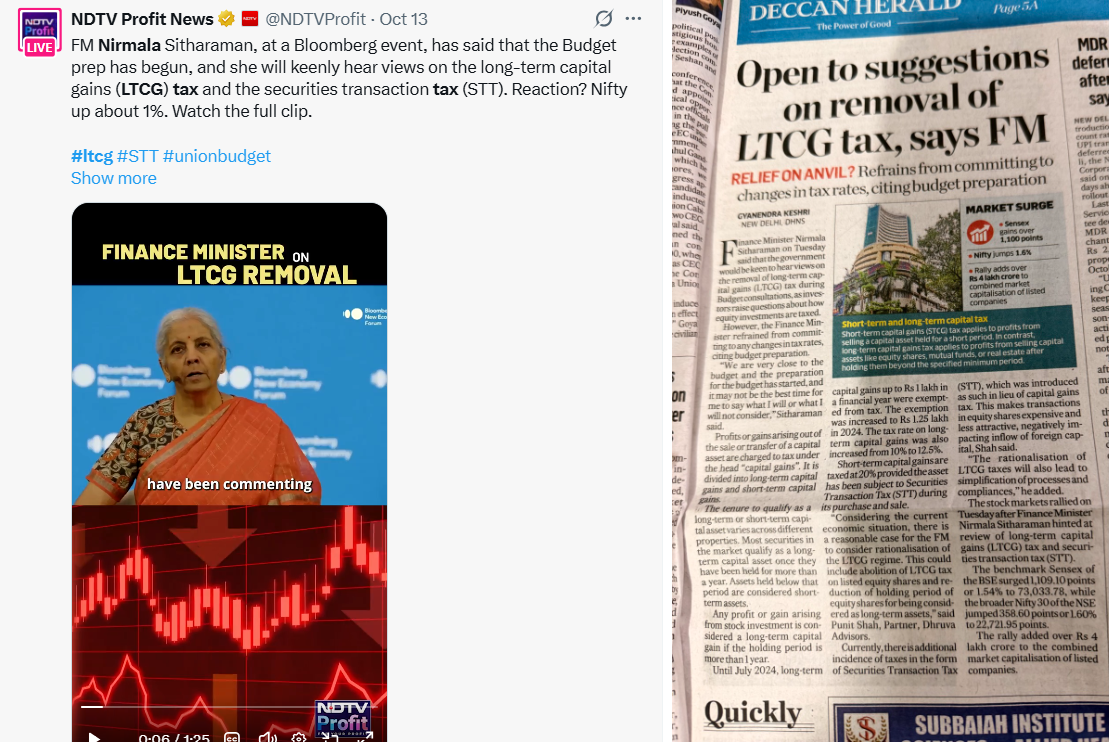
Recently, at a public forum, Finance Minister Nirmala Sitharaman acknowledged that concerns regarding both Long-Term Capital Gains Tax (LTCG) and Securities Transaction Tax (STT) have been raised by investors.

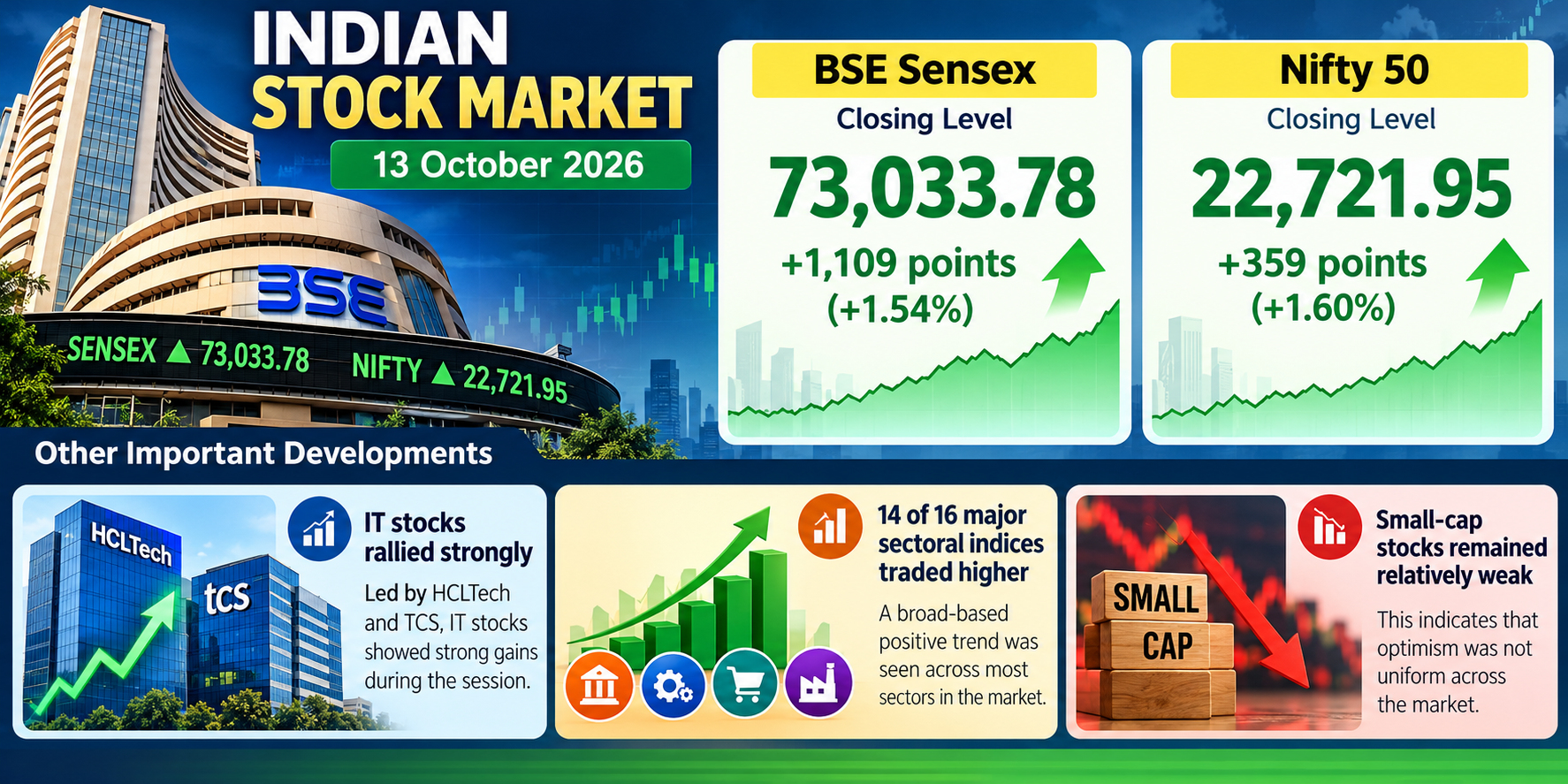
Although she did not announce any policy change, her acknowledgement alone was enough to fuel speculation that the government may be considering reforms. Markets reacted positively, with benchmark indices witnessing a notable rise as investors interpreted the comments as a potentially encouraging signal.
💡 What Exactly Is LTCG Tax?
Before understanding the controversy, it is important to know how LTCG works.
When you sell an asset such as shares, mutual funds, or property at a profit, the gain is known as a capital gain.
Example:
ü You buy shares worth ₹3 lakh.
ü Later, you sell them for ₹5 lakh.
✅Profit earned = ₹2 lakh.
This ₹2 lakh is your capital gain.
Capital gains are of two types:
1️. Short-Term Capital Gains (STCG)
If you sell equity shares within 12 months of purchase, the profit is classified as a short-term capital gain.
Current STCG tax rate: 20%
2️. Long-Term Capital Gains (LTCG)
If you hold shares for more than one year, the gains are treated as long-term capital gains.
Current LTCG tax rate: 12.5%
However, there is an important exemption.
✅ The ₹1.25 Lakh LTCG Exemption
Retail investors are often worried that every gain will be taxed, but that is not the case.
Under current rules:
ü LTCG up to ₹1.25 lakh per financial year is tax-free.
ü Tax is charged only on gains exceeding ₹1.25 lakh.
Example 1:
If your LTCG is ₹90,000, you pay zero tax.
Example 2:
If your LTCG is ₹2 lakh:
ü Exempt amount = ₹1.25 lakh
ü Taxable amount = ₹75,000
ü LTCG tax @12.5% = ₹9,375
ü Additional 4% cess applies on the tax amount
Example 3:
If your LTCG is ₹5 lakh:
ü Exempt amount = ₹1.25 lakh
ü Taxable gain = ₹3.75 lakh
ü LTCG tax @12.5% = ₹46,875
ü Plus applicable cess
For most small investors, the exemption significantly reduces the tax burden.
📉 Why Are Investors Opposing Higher LTCG Taxes?
The primary concern is simple: higher taxes reduce investment returns.
When global investors allocate money, they compare multiple markets, including India, the United States, South Korea, and other emerging economies.
They consider factors such as:
a) Economic growth
b) Corporate earnings
c) Currency stability
d) Interest rates
e) Market valuations
f) Tax policies
Taxation may not be the only factor, but it is certainly an important one. Supporters of LTCG reform argue that higher taxes make India less competitive, especially when investors can choose from several global markets.
🌍 Foreign Investors and Market Pressure
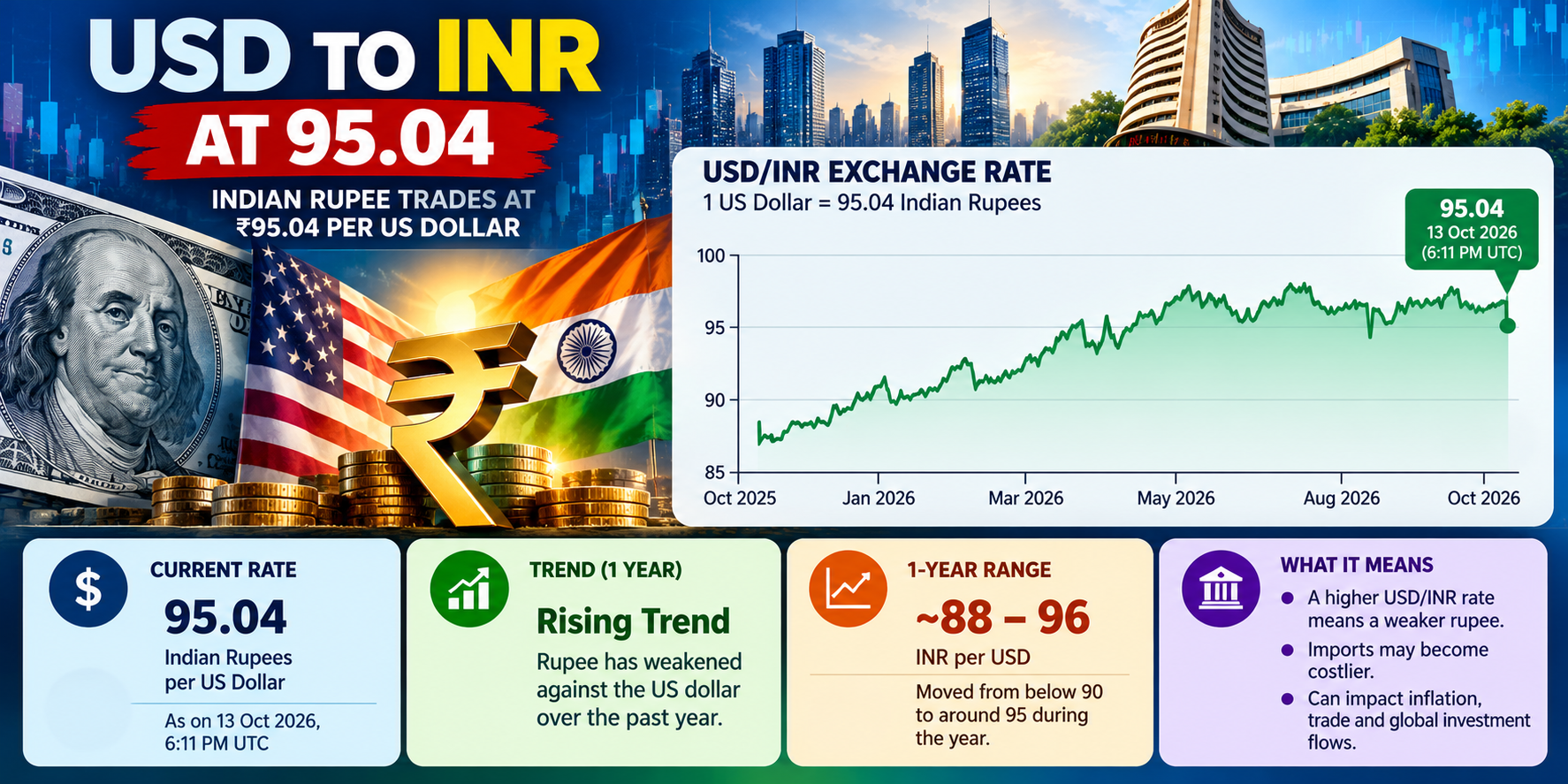
A key issue driving the debate is the significant outflow of foreign investment from Indian equities during 2026.
When foreign investors sell Indian shares:
1. They convert their investments into foreign currency.
2. Dollars move out of India.
3. Pressure increases on the Indian rupee.
4. Equity markets face additional selling pressure.
Many analysts believe that improving post-tax returns could help India attract and retain long-term capital from global investors.
This is one reason why proposals to reduce or abolish LTCG tax are gaining attention.
🏦 SBI Research's Proposal: A Different Approach

The debate intensified after SBI Research reportedly suggested that India should consider eliminating LTCG tax for investors who remain invested for extended periods.
Instead of a complete abolition, one proposal being discussed is a graded taxation structure:
a) Holdings between 1 and 2 years: Lower LTCG tax
b) Holdings beyond 2 or 3 years: Zero or minimal LTCG tax
The idea is to encourage long-term investing rather than short-term speculation.
Such a framework could incentivize investors to keep money in Indian markets for longer periods, improving market stability and reducing sudden capital outflows.
⚖️ The Big Debate: Remove LTCG Tax or Keep It?
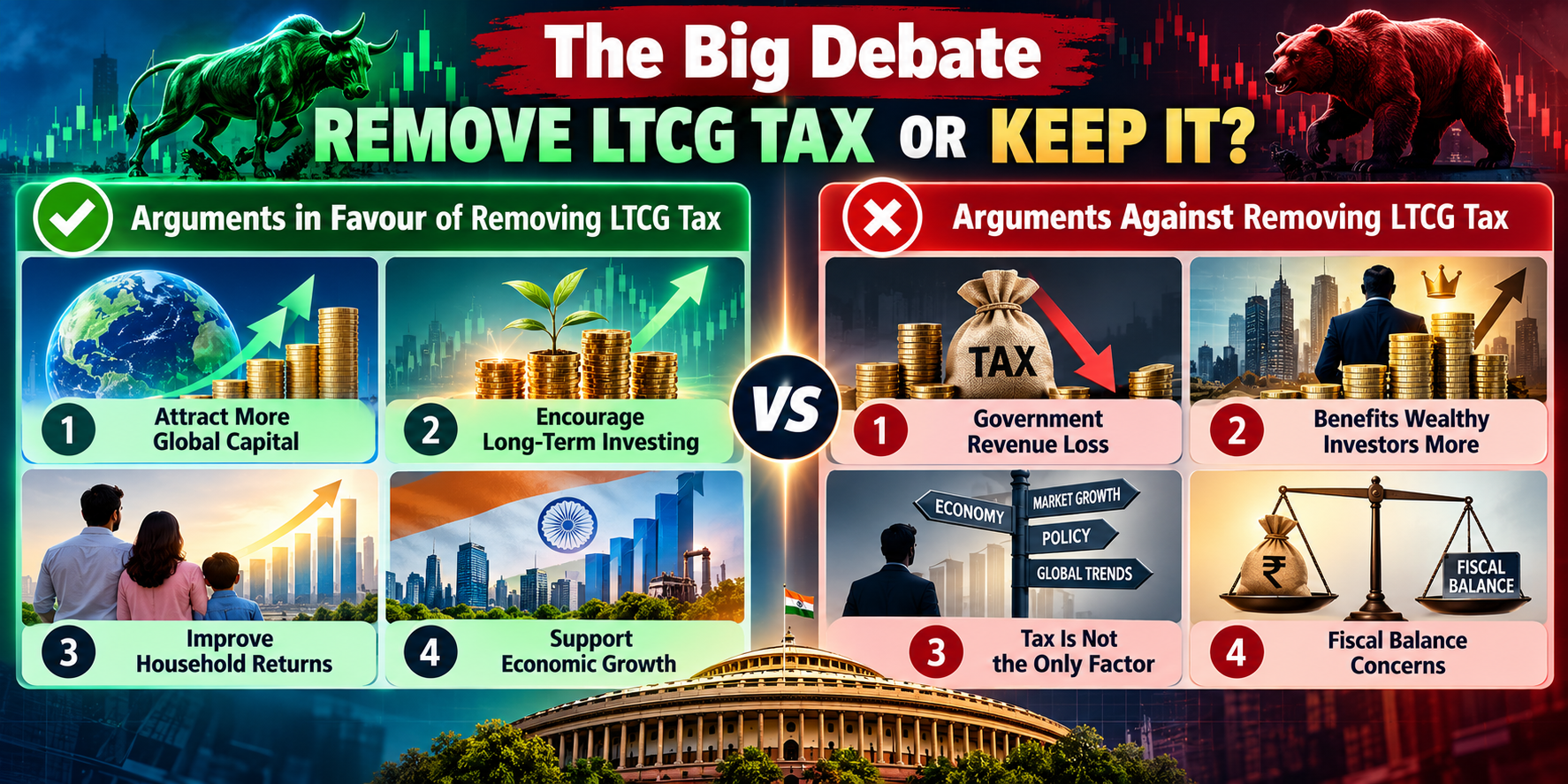
✅ Arguments in Favour of Removing LTCG Tax
1. Attract More Global Capital
Lower taxes could make India more appealing to international investors.
2. Encourage Long-Term Investing
Investors may be willing to stay invested longer if future gains are taxed less.
3. Improve Household Returns
Better post-tax returns could encourage greater participation in equity markets.
4. Support Economic Growth
More investment capital can strengthen businesses, innovation, and employment.
❌ Arguments Against Removing LTCG Tax
1. Government Revenue Loss
LTCG tax contributes to government tax collections. Eliminating it may reduce revenue.
2. Benefits Wealthy Investors More
Some economists, tax policy experts, and market observers argue that removing LTCG tax would primarily benefit high-net-worth individuals and large investors who earn substantial capital gains.
3. Tax Is Not the Only Factor
Investment decisions depend on many variables beyond taxation, including growth prospects and economic stability.
4. Fiscal Balance Concerns
The government may need alternative revenue sources if LTCG collections decline significantly.
🚀 Why Did Markets Cheer the LTCG Discussion?
Stock markets are forward-looking. Investors do not wait for a policy announcement before reacting. Financial markets often move on expectations, not just official announcements. Even the possibility of a future policy shift can influence investor sentiment and trigger market reactions.
📡 Three Signals Investors Watch Closely
✅ No Government Response: Markets assume current tax rules are likely to continue unchanged.
✅Government Recognizes Investor Concerns: Investors start anticipating a potential review or reform in the future.
✅ Tax Relief Is Officially Announced: Markets can immediately assess the direct impact on investment returns.
In this case, the Finance Minister's remarks appeared closer to the second signal, suggesting that investor concerns are being heard, even though no actual tax reduction has been announced yet.
📈 Why This Matters
For investors, policy acknowledgement is often the first step toward reform. While no changes have been confirmed, the government's willingness to engage with the debate has raised hopes of a more investor-friendly tax framework, helping improve market sentiment.
💳 UPI MDR Charges Also Deferred

Alongside the LTCG discussion, another important financial update emerged regarding UPI payments.
There had been concerns that Merchant Discount Rate (MDR) charges could be introduced on certain large-value UPI merchant transactions.
However, implementation has reportedly been postponed until after the festive season.
The move is expected to:
a) Avoid burdening consumers during major festivals.
b) Provide merchants more time to adapt.
c) Allow banks and payment service providers to improve readiness.
For now, consumers can continue using UPI without immediate changes during the peak shopping season.

🔎 Strategic Outlook
India's LTCG tax debate has evolved into a much bigger conversation about investment competitiveness, foreign capital flows, market growth, and economic policy.
While the government has not announced any decision yet, the fact that investor concerns are being publicly acknowledged has already energized the market.

Whether LTCG is reduced, restructured, or ultimately abolished remains to be seen. But one thing is certain: any major change in capital gains taxation could have a profound impact on investors, stock market sentiment, and India's position as a global investment destination.
📢 What Do You Think?
Should India abolish LTCG tax on long-term equity investments to attract more investors and strengthen the stock market?
👇 Share your views in the comments below!
📈 Follow us for the latest updates on taxation, stock markets, economy, and personal finance.
🔔 Don't forget to bookmark this page and share it with fellow investors who want to stay ahead of the next big market move.
Written by
Ishaan TrivediDiscussion (0)
Sign in to join the discussion.
Loading comments…