
A Historic Alliance Emerges
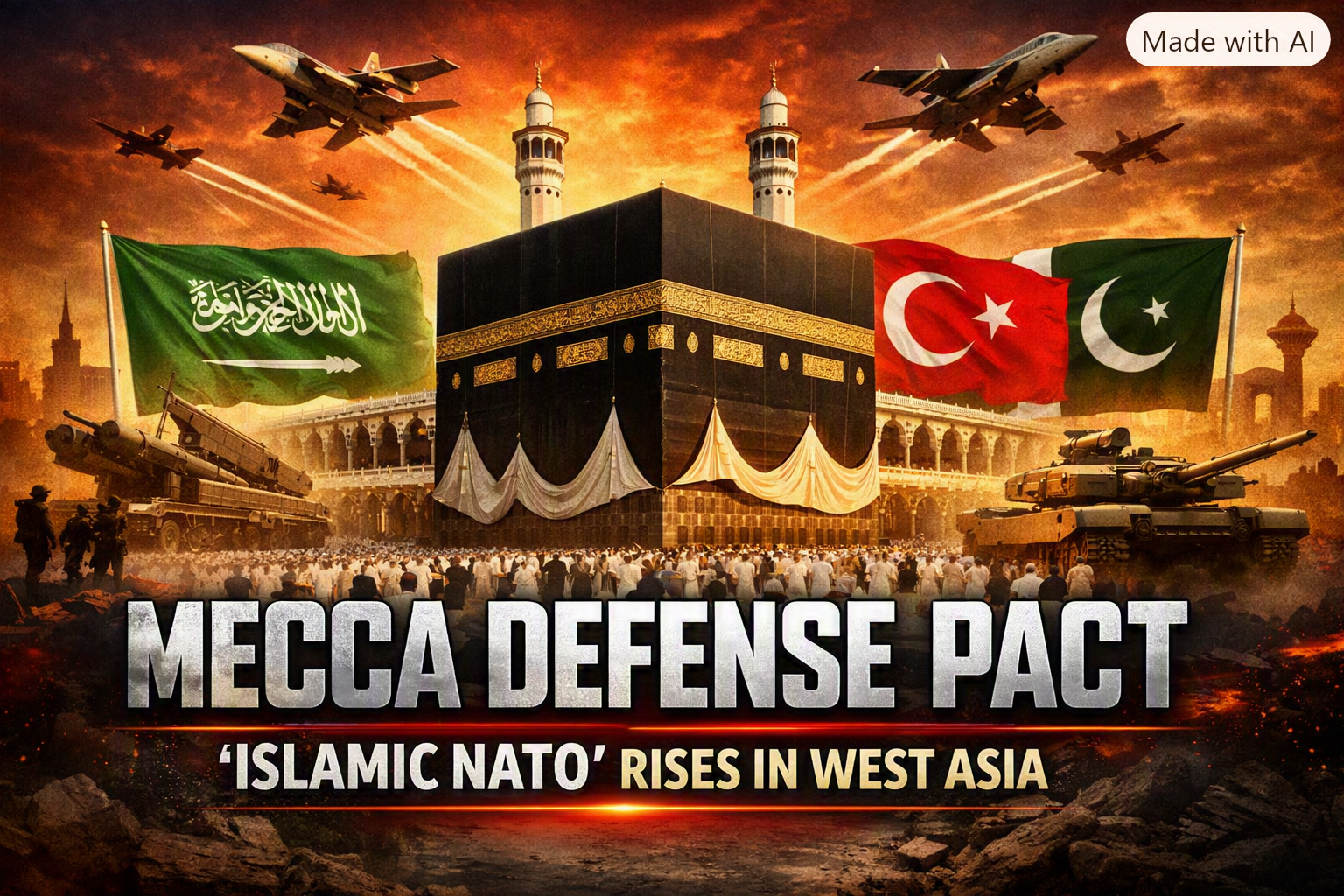
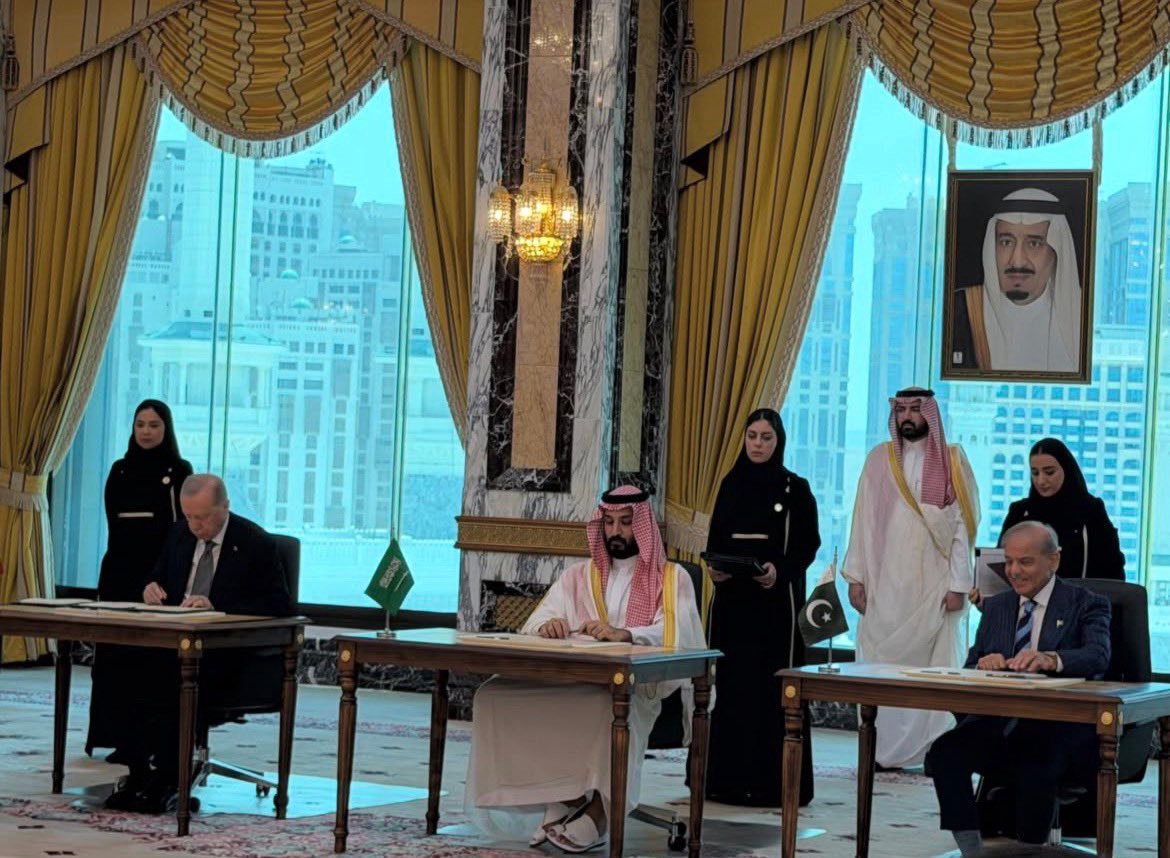
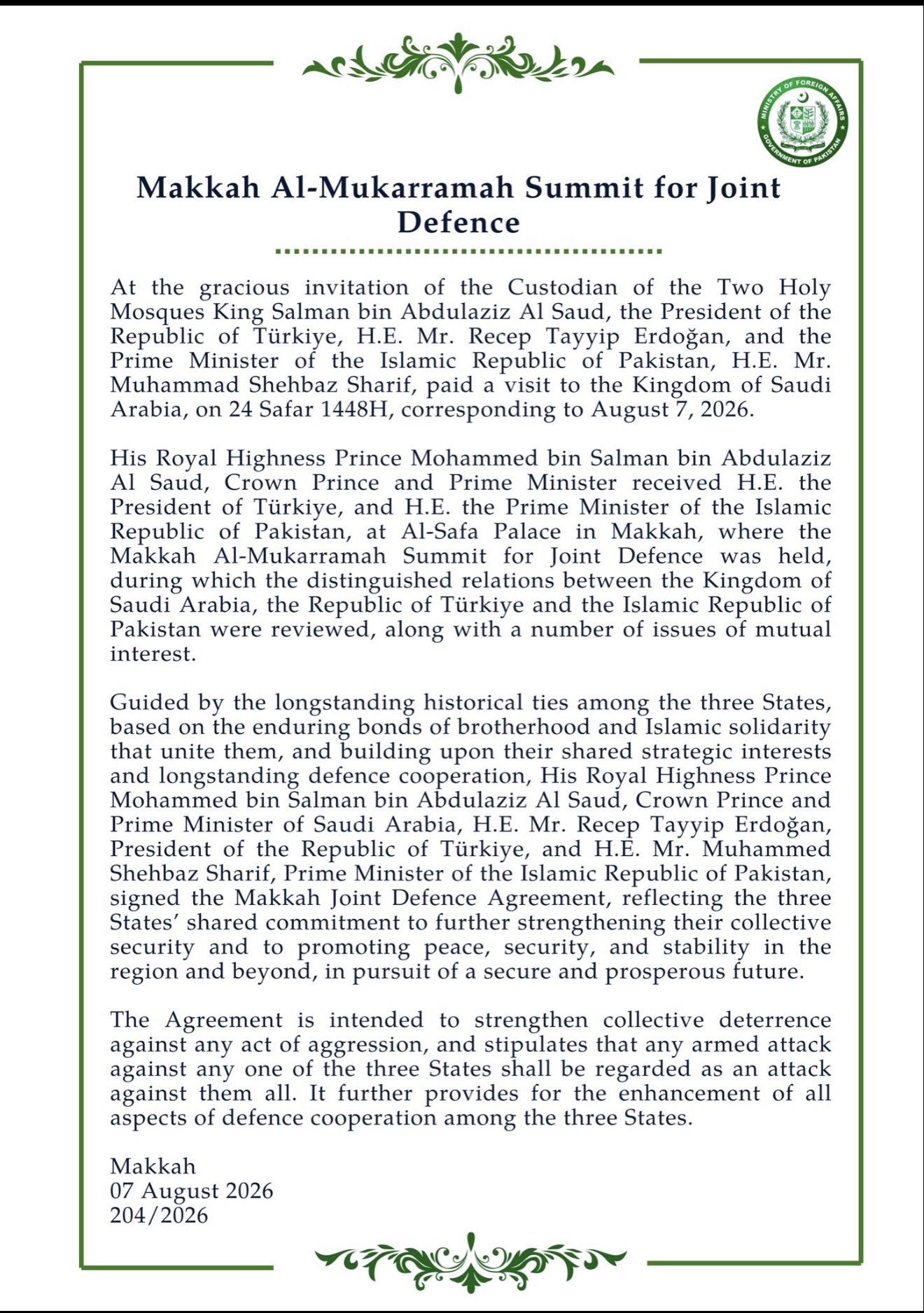
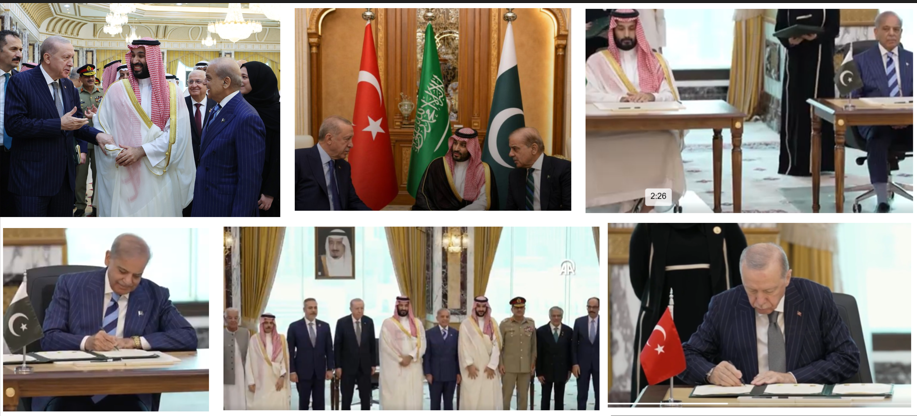
On August 7, Pakistan, Saudi Arabia, and Turkey signed the Mecca Defense Agreement, a landmark pact that analysts are calling the beginning of an “Islamic NATO.” The deal promises collective defense: an attack on one will be treated as an attack on all.
This marks one of the most significant geopolitical shifts in West Asia in recent years.
Why Turkey Changes the Game?
While Pakistan and Saudi Arabia already shared deep military ties, Turkey’s inclusion transforms the equation.
Defense Industry Powerhouse: Turkey has rapidly become one of the world’s fastest‑growing defense manufacturers, famous for its Bayraktar combat drones, cruise missiles, and advanced air defense systems.
NATO Experience: As a NATO member, Turkey brings operational expertise from conflicts in Syria, Libya, and Iraq.
Joint Production Potential: Pakistan now gains opportunities to co‑develop cutting‑edge military technology with Turkey.
Saudi Arabia’s Strategic Shift
Repeated Iranian missile strikes exposed the limits of relying solely on U.S. protection. Despite American missile defense deployments, Saudi infrastructure suffered damage. The Mecca Pact signals Riyadh’s intent to diversify its security partners and reduce dependence on Washington.
Pakistan’s Nuclear Umbrella
Pakistan’s role is pivotal. As the only nuclear‑armed Muslim‑majority nation, it offers a deterrence factor that other Islamic states lack. Its large standing army, ballistic missile capability, and military leadership experience make Islamabad a cornerstone of the alliance.
Iran’s Warning Shot: “Just a Paper Agreement, Security Can’t Be Bought on Paper”
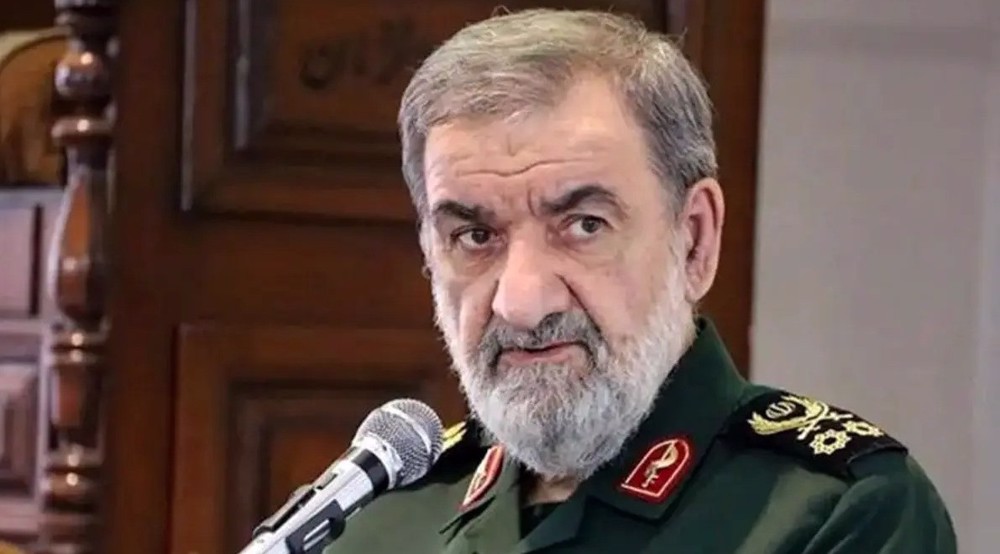
Ebrahim Rezaei, a member of the Iranian Parliament's National Security and Foreign Policy Commission, dismissed the newly signed Mecca Joint Deterrence Agreement between Saudi Arabia, Türkiye, and Pakistan as nothing more than a symbolic gesture. They pointed to Saudi Arabia’s past reliance on U.S. protection, which failed to prevent Iranian strikes. For Tehran, this pact is psychological signaling rather than a credible military threat. Instead of chasing alliances, he urged Saudi leaders to rethink their strategies so they no longer find themselves pleading with others for security.
A Pact for Stability, Not Power Plays
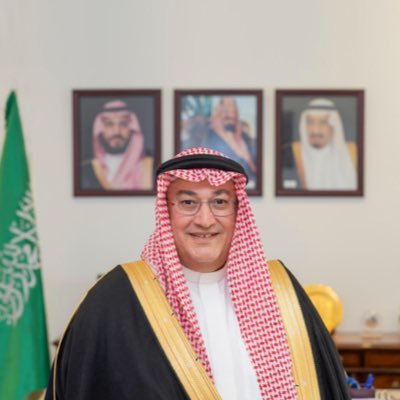
Saudi officials emphasized that the trilateral agreement is about building long‑term resilience, not fueling rivalries. Deputy Minister for Public Diplomacy Rayed Krimly clarified that the initiative is designed to strengthen sustainable capabilities rather than form military blocs or pursue nuclear ambitions. He stressed that the accord poses no threat to regional security and should not be seen as an escalation between states, but rather as a cooperative step toward stability.
India Keeps a Watchful Eye: Implications for India
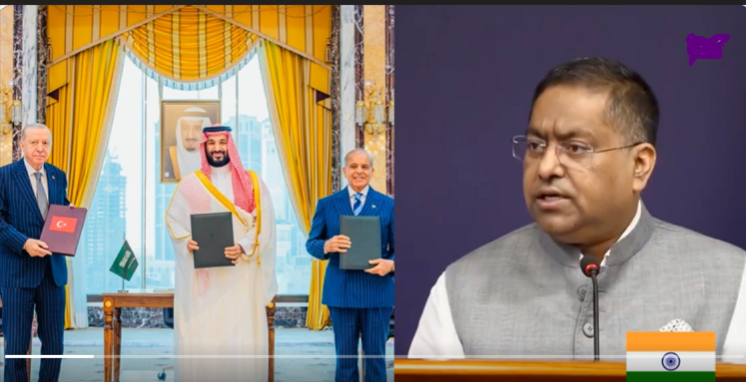
During Friday’s media briefing, MEA spokesperson Randhir Jaiswal underlined that New Delhi is closely tracking the trilateral pact. He noted that the agreement remains under careful observation and assured that the government will continue to provide updates as developments unfold.
Pakistan’s involvement, given its history of cross‑border terrorism, ensures India will monitor developments with caution. However, Saudi‑India relations remain stable, reducing the likelihood of direct fallout.
What Comes Next?
Could more states join this alliance? Possibly. Future cooperation may expand into cyber defense and broader strategic domains. For now, the pact represents financial strength (Saudi Arabia), military capability (Pakistan), and technological expertise (Turkey) converging into a formidable bloc.
The Mecca Defense Pact could redefine power balances in West Asia. Do you think this alliance will hold under real conflict, or is Iran right to call it “just a paper agreement”? Share your thoughts and join the debate below!
Written by
Ritvik DeshmukhDiscussion (0)
Sign in to join the discussion.
Loading comments…