
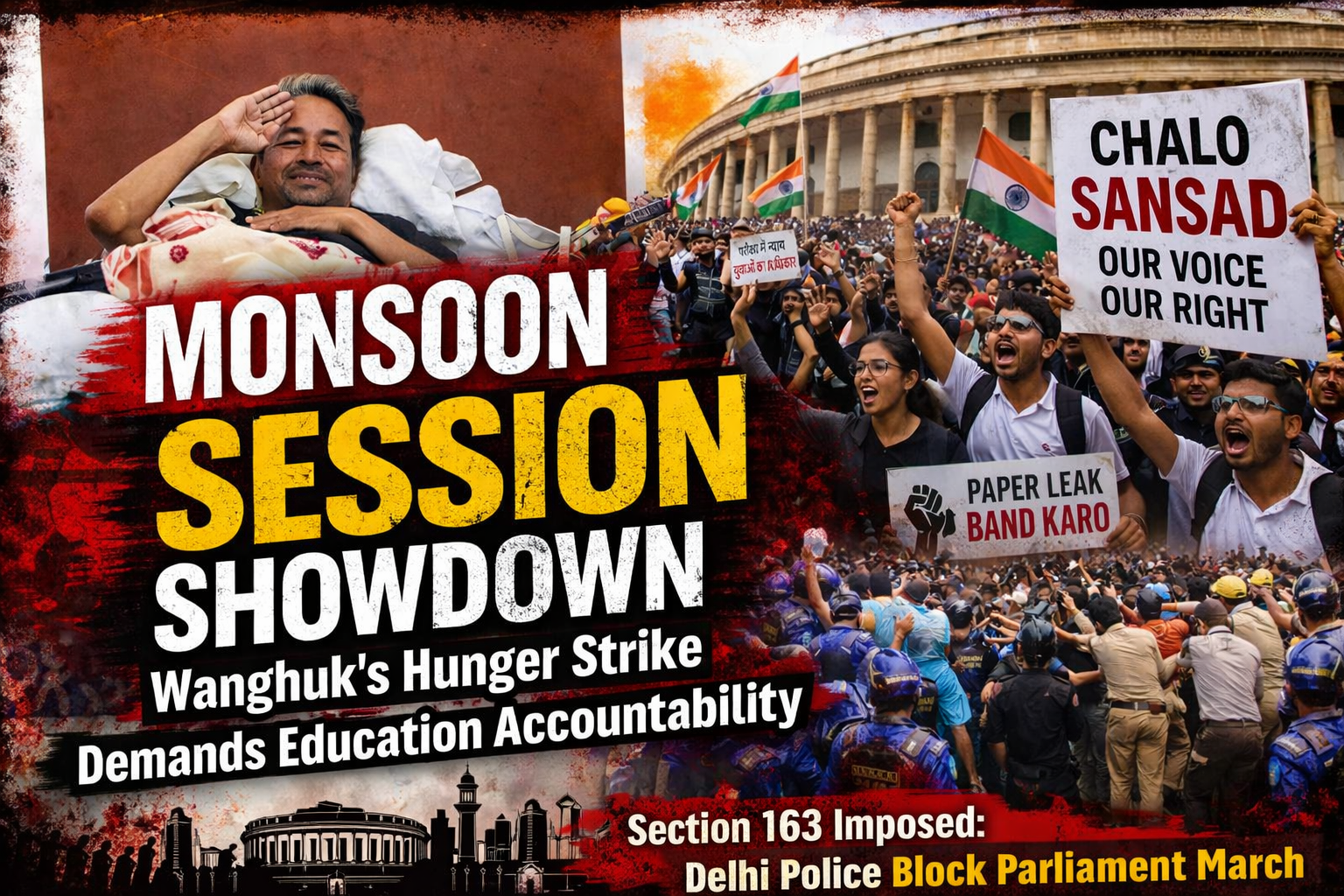
The Protest That Shook India’s Education System
For weeks, Jantar Mantar has been the epicenter of a storm brewing over India’s competitive examination system. From NEET paper leaks to recruitment delays, millions of young aspirants have felt betrayed. What began as a low‑key protest by the Cockroach Janata Party (CJP) suddenly caught fire when renowned educationist and climate activist Sonam Wangchuk joined the movement.
His frail body, weakened by an indefinite hunger strike, became a symbol of resistance, forcing the nation to confront the failures of its education machinery.
Delhi High Court Steps In
As Wangchuk’s health deteriorated, with over 9 kilos lost in 20 days and doctors warning of organ failure, the matter reached the Delhi High Court. The court ordered daily medical monitoring, stressing that “Sonam Wangchuk’s life must be protected at all costs.”
Yet controversy erupted when Delhi Police, in civilian clothes, removed him from the protest site and shifted him to a government hospital. His wife appealed for a transfer to a private facility, but the court rejected the plea.
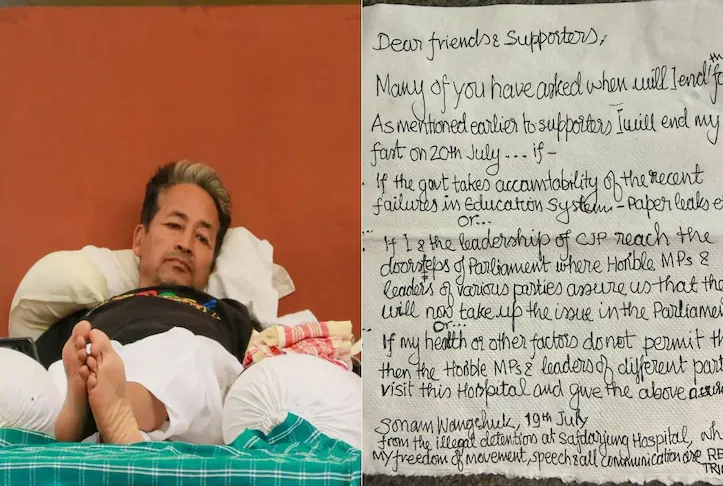
The Midnight Twist: Two Conditions to End the Fast
Late last night, Wangchuk’s wife made a dramatic announcement:
· Condition 1: A representative from the ruling NDA government must meet Wangchuk in person.
· Condition 2: The ongoing Monsoon Session of Parliament must include a serious discussion on education accountability and reforms.
This marked a softening of demands; earlier, the protest insisted on the resignation of Education Minister Dharmendra Pradhan.
Clash with Delhi Police: Parliament March Blocked
Today was supposed to witness the “Chalo Sansad March” — a peaceful rally towards Parliament. But Delhi Police declared it unauthorized, citing Section 163 of the Indian Citizen Security Code (formerly Section 144 CrPC). This law prohibits gatherings of more than four people, citing risks to public safety and order.
Organizers argue that the Constitution guarantees peaceful assembly as a fundamental right. Police counter that permissions are necessary to manage traffic, security, and crowd control.
Wangchuk’s Call: A Second Freedom Movement
From his hospital bed, Wangchuk issued a stirring message:
Students and citizens must march peacefully, without violence.
We must seek "freedom from fear, corruption, and institutional failure.”
He declared this struggle the “Second Freedom Movement”, the first being independence from colonial rule, and the second from systemic injustice.
Why Today Matters
With Parliament’s Monsoon Session opening, all eyes are on whether the government will acknowledge the crisis. Will education reforms finally be debated? Will Wangchuk’s fast end? Or will the march defy police restrictions?
One thing is clear: India’s youth are demanding accountability, and the nation cannot look away.
Written by
Vedant BhardwajDiscussion (0)
Sign in to join the discussion.
Loading comments…