
America’s Tariff Obsession Hits a New Peak
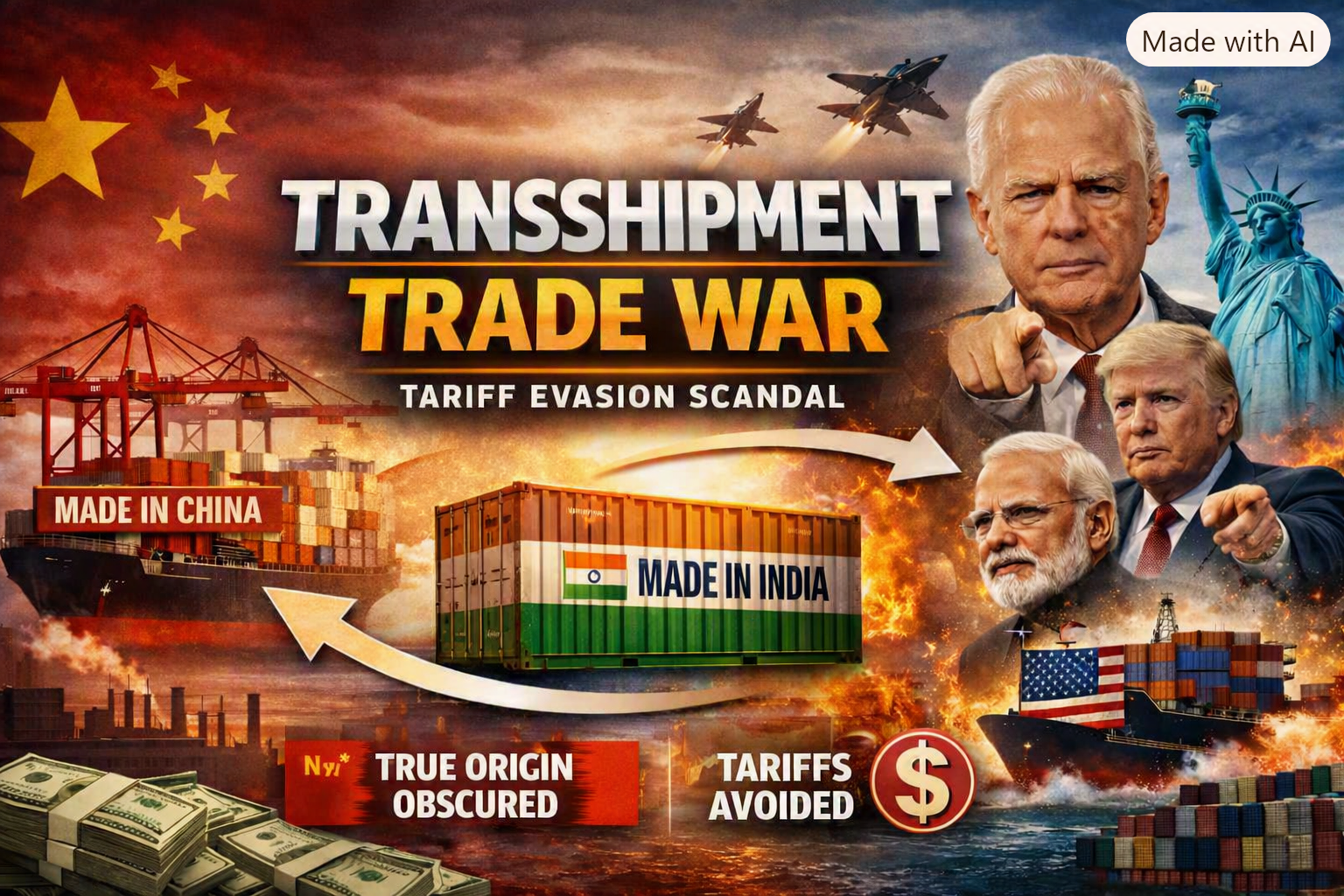
The Trump administration has dropped a bombshell report titled “The Great Transshipment Scam”, accusing 40 countries, including India, of helping China dodge U.S. tariffs. The report, driven by trade advisor Peter Navarro, claims that nations like Canada, Mexico, Japan, South Korea, Vietnam, Malaysia, and India are being used as indirect gateways for Chinese goods to enter the American market.
🔎 India Under the Scanner: Transshipment Shadow Network Allegation
White House trade hawk Peter Navarro made it clear: “India is firmly on our radar.” His remarks signal that Washington is watching New Delhi’s trade practices with growing suspicion. Navarro alleged that India, along with several other nations, may be tapping into a “transshipment shadow network” to evade new duties. These new tolls stem from sanctions targeting Russian oil purchases.
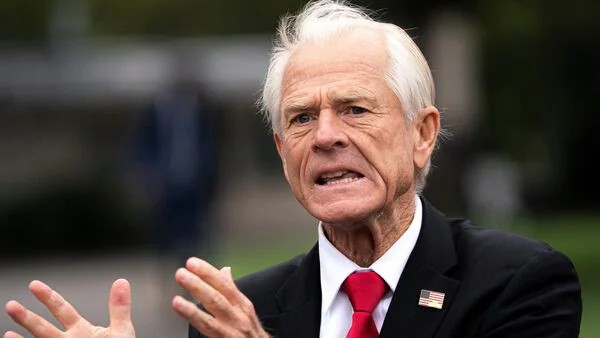
👑 Navarro’s Tariff Taunt
Peter Navarro has often aimed at India, once dubbing it the “Maharaja of tariffs.” He used the phrase while defending U.S. retaliatory duties tied to India’s continued Russian oil imports.
🔥 Navarro vs. Indian Netizens
After his “Brahmins profiteering” remark in August 2025, which triggered a storm online, Trump’s trade adviser Peter Navarro lashed out. He told reporters, “I got firebombed by the Indian continent with nasty little attacks. That’s not how we solve problems in America.”
💻 Keyboard Warriors Strike Back
The clash didn’t end there. Navarro accused Indian users of acting as “keyboard minions”, mobilizing on X to drown out his claims.
📝 Community Notes Showdown
He further alleged that India’s online community was weaponizing Community Notes to bury what he called “facts” about India’s trade practices, turning social media into yet another front in the tariff war.
What Exactly Is Transshipment?
Transshipment is the practice of rerouting goods through a third country before they reach their final destination. While not inherently illegal, the U.S. alleges that China is exploiting this loophole by sending goods to India and other nations for minor processing, repackaging, or relabeling, then exporting them to America as “Made in India.”
For instance, imagine a smartphone fully assembled in China. Instead of shipping it directly to the U.S., the device is sent to India, where only the charger is added to the box or the packaging is swapped to say “Made in India.” The phone is then exported to America under the Indian label.
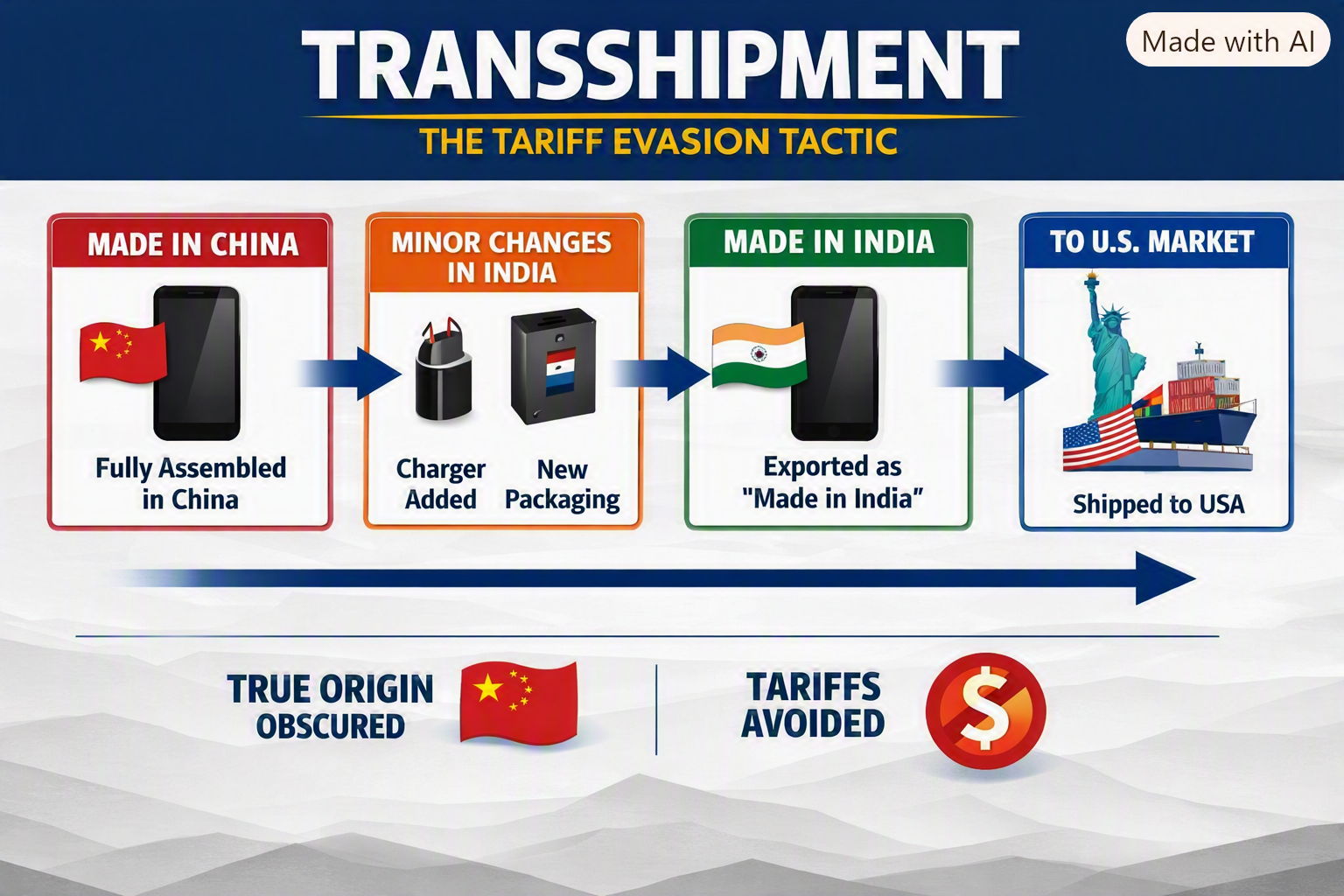
From Washington’s perspective, this kind of minimal processing or relabeling undermines the very purpose of tariffs, because the product’s true origin, China, gets obscured. At the same time, the U.S. market continues to absorb Chinese goods despite heavy duties.
Why India Is in the Spotlight
The report specifically mentions industrial hubs in Pune, Gujarat, and Chennai, accusing them of exporting pumps and compressors that are essentially Chinese in origin. According to U.S. officials, this practice hurts American manufacturers in places like Columbus and Cincinnati, who face unfair competition from re‑routed Chinese goods.
However, the report also admits that not all Indian exports are Chinese‑linked. Much of this issue stems from the global supply chain itself: India imports raw materials from China, processes them, and then exports finished goods. The blurred lines between legitimate value addition and mere relabeling make enforcement extremely complex.
The Bigger Picture: Supply Chains in Flux
Since Trump’s 2018 tariffs on China under Section 301, global supply chains have shifted dramatically. Many multinational companies now follow a “China Plus One” strategy, diversifying production across India, Vietnam, and Thailand. This makes it harder to determine the true origin of goods, whether they are genuinely Indian or just Chinese components reassembled abroad.
The U.S. estimates that anywhere between $40 billion to $300 billion worth of goods may be reaching America through transshipment, causing annual revenue losses of up to $26 billion.
America’s Next Move: AI Surveillance
To combat this, U.S. Customs and Border Protection is deploying AI‑enabled systems to track shipping routes, invoices, and product origins. If companies are found guilty of transshipment, they could face sanctions, higher tariffs, or stricter scrutiny, posing a serious risk to Indian exporters.
What This Means for India: New Trade Rules, New Penalties
While India is not accused of deliberately aiding China, exporters may face tougher compliance checks and rising costs. The challenge lies in proving genuine value addition in Indian manufacturing, rather than being caught in the crossfire of U.S.–China trade wars.
According to U.S. officials, upcoming trade frameworks will include stringent provisions designed to punish partners that rely on transshipment loopholes. The Trump administration wants to ensure that countries helping China or Russia sidestep tariffs will face direct consequences.
💥 Tariffs That Bite
India, China, Slovakia, Hungary, and Azerbaijan now face 100% tariffs under the Russia sanctions bill, penalties tied to their continued significant imports of Russian energy. For Indian exporters, this marks a dangerous escalation in America’s tariff war.
Trade War Verdict
The “Great Transshipment Scam” highlights America’s growing frustration with tariff evasion and its obsession with China. For India, the report is both a warning and a wake‑up call: exporters must tighten compliance, prove authenticity, and prepare for heightened U.S. scrutiny.
🤝 Trump–Modi Equation in Focus
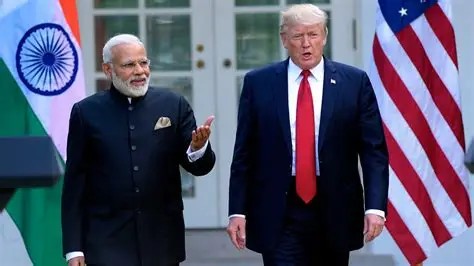
White House adviser Peter Navarro noted that President Trump and Prime Minister Modi share a strong working relationship. He stressed that the two leaders will handle disagreements over India’s Russian oil imports and looming U.S. tariffs directly, saying it’s a matter for them to resolve, not for him to intervene in a press gaggle.
Closing Note
For India, the message is clear: the global trade battlefield is shifting, and credibility is everything. Indian exporters must audit their supply chains and maintain airtight documentation to prove genuine value addition. Policymakers need to reinforce “Rules of Origin” enforcement, safeguarding India’s reputation in international markets.
Readers should stay alert; this tariff war is far from over, and its ripple effects could reshape the very foundations of global commerce.
Written by
Ishaan TrivediDiscussion (0)
Sign in to join the discussion.
Loading comments…