
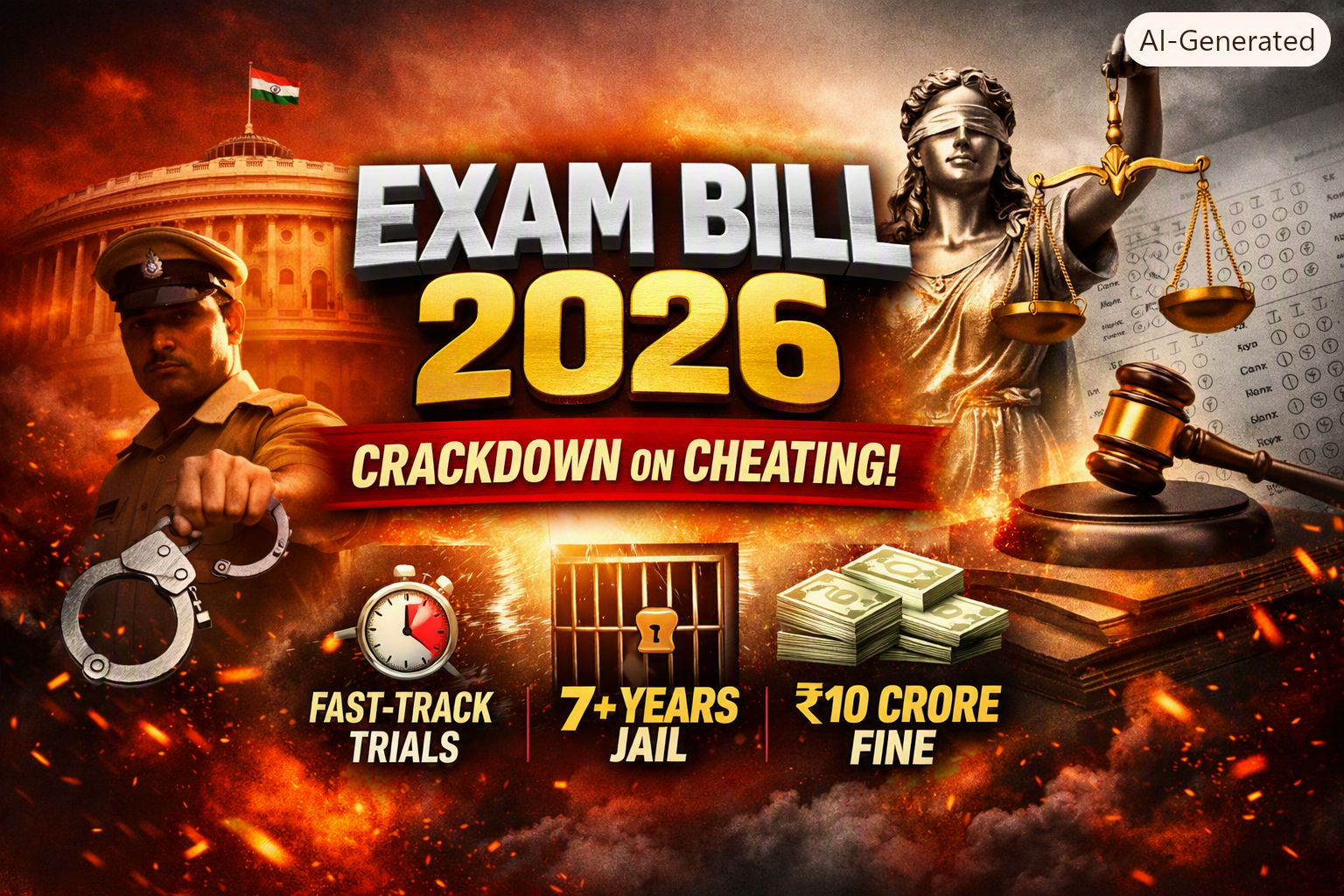
From Paper Leaks to Parliament Action
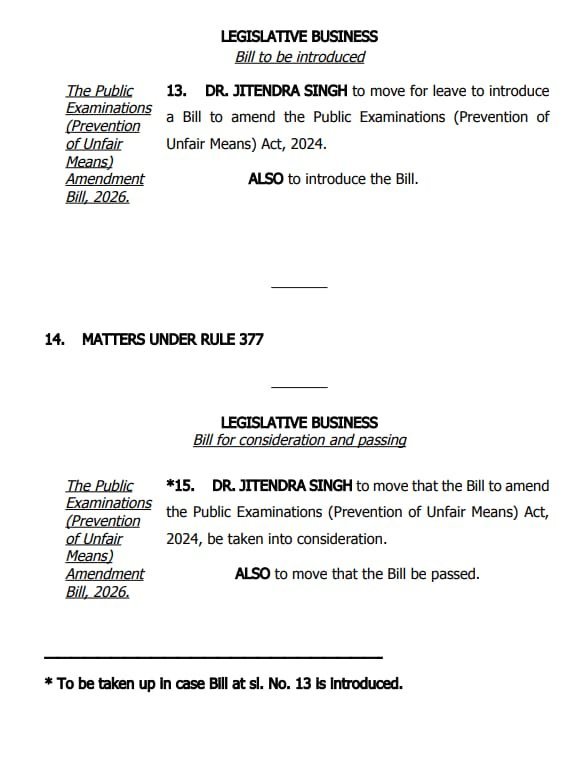
After weeks of uproar over repeated exam scandals, Union Minister Dr. Jitendra Singh is all set to introduce the Public Examinations (Prevention of Unfair Means) Amendment Bill, 2026 in the Lok Sabha on Monday, July 27. The Bill aims to toughen the 2024 law that was originally brought in after the NEET paper leak, but which critics say failed to deliver quick justice.
According to the official legislative agenda, the Bill aims to amend the Public Examinations (Prevention of Unfair Means) Act, 2024, to strengthen safeguards against malpractice in competitive examinations.
What the 2024 Law Promised
The earlier Act sought to:
Stop paper leaks and organized cheating in central public exams.
Ensure merit‑based recruitment.
Impose 3–5 years’ jail for ordinary cheating and 5–10 years plus ₹1 crore fine for organized leaks.
Make offenses cognizable, non‑bailable, and non‑compoundable.
Yet, delays in investigation and trial meant students waited years for justice, while cheating syndicates grew more sophisticated.
What’s Changing in 2026
The new Bill introduces:
Time‑bound investigation: Police must finish probes within 2 months.
Fast‑track trials: Courts must conclude hearings within 3 months, ensuring verdicts in 5 months total.
Stricter punishment: Minimum jail for organized leaks raised to 7 years, fines increased tenfold to ₹10 crore.
Expanded accountability: Not just individuals, but institutions, exam centers, private agencies, and tech vendors can face prosecution, penalties, and blacklisting.
Exams Covered
The law applies to central exams like UPSC, SSC, NTA tests (NEET, JEE, CUET, UGC‑NET), RRB, and banking exams. States may adopt similar laws, but the Bill itself covers only central examinations.
The Big Question: Will It Work?
While the government promises fast‑track courts and AI‑based monitoring, challenges remain:
Can police really complete investigations in 2 months?
Will courts with massive backlogs deliver speedy trials?
Without secure digital systems, can leaks truly be stopped?
And what about state‑level exams, where leaks are rampant?
Closing Note
This Bill is being pitched as a game‑changer for exam integrity, but whether it restores trust among India’s youth or becomes another law lost in delays will depend on how strongly it is enforced.
Written by
Aditya KulshreshthaDiscussion (0)
Sign in to join the discussion.
Loading comments…