

Foreign investors have pulled out billions, crude oil prices are rising, the rupee is weakening, and market breadth is collapsing. Here’s why Indian stocks are falling and whether the worst is yet to come.
Should Investors Brace for More Pain Ahead?
The Indian stock market is going through one of its most challenging phases in decades. Whether you're an active trader, a long-term investor, or someone who only occasionally follows financial headlines, you've probably noticed the relentless decline in benchmark indices.
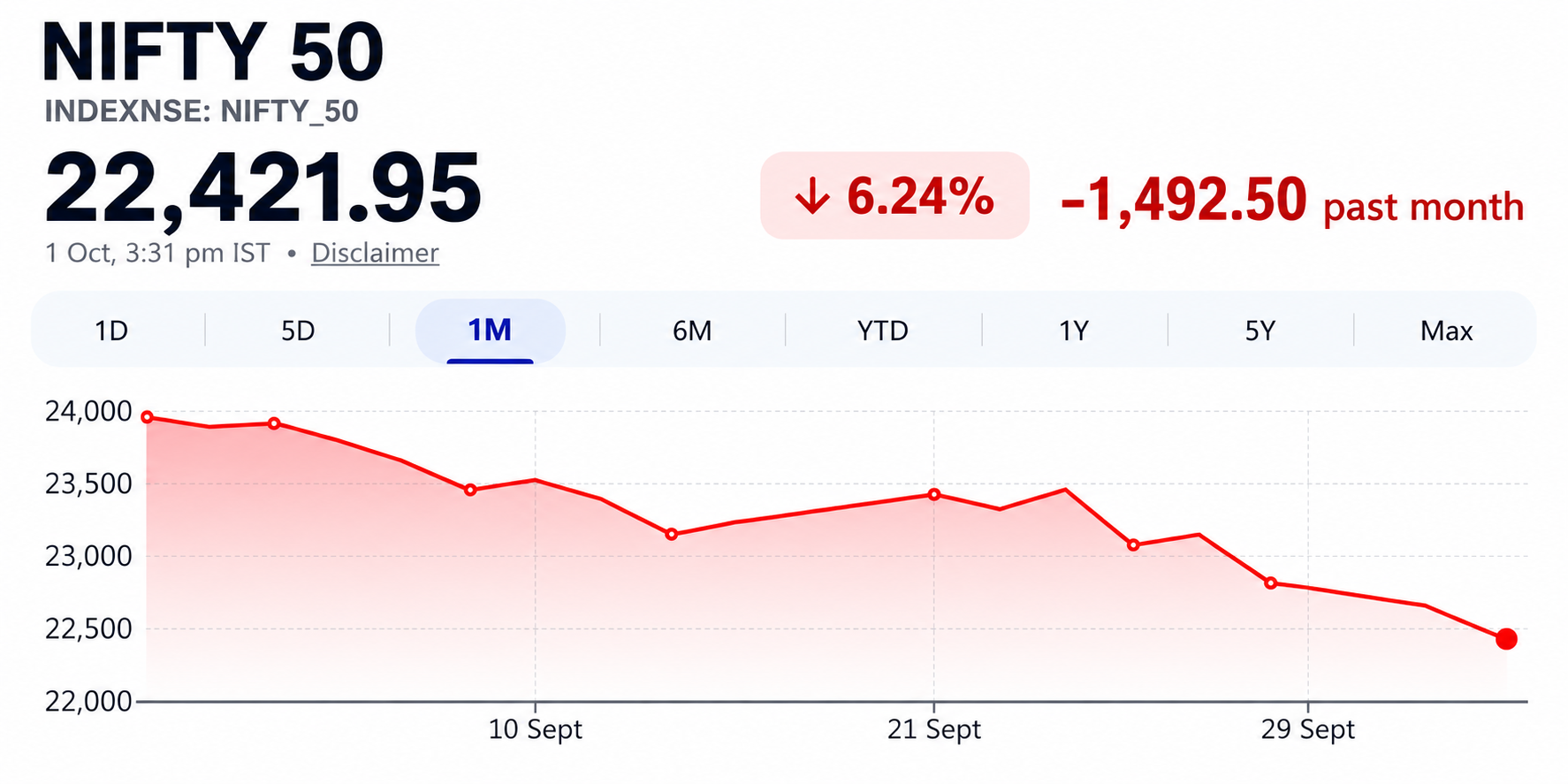
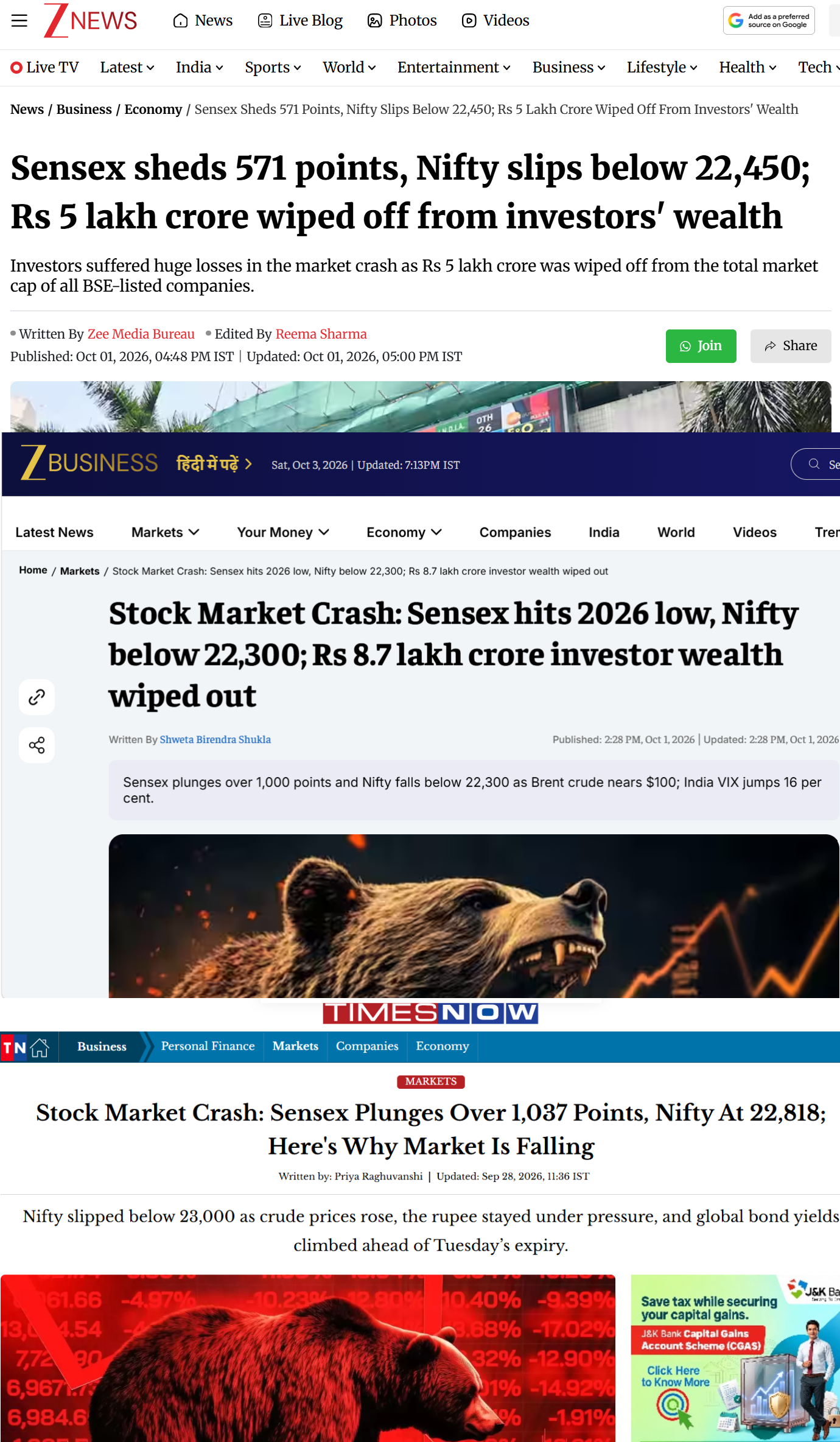
For the first time in nearly 25 years, the market has witnessed eight straight weeks of losses, triggering widespread concerns among investors. Nifty and Sensex have been under intense pressure, billions in market value have been wiped out, and foreign investors are pulling money out at an alarming rate.
The big question now is: Are we entering a bear market, or is this simply a temporary correction before the next rally?
Let's break down what is happening, why it matters, and what investors should watch next.
📉 The Numbers Behind the Market Meltdown
Recent market performance tells a worrying story.
1. Nifty has fallen nearly 15% from its all-time high.
2. Over the last eight consecutive weeks, the index has declined around 8.7%.
3. September alone witnessed a drop of over 6%, making it one of the worst-performing months in recent times.
4. Foreign Institutional Investors (FIIs) have reportedly withdrawn more than ₹2.5 lakh crore from Indian equities.
5. Brent crude oil prices have surged to around the $100 per barrel mark, increasing inflationary and import-cost pressures on oil-importing economies like India.
6. The US 10-year Treasury yield has climbed to approximately 5.3%, making safer US assets more attractive and prompting foreign investors to shift capital away from emerging markets.
To put things into perspective, the Nifty was trading around 24,500 in early August and has now slipped close to 22,400, resulting in a decline of more than 2,100 points.
While the percentage drop may not seem as severe as past crashes, the duration of the decline is what has captured market attention.
⏳ Why 8 Weeks of Continuous Selling Is a Big Deal
Stock markets naturally move in cycles. Corrections are normal. Volatility is expected. However, what makes the current situation unusual is the consistency of the selling pressure.
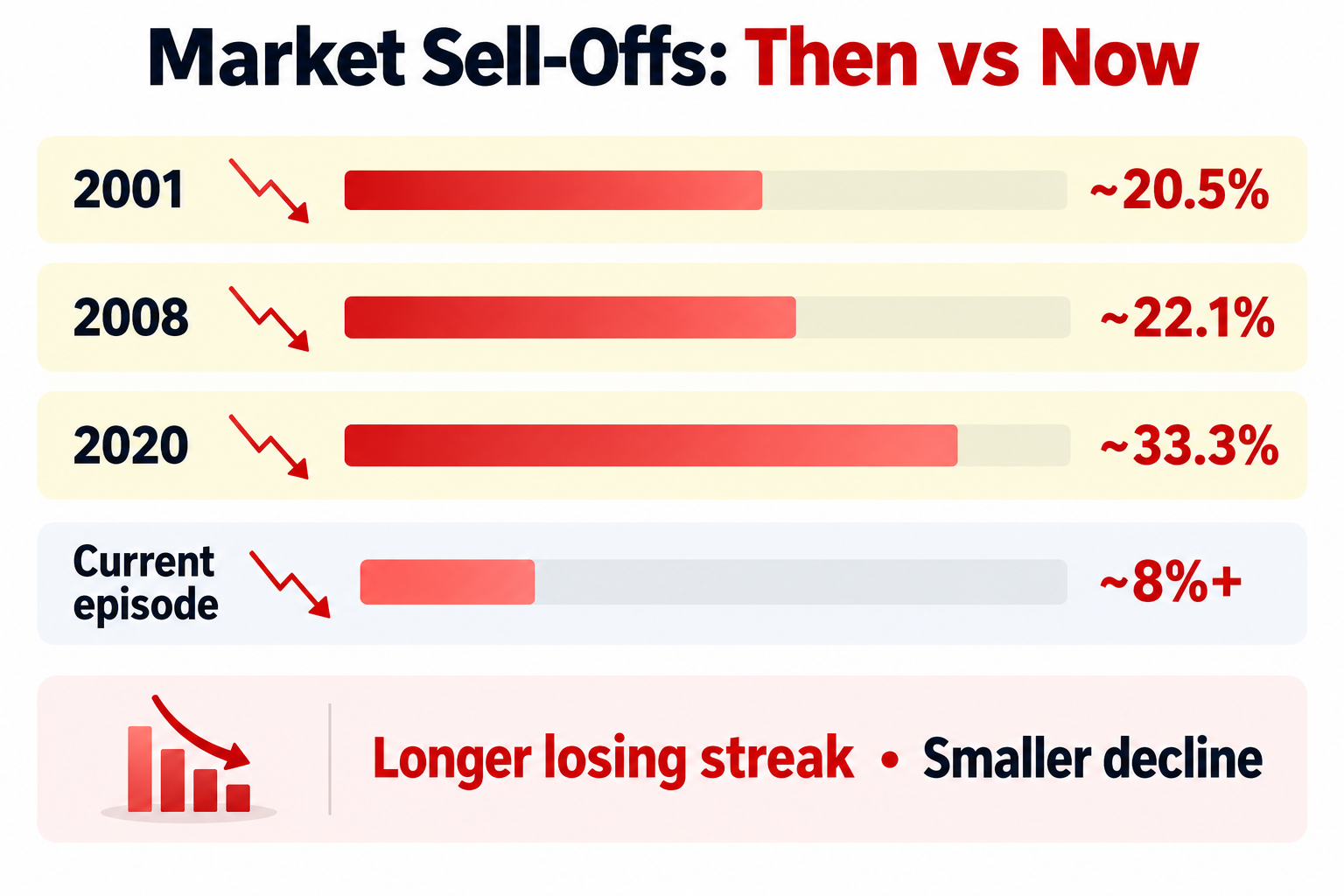
Since 2001, the Indian market has rarely experienced such a prolonged losing streak. Historical crashes like:
1. The Dot-Com collapse (2001)
2. The Global Financial Crisis (2008)
3. The COVID crash (2020)
saw larger percentage declines, but the current market is creating records in terms of persistence.
If the market continues to decline for a couple more weeks, it could challenge some of the longest losing streaks seen in decades. For investors, such extended weakness often signals deeper concerns beneath the surface.
🐻 Are We Officially in a Bear Market?
Not yet.
By standard financial definition, a bear market begins when an index falls more than 20% from its recent peak. At the moment:
1. Nifty's peak was above 26,000.
2. Current levels are around 22,400.
3. The decline is approximately 15%.

So, while investors are undoubtedly nervous, the market is currently in a sharp correction rather than a confirmed bear market.
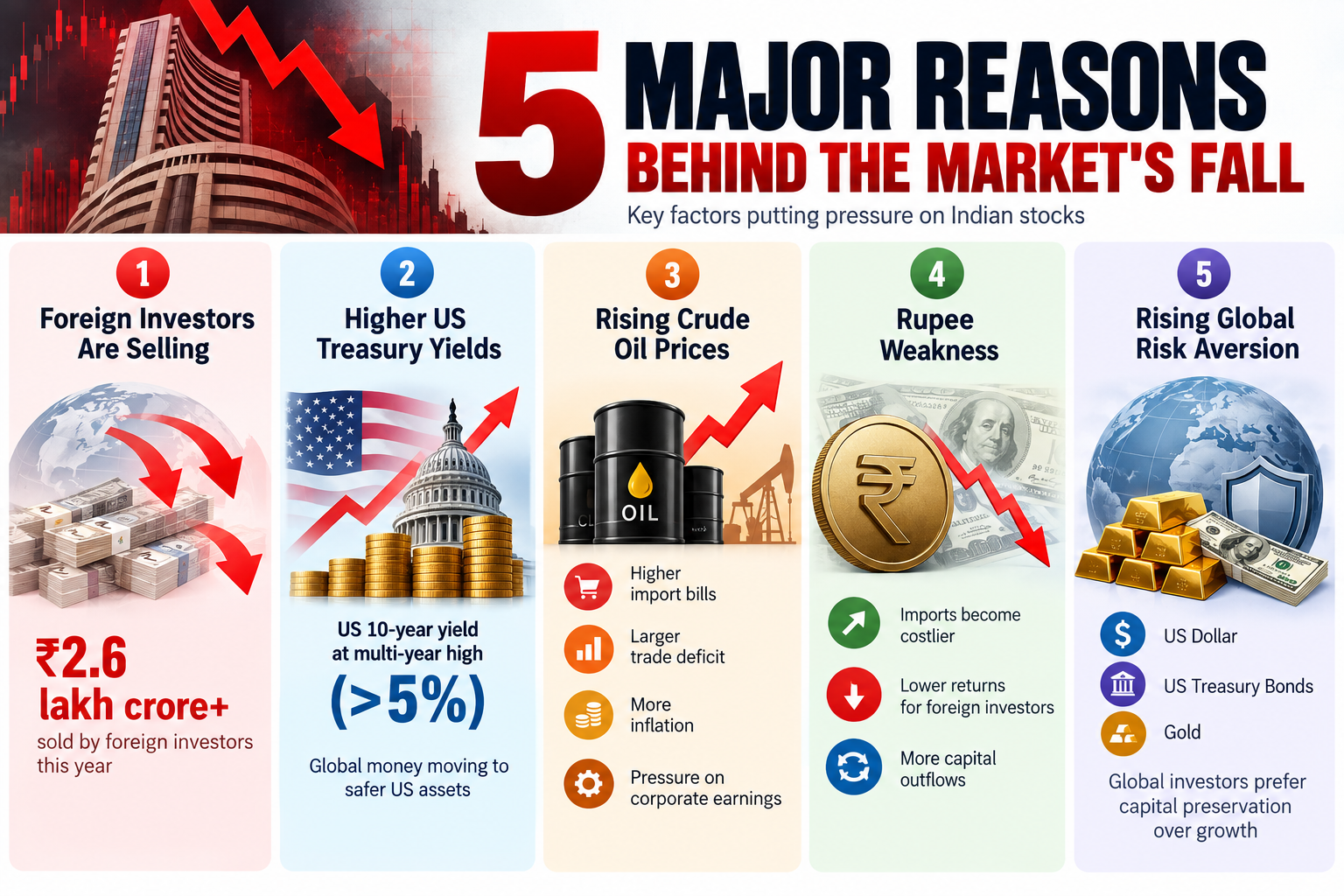
🔥 Five Major Reasons Behind the Market's Fall
Understanding the causes is crucial before making any investment decisions.
1. Foreign Investors Are Pulling Out Massive Amounts of Money
One of the biggest reasons behind the fall is aggressive selling by foreign investors. Global funds allocate money where risk-adjusted returns appear most attractive. If better opportunities arise elsewhere, they quickly move capital.
This year, foreign investors have reportedly sold Indian equities worth over ₹2.6 lakh crore. When such large institutional players exit, market liquidity declines and selling pressure intensifies.
2. Rising US Treasury Yields Are Attracting Global Money
Another major factor is the surge in US Treasury yields. The US 10-year Treasury yield has climbed to levels (5.3%)
not seen since the aftermath of the 2008 financial crisis.
Why does this matter?
Imagine you're a global investor. You now have two choices:
Option A:
Invest in a volatile emerging market like India.
Option B:
Earn over 5% returns from relatively safe US government securities.
Many investors are choosing the second option.
As a result, capital is flowing out of emerging markets and into US assets, putting pressure on Indian stocks.
3. Rising Crude Oil Prices Are Creating Headwinds
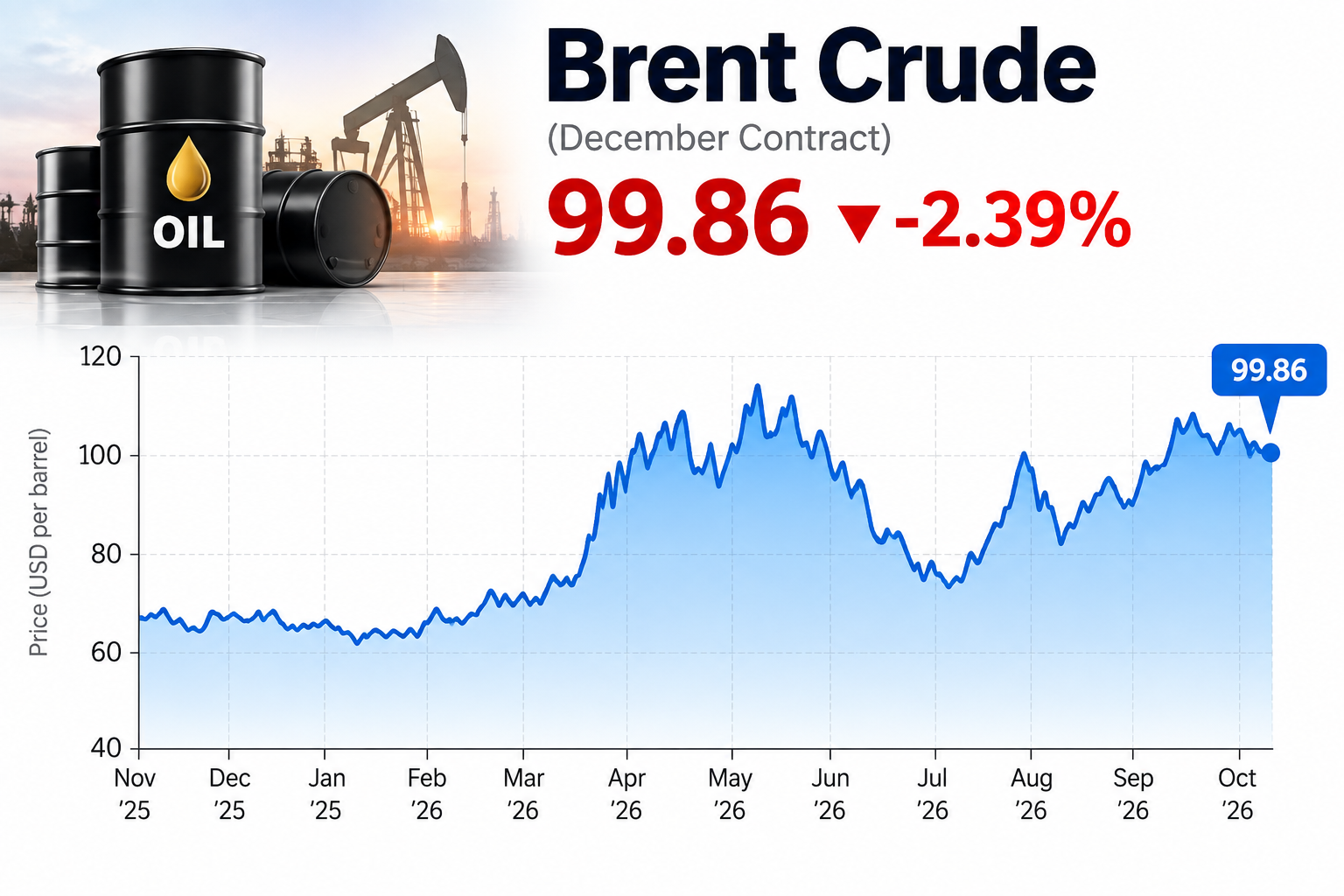
India is one of the world's largest oil importers. Whenever crude oil prices rise, the country faces multiple challenges:
a) Higher import bills
b) Larger trade deficits
c) Increased inflationary pressures
d) Pressure on corporate profitability
Recent geopolitical uncertainties and disruptions in global energy markets have pushed crude oil prices higher again. For India's economy and stock market, expensive oil is generally bad news.
4. Rupee Weakness Is Adding More Pressure
A weakening rupee creates a double challenge. First, imports become more expensive.
Second, foreign investors may earn lower returns once currency fluctuations are considered.
For example:
If the rupee loses value against the dollar, foreign investors can see part of their investment gains wiped out by exchange-rate losses. This often encourages additional capital outflows, creating a vicious cycle.
5. Global Risk Aversion Is Rising
Markets do not operate in isolation. Whenever global uncertainty increases, investors shift from risky assets to safer alternatives. Historically, during uncertain periods, money tends to move toward:
✅ US Dollar
✅ US Treasury Bonds
✅ Gold
At the moment, global investors appear to be prioritizing capital preservation over aggressive growth opportunities. That shift in sentiment is hurting emerging markets, including India.
📊 The Hidden Warning Sign Most Investors Are Missing
Many people focus only on the Nifty or Sensex. But the real picture becomes clearer when we look beneath the surface. Recent market data shows that nearly 81% of Nifty 500 stocks are trading below their 50-day moving average.
What does that mean?
It means the weakness is widespread. This isn't just a handful of large companies dragging down the index. Hundreds of stocks across sectors are declining simultaneously.
Market experts call this weak market breadth, and it often indicates broader investor caution. When a majority of stocks are falling together, it becomes harder for the overall market to recover quickly.
🎯 What Should Investors Do Now?
Periods like these can feel uncomfortable, especially for newer investors. However, history shows that corrections are an inevitable part of investing. Instead of reacting emotionally:
1. Avoid panic selling.
2. Focus on quality businesses.
3. Maintain a long-term perspective.
4. Keep an eye on inflation, oil prices, US bond yields, and FII flows.
5. Invest systematically rather than trying to time the market perfectly.
The next few weeks will be crucial in determining whether this correction stabilizes or moves closer toward bear-market territory.
🔍 The Road Ahead for the Indian Stock Market
The Indian stock market is undoubtedly under pressure. Eight straight weeks of declines, massive foreign investor selling, rising US yields, expensive crude oil, and a weakening rupee have created the perfect storm for equities.
Yet, despite the fear and uncertainty, the market has not officially entered a bear market.
The coming months will reveal whether this is merely a sharp correction or the start of a deeper downturn. Smart investors know one thing: market falls create panic for some, but opportunities for others.
📢 Want to Stay Ahead of Every Market Move?
Don't let headlines dictate your investment decisions.
✅ Follow market trends with data, not emotions.
✅ Learn how global events impact your portfolio.
✅ Build investing skills that help you navigate both bull and bear markets.
Subscribe to our newsletter today and get expert market insights, investment strategies, and timely updates delivered straight to your inbox! 📈💰
Written by
Samar PrakashDiscussion (0)
Sign in to join the discussion.
Loading comments…