
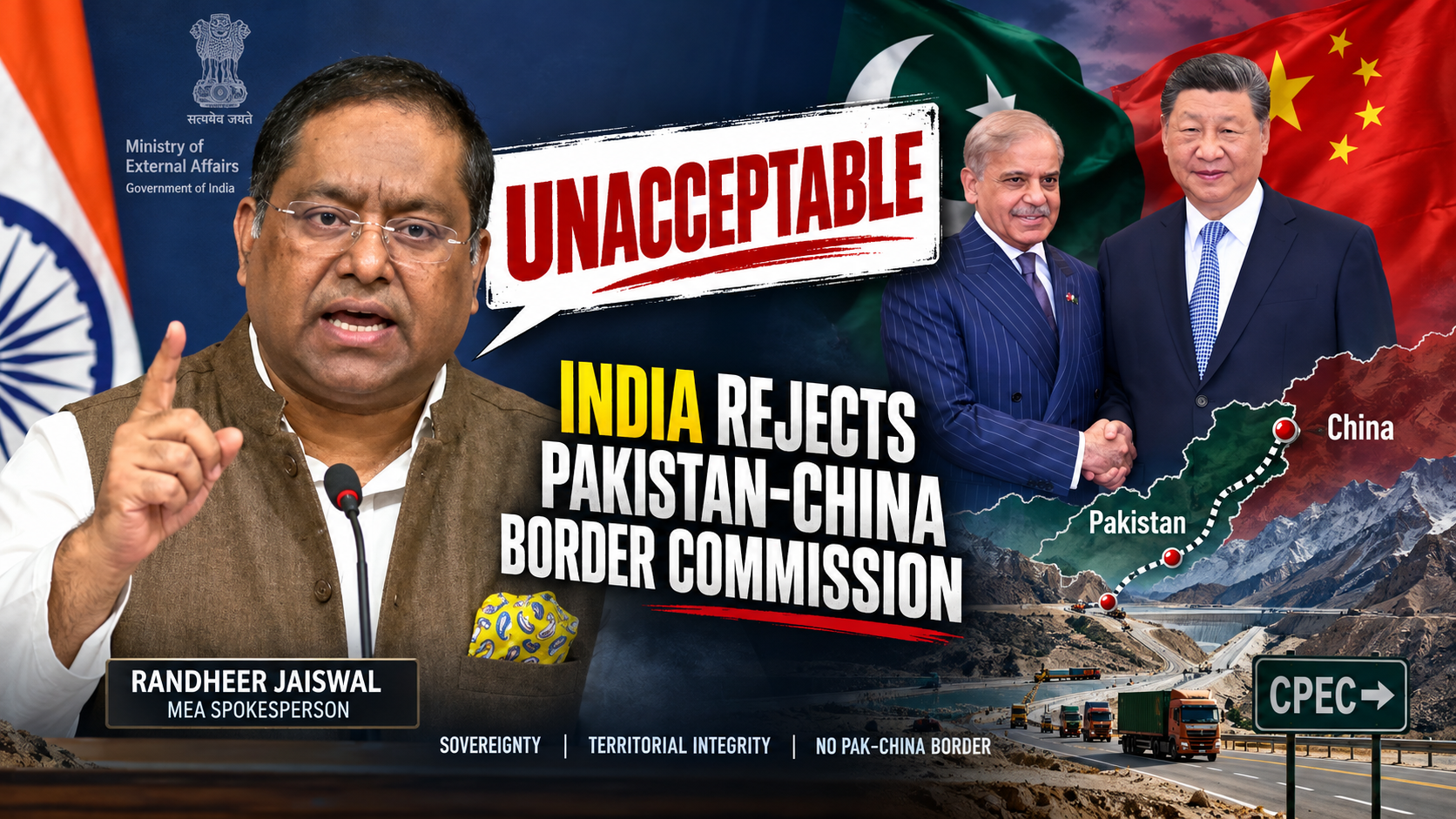
As Pakistan and China attempt to institutionalize a disputed frontier, India fires back with a strong message: “There is No Pakistan-China Border.” Here’s why this geopolitical flashpoint matters far beyond South Asia.
Geopolitics is rarely driven by coincidence. Every diplomatic move, every strategic partnership, and every new agreement is usually rooted in a larger objective. The latest controversy involving Pakistan and China is a perfect example.
Just days after a successful BRICS Summit that witnessed the participation of major global leaders, including Russian President Vladimir Putin and Chinese President Xi Jinping, Pakistan unveiled a new initiative alongside China: a Pakistan-China Boundary Joint Commission.
At first glance, it appears to be an administrative mechanism focused on border management and connectivity. But India sees it differently.
New Delhi has firmly rejected the move, arguing that there is no legitimate Pakistan-China border in the first place, as the area in question includes territory that India considers an integral part of its sovereign land.
So why has this new commission triggered such strong reactions? And why is the dispute over the Shaksgam Valley one of Asia's most sensitive geopolitical issues?
Let’s break it down.
What Is the New Pakistan–China Boundary Joint Commission?
Pakistan and China recently held the first meeting of their newly established Boundary Joint Commission in Islamabad on 16th September 2026. According to Pakistan, the commission is intended to:
1. Improve border management
2. Conduct joint surveys
3. Enhance trade and connectivity
4. Promote people-to-people exchanges
5. Strengthen cooperation across frontier regions
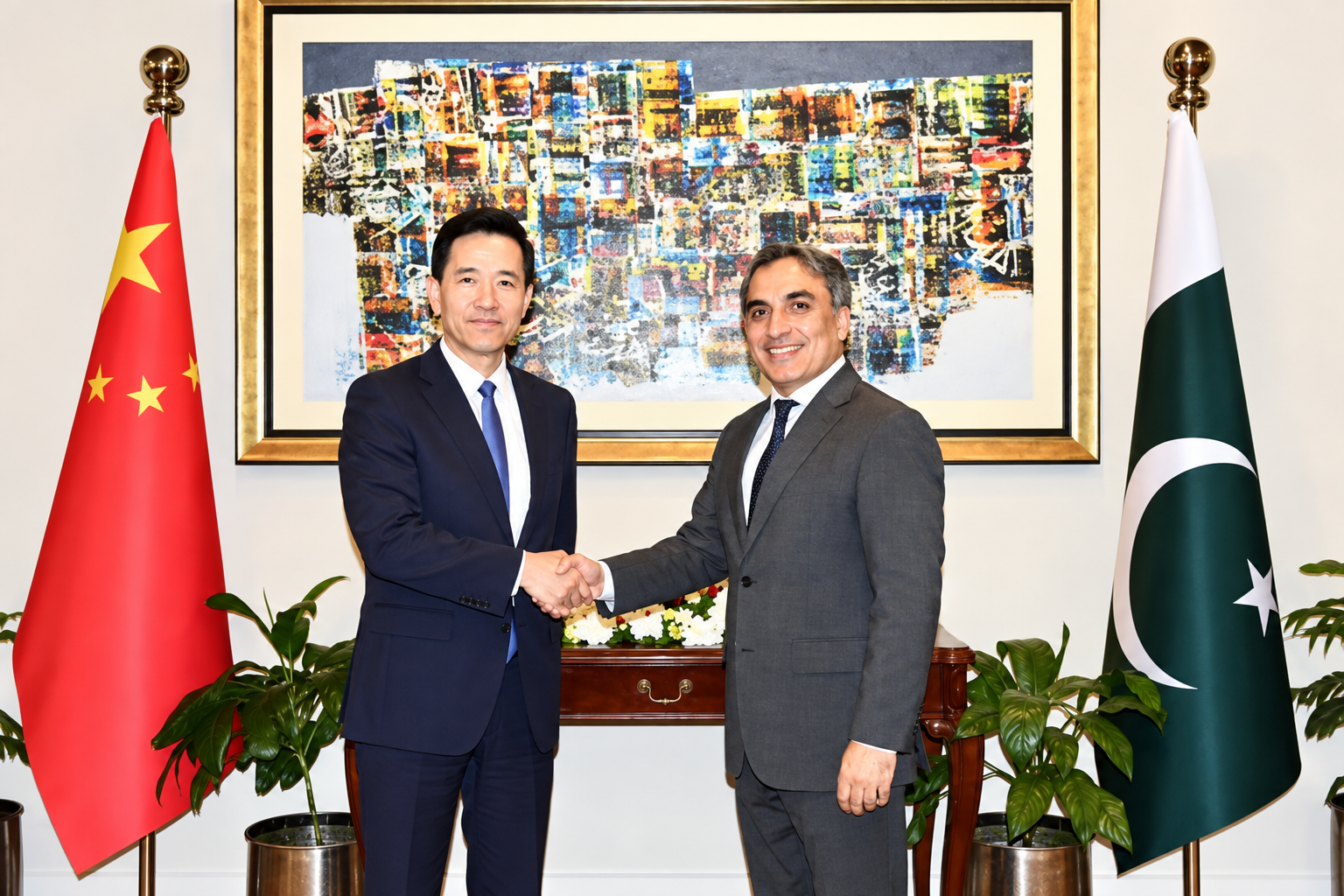
Islamabad argues that the commission is based on provisions contained in a 2013 bilateral border management agreement and is merely an institutional mechanism designed to facilitate cooperation.
However, India strongly disagrees.
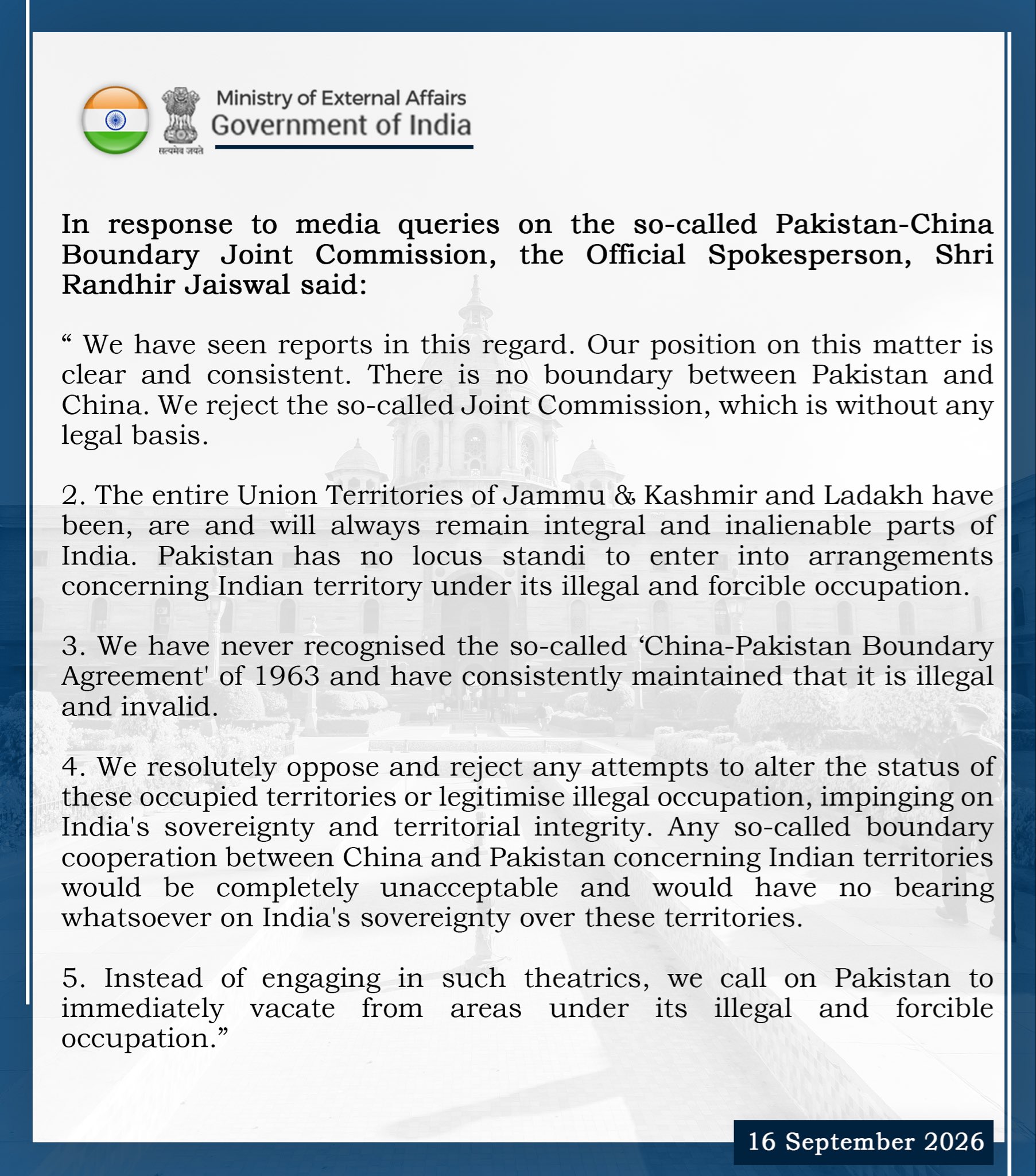
India’s Sharp Rejection: “There Is No Pakistan-China Border”
India’s Ministry of External Affairs (MEA) responded with unusually strong language. New Delhi’s position is straightforward: The territory through which Pakistan and China claim to share a border does not legally belong to Pakistan.
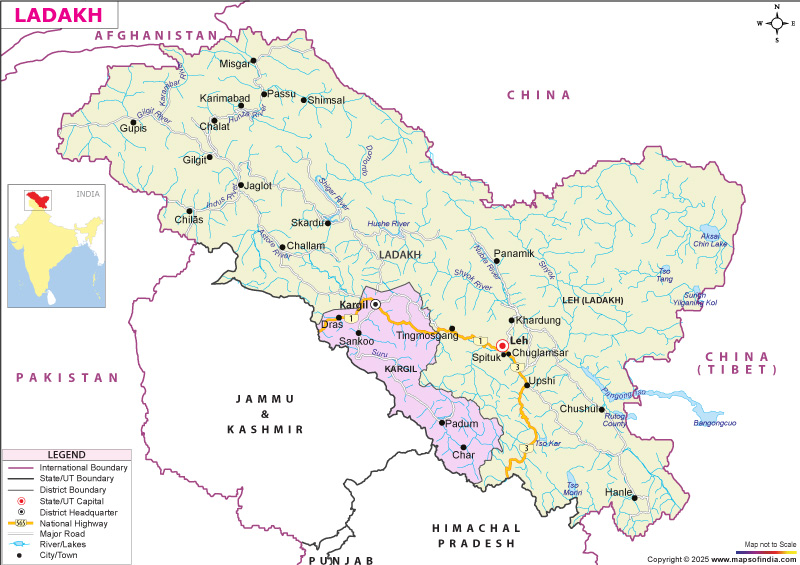
India maintains that the region forms part of the former princely state of Jammu and Kashmir, which legally acceded to India in 1947 through the Instrument of Accession signed by Maharaja Hari Singh.
As a result, India argues that Pakistan cannot establish border commissions, agreements, or administrative arrangements involving territory that it does not legally own. For New Delhi, the issue is not merely about border management. It is about sovereignty.
The Heart of the Dispute: Legal Reality vs Ground Reality
This controversy largely stems from the difference between legal claims and present-day control.
India’s Legal Position
According to India's official maps:
✅ The entire region of Jammu & Kashmir and Ladakh belongs to India.
✅ Pakistan-occupied territories remain under illegal occupation.
✅Therefore, Pakistan and China do not share a legitimate international border.
The Ground Reality
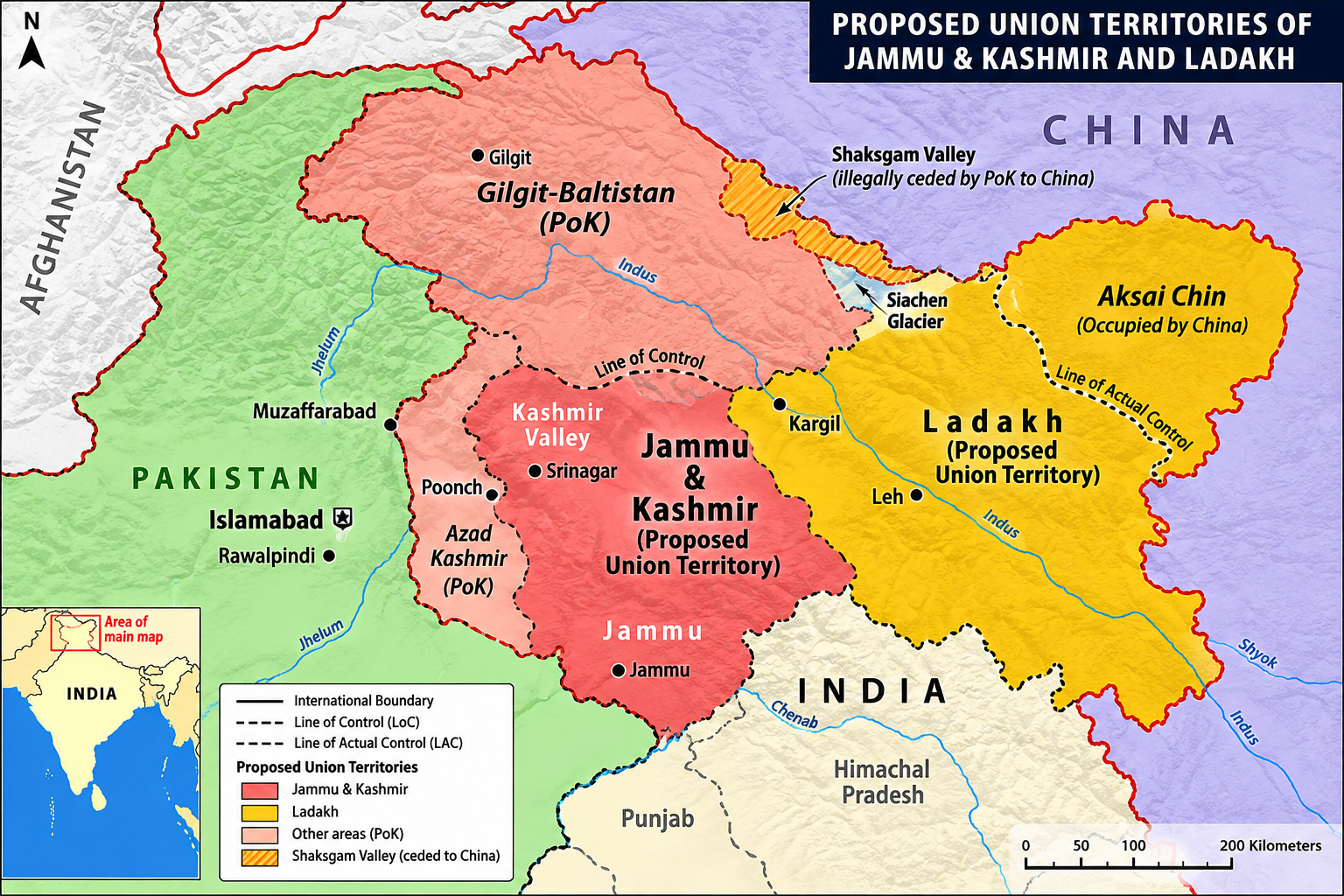
The current situation on the map is more complicated. Pakistan controls:
✅Gilgit-Baltistan
✅Pakistan-Occupied Kashmir (PoK)
China controls:
✅Aksai Chin, seized after the 1962 Sino-Indian War
As a result, Pakistan-controlled territories and Chinese-controlled territories physically touch each other today. This creates a situation where geographical reality appears different from India’s legal claim. And that distinction lies at the center of the current dispute.
How Did This Situation Begin? A Quick Historical Background
In return, he signed the Instrument of Accession, officially integrating Jammu and Kashmir into India. India subsequently deployed troops, leading to the first India-Pakistan war of 1947-48. The conflict ended with a ceasefire line, which later evolved into the Line of Control (LoC).
However, Pakistan retained control over significant portions of the territory that India continues to claim as its own.
China’s Entry into the Equation
The dispute became even more complex after the 1962 India-China War. During that conflict, China occupied approximately 38,000 square kilometers of territory in Aksai Chin, an area India considers part of Ladakh.
But the most controversial development came a year later.
The Shaksgam Valley Deal: A Strategic Transfer That Still Haunts Regional Politics
In March 1963, Pakistan and China signed the Sino-Pakistan Boundary Agreement. Under the agreement, Pakistan transferred approximately 5,180 square kilometers of territory in the Shaksgam Valley to China.
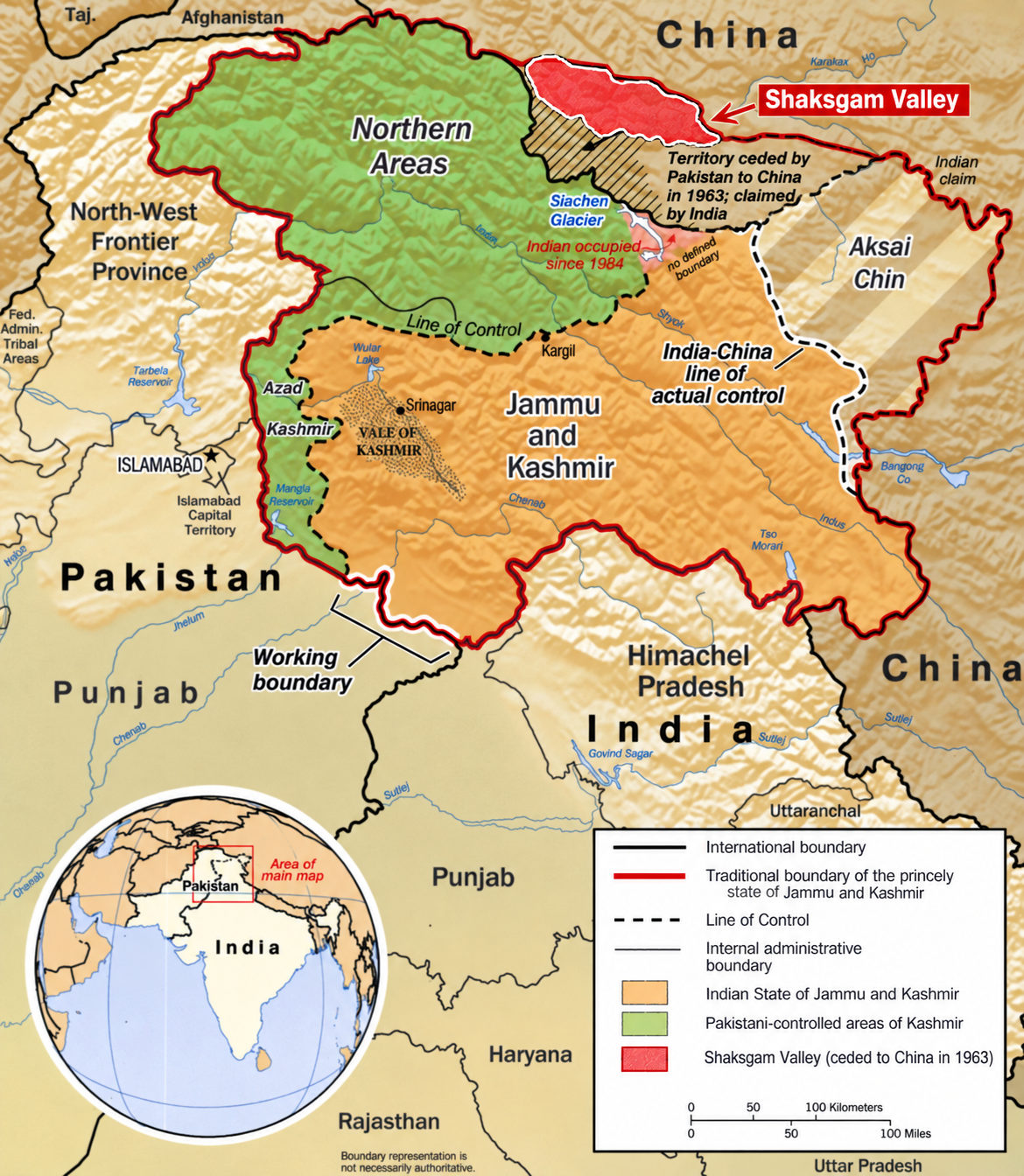
The move was highly controversial. The Shaksgam Valley is strategically important because of its proximity to:
1. The Karakoram Range
2. The Karakoram Pass
3. Siachen Glacier
4. Xinjiang region of China
5. Gilgit-Baltistan
India immediately rejected the agreement. New Delhi's argument was simple:
“If the territory itself is disputed and claimed by India, Pakistan has no legal authority to transfer it to another country.”
Since 1963, India has consistently maintained that the agreement is both illegal and invalid.
Why Is the New Commission So Significant?
The importance of the new Pakistan-China commission goes far beyond administrative cooperation. In international politics, institutions matter. When countries establish commissions, frameworks, and permanent mechanisms, they create an appearance of legitimacy and permanence.
India fears that this new commission serves exactly that purpose. By creating a formal border-management structure, Pakistan and China appear to be reinforcing the notion that a recognized and settled border exists between them.
From New Delhi’s perspective, this could gradually normalize territorial arrangements that India fundamentally rejects. In other words, India views the move as an attempt to institutionalize a disputed status quo.
The CPEC Factor: Another Major Concern for India
The issue also intersects with one of China's flagship infrastructure projects. The China-Pakistan Economic Corridor (CPEC), a crucial component of China's Belt and Road Initiative (BRI), passes through territories claimed by India.
For years, India has opposed CPEC for a specific reason: “The project traverses regions that New Delhi considers illegally occupied by Pakistan.”
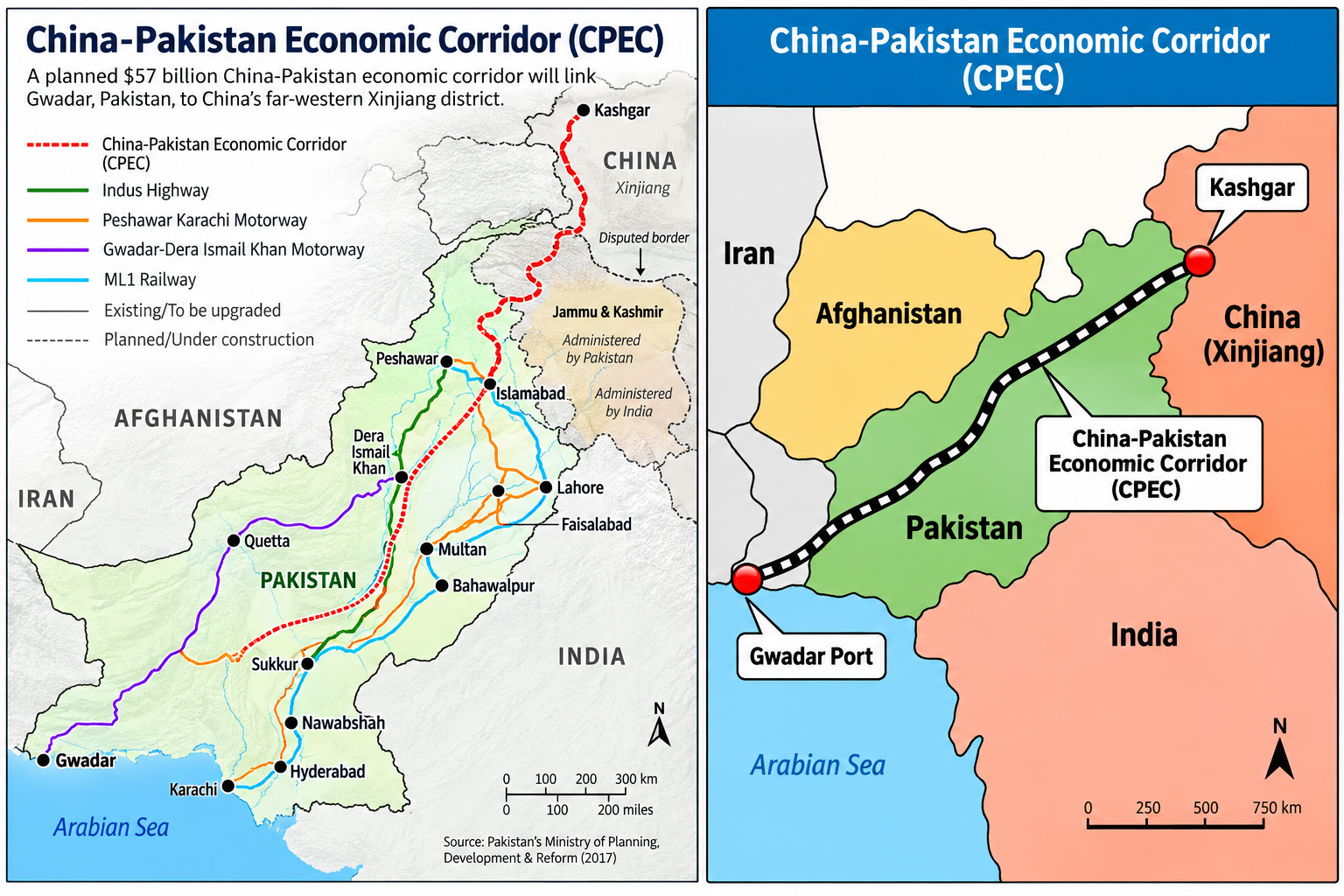
Any new framework that strengthens Pakistan-China coordination in these territories inevitably raises concerns in India regarding sovereignty and territorial integrity.
Pakistan’s Response
Pakistan, unsurprisingly, has rejected India's objections. Islamabad maintains that the 1963 agreement remains valid and continues to argue that Jammu and Kashmir is an internationally disputed territory.
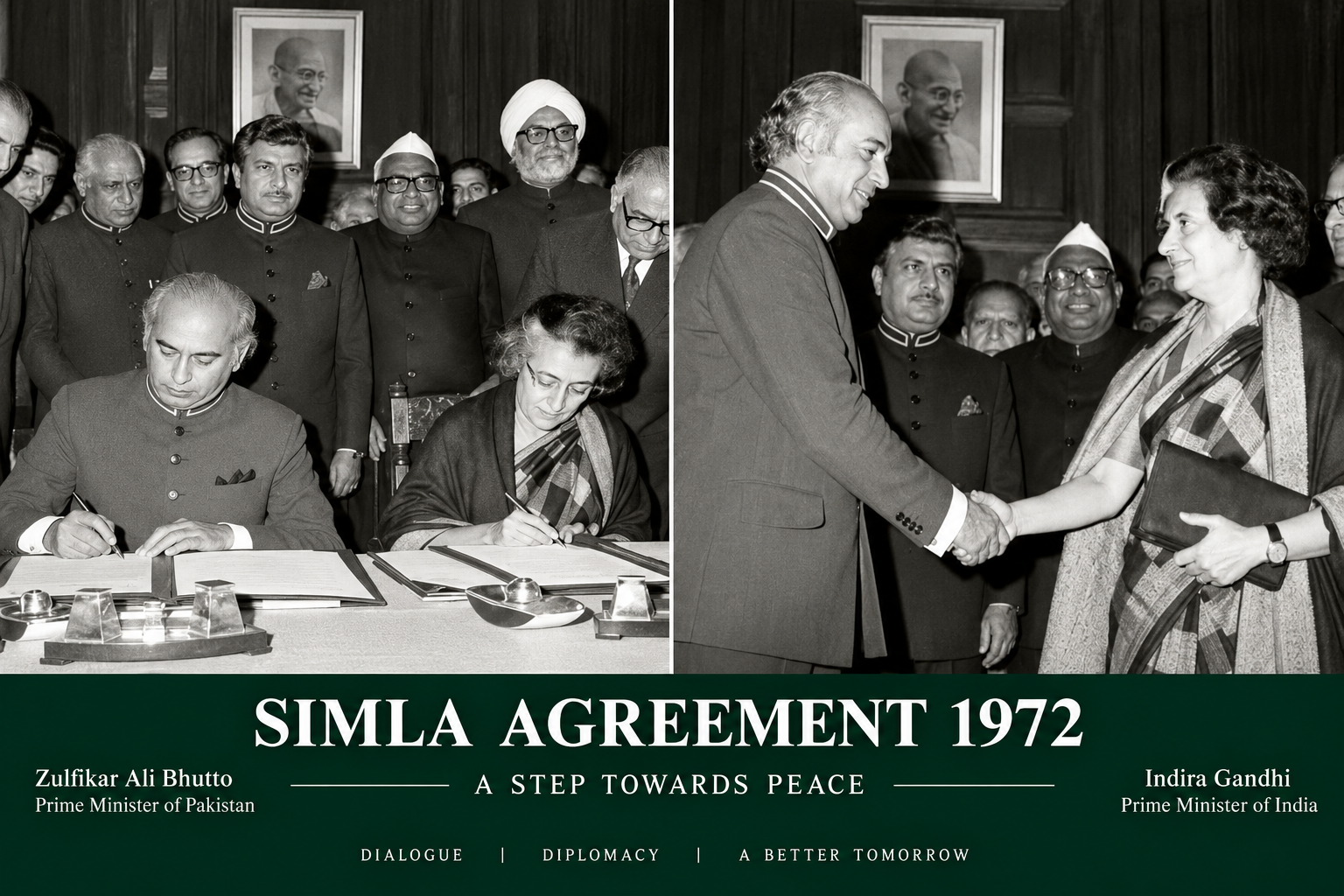
Pakistan has often referred to historical United Nations resolutions regarding the region. India, however, counters that those discussions cannot be viewed in isolation and points to subsequent developments, particularly the 1972 Simla Agreement, which established that disputes between India and Pakistan should be resolved bilaterally without third-party intervention.
The Bigger Geopolitical Picture
At its core, this dispute is about far more than maps and borders. It reflects:
1. India’s insistence on protecting its territorial claims.
2. Pakistan’s efforts to reinforce its control over contested regions.
3. China’s growing strategic footprint in the Himalayas.
4. The long-term implications of infrastructure projects like CPEC.
The creation of the Pakistan-China Boundary Joint Commission may look administrative on paper, but its geopolitical symbolism is impossible to ignore.
For India, it represents an attempt to legitimize disputed territorial arrangements.
For Pakistan and China, it reflects deeper strategic cooperation in a region that remains one of the world's most complex geopolitical flashpoints. As tensions continue to simmer, one thing remains certain: “The battle over maps, sovereignty, and strategic corridors is far from over.”
🔥 What Do You Think?
Should Pakistan and China be allowed to institutionalize arrangements in territories claimed by India? Or is New Delhi justified in rejecting the commission outright?
💬 Share your views in the comments below.
📢 If you enjoyed this geopolitical analysis, subscribe for more deep dives into South Asia, global diplomacy, emerging power struggles, and strategic affairs shaping the future of world politics.
Stay informed. Stay analytical. Stay ahead of the story.
Written by
Niranjan MehtaDiscussion (0)
Sign in to join the discussion.
Loading comments…