
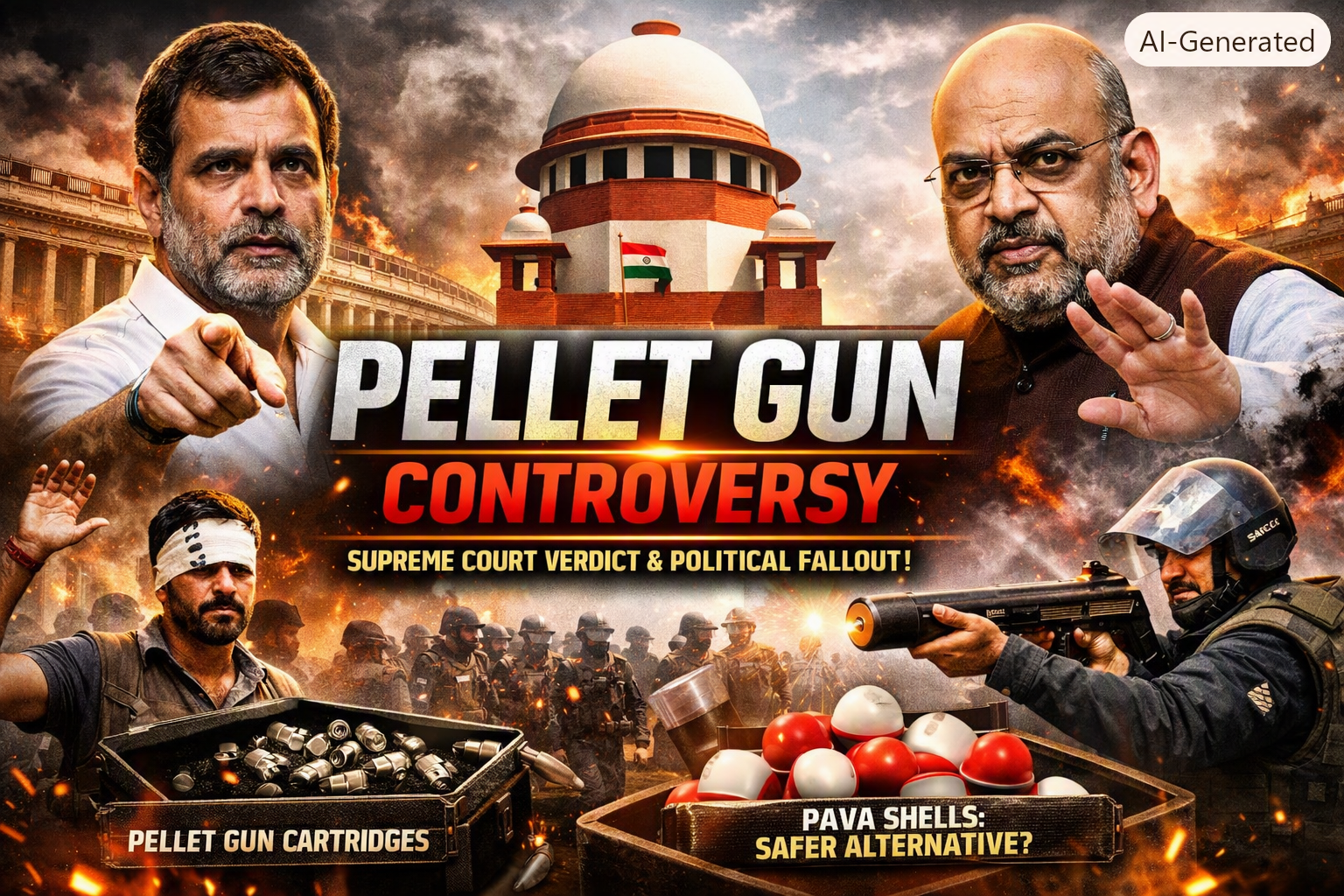
The Flashpoint at Jantar Mantar
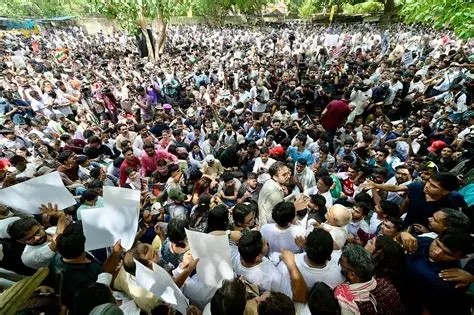
On 20 July, the Jantar Mantar protest, led by the Cockroach Janata Party and youth groups, spiralled into chaos when security forces blocked their march towards Parliament. Allegations quickly surfaced that the Rapid Action Force (RAF) had used metallic pellet ammunition, leaving several demonstrators grievously injured.
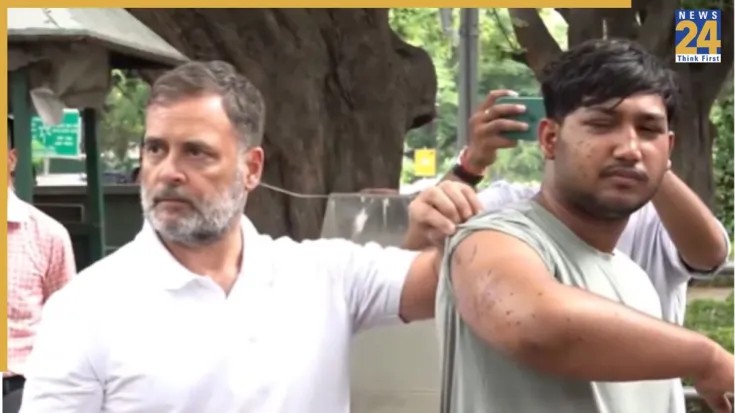
During a recent press briefing, a student protester was brought before the media by Congress leader Rahul Gandhi, allegedly injured by pellet gunfire from security personnel during the July 20 demonstrations.
Supreme Court Steps In
The case reached the Supreme Court, where petitioners, including a retired IPS officer and a former Central Information Commissioner, demanded:
An immediate nationwide ban on pellet guns against civilians.
Medical treatment and compensation for victims.
An independent investigation into the July 20 incident.
Court’s Observations
Pellet guns not declared illegal: The Court clarified that under existing police rules and SOPs, pellet guns can be used in exceptional situations.
No blanket ban: Petitioners were advised to challenge the rules themselves if they sought change.
Preserve ammunition logs: RAF was ordered to maintain detailed records of issued and fired cartridges to ensure accountability.
Medical care mandated: The government must provide treatment to the injured, though compensation was left undecided.
Political Flashpoint: CJP Slams SC, Pellet Gun Use Sparks Outrage
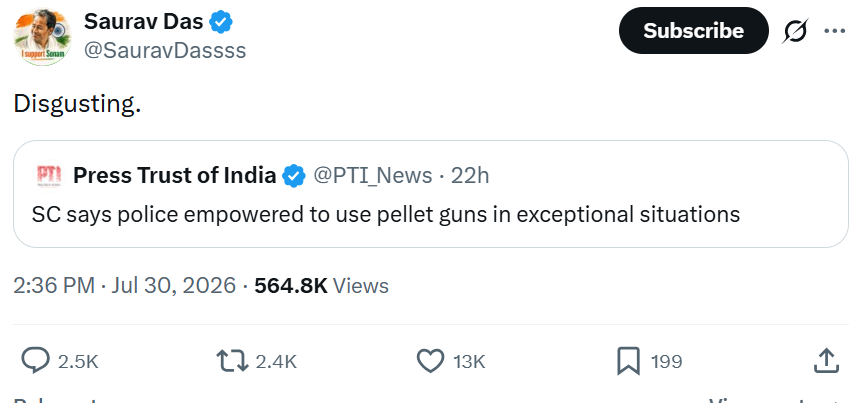
Reacting sharply to the Supreme Court’s stance, CJP spokesperson Saurav Das blasted the decision as “disgusting” in a post on X. The deployment of pellet guns by security forces during the “Sansad Chalo” march on July 20 has since become a major political flashpoint, with reports confirming that several demonstrators suffered serious injuries in the crackdown.
What Exactly Are Pellet Guns?
Unlike sports air guns, pellet guns are shotguns loaded with cartridges containing hundreds of tiny metallic pellets. When fired, these pellets burst and scatter, causing multiple injuries at once.
Classified as “less lethal weapons”, alongside tear gas, rubber bullets, and pepper balls.
Risks include permanent blindness, retinal damage, facial fractures, and long‑term disability.
Doctors and human rights groups warn of indiscriminate harm to peaceful protesters and bystanders.

The Controversy
Pellet guns remain controversial because:
Medical concerns: Eye injuries and skull fractures are common.
Human rights concerns: Indiscriminate spread can hit non‑violent demonstrators.
Police defense: Authorities argue pellet guns are safer than live bullets and act as a last resort for dispersing violent mobs.
Injured Journalist’s Ordeal
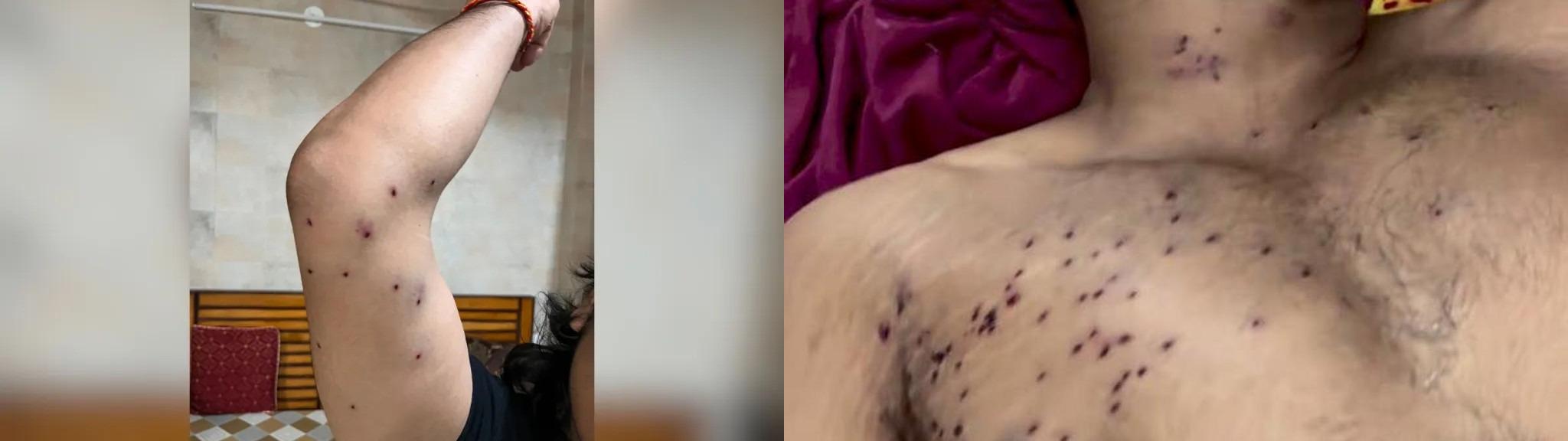
Three days after the ‘Chalo Sansad’ march, a 28‑year‑old sports journalist from Outlook has returned to his home in Delhi, still battling the pain with over 30 pellets lodged in his body.
A medical assessment from Safdarjung Hospital (July 22), reviewed by The Indian Express, confirms that he suffered injuries from a pellet gun assault at Jantar Mantar, with wounds scattered across his right arm, chest, and back.
Historical Echoes
This isn’t new. In 2016 Kashmir, pellet guns were used after militant Burhan Wani’s killing left hundreds injured, sparking global criticism.
Alternatives: PAVA Shells
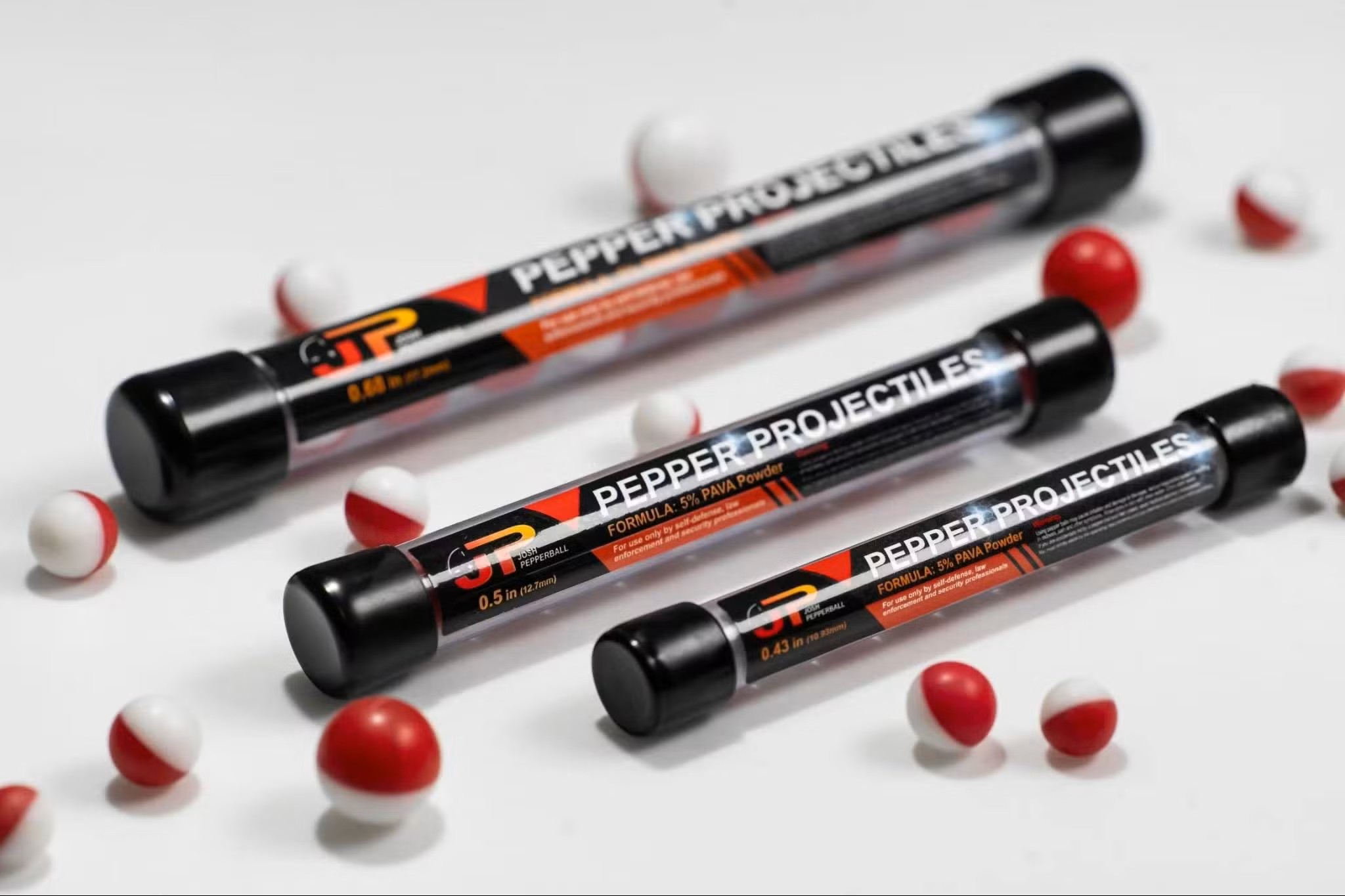
Experts highlight PAVA shells (Pelargonic Acid Vanillylamide), synthetic, pepper-based crowd-control shells, commonly known as Pepperball projectiles, as a safer alternative. They cause temporary burning sensations, eye irritation, and breathing discomfort, but avoid permanent injuries.
Political Fallout
The issue has now escalated into Parliament and political circles:
Protesters claim the government promised no FIRs against demonstrators, yet cases continue.
Rahul Gandhi demanded Home Minister Amit Shah’s resignation, alleging the crackdown was ordered under his watch.
The debate over civil liberties vs. state security has reignited, with the Supreme Court’s stance adding fuel to the fire.
Takeaway
The Supreme Court has not outlawed pellet guns but has tightened accountability. The controversy now lies at the intersection of law, politics, and human rights, with alternatives like PAVA shells offering a possible path forward.
Written by
Aditya KulshreshthaDiscussion (0)
Sign in to join the discussion.
Loading comments…