
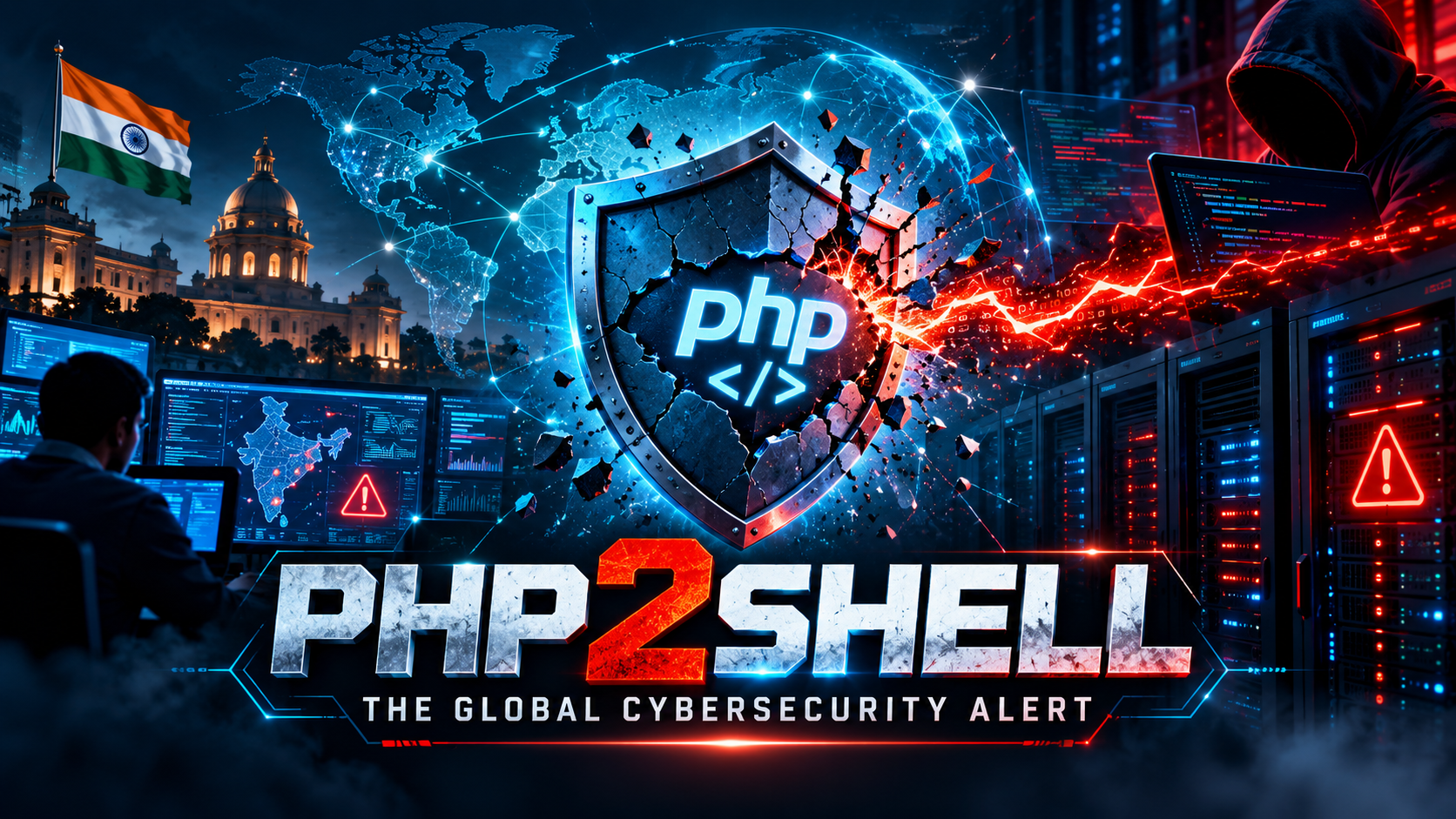
From Government Portals to Global Platforms, a Hidden Software Flaw Triggered a Worldwide Security Emergency
Imagine waking up to find that some of the world's most important websites, government portals, financial platforms, and digital services have suddenly gone offline.
That is exactly the scenario that unfolded after cybersecurity researchers uncovered critical vulnerabilities affecting systems used by thousands of websites worldwide. The discovery sparked an urgent race among organizations to secure their digital infrastructure before attackers could exploit the flaws.
The crisis has been widely associated with what cybersecurity experts are calling a "PHP2Shell" vulnerability chain, a dangerous flaw that could potentially allow attackers to gain unauthorized access to website servers and sensitive data.
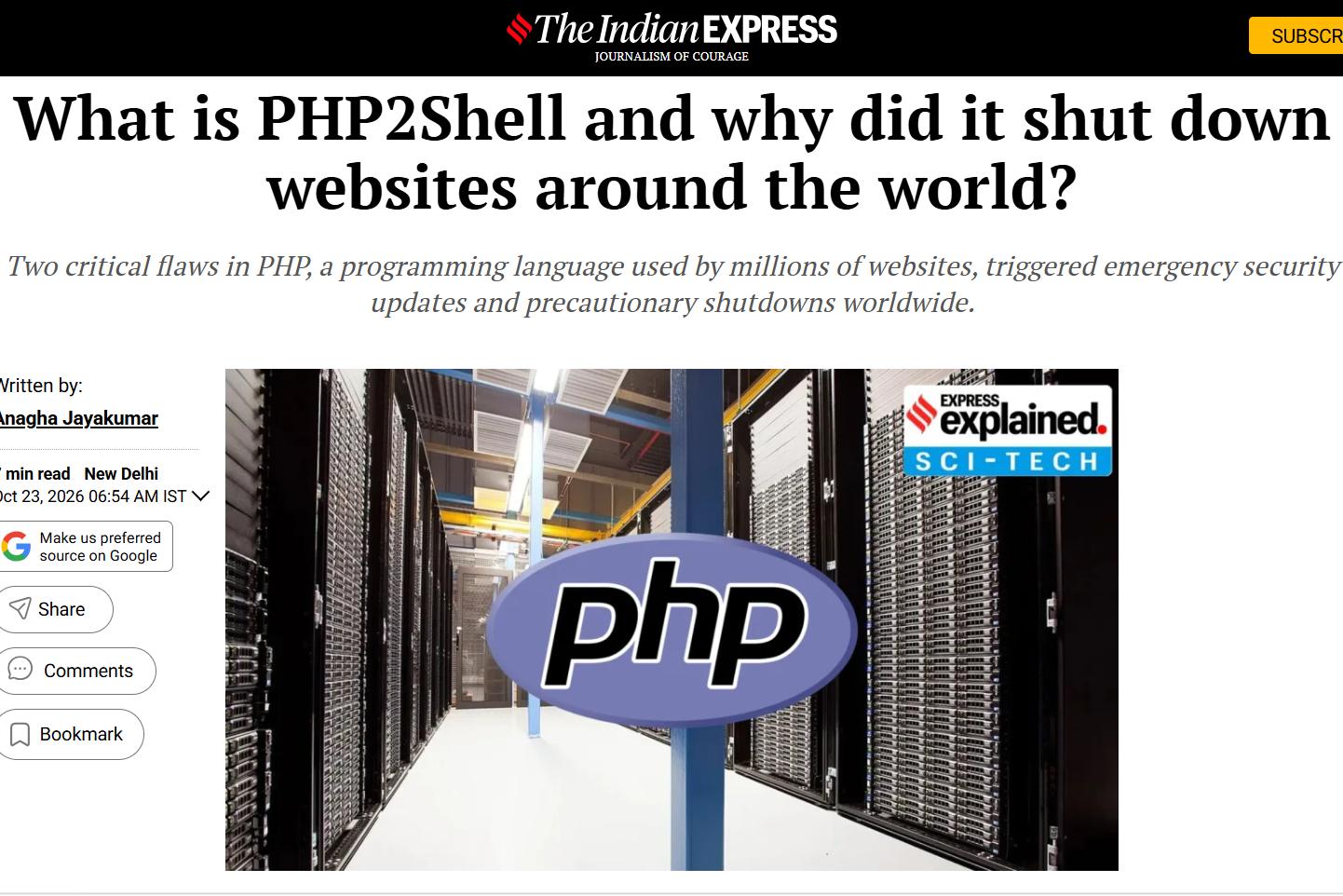
But how serious is this threat? Should everyday internet users be worried? And why did some organizations choose to temporarily shut down their websites rather than keep them running? Let's break it down.
What Exactly Happened?
Over the past few days, cybersecurity teams across the globe have reported millions of attempts by attackers to exploit newly discovered vulnerabilities in PHP-based systems.
The concern is significant because PHP is one of the most widely used server-side programming languages on the internet. It powers everything from news portals and e-commerce stores to government websites and online services.
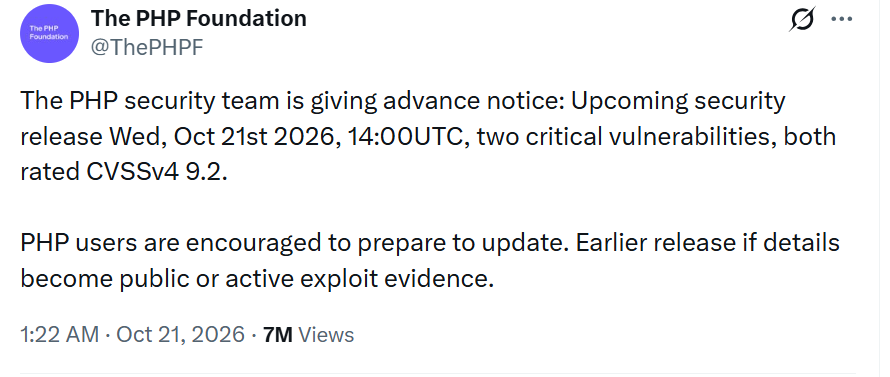
When a vulnerability is discovered in a technology used by millions of websites, the risk is no longer limited to one company. Instead, the entire digital ecosystem can become vulnerable.
That is why security experts reacted so quickly. Several organizations reportedly took precautionary measures, including temporary shutdowns and emergency security reviews, to ensure that their platforms remained protected from potential attacks.
🚨 Global Websites Hit the Pause Button
Even major platforms such as Japan's Finance Ministry portal, BambooHR, the Port of Rotterdam, and Wikimedia temporarily restricted or suspended services as cybersecurity teams rushed to contain a critical PHP security threat.
🚨 Amazon Spots PHP2Shell Activity Before Public Disclosure
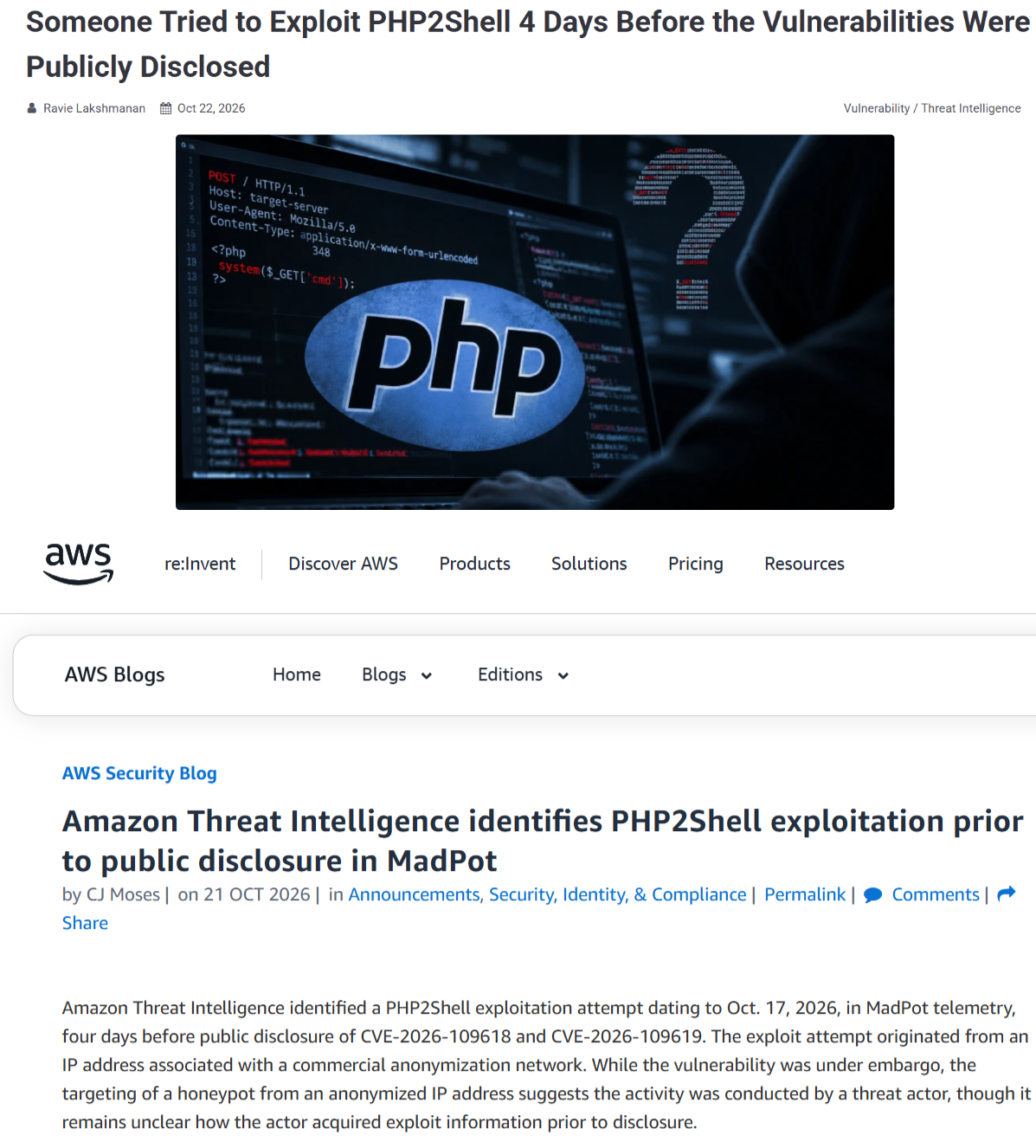
AWS Threat Intelligence Uncovers Early Signs of Exploitation
According to Amazon Threat Intelligence, an attempt to exploit the PHP2Shell vulnerability was detected four days before the flaw became publicly known, highlighting how threat actors may have been actively probing systems even before security teams worldwide were alerted. The discovery underscores the speed at which attackers move to capitalize on critical software weaknesses and the importance of rapid threat detection.
Understanding PHP in Simple Terms
For non-technical users, PHP can be thought of as the engine running behind many websites. Whenever you visit a website, submit a form, log into an account, or make an online payment, there is a process happening behind the scenes.
Here's a simplified explanation:
1. You send a request by opening a website.
2. The web server receives that request.
3. PHP processes the request and retrieves the necessary information.
4. The website then loads the required content on your screen.
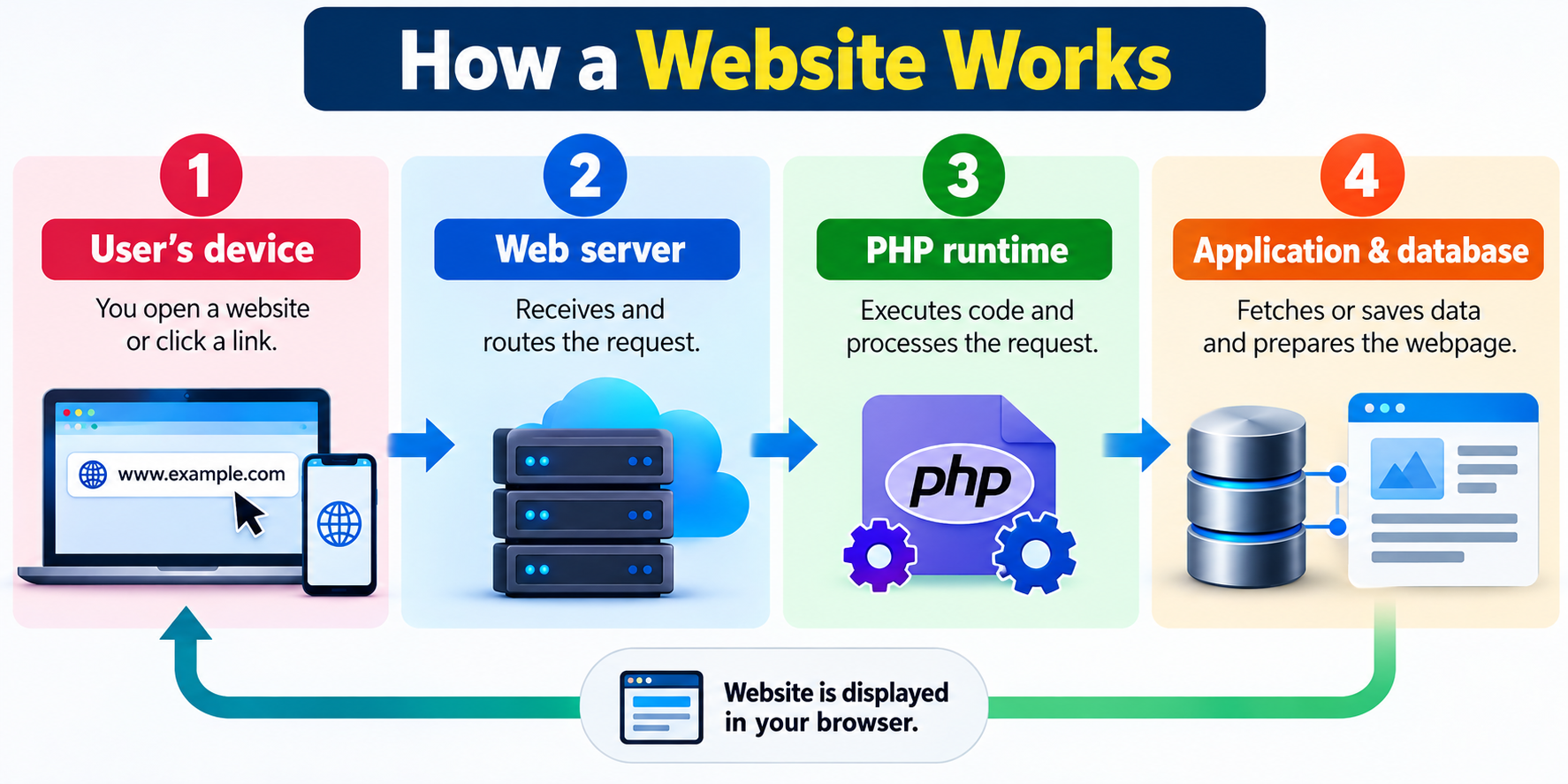
In other words, PHP acts as the middleware that helps websites function smoothly.
Now imagine if attackers discover a weakness in this process. Instead of sending normal requests, they could potentially send malicious commands designed to manipulate the server itself. And that is where the real danger begins.
The Critical Difference: PHP Is Not the Problem; the Vulnerability Is
One important misconception needs to be cleared up.
PHP itself is not a virus.
The term "PHP2Shell" does not refer to malware or a standalone cyber weapon. Instead, it describes a situation where attackers exploit vulnerabilities within PHP-based systems to gain deeper access to servers.
Think of it like a popular smartphone model used by millions of people worldwide. If one person's phone develops a problem, only that individual is affected. But if a critical flaw is discovered in the phone's operating system itself, every device running that software could suddenly become vulnerable to hackers. A single weakness can instantly turn into a global security issue affecting millions of users at once.
That's essentially what makes vulnerabilities in widely used web technologies so dangerous. The problem isn't with one website, but with a technology that thousands or even millions of websites depend on, meaning a single weakness could have much broader consequences.
Why Cybersecurity Experts Are Particularly Worried
At the heart of the concern is something known as Remote Code Execution (RCE).
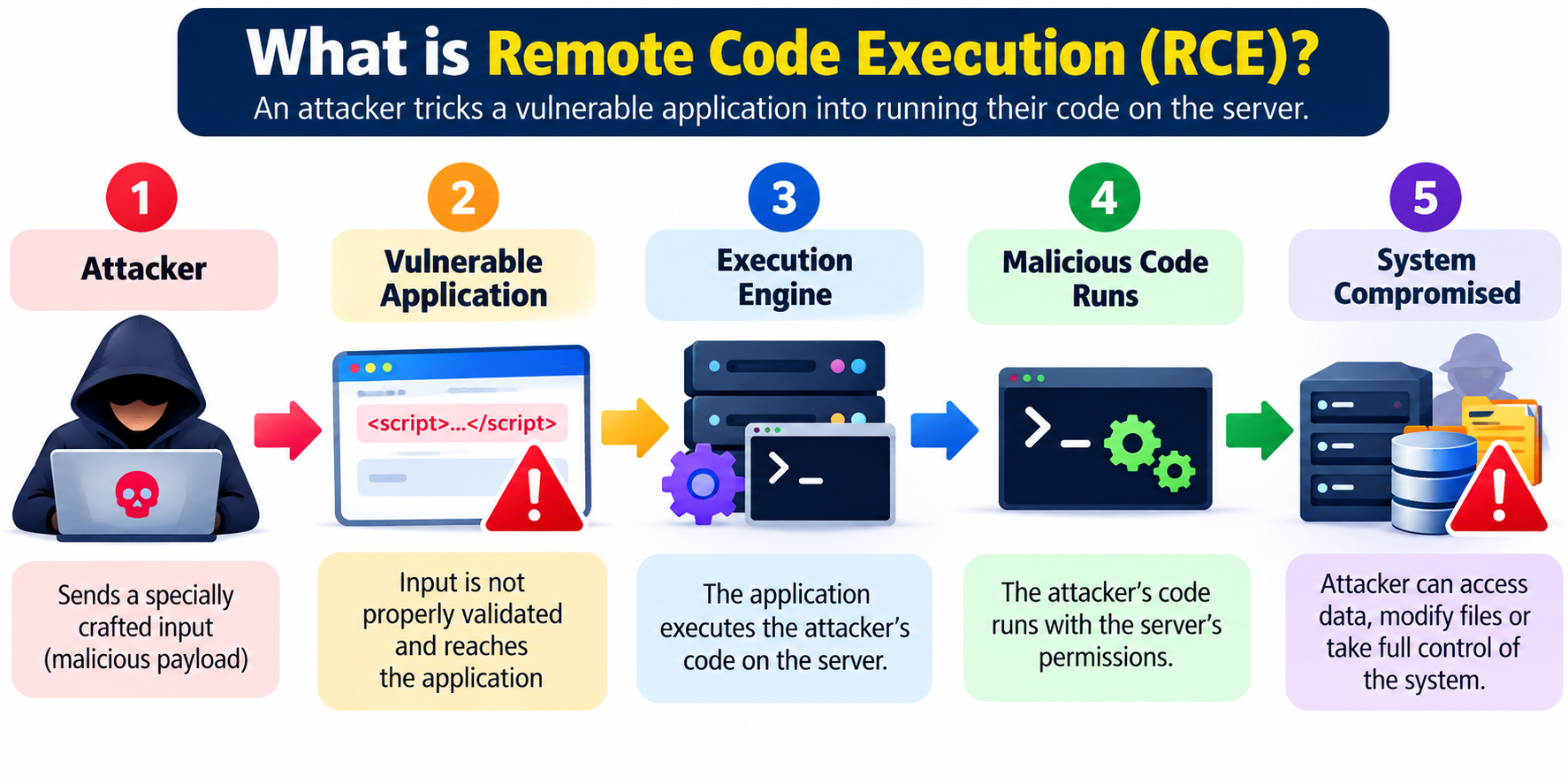
In the cybersecurity world, RCE vulnerabilities are considered among the most dangerous software flaws. Why?
Because they can potentially allow attackers to execute commands on a server remotely without physically accessing the system. If exploited successfully, attackers may be able to:
🔓 Steal Sensitive Data
User details, emails, phone numbers, documents, and internal databases could become exposed.
💰 Access Financial Information
Banking records, payment systems, and transaction-related data may be targeted.
🎭 Deface Websites
Hackers often replace website content with unauthorized messages, creating public embarrassment and panic.
🦠 Deploy Malware
Compromised servers can be used to spread malicious software across networks.
🛑 Disrupt Critical Services
Government portals, healthcare systems, educational platforms, and e-commerce websites could experience downtime or service interruptions.
For organizations managing millions of users, even a short disruption can result in significant financial and reputational damage.
Why Did Some Websites Go Offline?
Many people wondered why certain organizations chose to temporarily shut down services instead of fixing the issue while remaining online. The answer lies in risk management.
When security teams suspect that attackers are actively attempting to exploit a newly discovered vulnerability, continuing operations may expose critical systems to greater danger.
Organizations often face two difficult choices:
Option 1: Stay Online
a) Continued user access
b) Business operations continue
c) Higher risk of cyberattacks and data theft
Option 2: Temporary Shutdown
a) Short-term inconvenience
b) Service interruptions
c) Greater opportunity to patch vulnerabilities safely
For many organizations, the second option becomes the safer choice when dealing with high-severity cyber threats. Simply put, a few hours of downtime are often preferable to a large-scale data breach.
The AI Factor: How Artificial Intelligence Helped Detect the Threat
One of the most fascinating aspects of this story is that artificial intelligence played a major role in identifying the vulnerabilities.
Traditionally, security researchers spend months or even years examining millions of lines of code to uncover hidden weaknesses. Today, advanced AI tools can analyze software at incredible speed, helping researchers discover vulnerabilities much faster than before.
According to cybersecurity researchers, AI-assisted analysis significantly accelerated the identification of flaws that may otherwise have remained hidden for a long time.
This is a major milestone for cybersecurity. While AI is often discussed as a tool that could empower cybercriminals, this incident demonstrates its equally powerful defensive potential.
AI is increasingly becoming a digital guardian capable of detecting threats before they evolve into full-scale attacks.
Where Does India Stand?
India's digital infrastructure has expanded rapidly over the last decade. Government portals, banking platforms, insurance services, e-commerce websites, and public utility systems all rely heavily on online technologies.
In response to emerging cyber threats, India's national cybersecurity agency, CERT-In (Indian Computer Emergency Response Team), regularly issues security advisories and coordinates responses to critical incidents.
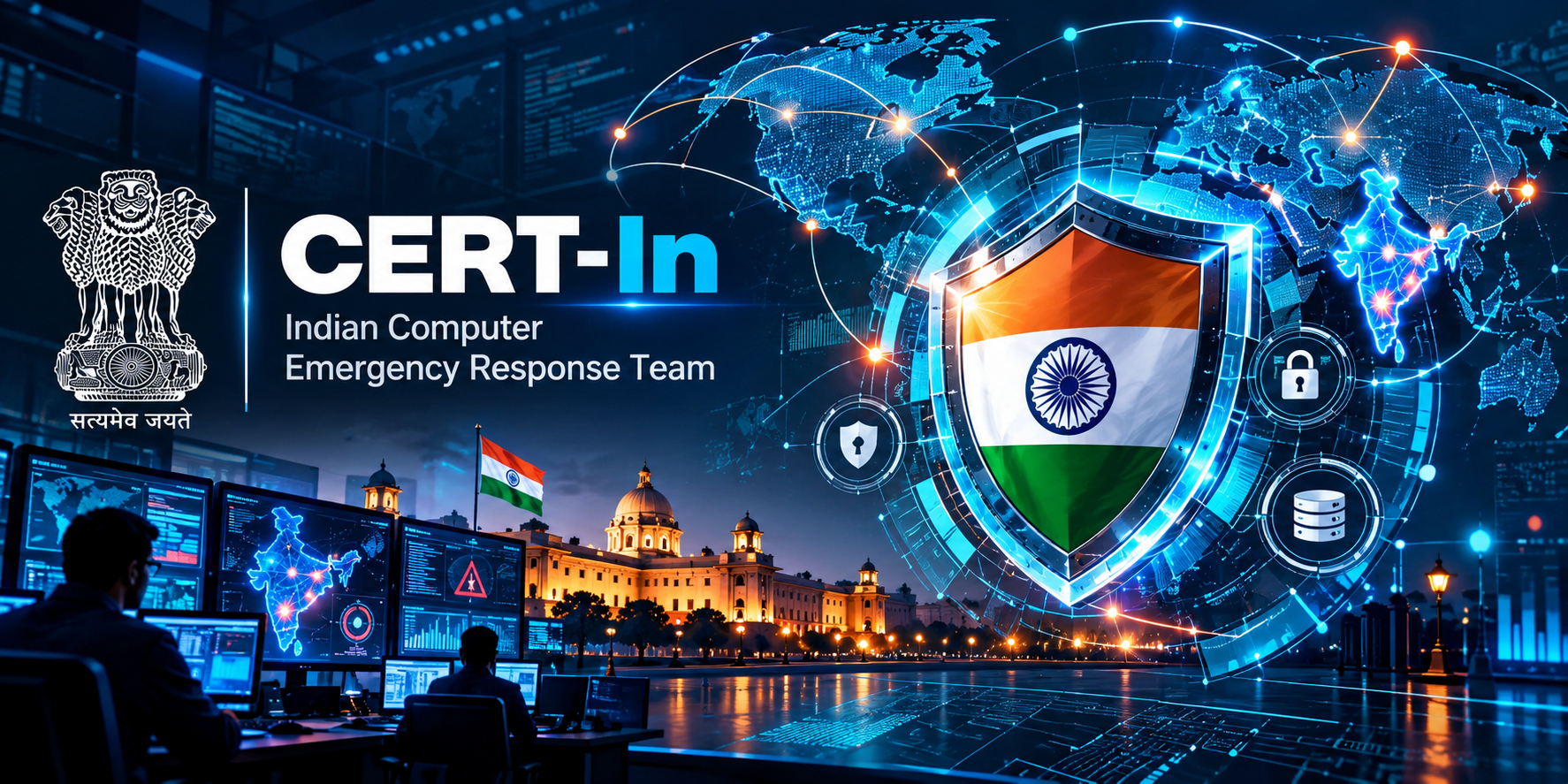
Given the importance of digital services in modern India, cybersecurity preparedness remains a top priority for both public and private organizations.
Businesses are being urged to apply security patches promptly, monitor systems continuously, and strengthen defensive measures against emerging threats.
Should Ordinary Internet Users Be Worried?
The good news is that this vulnerability primarily affects website operators and server administrators rather than everyday internet users directly. However, users should still follow basic cybersecurity best practices:
✅ Keep devices updated regularly
✅ Use strong and unique passwords
✅ Enable two-factor authentication wherever possible
✅ Avoid clicking suspicious links
✅ Monitor accounts for unusual activity
✅ Update browsers and applications promptly
These simple habits significantly reduce personal cyber risk.
What's at Stake: A Warning Shot for the Digital Age
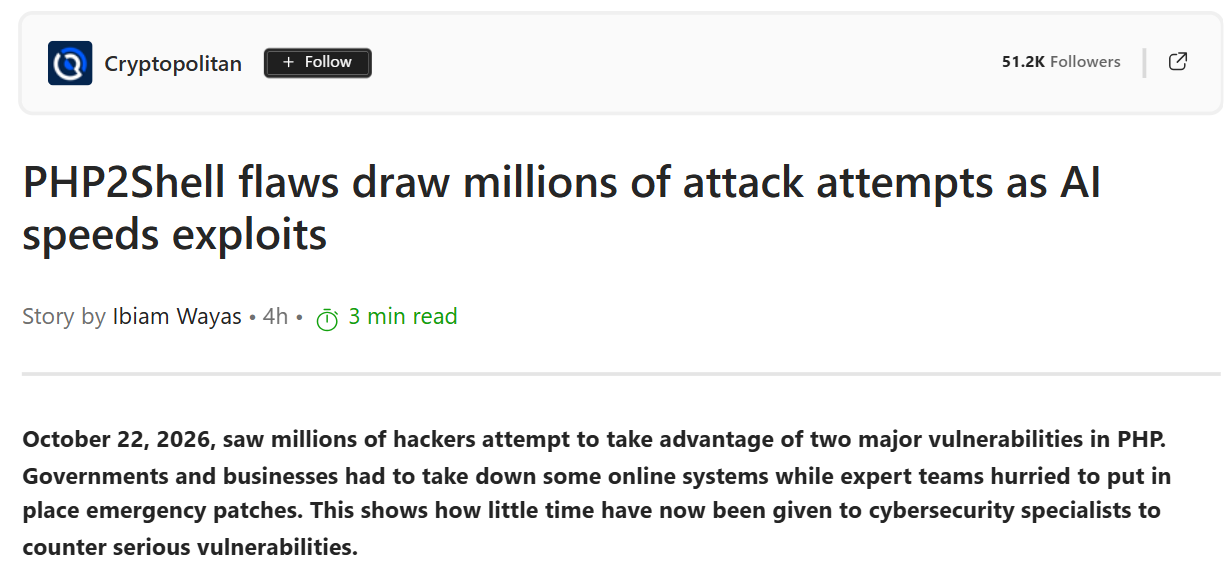
The PHP2Shell crisis is more than just another cybersecurity headline. It highlights a critical reality of today's interconnected world: a vulnerability in a widely used technology can have global consequences within hours.
At the same time, it showcases how modern security teams and AI-powered tools are becoming increasingly effective at detecting threats before catastrophic damage occurs.
As governments, businesses, and cybersecurity experts work to strengthen defenses, this incident serves as a powerful reminder that digital security is no longer optional. It is the foundation upon which the modern internet depends.
🚀 What Do You Think?
Could AI become the world's most powerful cybersecurity defender, or will hackers find ways to stay one step ahead?
Share your thoughts in the comments below and stay tuned for more insights on cybersecurity, emerging technologies, and global digital threats. 🔍💻🌐
📢 Enjoyed this analysis? Share it with your friends, colleagues, and fellow tech enthusiasts so they can stay informed and stay secure in an increasingly connected world.
Written by
Samar PrakashDiscussion (0)
Sign in to join the discussion.
Loading comments…