
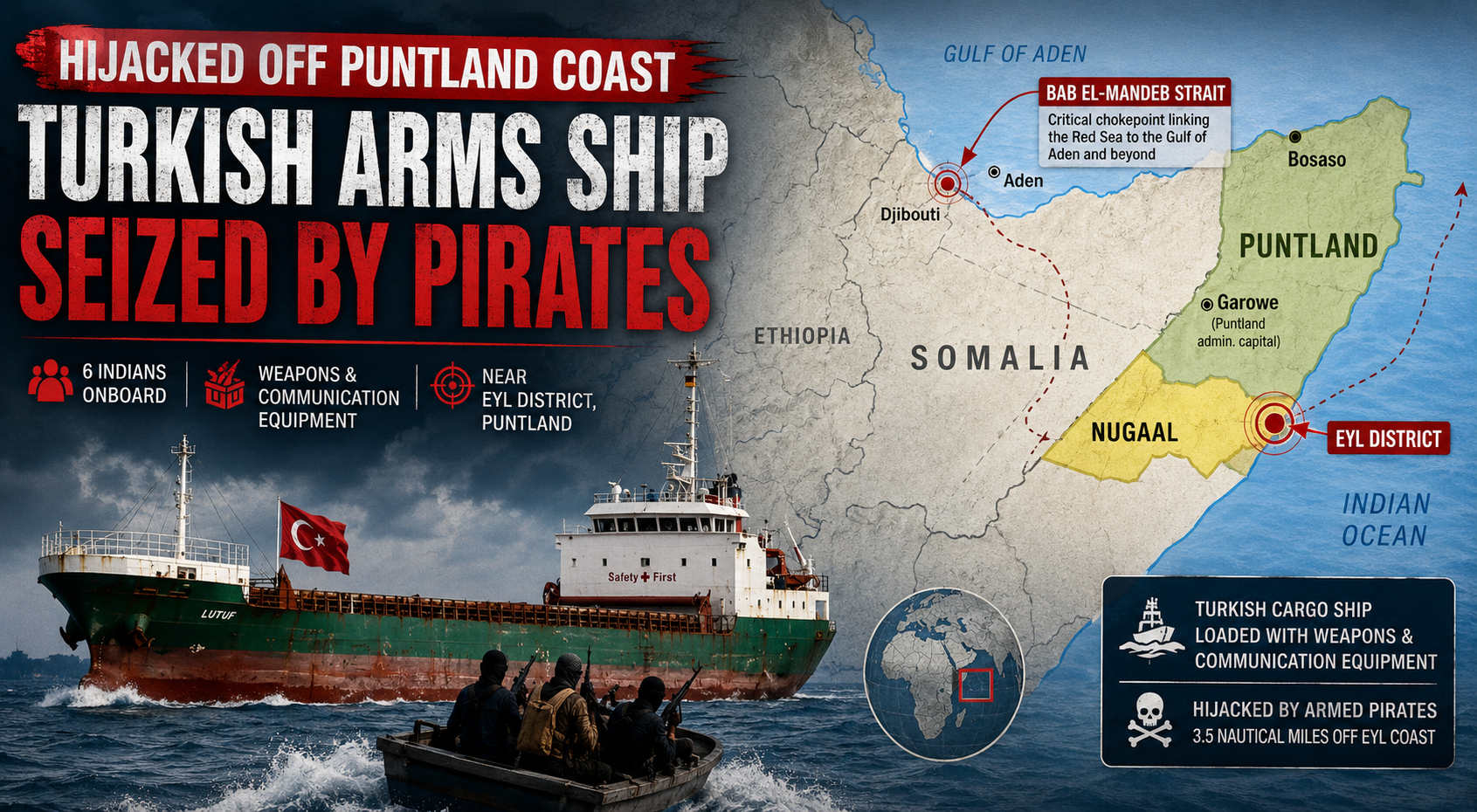
🌍 A Shocking Incident at Sea
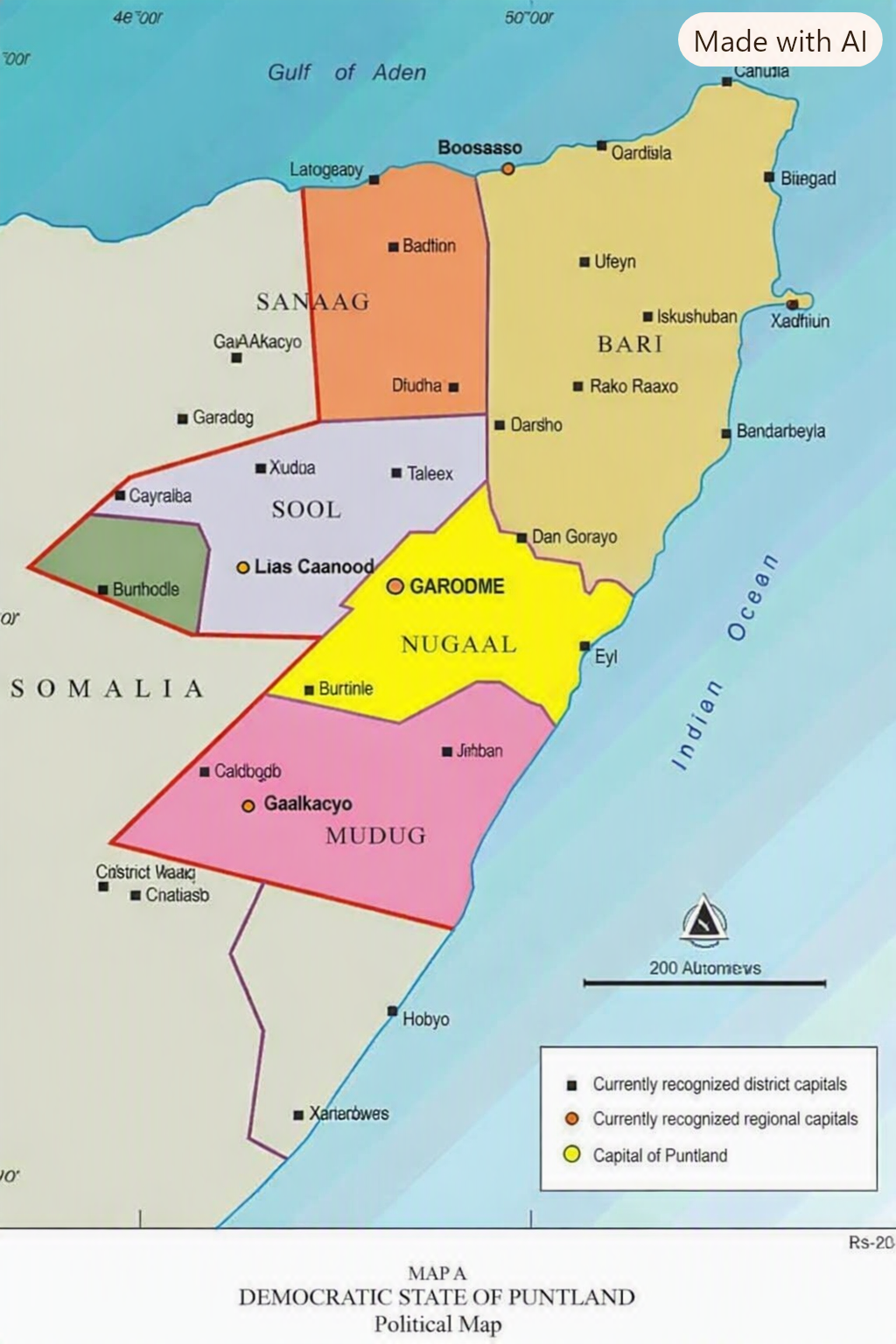
In a dramatic turn of events, a Turkish cargo ship loaded with weapons and communication equipment was hijacked near Somalia’s Puntland coast, close to the Eyl district. The ship M/V LUTUF, sailing under the Cameroon flag, was en route to Mogadishu to deliver military supplies to Turkey’s training facility. But pirates intercepted it just 3.5 nautical miles off the coast, reigniting fears of Somali piracy.
“Six Indians were among the 10 crew members onboard when pirates seized the vessel.”
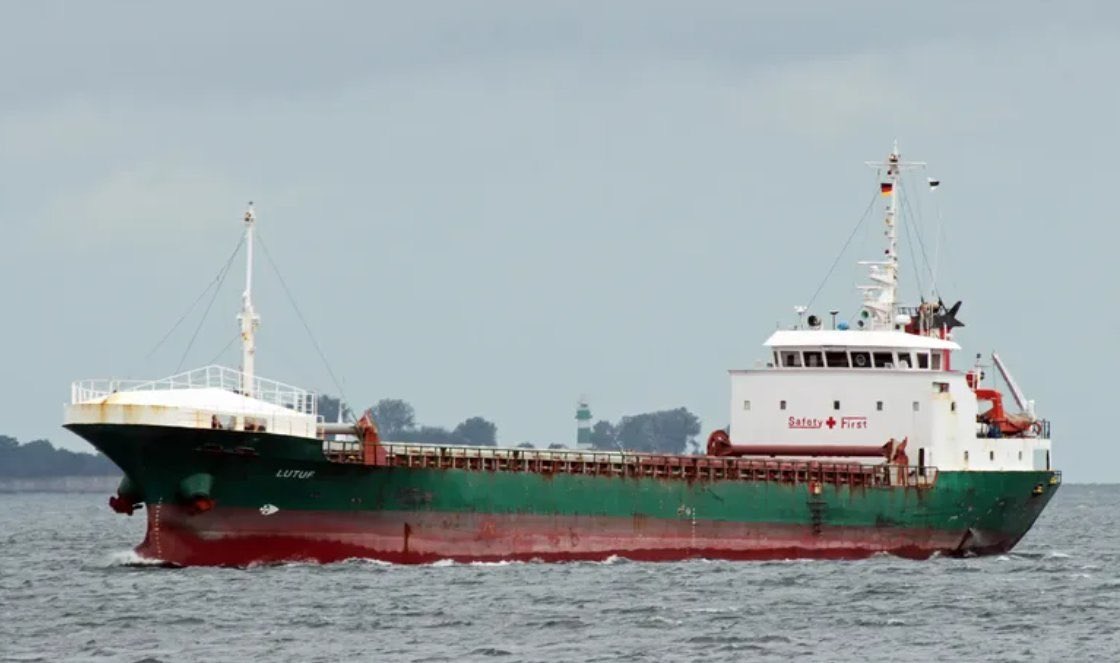
⚔️ Why This Hijacking Matters
The ship carried satellite and communication equipment intended for Somalia’s military training program.
Pirates now have access to advanced weaponry, raising serious global security concerns.
India is directly affected, as six of its citizens are trapped in this crisis.
📌 Somalia’s Strategic Importance
Somalia sits at the Horn of Africa, near the Bab el-Mandeb Strait, a critical chokepoint connecting the Indian Ocean to the Red Sea.
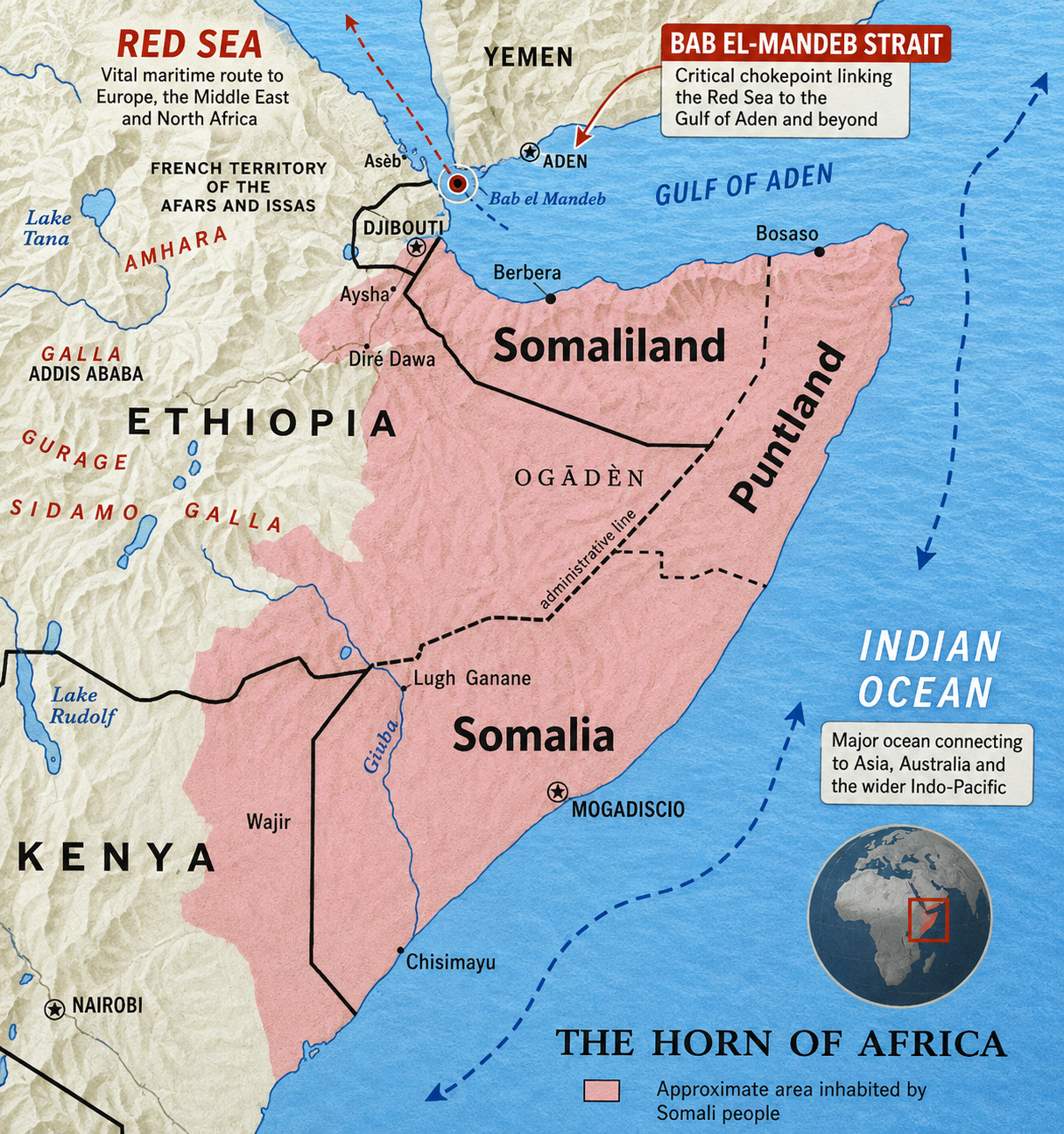
Nearly all trade between Asia and Europe passes through this route.
Instability here threatens global shipping and India’s maritime workforce, which makes up 1 in 5 seafarers worldwide.
🗺️ Understanding Puntland
Puntland, located in northeastern Somalia, is a semi-autonomous region that governs itself independently while remaining officially part of Somalia. Its Eyl district has long been infamous as a hub for Somali piracy along the Horn of Africa.
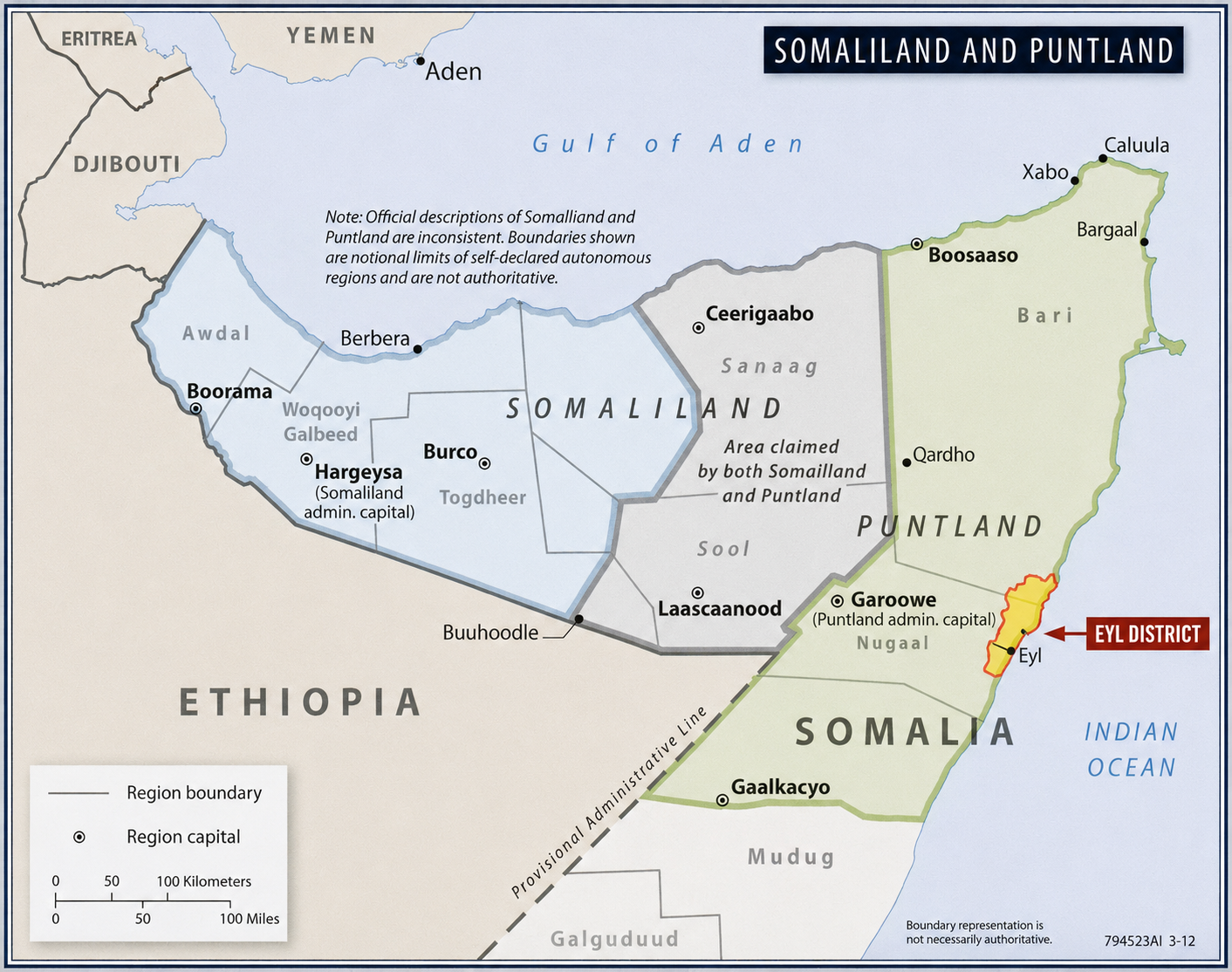
🏴☠️ The Return of Somali Piracy?
Somali piracy had declined after international naval patrols, armed security teams, and coordinated maritime protection. But poverty, unemployment, and weak governance continue to fuel piracy. This hijacking signals that pirate networks in Puntland’s Eyl region may be resurging, echoing the notorious ransom-driven attacks of the 2000s.
🌐 Global Efforts Against Piracy
Somali piracy was curbed through a mix of international naval patrols, stronger ship defenses, and coordinated global action. Warships from India, the U.S., Europe, China, and NATO patrolled the seas, while commercial vessels fortified themselves with razor wire, water cannons, and armed guards. Information-sharing and joint patrols added another layer of protection, but poverty, weak governance, and criminal networks in Somalia mean the threat has never fully disappeared.
India’s Angle
With six Indians onboard, the incident has become a matter of urgent concern for New Delhi.
India’s Navy has long maintained a presence in these waters to safeguard shipping routes.
Negotiations and rescue operations are expected, but the situation remains tense.
✈️ What Happened Next?
Reports indicate the vessel was steered toward the Nugaal coast, and Turkish-owned ships, helicopters, and drones began monitoring the hijacked vessel.
Airstrikes and firing were allegedly carried out against the pirates, with four casualties reported.
The fate of the LUTUF, its crew, and cargo remained uncertain, with details unverified. Turkish officials offered no immediate response to the incident. As of Friday morning, the Ministry of External Affairs has not released any statement on the matter.
🔥 Why This Is Dangerous
Unlike routine ransom hijackings, this ship carried military-grade equipment. If pirates gain control, it could destabilize the region further and embolden criminal networks.
🚨 The Ultimate Signal: Somali Piracy - Signs of Resurgence?
A single hijack doesn’t prove piracy is back in full force. To gauge a real comeback, analysts look at attempted versus successful hijackings, ransom demands, pirate networks, and attack frequency. For now, the safer conclusion is that while the capability still lingers, it hasn’t yet escalated into a systematic resurgence.
This incident is not just about piracy; it’s about global trade security, India’s maritime workforce, and the fragile stability of Somalia. The world is watching closely as events unfold.
Stay updated on maritime security developments with us. Share this story to raise awareness about the risks faced by Indian seafarers.
Written by
Bhavana SharmaDiscussion (0)
Sign in to join the discussion.
Loading comments…