
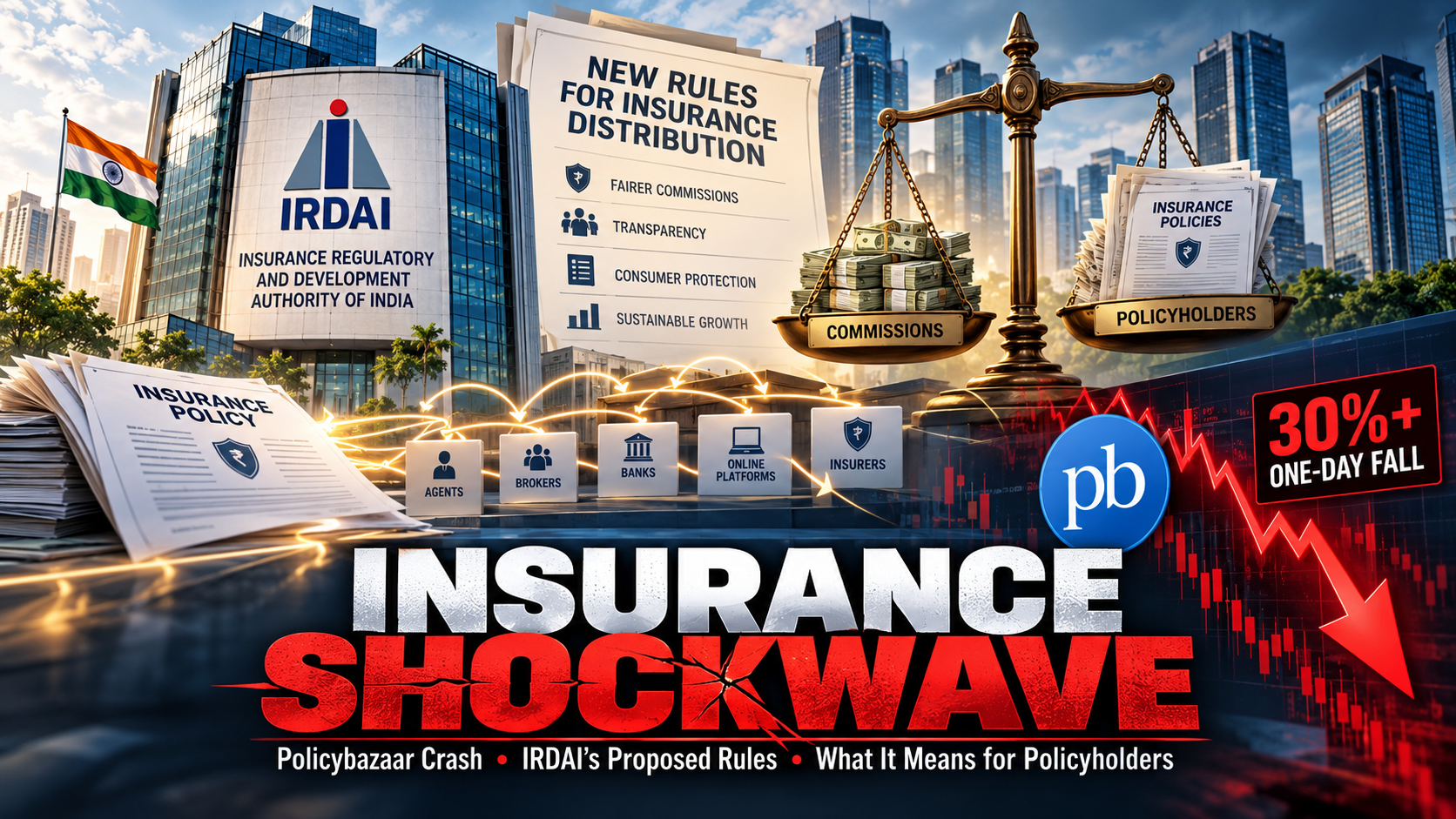
IRDAI’s Bold Move Triggers Chaos Across India’s Insurance Sector
India's insurance industry witnessed a massive market shock as shares of Policybazaar plunged more than 30% in a single trading session. The sudden crash did not stop there. Several leading insurance companies, including major life and health insurers, also saw their stock prices tumble as investors reacted to a sweeping draft proposal released by the Insurance Regulatory and Development Authority of India (IRDAI).
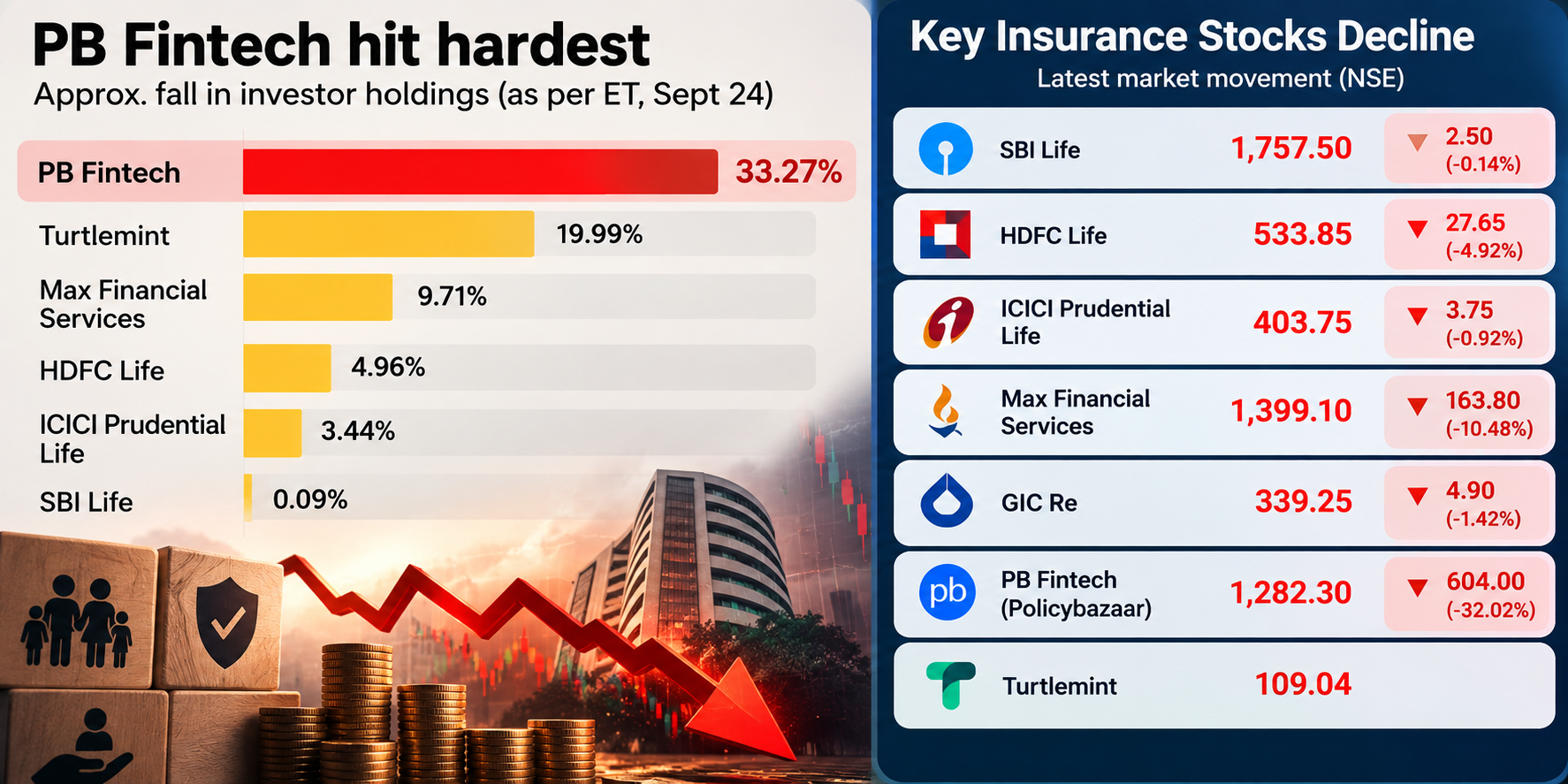
At the heart of the controversy lies a simple but disruptive idea: reduce the excessive commissions earned by intermediaries and make insurance more customer-friendly, transparent, and affordable.
But why has this sent shockwaves across the sector? More importantly, what does it mean for policyholders, agents, insurers, and platforms like Policybazaar? Let's break it down.
The Real Problem: Insurance Premiums vs Rising Commissions
Whenever you purchase an insurance policy, the premium you pay does not entirely go to the insurance company. A significant portion is distributed among:
1. Insurance agents
2. Corporate brokers
3. Banks
4. Online insurance marketplaces
5. Distribution networks
IRDAI believes that this distribution ecosystem has become increasingly expensive. In recent years, the growth in commissions paid to intermediaries has significantly outpaced the growth in insurance premiums collected from customers. In simple terms, the cost of selling insurance is rising much faster than the business itself.
This imbalance has prompted the regulator to rethink how insurance products are distributed across India.
What Exactly Has IRDAI Proposed?
The regulator has introduced a draft paper on 23rd September 2026 titled "Recalibrating Economics of Insurance Distribution", outlining several reforms aimed at restructuring the insurance distribution model. The proposed changes focus on:
1. Agent and broker commissions
2. Payments to digital insurance platforms
3. Mis-selling prevention
4. Commission transparency
5. Dark pattern elimination
6. Consumer protection
The objective is clear: align incentives with customer interests rather than commission maximization.
The Commission Gap That Raised Red Flags
IRDAI's concern stems from a growing imbalance in the insurance industry. While customer premiums have been increasing at a modest pace, payouts to distributors and agents have surged much faster.
A Growing Disconnect
1. Life insurers paid over ₹60,800 crore in commissions during FY25.
2. Commission expenses jumped 18% year-on-year.
3. Premium collections, however, grew by only 6.73%.
This widening gap has prompted regulators to question whether distribution costs are rising faster than the industry's actual growth.
Why IRDAI Is Stepping In
Simply put, the money flowing to intermediaries is increasing much faster than the money coming into the insurance system. IRDAI believes this imbalance could distort pricing, encourage aggressive selling practices, and ultimately impact policyholders.
Commission Growth: 18%
Premium Growth: 6.73%
That's the mismatch the regulator is now looking to address.
Commissions Soared, Business Didn't
IRDAI's review uncovered a striking imbalance in the insurance ecosystem. While insurers were paying significantly more to distributors and corporate agents, actual business growth failed to keep pace.
The Numbers Tell the Story
1. Distributor payouts surged 125% between FY23 and FY25.
2. New business premiums grew by only 28% during the same period.
This sharp gap suggests that distribution costs have been rising much faster than the industry's underlying growth.
Why the Regulator Hit the Alarm Bell
When commission payouts grow several times faster than premium collections, it raises concerns about sustainability, product pricing, and sales practices.
Remuneration Growth: 125%
Business Growth: 28%
That's the imbalance IRDAI now wants to correct through its proposed reforms.
Product-Wise Commission Caps: A Game-Changing Reform
One of the most significant proposals is the introduction of commission caps at the product level. Today, different insurance products often carry varying levels of commissions, which can sometimes influence what agents recommend to customers.
Under the new framework:
1. Simple products with minimal advisory requirements may carry lower commissions.
2. Complex products requiring extensive consultation and servicing could allow higher commission payouts.
This approach aims to ensure that compensation reflects actual effort rather than merely incentivizing aggressive sales tactics.
Why This Matters
Example: Why Commission Caps Cannot Be One-Size-Fits-All
Imagine two insurance products:
Policy A: A basic health insurance renewal purchased online in just a few clicks, with no consultation or paperwork required.
Policy B: A customized retirement and life insurance plan that requires multiple meetings, financial assessments, detailed risk profiling, documentation, and ongoing policy servicing over several years.
Should the distributor earn the same commission on both products?
IRDAI believes the answer is no. A simple, self-service product requires minimal effort and lower distribution costs, while a complex financial protection plan demands significant time, expertise, and customer support. Therefore, commission structures should reflect the actual effort involved in selling and servicing the policy.
Major Changes Proposed for Life Insurance
The regulator has suggested different commission caps based on policy tenure and complexity. For long-term life insurance products:
1. Distribution entities may face capped commissions.
2. Individual agents may receive limited commission percentages.
3. Longer-duration policies could attract higher commission ceilings than shorter-term products.
The logic is straightforward. Policies that require greater effort, education, and customer servicing deserve better compensation than products that are easy to purchase online.
Rural India May Actually Benefit
Interestingly, IRDAI is not looking to eliminate agent incentives. In fact, the regulator has proposed additional rewards for agents operating in rural areas, small towns and underpenetrated insurance markets.
Why? Because selling insurance in remote regions often requires more time, travel, awareness-building, and customer education. Without special incentives, agents may avoid these regions entirely, slowing insurance penetration across India.
This move could encourage wider coverage and better financial protection for millions of underserved citizens.
The End of Huge Upfront Commissions?
Another major proposal could completely transform insurance selling practices. Currently, agents often earn large commissions during the first year of a policy. This creates a situation where some agents prioritize selling expensive policies rather than recommending the most suitable ones.
IRDAI wants to gradually distribute these commissions over multiple years.
How Would This Help?
Consider a policy where an agent receives a large commission immediately after sale. Once the transaction is completed, the agent has little financial incentive to ensure long-term customer satisfaction.
Under the new system:
1. Commissions could be linked to policy continuation.
2. Agents may earn payouts over several years.
3. Customer retention may become more important than aggressive selling.
This could significantly reduce policy mis-selling and improve overall service quality.
The Policy Retention Reality Check: The Persistence Problem
Persistence measures how long customers keep their insurance policies active. If many policyholders quit within the first few years, it signals a problem. If most renew regularly, the product is likely meeting customer needs.
When policyholders stop paying premiums early, it may signal:
1. Mis-selling
2. Wrong product fit
3. Affordability issues
4. Poor customer awareness
To improve outcomes, IRDAI wants agent rewards to be linked to long-term policy retention, not just quick sales.
Commission Clawback: Agents Could Be Forced to Return Money

Perhaps the strongest deterrent proposed by IRDAI is the introduction of commission clawback mechanisms. If a policy is later found to have been:
1. Mis-sold
2. Incorrectly represented
3. Unsuitable for the customer
The distributor or agent may be required to return the commission earned from that sale. This would create greater accountability and encourage more ethical sales practices throughout the industry.
New Rules for Health Insurance

Health insurance is also set to face tighter commission controls. The draft proposes:
1. Defined limits on first-year commissions
2. Lower renewal commission structures
3. Greater standardization across distribution channels
The goal is to prevent excessive costs from being passed on to consumers while maintaining a sustainable distribution network.
Motor Insurance Reforms Could Disrupt Dealers
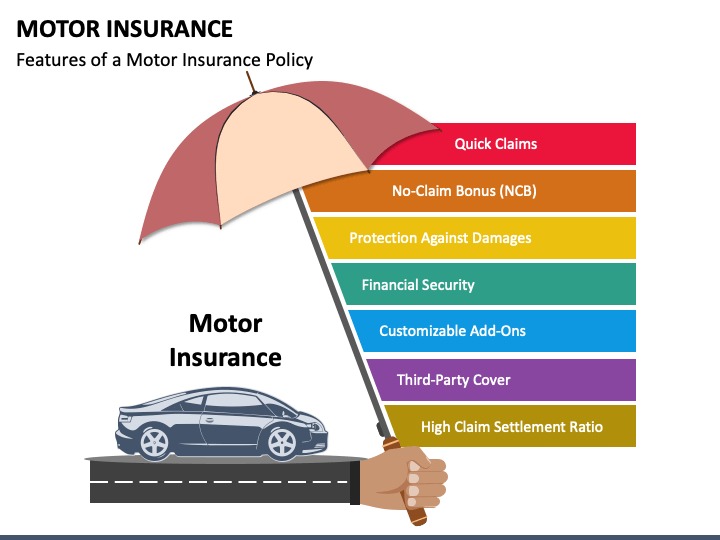
The regulator has also targeted motor insurance distribution. Third-party motor insurance is legally mandatory in India.
Since customers must buy it anyway, IRDAI believes excessive commissions for selling these products are hard to justify. As a result:
1. Distribution commissions may be drastically reduced.
2. Dealer incentives could shrink considerably.
3. Customers may gain more freedom to compare and choose providers independently.
This could reduce pressure selling often experienced while purchasing a vehicle.
Crackdown on Dark Patterns and Manipulative Sales Tactics
One of the most consumer-friendly proposals targets digital manipulation. Many online platforms use psychological triggers and interface tricks to push additional insurance products. These practices often include:
1. Pre-selected add-ons
2. Hidden alternatives
3. Fear-based messaging
4. Forced upselling
5. Misleading recommendations
IRDAI wants to eliminate such "dark patterns" and ensure customers make informed decisions without manipulation. For consumers, this could be one of the biggest wins.
Why Policybazaar Was Hit the Hardest
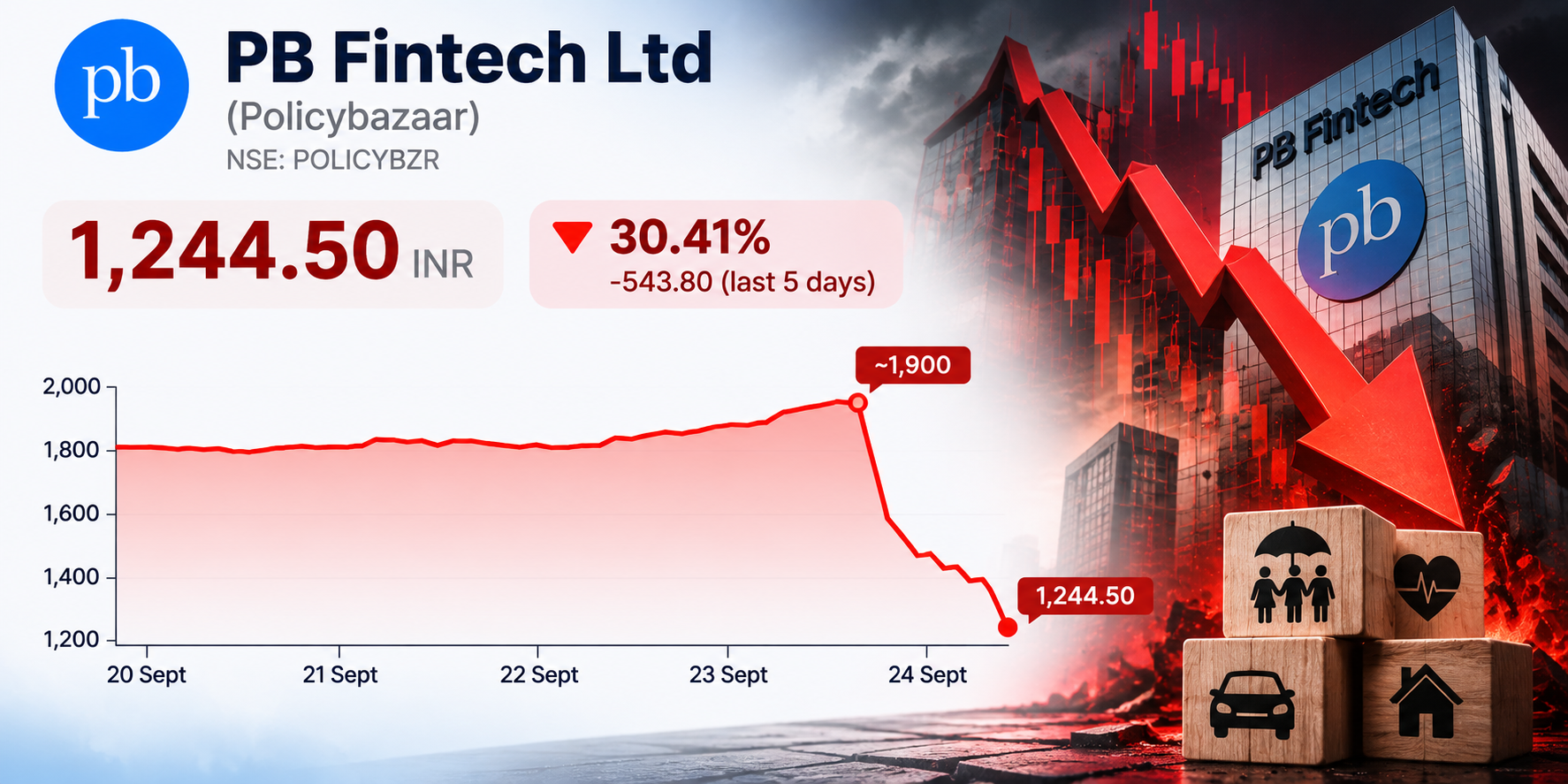
Policybazaar's business model relies heavily on insurance distribution. The platform earns revenue by helping customers compare and purchase insurance products from various providers If commission structures are capped or reduced:
1. Revenue per policy may decline.
2. Profitability could be affected.
3. Business expansion assumptions may need revision.
This explains why investors reacted aggressively, resulting in one of the sharpest stock declines in the company's history.
Why Insurance Companies Also Fell
While insurers may eventually benefit from lower distribution costs, investors remain cautious. The industry now faces uncertainty regarding:
1. Agent incentives
2. Distribution partnerships
3. Customer acquisition strategies
4. Technology investments
5. Future market share dynamics
Whenever major regulatory uncertainty emerges, markets typically respond negatively until the long-term impact becomes clearer.
The Bottom Line: A Consumer Revolution or an Industry Disruption?
IRDAI's proposed reforms could represent the biggest overhaul of India's insurance distribution ecosystem in years. If implemented successfully, they may:
✅ Reduce mis-selling
✅ Improve transparency
✅ Lower distribution costs
✅ Encourage ethical selling
✅ Expand rural insurance coverage
✅ Create a more consumer-centric industry
However, the transition could be painful for agents, brokers, digital marketplaces, and even insurers adapting to a new business reality. The biggest question remains unanswered: “Will lower commissions ultimately translate into cheaper insurance premiums for Indian consumers?”
Only time will tell.
🚀Stay Ahead of India's Biggest Financial Changes
India's insurance industry is entering a new era, and these reforms could directly impact your policies, premiums, and investment decisions.
👉 Follow our blog for expert analysis on insurance, banking, stock markets, and personal finance. Share this article with friends and family who own insurance policies. Subscribe to get instant updates on IRDAI regulations, Policybazaar developments, and market-moving financial news.
Don't let regulatory changes catch you off guard. Stay informed. Stay protected. Stay ahead.
Written by
Bhavana SharmaDiscussion (0)
Sign in to join the discussion.
Loading comments…