
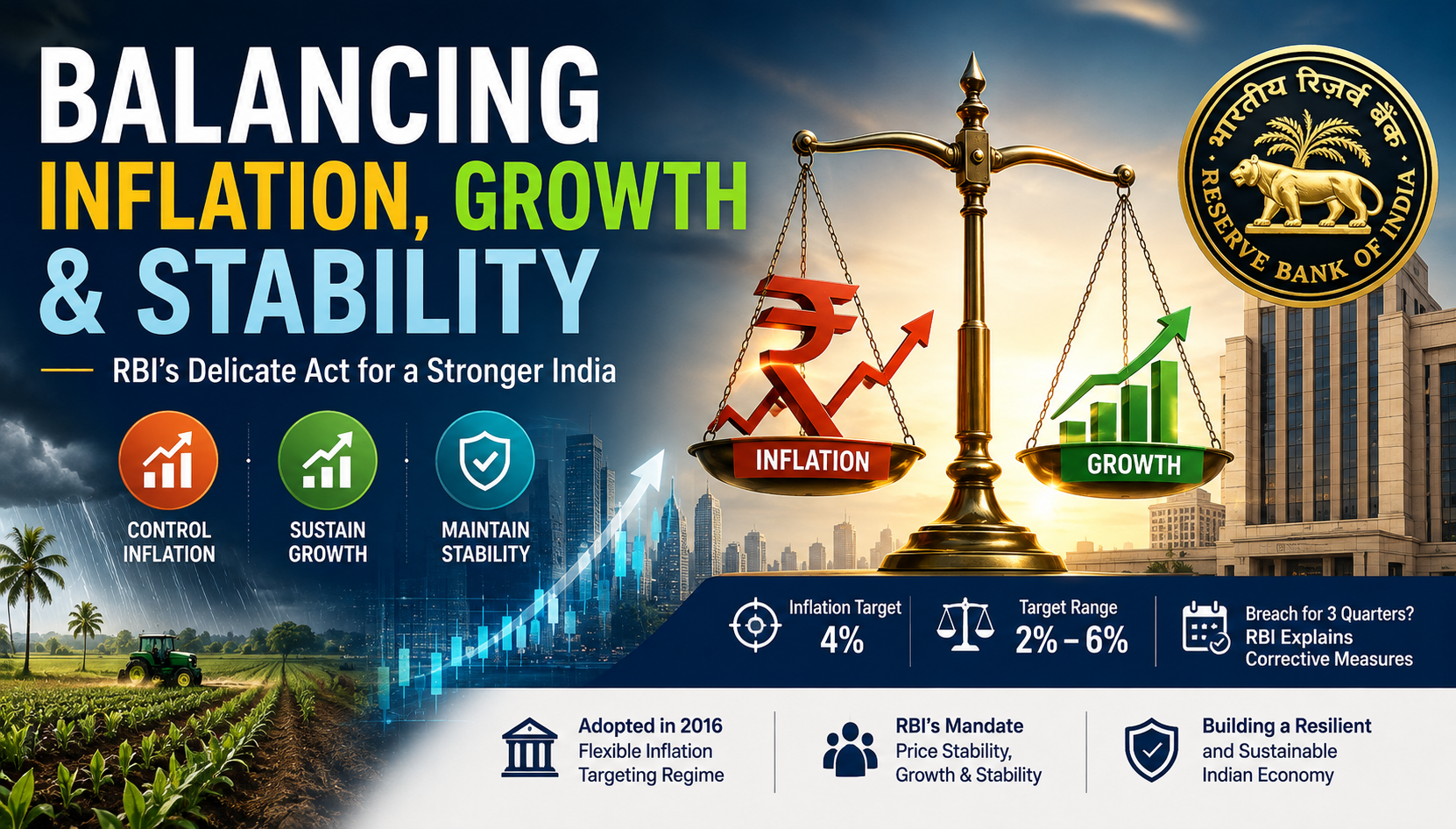
📊 Balancing Inflation, Growth & Stability
The Reserve Bank of India (RBI) continues its delicate balancing act. While inflation control remains its prime objective, the central bank also aims to sustain GDP growth and maintain financial stability. These goals often conflict: raising interest rates may help tame inflation but slow growth, while cutting rates can boost GDP at the risk of rising prices.
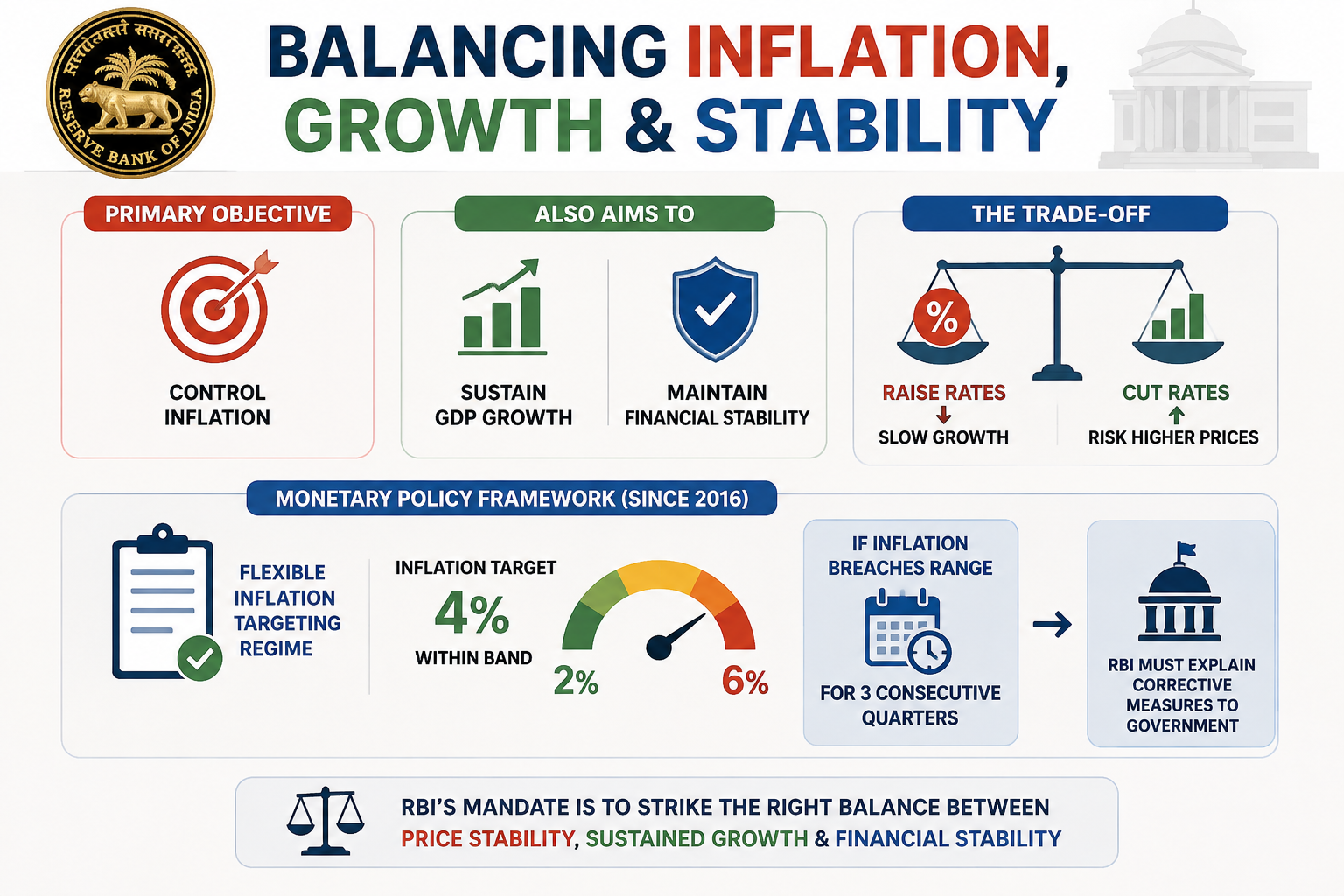
India’s monetary policy framework, adopted in 2016, follows a flexible inflation targeting regime. The RBI seeks to keep retail inflation around 4%, within a band of 2 to 6%. If inflation breaches this range for three consecutive quarters, the RBI must explain corrective measures to the government.
🏛 Inside the RBI’s Decision Room
India’s Monetary Policy Committee (MPC), the six‑member team steering the nation’s interest rates, has once again voted unanimously (6‑0) to keep the repo rate unchanged. The committee includes the RBI Governor (Chairperson), the Deputy Governor for Monetary Policy, one RBI official, and three external experts nominated by the government. Each member has one vote, and in the event of a tie, the Governor’s casting vote decides the outcome.
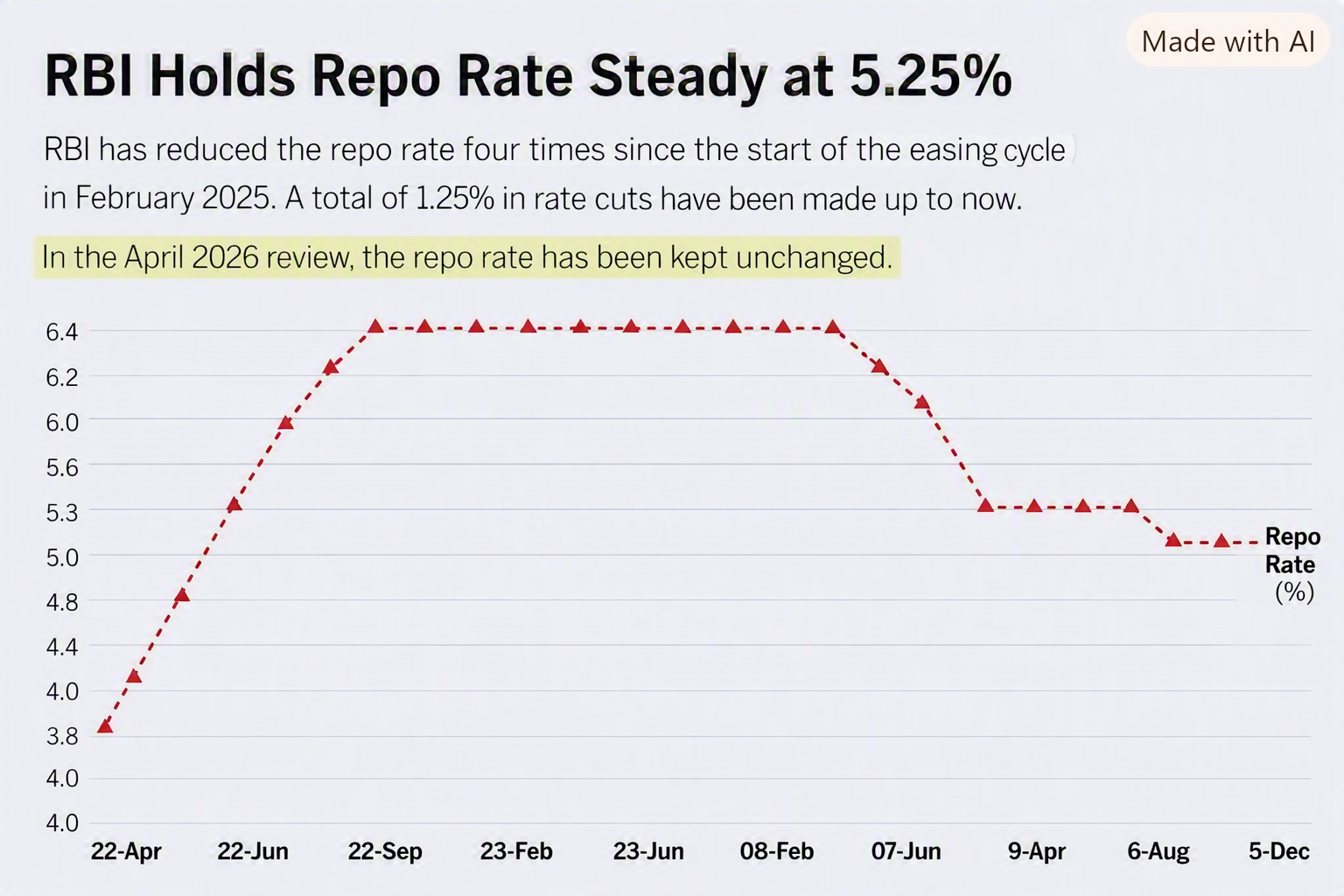
💰 Repo Rate: Unchanged at 5.25%
In its latest bi‑monthly Monetary Policy Committee (MPC) meeting, the RBI unanimously decided to keep the repo rate steady at 5.25%. This comes after a cycle of pandemic‑era cuts to 4%, followed by hikes up to 6.5% when inflation surged.
Why no change this time?
Domestic economy remains resilient: Strong consumption, government infrastructure spending, and manufacturing expansion under the PLI schemes.
Inflation risks seen as temporary: Crude oil prices and geopolitical tensions are easing, with oil dipping below $80 per barrel.
Liquidity remains healthy: Banks hold surplus liquidity above ₹1 lakh crore, ensuring credit flow.
Services from IT to tourism continue to thrive, while private investments show steady improvement.
Together, these factors give the RBI confidence to hold rates steady rather than cut them.
📈 Growth Outlook Brightens
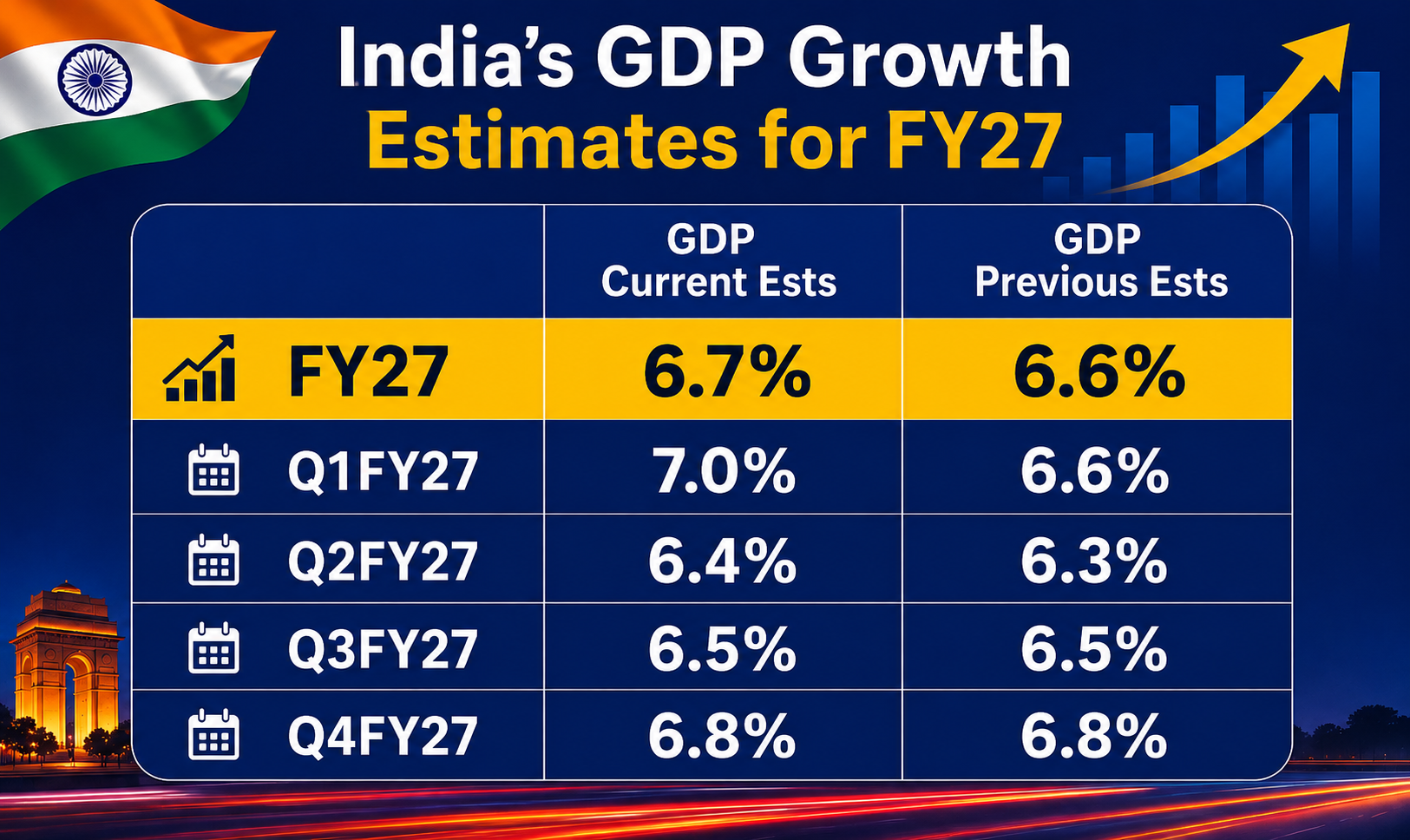
The RBI has revised India’s GDP growth forecast for FY 2026‑27 from 6.6% to 6.7%, citing robust performance in the April–June quarter. Inflation expectations have also eased slightly, with projections lowered from 5.1% to 5% for the year. The central bank attributes this optimism to robust domestic demand, resilient services, and steady urban consumption, even amid global headwinds.
🌦 Agriculture: The Looming El Niño Threat
The biggest red flag in this policy update is agriculture. The RBI warns that warming in the Pacific Ocean and a stronger El Niño could disrupt India’s monsoon. With 70% of annual rainfall concentrated in the southwest monsoon, crops like rice, cotton, soybeans, pulses, and maize are highly vulnerable.
Reduced rainfall could mean:
Lower sowing and crop yields
Higher irrigation costs
Falling farmer incomes
Rising food inflation across staples and vegetables
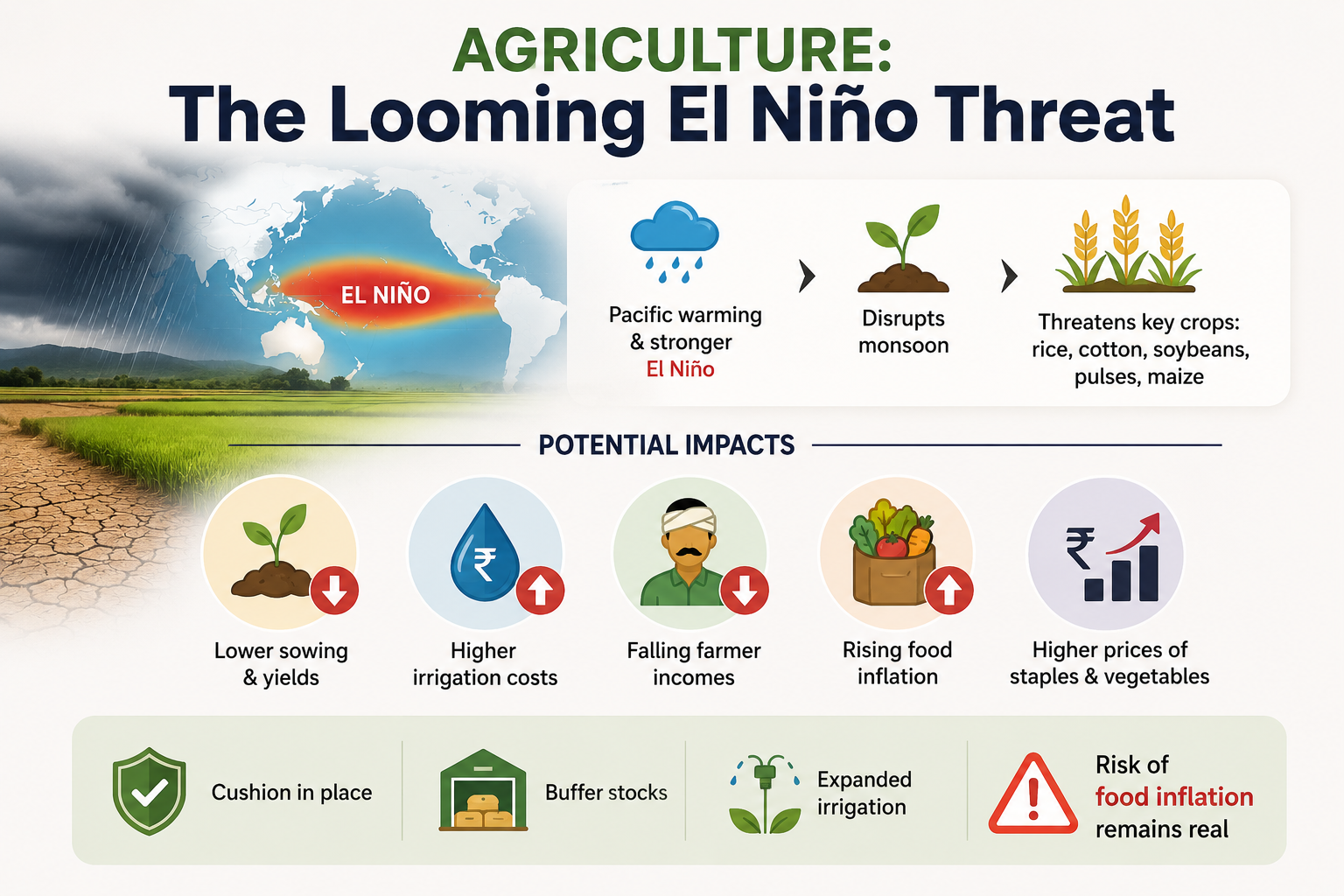
The RBI notes that while government buffer stocks and expanded irrigation coverage provide some cushion, the risk of food inflation remains real.
🚨 What It Means for You
Borrowers: Loan rates remain unchanged, a relief for homebuyers and businesses.
Investors: Stable rates signal confidence in India’s growth story.
Consumers: Food prices could rise if monsoon disruption worsens.
India’s economy stands strong, but agriculture remains the wild card. India’s growth engine is humming, but inflation could test its endurance. Will El Niño derail the growth story or will government safeguards hold the line?
👉 Stay ahead of the curve - follow our blog for real‑time RBI updates, inflation trends, and market insights.
💬 Share your thoughts: Should the RBI act pre‑emptively on food inflation, or wait and watch?
Written by
Ritvik DeshmukhDiscussion (0)
Sign in to join the discussion.
Loading comments…