
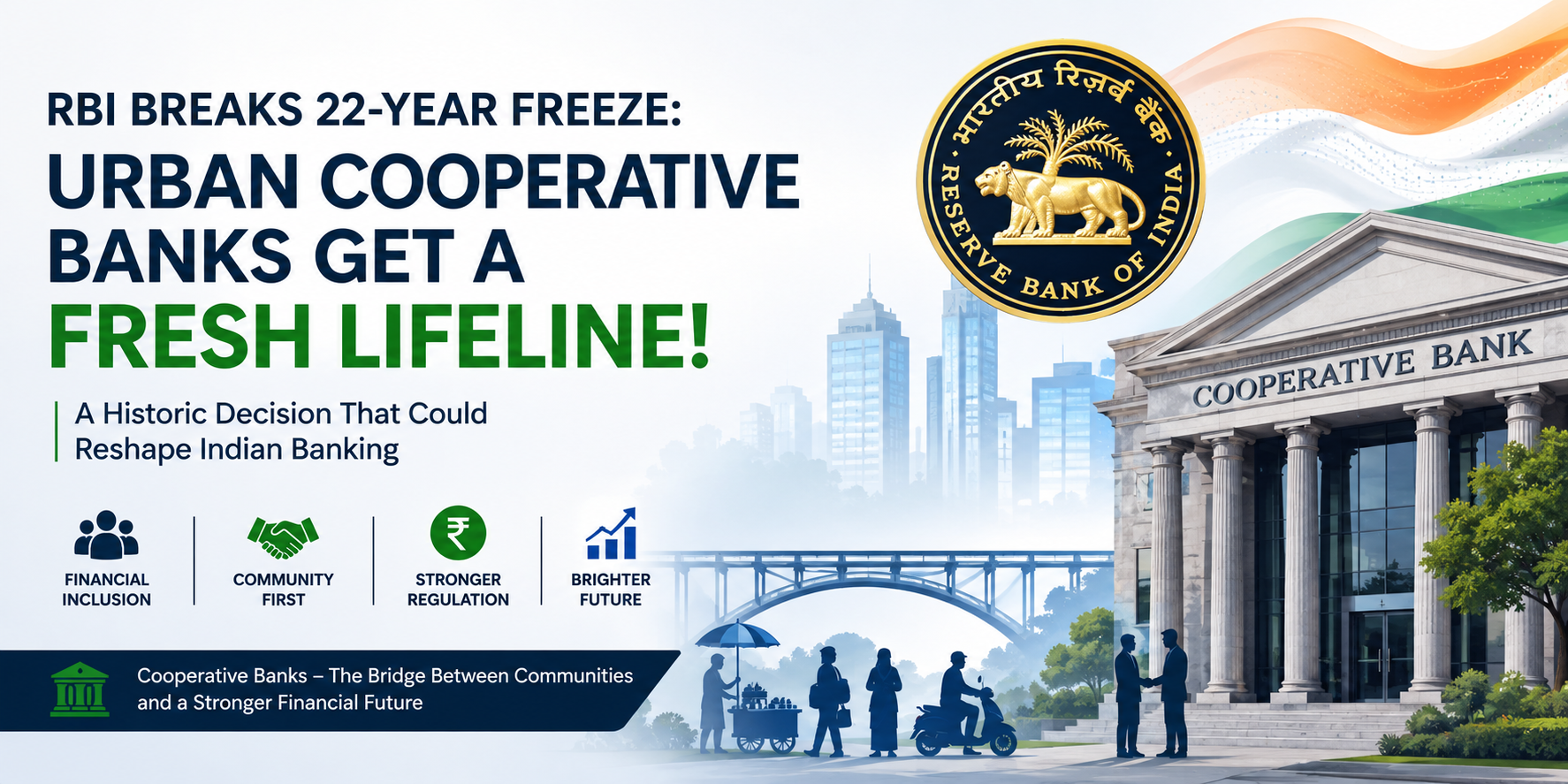
A Historic Decision That Could Reshape Indian Banking
For the first time since 2004, the Reserve Bank of India (RBI) has announced that it will issue new licenses to urban cooperative banks. This ends a 22‑year pause that had kept the sector stagnant, signaling RBI’s confidence that cooperative banking has finally stabilized and is ready for expansion.
Why This Move Matters
Cooperative banks are not just financial institutions; they are pillars of inclusion. Millions of Indians, especially small vendors, shopkeepers, salaried employees, and MSMEs, rely on them when commercial banks shut their doors.
Unlike profit‑driven commercial banks, cooperative banks operate on community principles:
One member, one vote, regardless of capital invested.
Affordable banking and credit for those excluded from mainstream banking.
Shielding borrowers from exploitative moneylenders.
This decision reflects RBI’s belief that the sector is now strong enough to expand responsibly.
🏦 Understanding India’s Cooperative Banking Story
The Indian Banking System at a Glance
India’s banking structure is vast and layered. At the top sit commercial banks, public sector giants like SBI and PNB, private players like HDFC and ICICI, foreign banks, and small finance banks. Alongside them are payment banks and regional rural banks (RRBs).
Then comes the cooperative banking sector, divided into:
Urban Cooperative Banks (UCBs)
Rural Cooperative Banks, which further include state cooperative banks, district central cooperative banks, and primary agricultural credit societies (PACS).
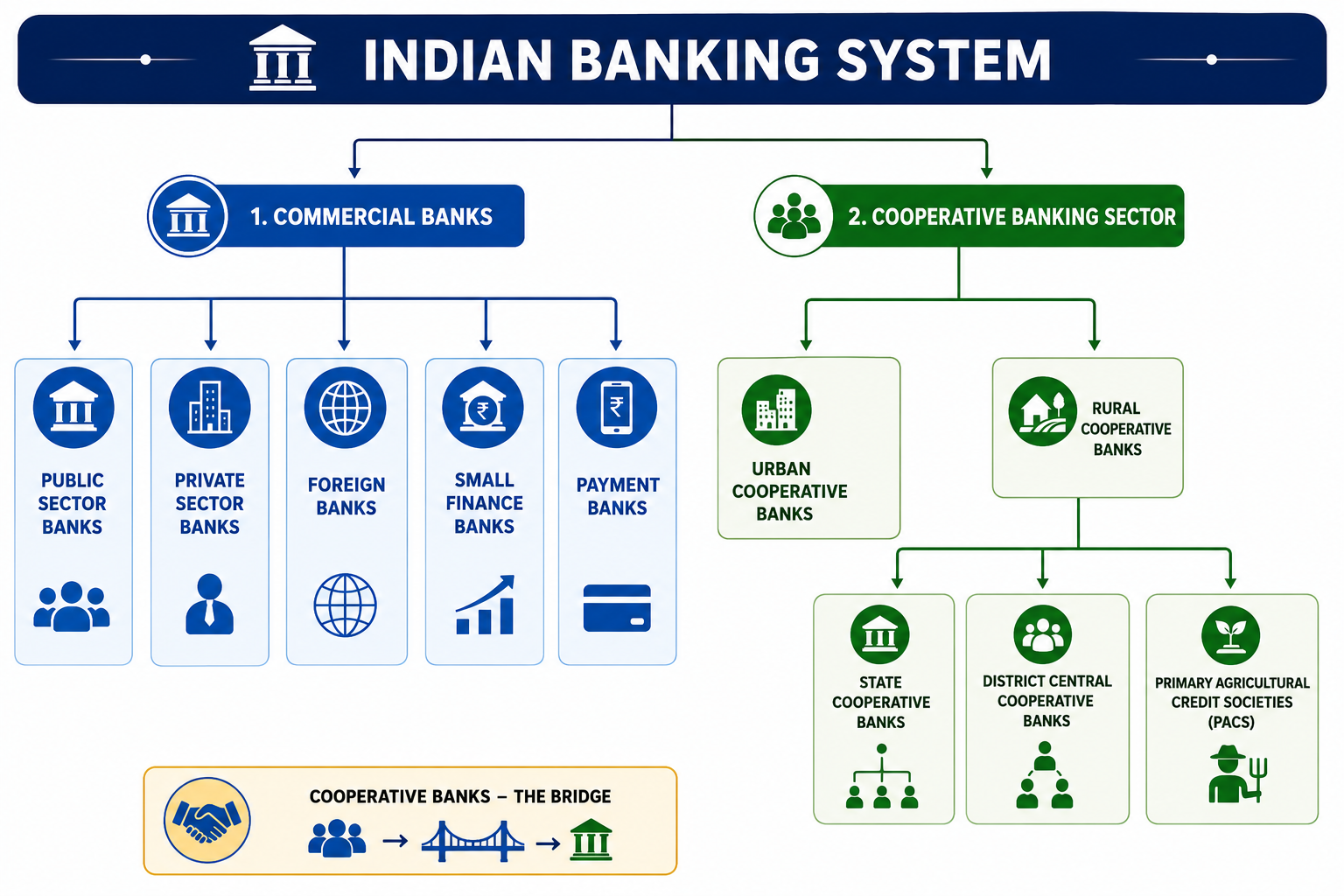
This hierarchy shows how cooperative banks form a crucial bridge between grassroots communities and the formal financial system.
Constitutional Recognition: The Legal Backbone
Cooperative societies enjoy constitutional recognition:
Article 19(1)(c) grants the right to form cooperative societies.
Part IXB was added through the 97th Constitutional Amendment, though later limited to multi‑state cooperatives.
Entry 32 of the State List makes cooperatives largely a state subject.
Yet, banking regulation falls under the Union, giving RBI authority over cooperative banks.
This dual structure means cooperative banks operate under both state cooperative laws and RBI’s banking regulations.
Evolution of Cooperative Banking in India
The cooperative movement has deep roots:
1904: The Co‑operative Credit Societies Act was enacted to protect farmers from moneylenders and encourage thrift.
1912: The Co‑operative Societies Act expanded the movement further.
Post‑Independence: Cooperatives became central to the Green Revolution, agricultural credit, rural development, and the dairy revolution.
Over time, they evolved into vital institutions supporting India’s rural and urban economy.
Key Regulatory Milestones
1966: Provisions of the Banking Regulation Act were extended to cooperative banks, bringing them under RBI’s oversight.
2020: Major amendments strengthened RBI’s powers after governance failures in several cooperative banks, ensuring tighter supervision and accountability.
These milestones highlight how regulation has adapted to safeguard depositors and stabilize the sector.
The Troubled Past: Why Licenses Stopped in 2004
Between the 1990s and early 2000s, many newly licensed cooperative banks struggled with:
Weak governance and political interference.
Poor risk management and rising NPAs.
Financial instability that threatened depositors’ money.
The infamous PMC Bank crisis highlighted how fragile the system could be. To protect the public, RBI froze new licenses until reforms and stricter oversight were in place.
What’s Different Now? RBI’s New Safeguards
RBI is determined not to repeat past mistakes. The new framework emphasizes:
Higher capital adequacy to absorb shocks.
Fit & proper promoters with integrity and financial strength.
Professional management with banking expertise.
Tiered regulation & stronger supervision to prevent failures.
Technology adoption (core banking, NEFT, digital payments).
In November 2025, Union Cooperation Minister Amit Shah unveiled two breakthrough mobile apps, Sahakar Digi Pay and Sahakar Digi Loan, urging urban cooperative banks to embrace modern technology to stay competitive and future‑ready.

This ensures that future cooperative banks are resilient, transparent, and trustworthy.
The Bigger Picture: Why India Needs This
Financial Inclusion: Vegetable vendors, auto drivers, and kirana shop owners often get ignored by big banks. Cooperative banks fill this gap.
MSME Support: Quick, small loans for India’s growth engines.
Local Knowledge: Managers understand community businesses better than outsiders.
Employment & Competition: More banks mean more jobs, better interest rates, and healthier competition.
Globally, countries such as Germany, France, and Japan have thriving cooperative banking systems that coexist with commercial banks. India is now aiming to modernize rather than shut down this sector.
⚖️ Bombay HC Clarifies TDS Relief for Co‑op Banks
In a landmark ruling, the Bombay High Court confirmed that cooperative banks are not required to deduct TDS on interest paid to other cooperative societies. The judgment, rooted in Section 194A(3)(v) of the Income Tax Act, reinforces the statutory exemption and provides much‑needed clarity for the sector.
The Road Ahead
This reform could accelerate India’s goals of financial inclusion, digital economy growth, and grassroots empowerment. Cooperative banks, if managed well, can become the bridge between underserved communities and modern financial systems.
The RBI’s bold step opens new doors for entrepreneurs, small businesses, and everyday citizens. But the real test lies ahead: Will cooperative banks rise to the challenge?
👉 Stay tuned for updates on licensing developments. Share this blog to spark conversations about India’s banking future. Have thoughts on cooperative banking?
Drop them in the comments; we’d love to hear your perspective!
Written by
Ishaan TrivediDiscussion (0)
Sign in to join the discussion.
Loading comments…