
A Shockwave in International Finance
Russia has proposed that its trade with Bangladesh be settled in Indian rupees rather than U.S. dollars. If implemented, this would mark one of the most significant shifts in international finance in recent years. For decades, the Dollar has dominated global trade, but sanctions on Russia after the Ukraine war have forced Moscow to look for alternatives.
"Putin wants Indian Rupee to replace the U.S. Dollar in Russia-Bangladesh trade" - reports suggest this is more than just a payment tweak; it touches geopolitics, sanctions, and the future of de-dollarisation.
Why This Matters?
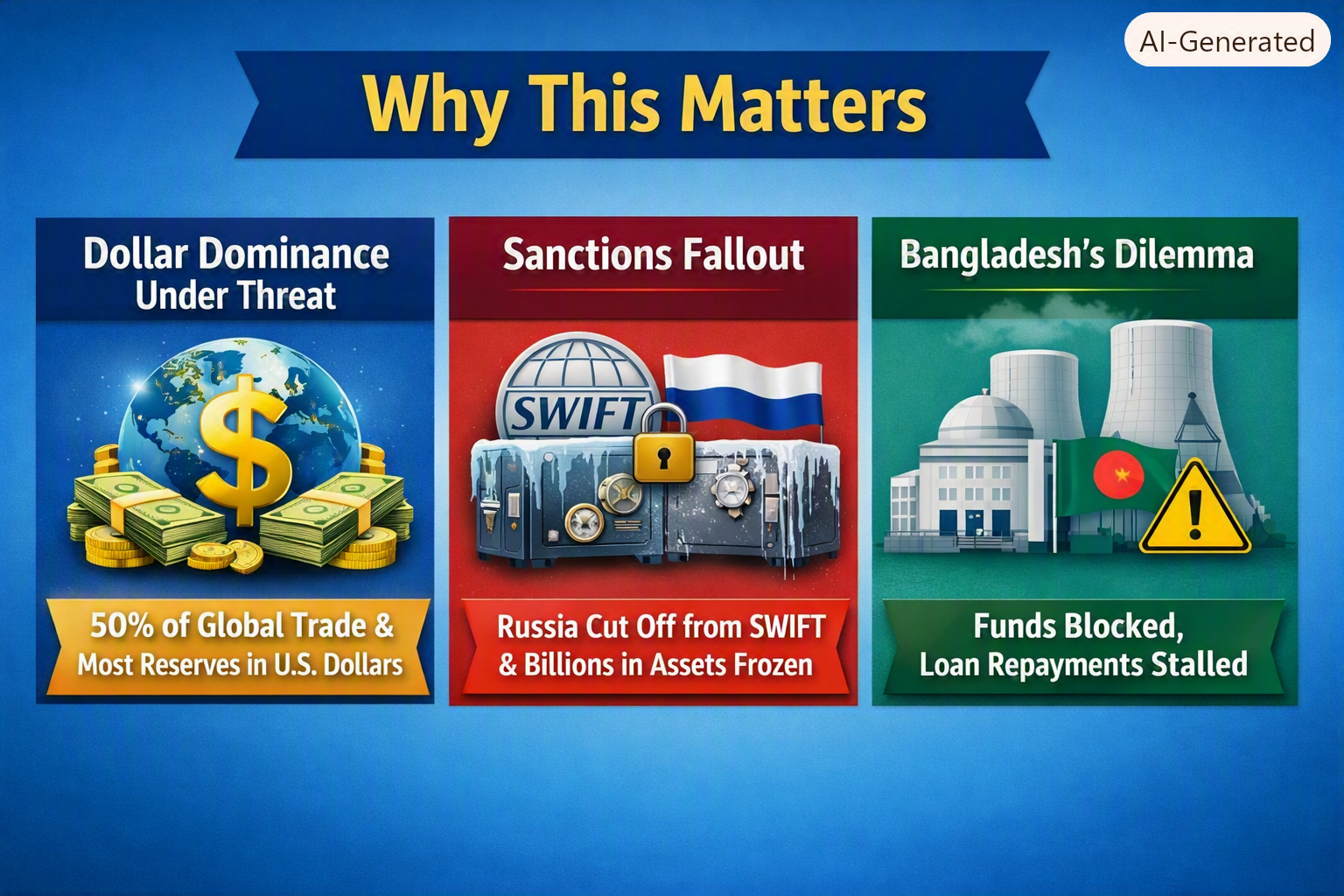
Dollar Dominance Under Threat: Since WWII, most global trade has been invoiced in dollars. Half of all trade and the majority of foreign reserves are dollar-denominated.
Sanctions Fallout: Russia was cut off from SWIFT, the world’s largest financial messaging system, and had billions in reserves frozen. This forced Moscow to seek new settlement systems.
Bangladesh’s Dilemma: Its biggest infrastructure project, the Rooppur Nuclear Plant, was financed by Russia. The usual dollar‑denominated channels for loan repayments have been blocked by sanctions on Russian banks, leaving Dhaka scrambling for alternatives.
Why the Rupee, Not Yuan?
Bangladesh initially considered the Chinese Yuan, given its strong ties with Beijing. Banking hurdles, regulatory complications, and gaps in settlement infrastructure stalled the plan. Russia then suggested the Indian Rupee, leveraging India’s strong ties with both nations.
India already imports massive amounts of Russian crude oil in rupees, leaving Moscow with large rupee reserves. Bangladesh joining the system could make India a financial bridge in South Asia.
The Trade Imbalance Problem
Imagine this scenario:
Country A exports $40 billion worth of crude oil to Country B.
In return, Country B exports only $3 billion worth of textiles and machinery to Country A.
This creates a huge imbalance. Country A ends up holding massive reserves of Country B’s currency (because it keeps getting paid in that currency) but has very few opportunities to spend it. Unless Country A starts importing more goods and services from Country B, those reserves become almost useless, sitting idle in bank accounts.
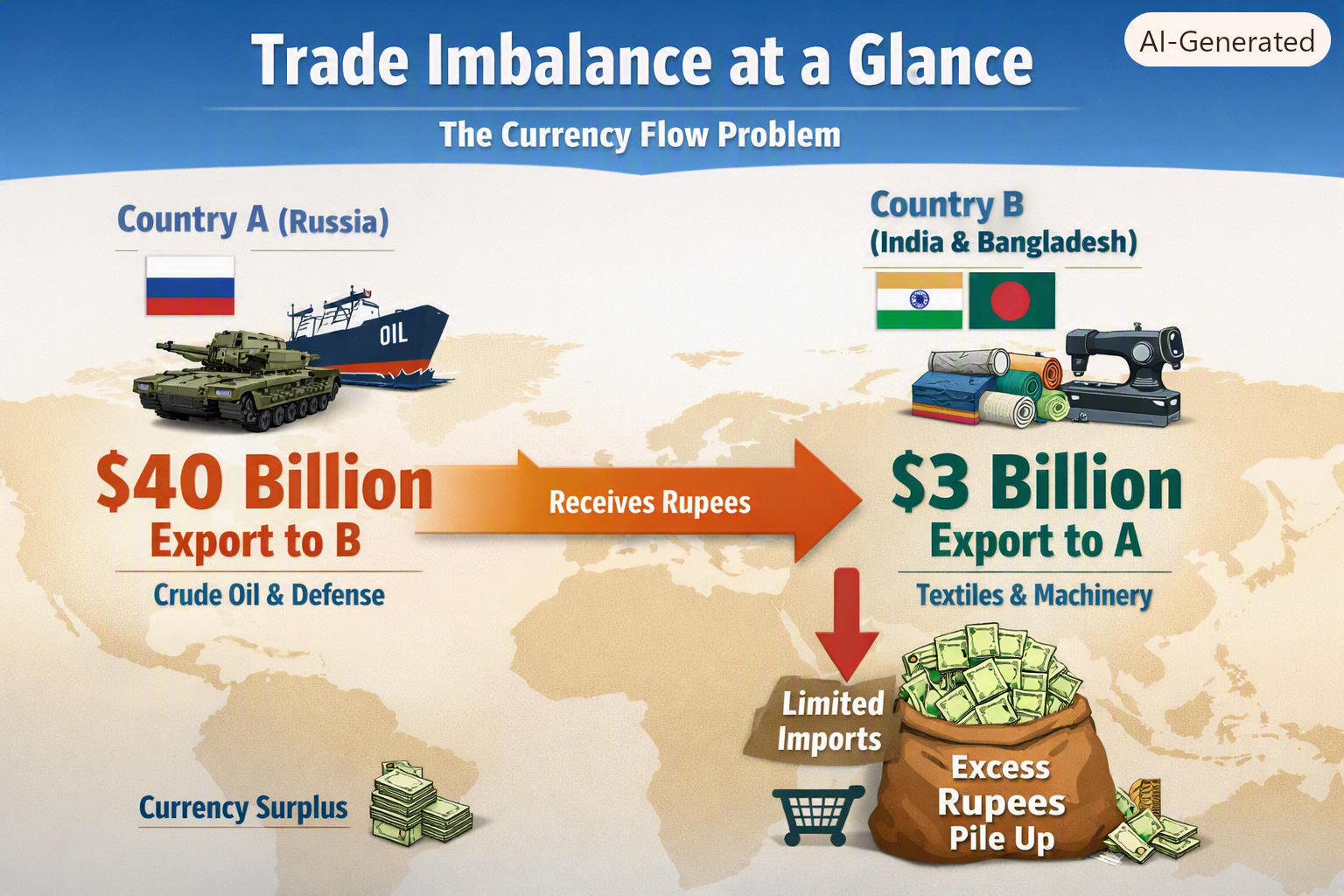
That’s exactly the challenge Russia faces with rupee settlements. It sells enormous amounts of oil and defense equipment to India and Bangladesh but buys relatively little in return. The result? Russia has accumulated rupees that it cannot easily spend unless it significantly increases imports from India, such as pharmaceuticals, machinery, textiles, and consumer products, to balance the books.
This imbalance is the Achilles’ heel of rupee trade: without balanced flows, one side ends up with “stranded currency” that loses practical value.
Special Rupee Vostro Accounts
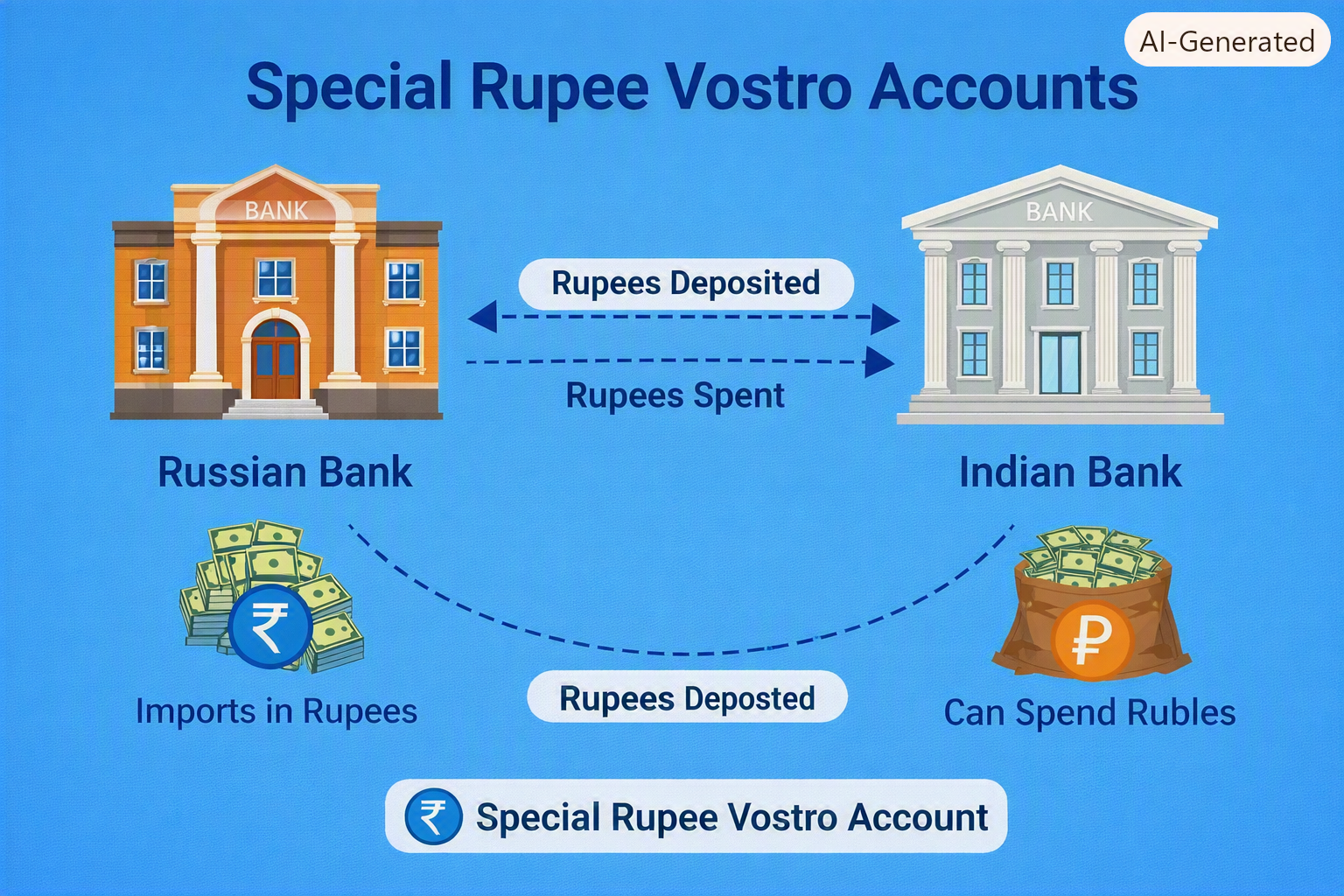
To make this work, Russian banks open Special Rupee Vostro Accounts in Indian banks.
Indian importers deposit rupees here.
Russian companies use the same rupees to buy Indian goods. There is no need for constant currency conversions, which lowers costs and helps bypass sanctions.
What’s at Stake?
For India:
· Boosts rupee demand globally.
· Expands Indian banking influence.
· Strengthens its role as a regional leader.
For Bangladesh:
· Smooth repayment of Russian loans.
· Energy security for its nuclear project.
· Greater banking flexibility.
For the U.S. Dollar:
· Still dominant today, backed by deep financial markets and investor confidence.
· But cracks are showing-alternatives like the rupee are slowly emerging.
The Bigger Picture
This isn’t full de-dollarisation yet. But it’s a strategic crack in the dollar’s monopoly. If more countries adopt rupee settlements, India could position itself as a regional financial hub, reshaping South Asian trade flows.
The world is watching: Will Russia and Bangladesh actually pull the trigger on rupee trade? Can India leverage this opportunity to push further the rupee’s internationalization? And, more importantly, could this mark the first crack in the dollar’s dominance? Share your thoughts below.
Stay tuned - the rupee revolution might just be beginning.
Written by
Ritvik DeshmukhDiscussion (0)
Sign in to join the discussion.
Loading comments…