
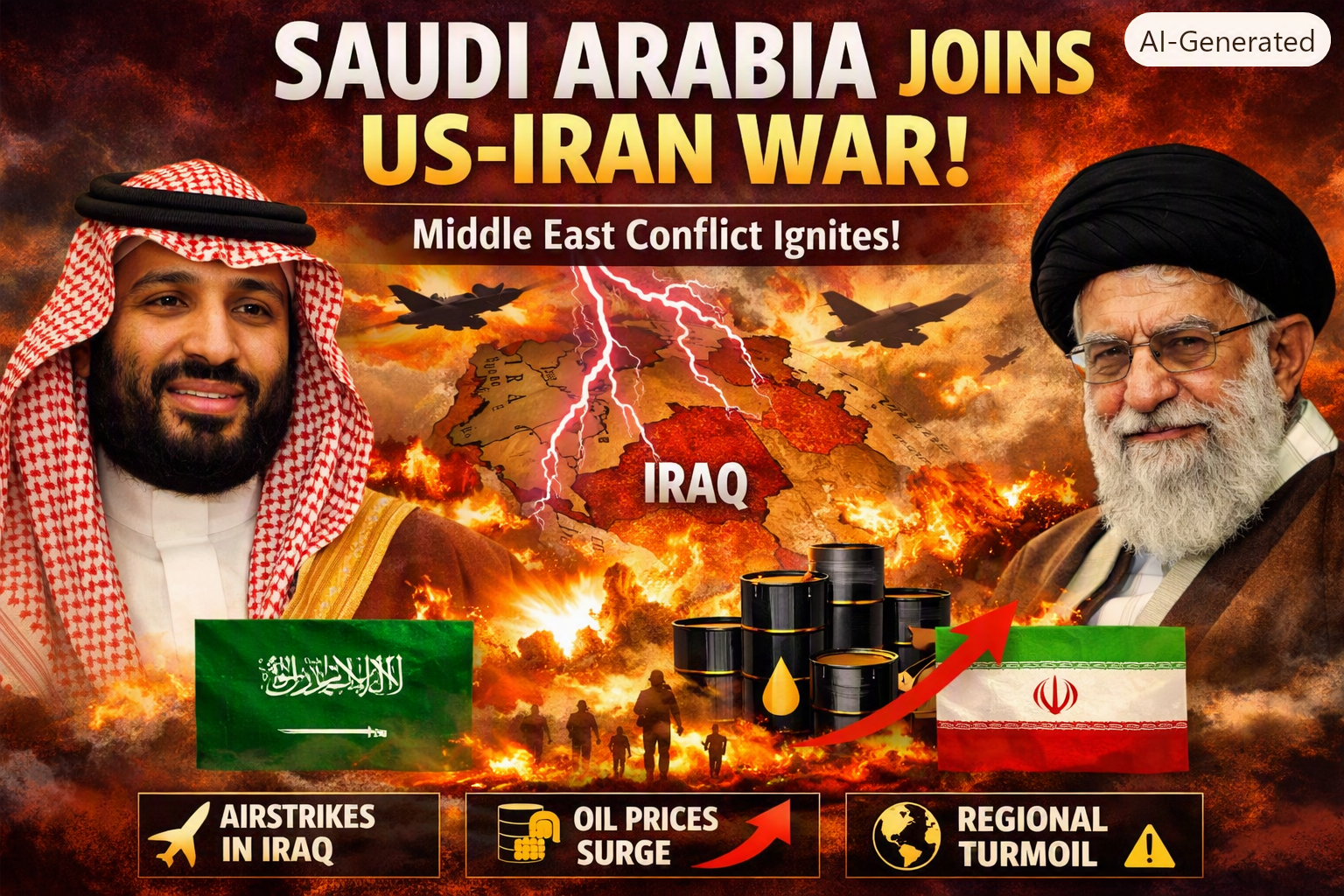
A Regional Conflict Turns Global
For months, the US–Iran confrontation simmered across the Gulf, with Iranian proxies striking American bases and Gulf infrastructure. Yet Gulf states largely avoided direct involvement until now. In a stunning escalation, Saudi Arabia has entered the battlefield alongside the United States, launching coordinated airstrikes in Iraq against Iran‑backed militias.
Iraq: The Reluctant Battleground
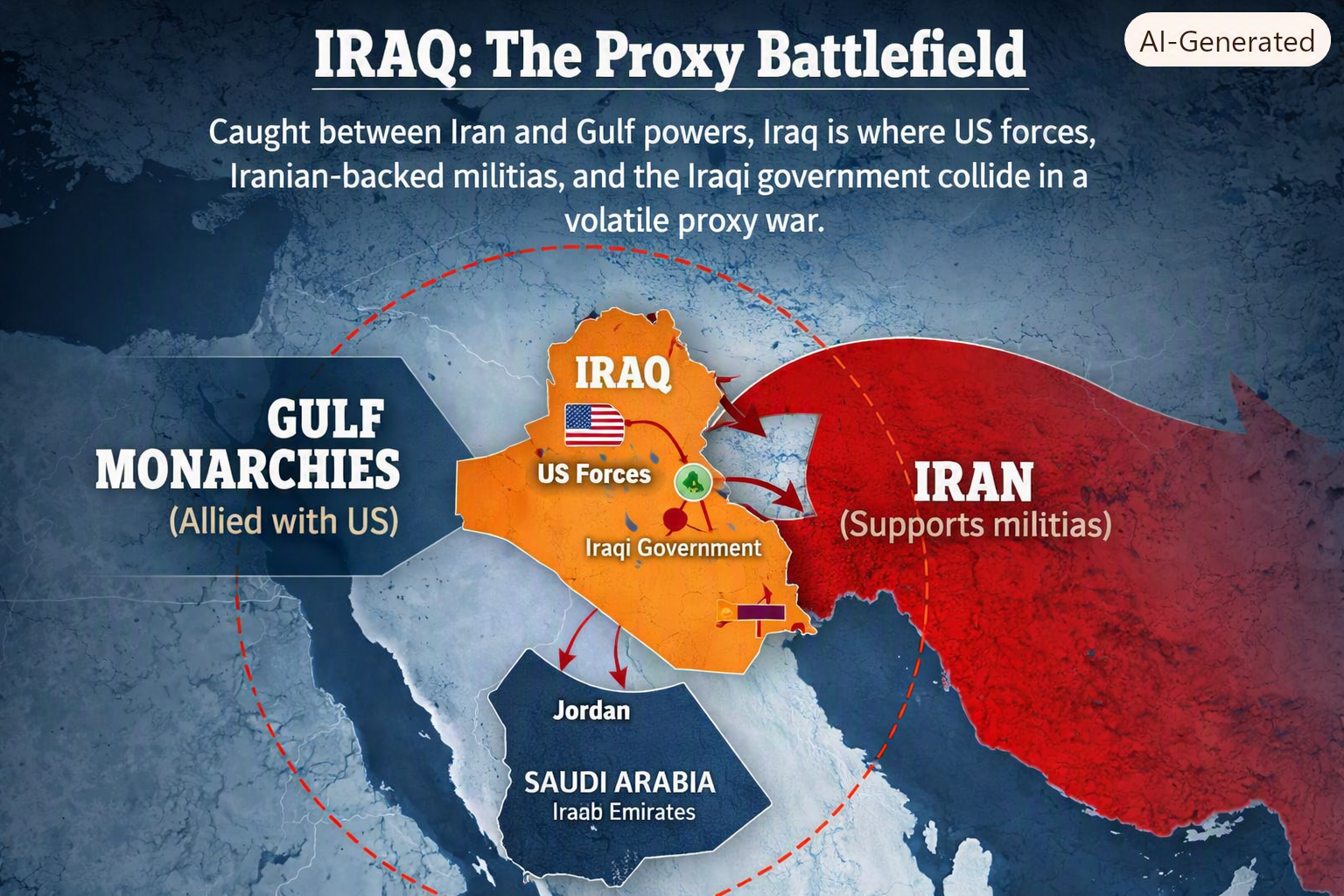
Why Iraq? Geography makes it the perfect storm. Wedged between Iran and the Gulf monarchies, Iraq hosts US military bases, Iranian‑backed militias, and fragile government forces, all colliding in one volatile arena. Whenever Washington and Tehran clash, Iraq becomes the proxy battlefield, and civilians bear the brunt of devastation.
The Two Camps of West Asia
West Asia is now split into two hardened blocs:
US and Allies: Israel, Saudi Arabia, UAE, Bahrain, Jordan, determined to block Iran’s regional dominance and nuclear ambitions, while safeguarding Gulf oil infrastructure and freedom of navigation through the Strait of Hormuz.
Iran and the “Axis of Resistance”: Houthis in Yemen, Hezbollah in Lebanon, Hamas in Gaza, militias in Syria, and Iraq’s Popular Mobilization Forces (PMF), armed, funded, and trained by Iran’s Revolutionary Guard Corps.
Why Saudi Arabia Finally Stepped In?
Traditionally cautious, Riyadh avoided direct military confrontation with Tehran, drained already by its costly war against Yemen’s Houthis. But repeated drone and missile strikes on Saudi oil fields and pipelines forced a shift. With its energy lifelines under siege, Saudi Arabia joined US operations, striking PMF positions in Iraq. Reports suggest at least eight militia fighters were killed.
Iran Strikes Back
Tehran wasted no time retaliating. Ballistic missiles targeted US bases in Jordan, though officials claim they were intercepted. Meanwhile, Iranian forces seized three commercial oil tankers in the Strait of Hormuz, reigniting fears of a global energy chokehold.
The Global Ripple Effect
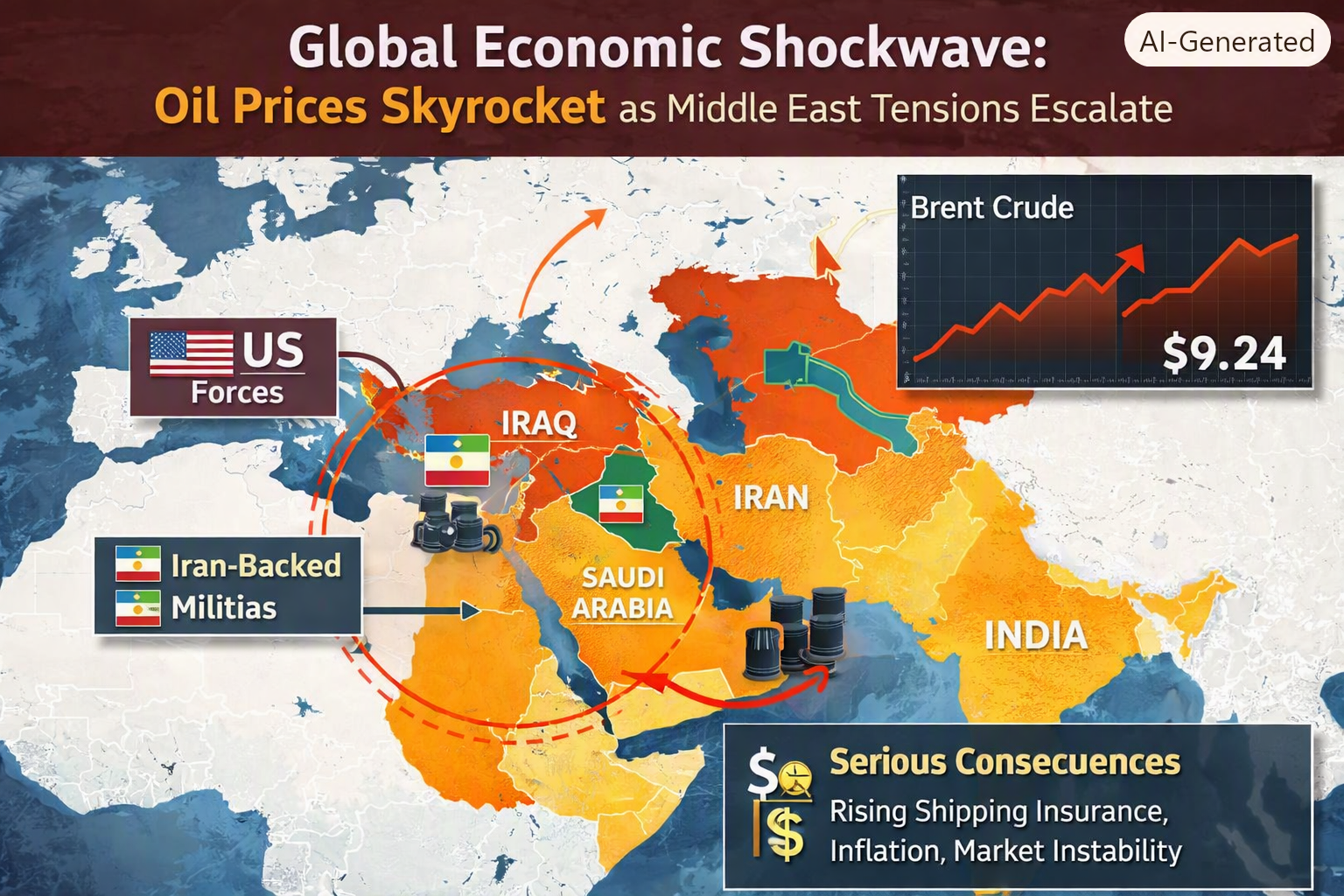
This isn’t just a Middle East crisis; it’s a global economic shockwave. Oil prices, which had dipped below $70 when peace seemed possible, have surged back toward $90 as the war escalates. For countries like India, the consequences are severe: rising shipping insurance costs, inflationary pressures, and financial market instability.
Saudi Arabia Walks a Fine Line: Retaliation Without Escalation
Riyadh has been careful to frame its recent strikes as measured retaliation, not a declaration of war. Saudi officials insist the operations were a limited defensive response to aggression, not a shift toward full military engagement. As Defence Ministry spokesman Maj. Gen. Turki al‑Malki stressed, “The Kingdom does not seek escalation but will respond decisively to any attack against it.”
Both BBC and The New York Times noted that Saudi statements deliberately emphasized self‑defence, steering clear of language that would suggest a deeper plunge into the US‑Iran confrontation. In essence, Saudi Arabia is trying to project strength, without appearing to ignite a wider regional firestorm.
What Lies Ahead
Saudi Arabia’s direct involvement marks one of the most dangerous phases of the war yet. With Iraq now a battlefield, Jordan under fire, and Hormuz under siege, the conflict threatens to spiral into a full‑scale regional war, one that could reshape global energy markets and geopolitical balances for years to come.
Written by
Bhavana SharmaDiscussion (0)
Sign in to join the discussion.
Loading comments…